
Commercial Roofing in I-20 Business Corridor, Arlington, TX
I-20 Business Corridor
Commercial roof repair along Arlington's I-20 business corridor: rooftop curb and equipment flashing, PVC repairs, wet insulation checks and clear photo records.
Arlington's I-20 business corridor runs through Council District 3, which also takes in Arlington Municipal Airport, Tarrant County College and Arlington Highlands. The buildings range from retail and offices to hangars and light industrial space. What many of them share is a low-slope roof crowded with rooftop units, exhaust fans and curbs. That equipment is where a lot of leaks start. The EF-2 tornado that crossed Arlington on November 24, 2020 is a reminder of how hard wind can hit these roofs, but every building still needs its own inspection to know what shape it is in today.
We look at the curbs, flashing and membrane you are concerned about, figure out what is failing and tell you what the repair involves, including any work that belongs to your HVAC contractor rather than the roofer.
Curbs and rooftop equipment
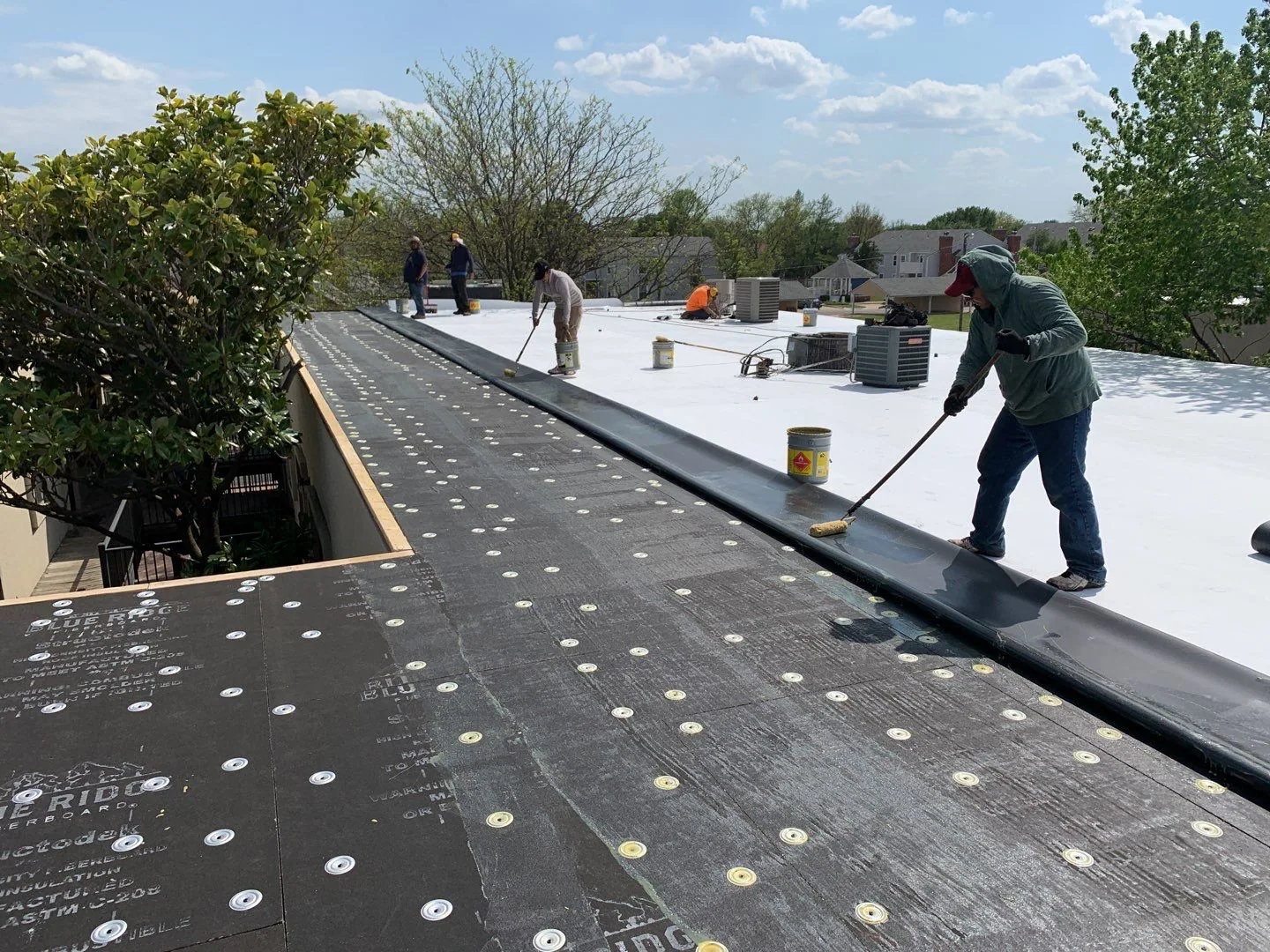
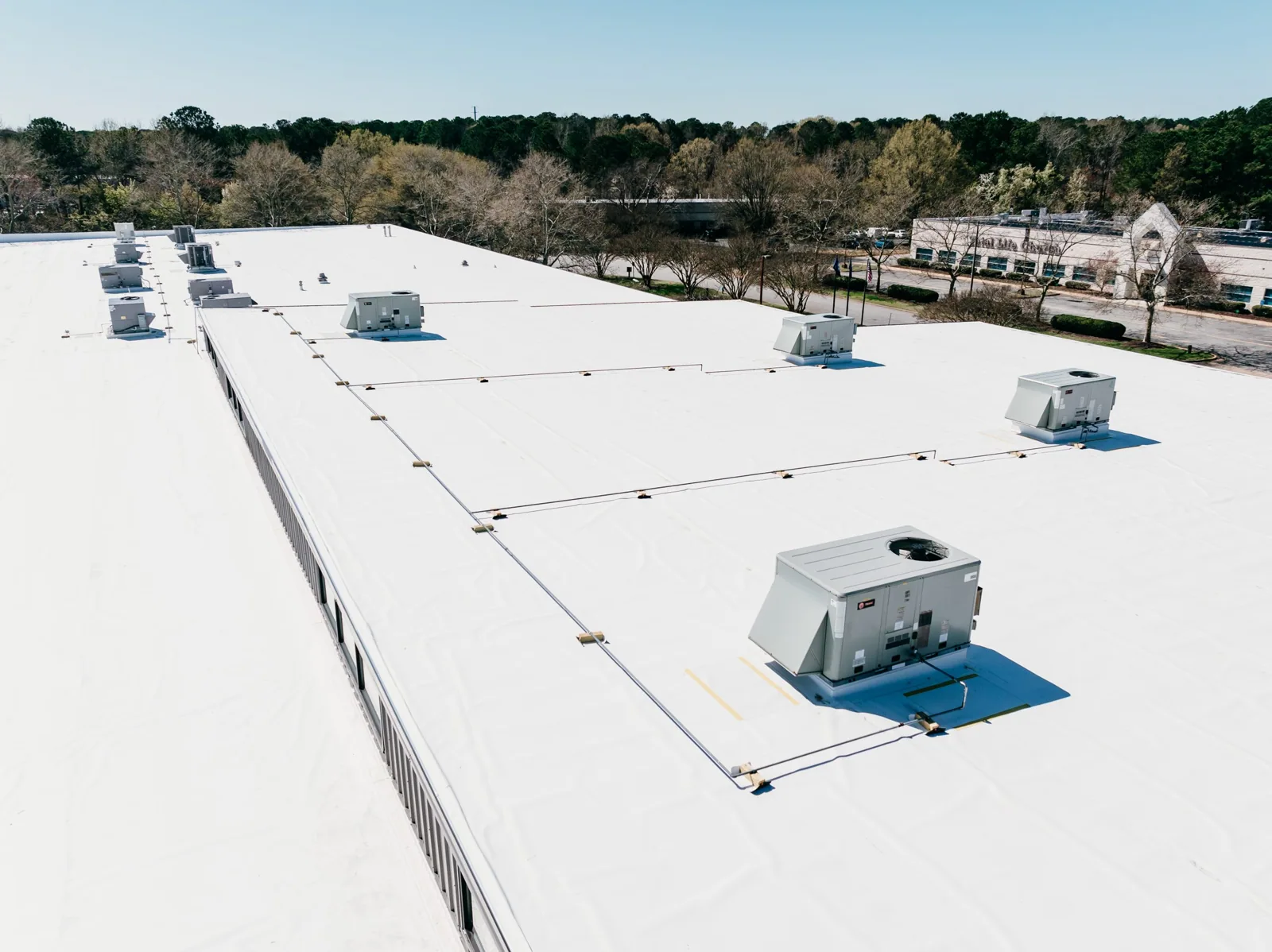
Rooftop curbs are a common leak source. The membrane flashing wraps up the side of the curb and tucks under a metal counterflashing or the unit itself. Over time the flashing pulls loose, the sealant dries out, or the curb itself rots or rusts. Sometimes the unit was replaced and the new one did not fit the old curb, leaving gaps that water finds quickly.
We check each curb in the problem area: the flashing, the counterflashing, the curb's condition and how the unit sits on it. Then we sort out what is roofing work and what is not. Our rooftop curb and equipment estimate lists the roof repair separately from anything your HVAC contractor needs to do, such as resetting a unit, repairing a rusted curb or sealing a cabinet.
We also work on curb leaks for commercial roofing in Grand Prairie and offer roof service in Kennedale, with every building inspected on its own.
If a tenant has reported a leak near a unit, we check whether it lines up with the curb. Condensate lines and unit cabinets leak too, and water from those can look a lot like a roof leak from inside.
Flashing the PVC around a curb
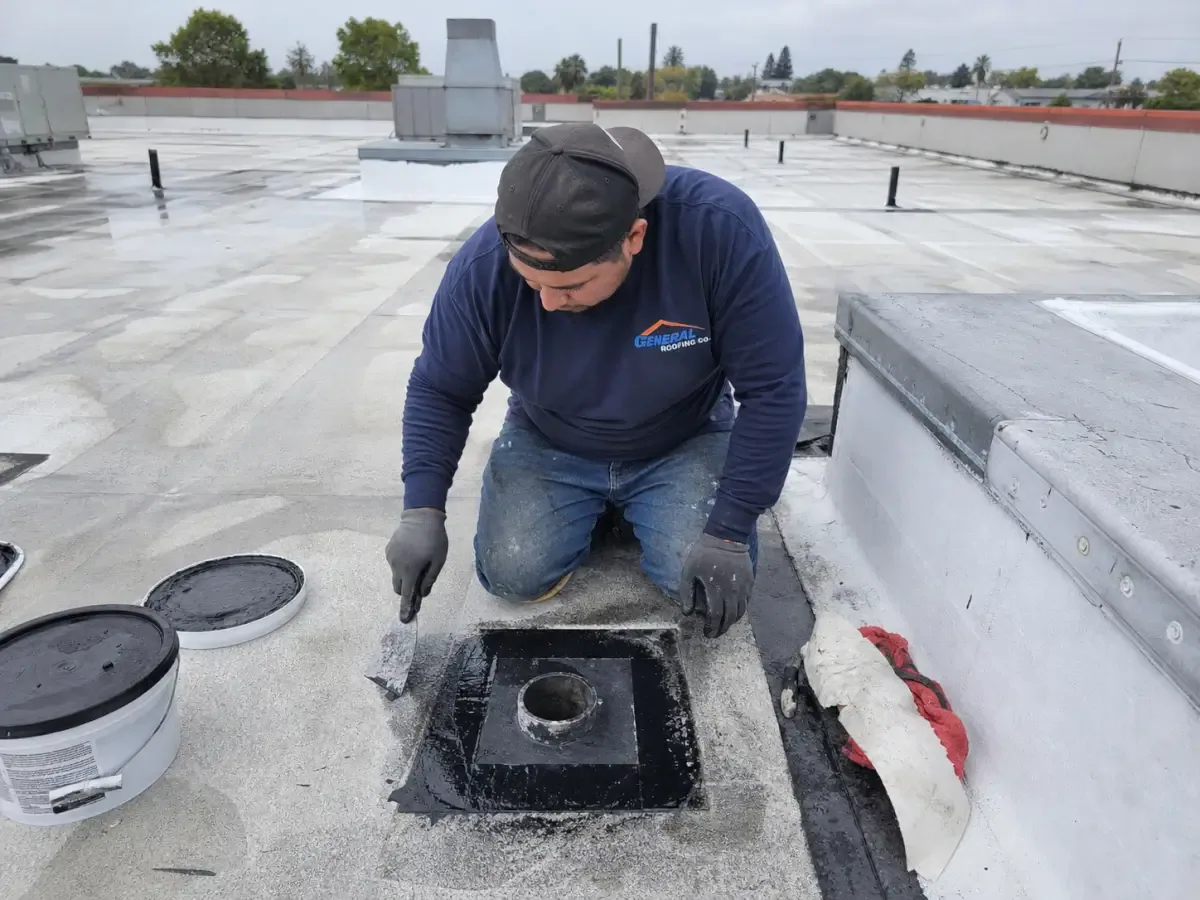
New curb flashing has to bond to the membrane already on the roof. We confirm what system is there and check the sheet around the curb, which often gets more foot traffic and wear than the rest of the roof because technicians kneel and set tools there.
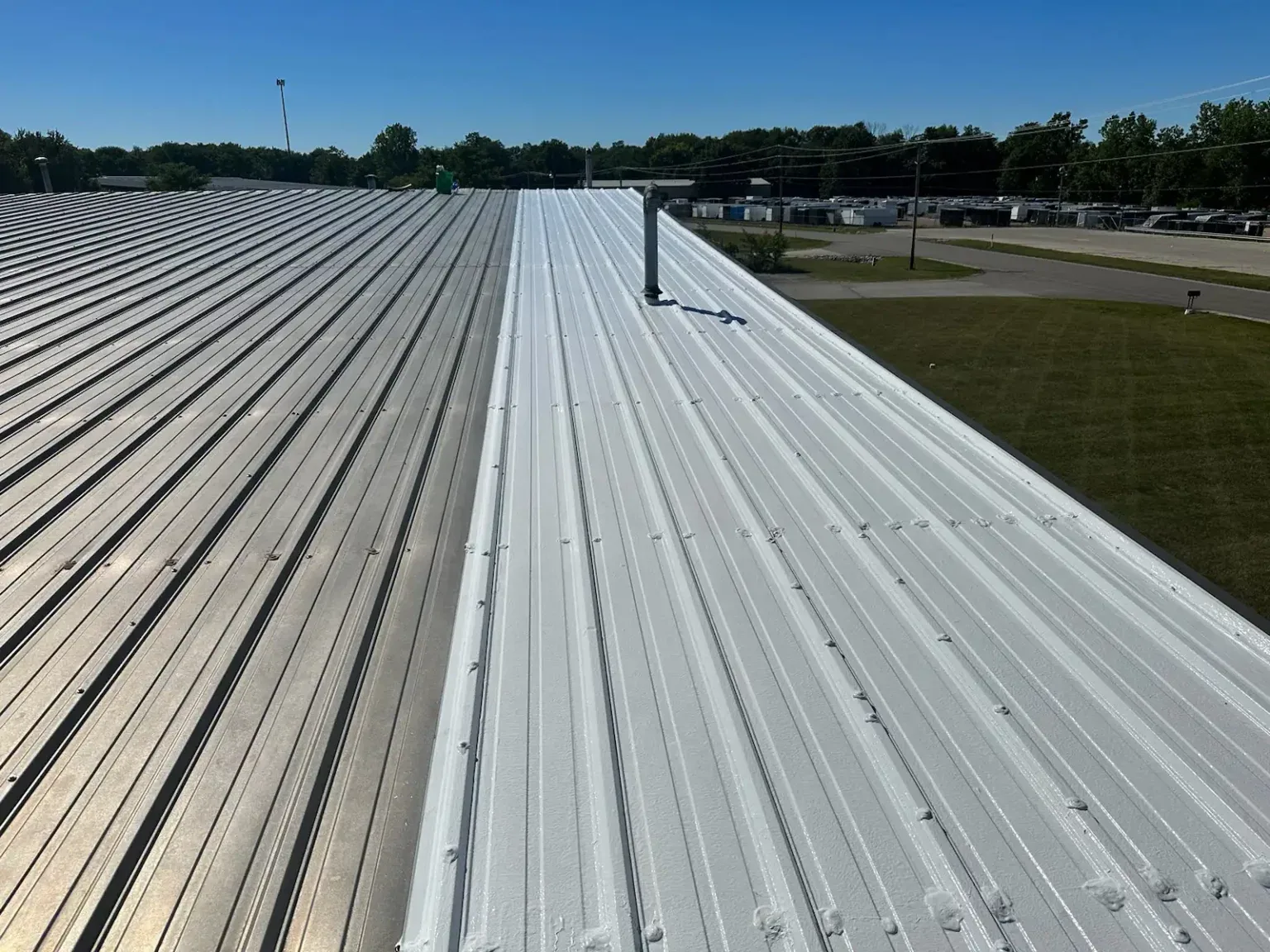
For PVC roofing, we clean the existing membrane, weld new PVC flashing up the curb and onto the field, add inside and outside corners and probe the welds once they cool. If the old PVC around the curb is stiff or scorched, we cut back to membrane that takes a good weld. A TPO, EPDM or modified bitumen roof gets its own method.
We also check seams near the curb. An open seam a few feet away can carry water to the curb and make it look like the flashing is leaking. Those fixes are listed separately in the estimate.
Insulation and deck around equipment
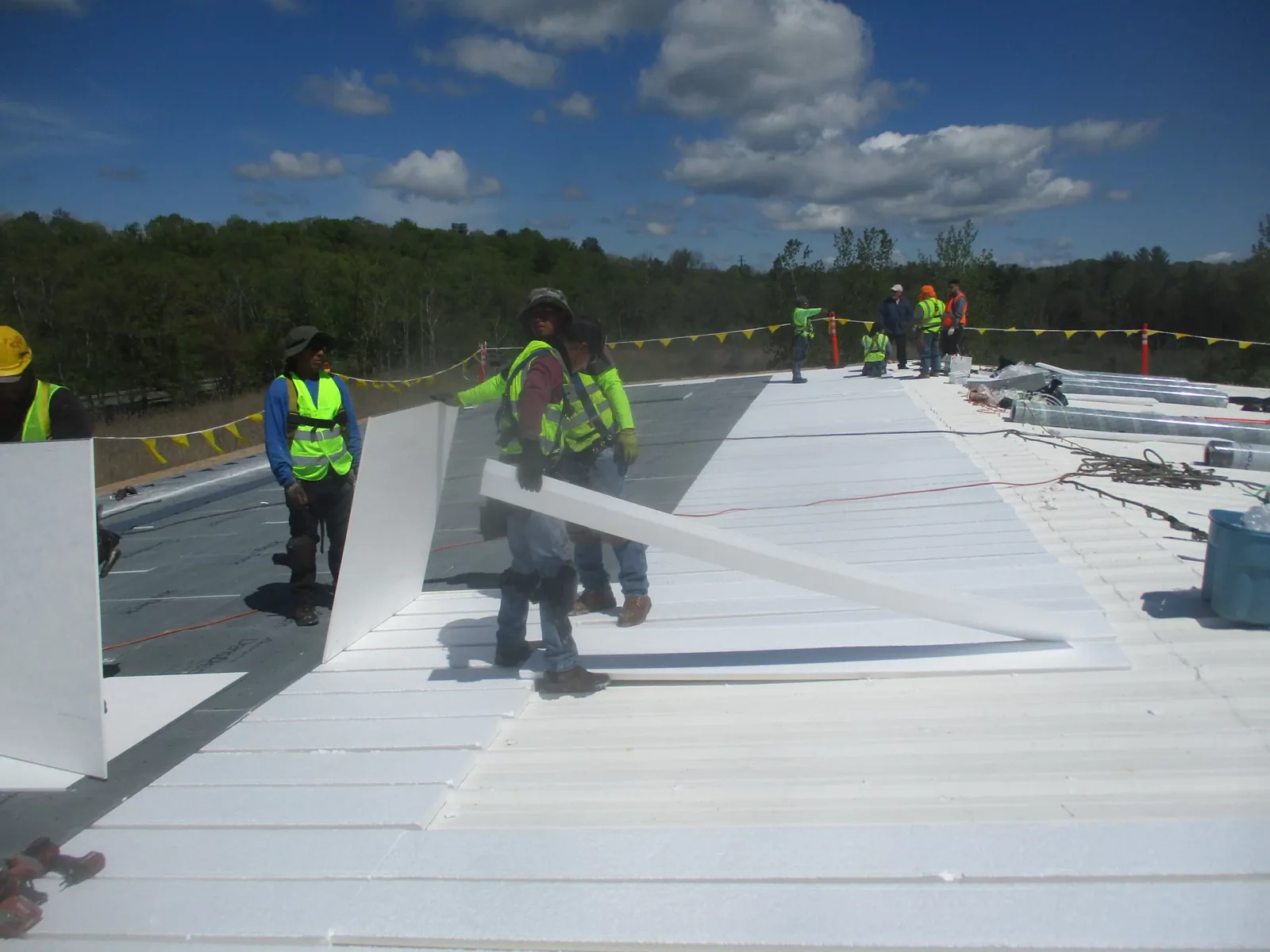
A curb that has leaked for a while usually leaves wet insulation around it. If the curb is wood, it may be rotted. If the deck around it is steel, it may be rusting. When we see soft spots, staining or high moisture readings, we open the area or cut a core to check. Wet insulation and rotted wood get replaced before new flashing goes on.
On an aircraft hangar roof, we coordinate any openings with the facility manager. Aircraft, tools and equipment may be parked right below, and some hangars have strict rules about debris and dust.
When an opening shows more damage than we expected, we stop, take photos and call you. A core near one curb tells us about that curb, not the others.
Coordinating with the HVAC contractor
Curb repairs often need the HVAC contractor first. They may need to disconnect and lift a unit so we can flash the curb properly, or repair a rusted curb before we can flash it at all. We list who is doing what and coordinate the timing so the unit is off the curb only as long as it has to be.
Once the curb is sound and nearby seams are fixed, we clean and prep the PVC and weld the new flashing. Then the HVAC contractor resets the unit and we install or reseal the counterflashing. If anything keeps the flashing from sealing properly, we tell you what it is and what has to happen first.
We confirm roof access, crane or lift needs, staging, parking and work hours with the building contact. If a unit has to be lifted, the HVAC contractor usually arranges the crane, and we schedule around it.
When you call about a building along I-20, tell us which building and which units or curbs are leaking, and send photos if you have them. If you know who services the rooftop equipment, let us know, so we can coordinate with them from the start.
Photos and the repair record
We photograph each curb as we find it, any opened insulation or rotted wood, the curb repairs, the prepped membrane and the finished flashing. Each photo is tied to its location on the roof plan, so the next technician can find the curb and see what was done.
A roof condition report for your building lists each curb we repaired, any work the HVAC contractor still needs to finish and any part of the roof we did not inspect.
If we installed temporary protection while waiting for the HVAC contractor, the report says so. That record makes the next visit easier for everyone. When a unit is replaced in a few years, the new installer can see exactly how the curb was flashed and what to watch for.
We also note curbs that are fine today but will need attention soon, such as a unit that is near the end of its life or a curb that is too short for proper flashing height. That helps you plan roof and HVAC work together instead of paying for the same curb twice.
Common Questions
What should we tell you before you look at a roof along I-20?
Which building, which units or curbs are leaking, who services the rooftop equipment and who can give us roof access. Photos and past repair records help too.
How do you separate curb repairs from roofing work?
We list the membrane flashing as roofing work and anything involving the unit or the curb's structure as HVAC or carpentry work. Each item shows who does it and in what order.
How do you make sure the new flashing bonds to the old roof?
We confirm the membrane type, check its condition around the curb and cut back to sound material if needed. Then we weld or bond the new flashing and test the seams.
What happens if you find rot or wet insulation around a curb?
We photograph it and talk with you before going further. Rotted wood and wet insulation get replaced before the new flashing goes on.
What records will we get of the curb repair?
Photos of each curb before, during and after the repair, tied to its location, plus a report listing any HVAC work still pending and any curbs to watch.
Get your I-20 corridor roof checked
Tell us which building and which curbs or rooftop units are leaking. We'll inspect the flashing, sort out roofing work from HVAC work and give you a clear estimate for the repair.
- commercial roofing in Grand Prairie
- roof service in Kennedale
- rooftop curb and support work defining the membrane correction and preceding component duty
- PVC curb flashing repair after verification of the membrane and suitable retained sheet
- aircraft hangar roof assessed through its own material and component findings
- roof condition account locating airport-area component findings and completed membrane work