
Data Center Roofing in Arlington, TX
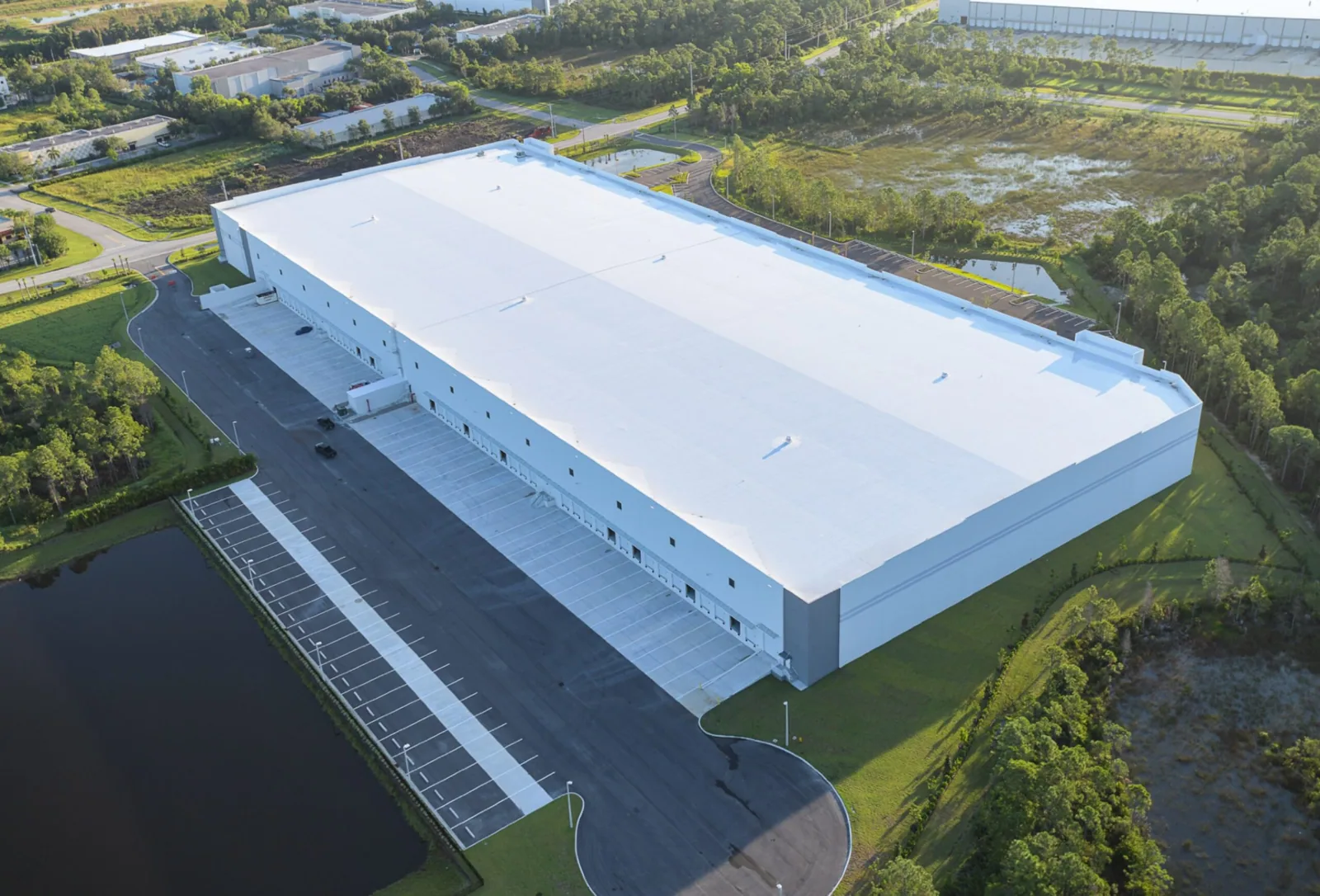
Data Center Roofing
Arlington, TX data center roofing: leak repair, wall flashing and curb work around cooling units, scheduled through your change control to keep the data hall dry.
Hail hit parts of Arlington on May 27, 2024, and on a data center even a small leak after a storm is a big deal. On a data center the details that matter most are the flashing at walls and parapets and the curbs under the cooling equipment, because a leak there doesn't drip onto an empty floor. It lands near servers, switchgear and the units keeping the room cool. Many of these repairs also need more than a roofer. Soft wall sheathing may have to be rebuilt before new flashing can be fastened, and the mechanical contractor may need to disconnect or raise a unit before we can flash its curb. We price that work right next to the roofing, so you compare complete repairs instead of a cheap patch that skips the hard part.
If you also manage buildings in Richland Hills or Cedar Hill, each property gets its own roof report.
To schedule a visit, send the address, where the problem shows up and any roof drawings or repair history. Tell us who runs facilities on site. Roof access, unit shutdowns and any opening above the data hall go through your change control, not our calendar.
Wall flashing and the backing behind it
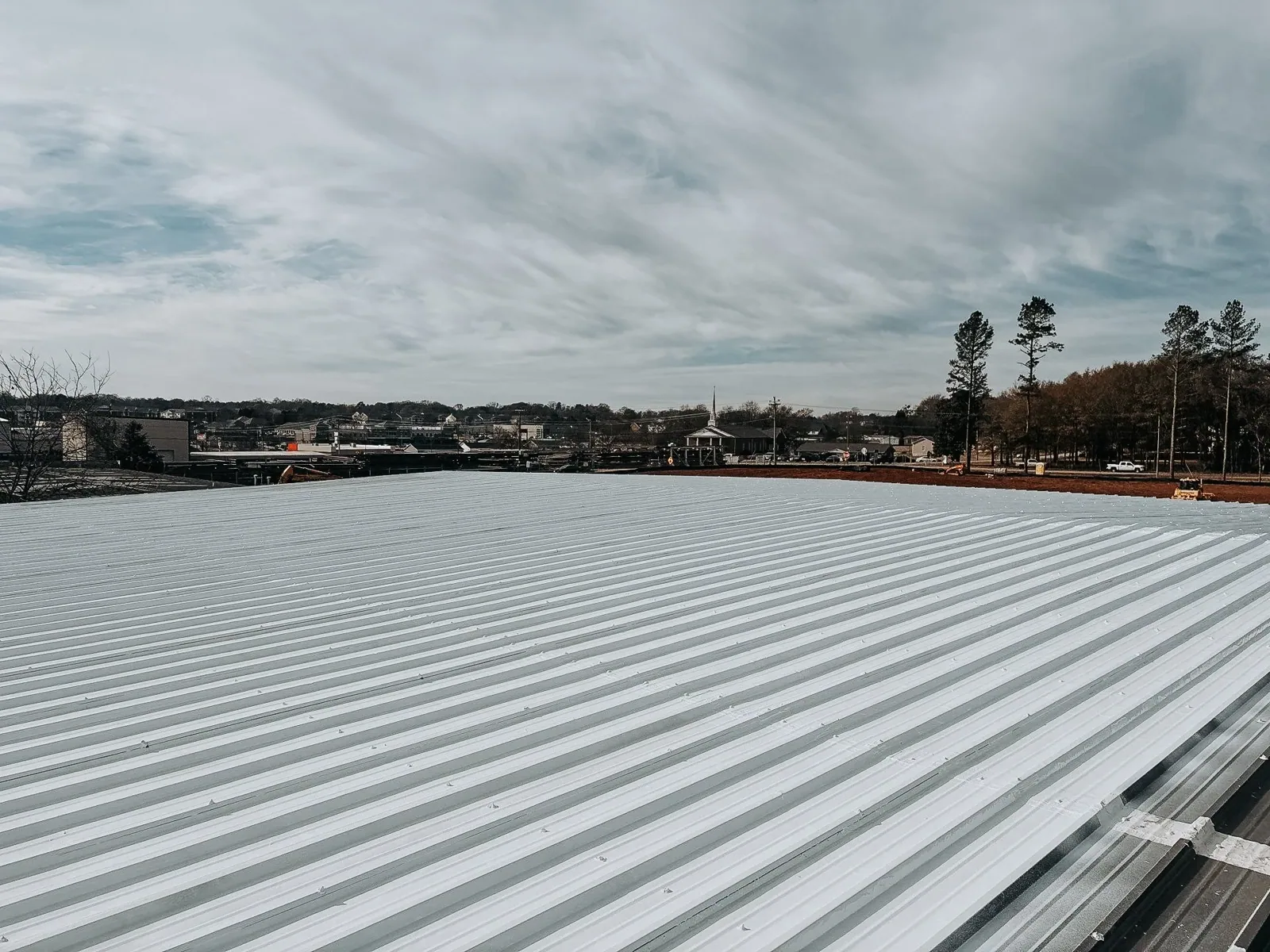
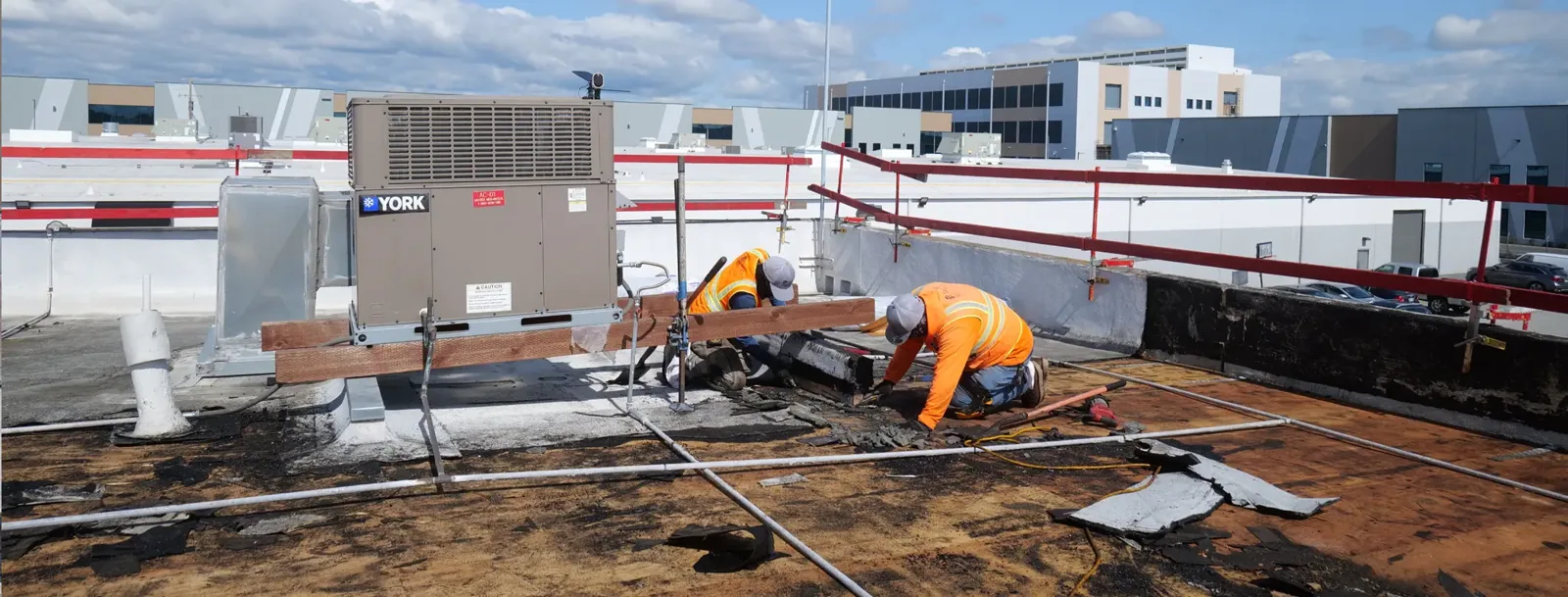
Most data center leaks we chase start where the membrane turns up a wall or parapet. For flashing failure repair, we pull back the old flashing and look at what it was fastened to. Solid sheathing stays. Wet or rotted backing gets replaced, usually by the wall contractor, and if the fix changes how the wall is framed, an engineer or architect signs off first. Then we install new base flashing, fasten the top edge with termination bar or counterflashing, and tie it into the field membrane below. Laying another strip of membrane over a rotten wall just buys a few months.
A ceiling stain or a water alarm in the data hall tells us roughly where to start, not where the water got in. Water can travel a long way along the deck before it drops. We note what we can see, mark what we can't confirm until something is opened, and photograph the bad backing before new flashing hides it. That way your team knows why the wall work was needed and where it was done. A small gap at the top of the flashing can sit over a much larger area of wet sheathing, so we don't guess at the size until we've looked.
What membrane can stay and what comes off
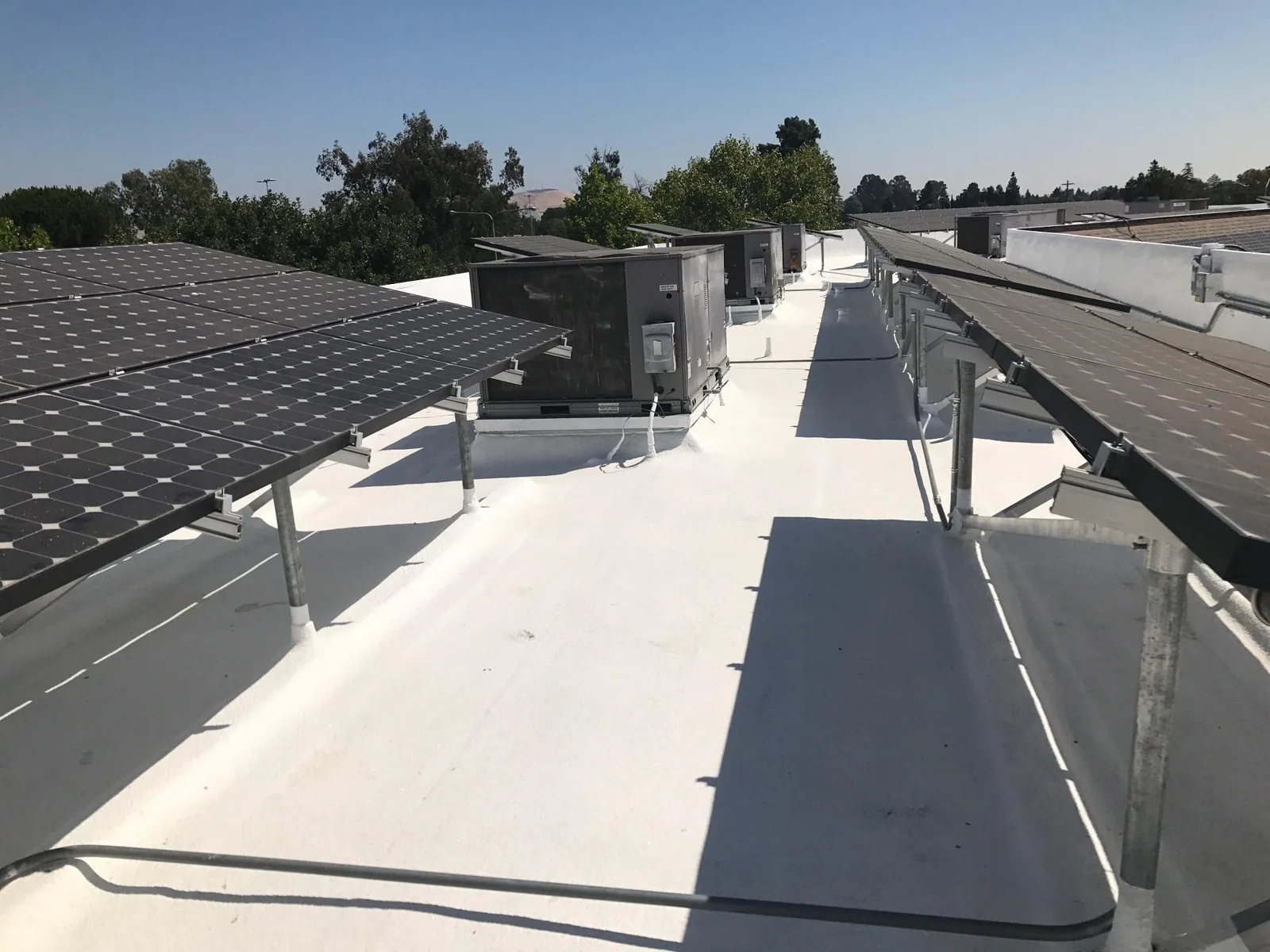
A commercial roof repair on a data center starts by sorting the membrane around the problem into two piles: material that's sound enough to tie into, and material that has to be cut out. Sound TPO or PVC gets cleaned and prepped so a new heat-welded seam will actually bond. Brittle, blistered or wet sections come off until we reach good membrane. Modified bitumen and built-up roofs get the repair method that fits them. A roof coating can't fix wet insulation or a rotten wall, and it isn't a substitute for the wall or equipment work around it, so we list that work separately in the same proposal.
Before we recommend keeping the existing roof in place, we want to know what's under it. An infrared moisture survey shows likely wet insulation, but the scan only points to suspect areas. We confirm with core cuts in a few spots, patch every core the same day, and plan protection inside before cutting above the data hall. Mechanical and structural questions stay with the people who handle them. Your proposal should show the readings and cores behind the recommendation, not guesses based on a storm date or the fact that it's a data center.
Cooling units, curbs and supports
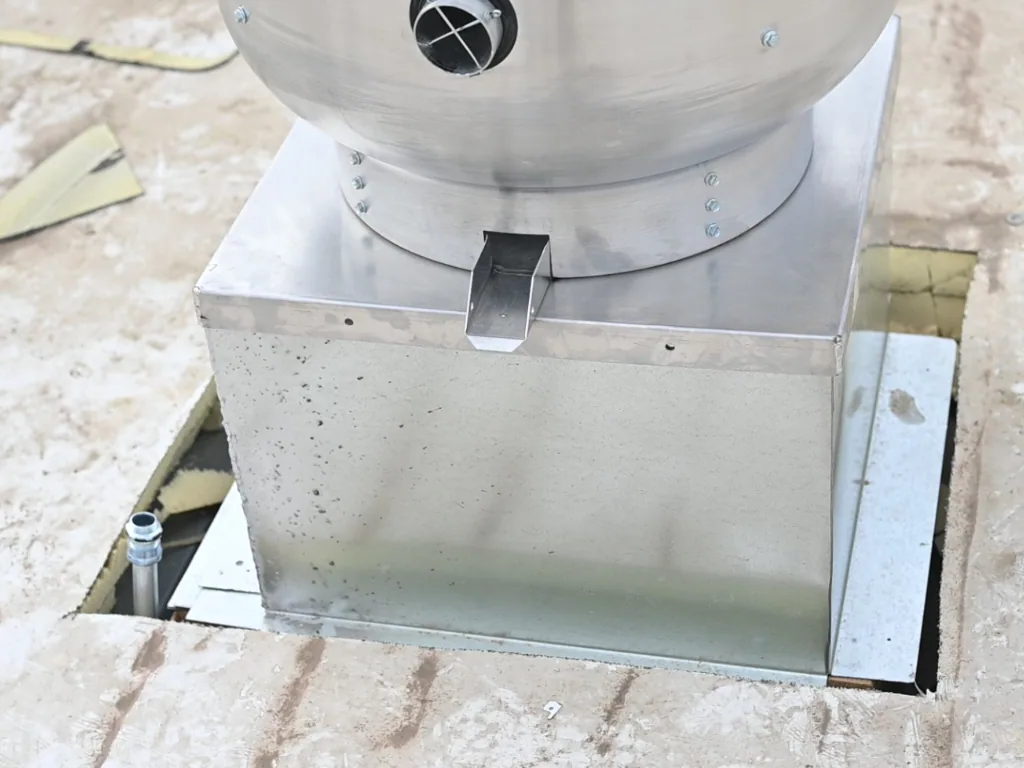
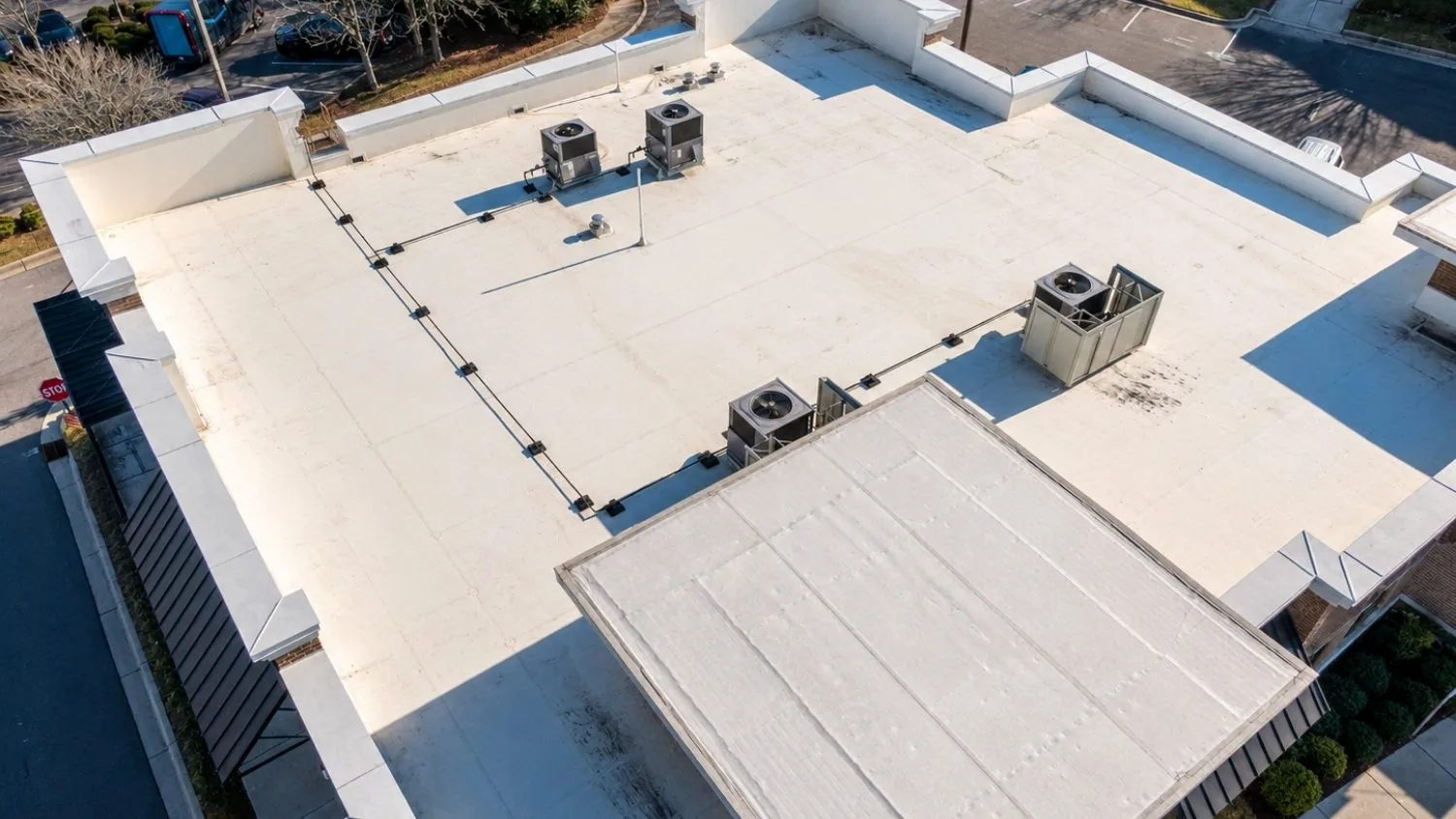
Data center roofs carry a lot of equipment: condensers, dry coolers, exhaust fans and the piping and conduit that feed them. Our rooftop equipment curbs and supports work starts with figuring out who has to touch a unit before we can flash it. If a curb has to be raised or a rail replaced, your mechanical contractor handles disconnecting and resetting the equipment, and your operations team decides when that can happen and what backup cooling covers the gap. If the support itself changes, a structural engineer reviews it. We spell out what has to be ready before we start and what flashing we install after, so the work happens in the right order.
Intakes and exhaust openings need the same care. Fumes, dust and debris from roof work can be pulled into the air system, so the people running the building decide whether intakes get filtered, covered or shut down, and when. Roof drains work the same way: we check the drain body and clamping ring before tying new membrane in, and if the pipe below is damaged or the drain needs to move, your plumber takes it from there. A new membrane around a drain or curb doesn't mean the equipment or piping has been checked, so the proposal lists each piece separately.
Protecting the data hall during roof openings
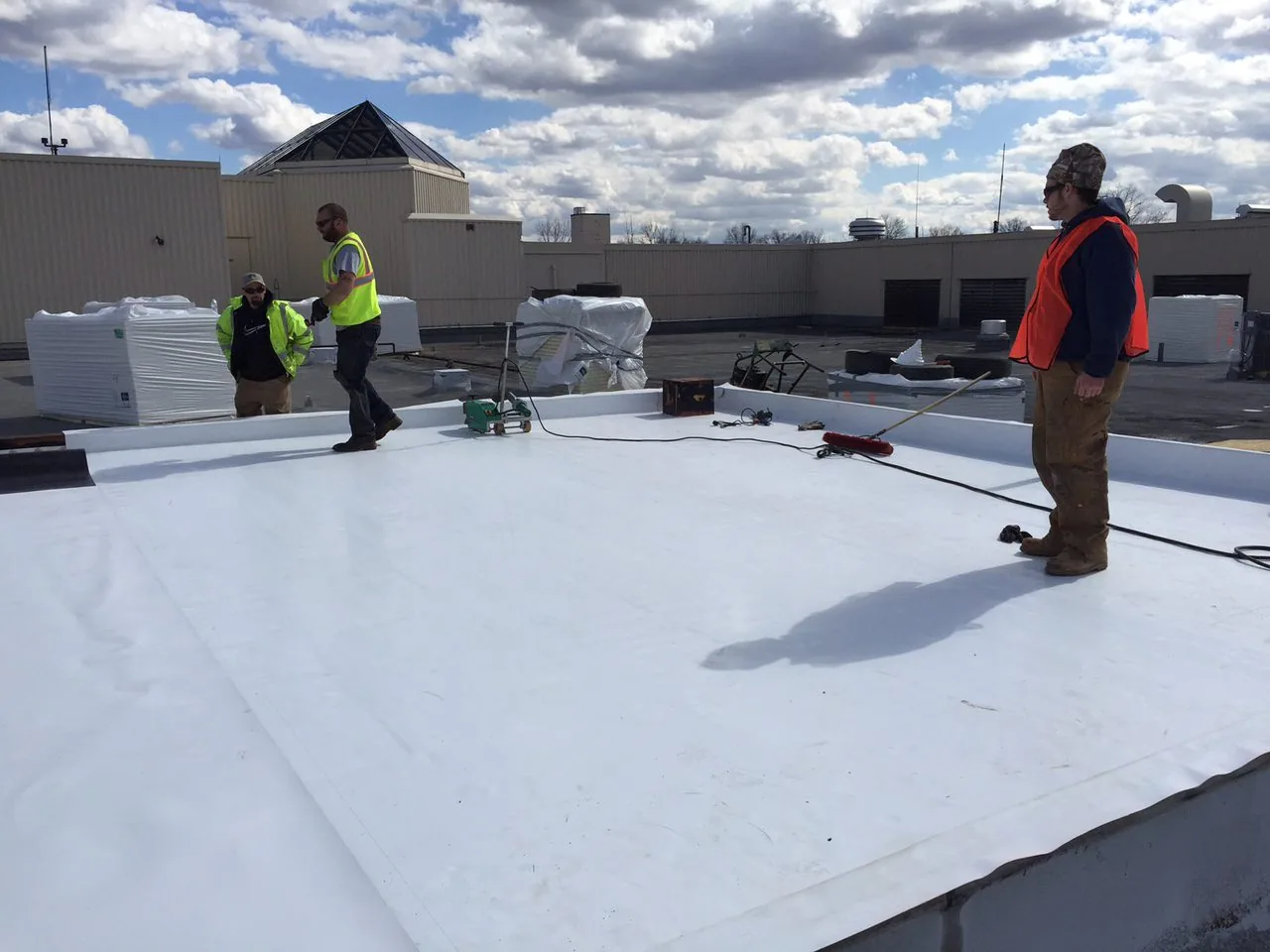
Any occupied building reroofing work over a data center starts with a written plan: where we'll open the roof, how big each opening will be, how material gets on and off the roof, and how we stay dry if weather turns. Your facilities and operations staff tell us what sits below each area and what they need protected. That could be racks, power distribution, fire suppression or nothing at all. They set any shutdown or monitoring requirements, and we build our precautions around their plan. We open only what we can close the same day, and nothing opens above live equipment without their sign-off.
Sometimes the roof is worse than it looked, and we find more wet insulation or a damaged deck once we cut in. When that happens we stop, photograph it and explain what more needs to come off. Your team approves the bigger opening and any added protection below before we keep going. If we're waiting on wall repairs or equipment work by another contractor, we put down a temporary seal and make clear the permanent flashing is still open. The revised price and the revised protection plan come to you together.
Closeout records
When the work is done, you get a closeout package: what was removed, what backing was replaced, what flashing and membrane went in and where. It includes photos of conditions we found while the roof was open and the core cut locations we patched. If wall, mechanical or plumbing work by others is still open, we note it next to our finished roofing so nobody assumes it's handled. If another spot on the roof still needs a look, we say where and why.
For an inspection in the Great Southwest Industrial District, call and we'll set a time with your facilities team. If you also run offices or plants, see office building roofing and manufacturing plant roofing. Each building is inspected on its own. The goal is a record your next roofer or engineer can pick up and understand without starting from scratch.
Common Questions
Should we have our data center roof checked after the May 2024 hail?
Yes. Hail can bruise membrane and dent equipment housings without causing a leak right away. We inspect the membrane, flashing and equipment curbs and tell you what, if anything, needs repair.
Who handles the cooling equipment when a curb needs new flashing?
Your mechanical contractor disconnects, lifts and resets the unit, and your operations team decides when that can happen. We flash the curb once it's ready. The proposal lists the equipment work and the roofing work as separate items so nothing falls through the cracks.
Can you reroof over a data hall without disrupting operations?
We plan the work around your change control. Your team tells us what's below each area, what protection and monitoring they need and when we can open the roof. We only open what we can close the same day.
What if you find more damage once the roof is open?
We stop, photograph it and explain what else needs to come off. Your team approves the larger opening and any extra protection below before we continue, and you get the revised price and plan together.
Schedule a data center roof inspection
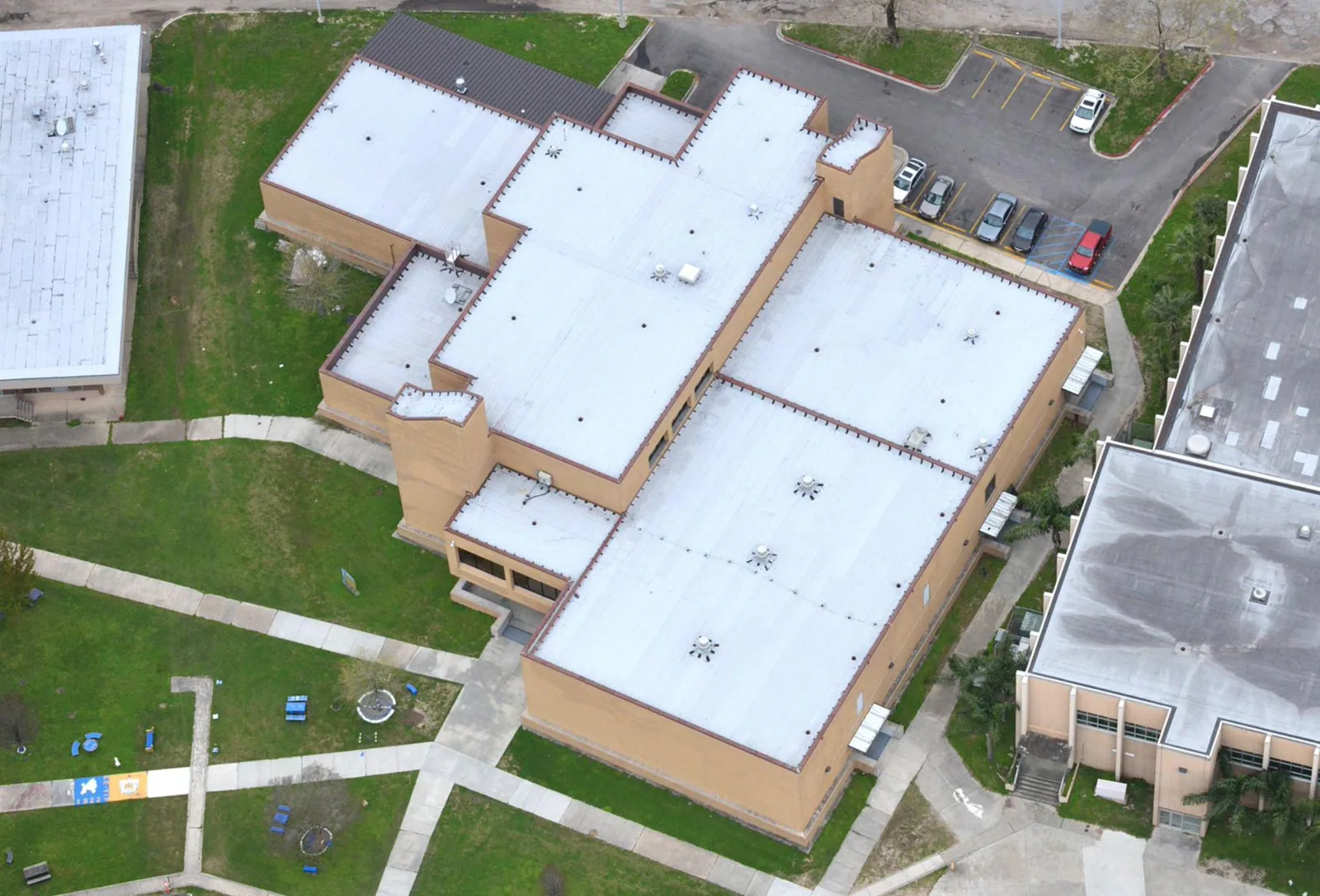
Have your facilities manager set up a visit. We'll walk the roof, check flashing and equipment curbs, and explain what work is needed and in what order.
- data facility wall flashing and backing reconstruction
- data center membrane repair and retained covering review
- data building roof observations and material inquiry
- data center roof component support and flashing handoffs
- data facility roof opening and interior protection review
- Great Southwest-area data facility roof examination
- office roofing with inspected wall preparation
- manufacturing roof support and component review