
Distribution Center Roofing in Arlington, TX
Distribution Center Roofing
Distribution center roof repair in Arlington, TX: drains, scuppers, rooftop curbs and membrane tie-ins, planned around racking, docks and floor operations.
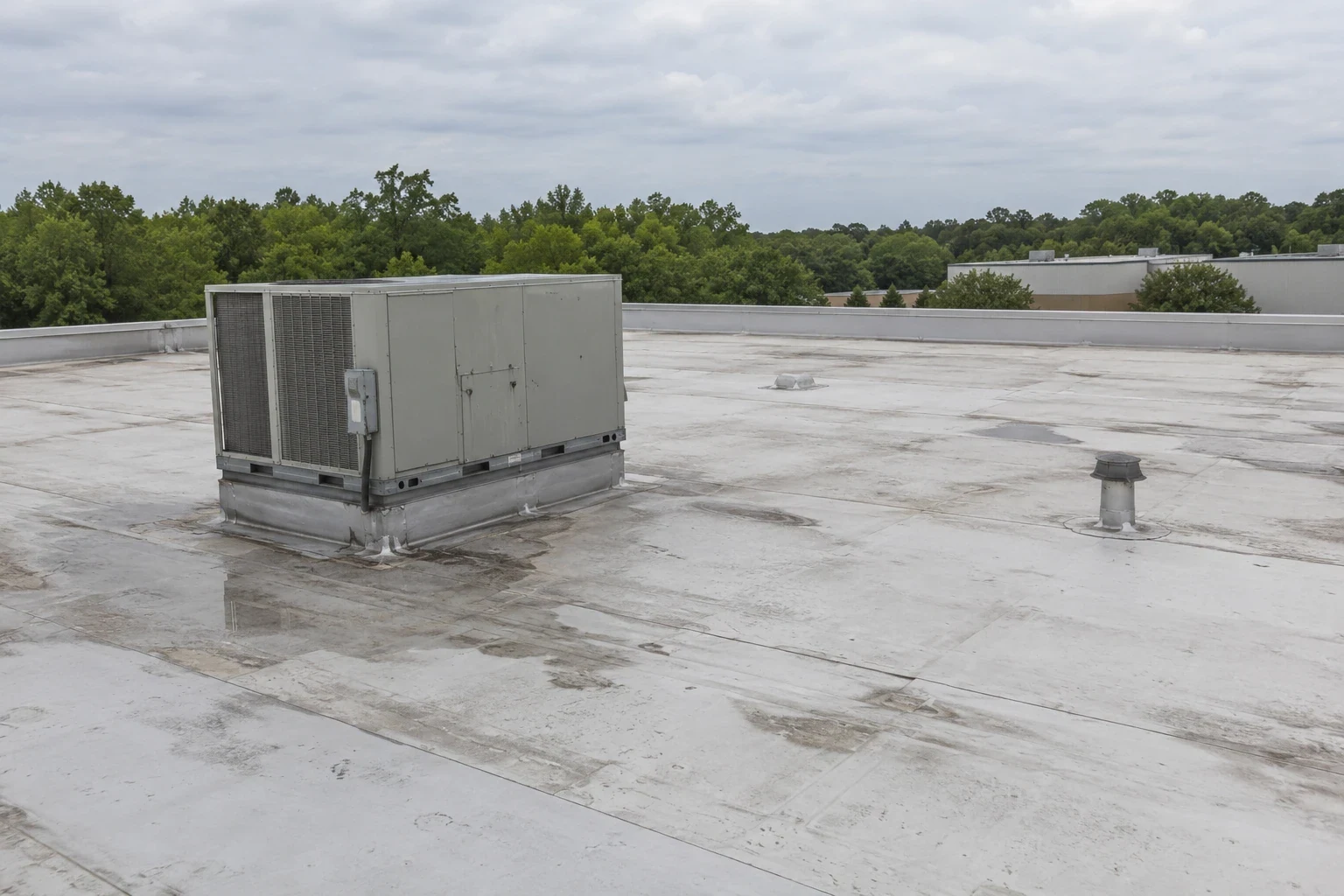
An EF-2 tornado touched down in Arlington on November 24, 2020, but most distribution center leaks we see have plainer causes. Big distribution roofs are mostly wide, low-slope fields, and trouble tends to concentrate at drains, scuppers, rooftop units and the seams around them. When water shows up below one of those spots, we start there. The membrane may need to be cut back and replaced, and the drain itself may need a plumber before we can tie new membrane into it. Our estimate shows both, so the asset manager isn't paying for another patch next to a cracked drain bowl.
We also work across Irving and Colleyville, and we keep each property's roof findings in its own file.
We set up the inspection with the building's facility manager. Dock schedules, racking layout and shift hours vary by tenant, so we ask rather than assume. If you know roughly where the leak shows up, mark it on a floor plan. On a roof this size, that saves real time.
Drains and scuppers
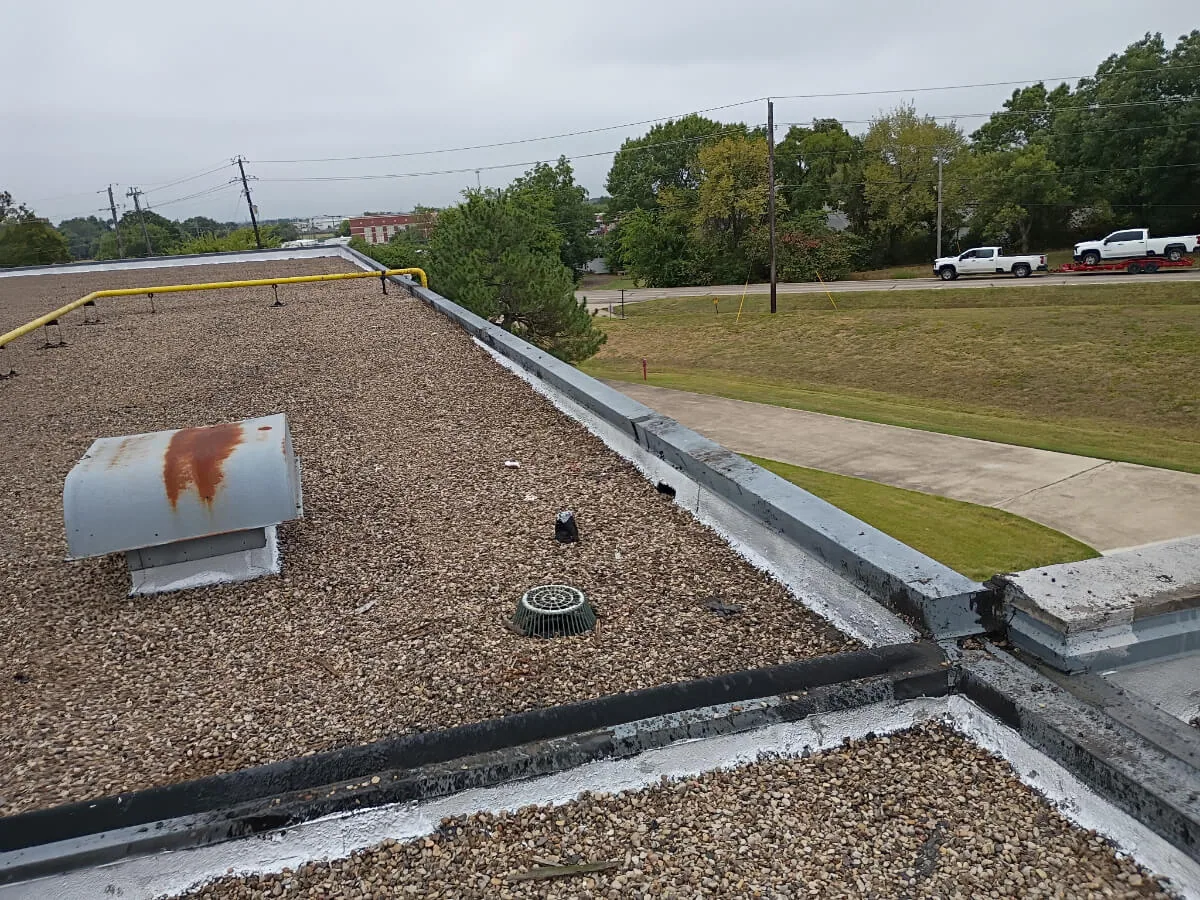
Our roof drain and scupper repair starts with the drain bowl, clamping ring, strainer and the membrane around them. On large distribution roofs we often find ponding around drains that sit high, loose clamping rings, or membrane that has split where it laps into the bowl. We figure out how much membrane is sound and what the drain needs before new membrane is clamped in. If the drain body is cracked or the leader pipe below is leaking, that's for the plumber, and an engineer should review any change to how the roof drains. We put their work and ours side by side in the estimate so the facility manager can schedule it.
Water on the floor near a drain line doesn't always mean the drain is leaking. It could be a seam upslope, a curb, or condensation on the pipe itself. We walk the roof around the reported spot, check seams and nearby curbs, and note what we can't confirm without opening the roof. We photograph what we find as it's exposed, before new membrane hides it, and the estimate is clear about what our repair fixes and what still needs a plumber to look at the piping.
Membrane and insulation
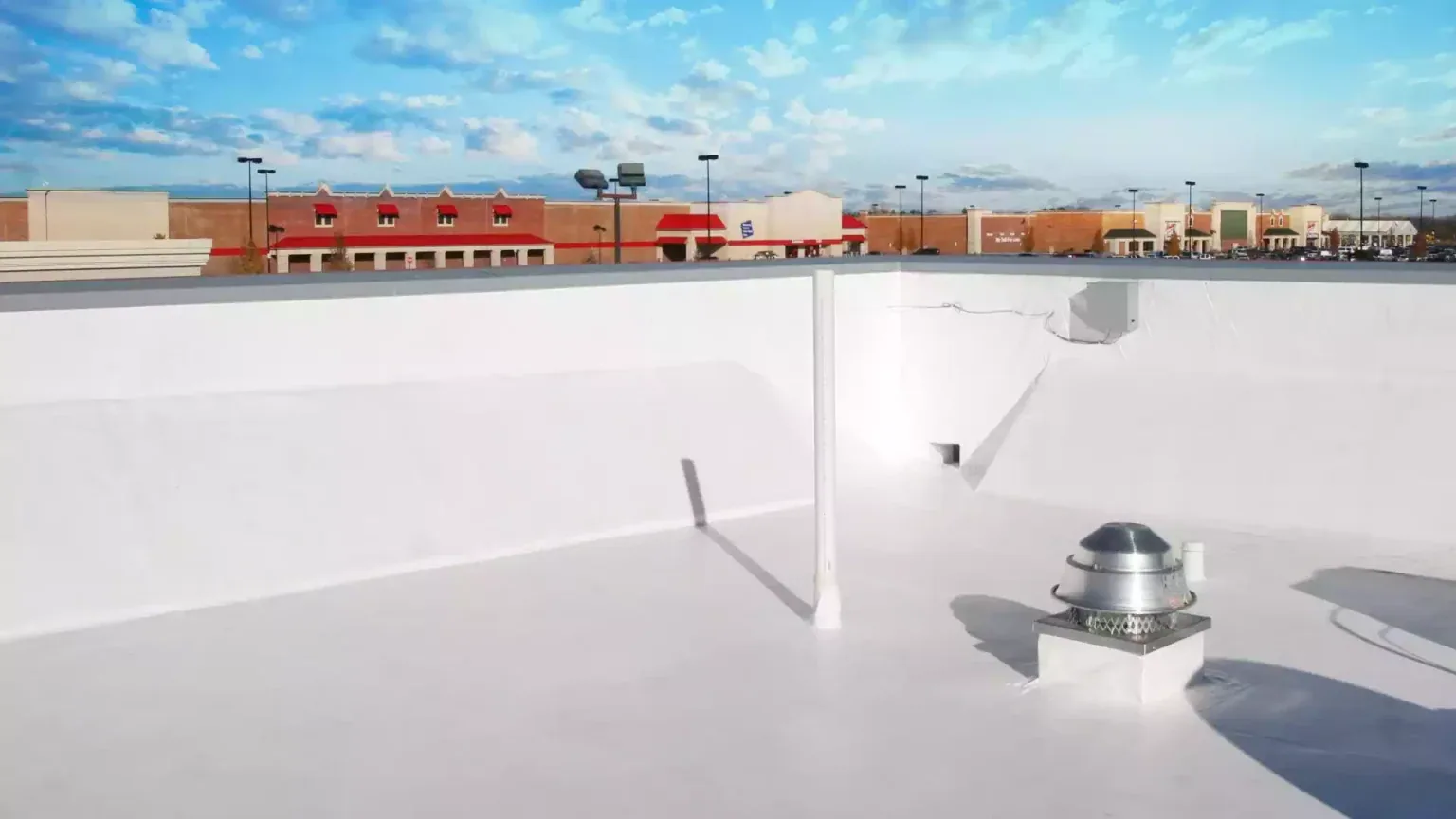
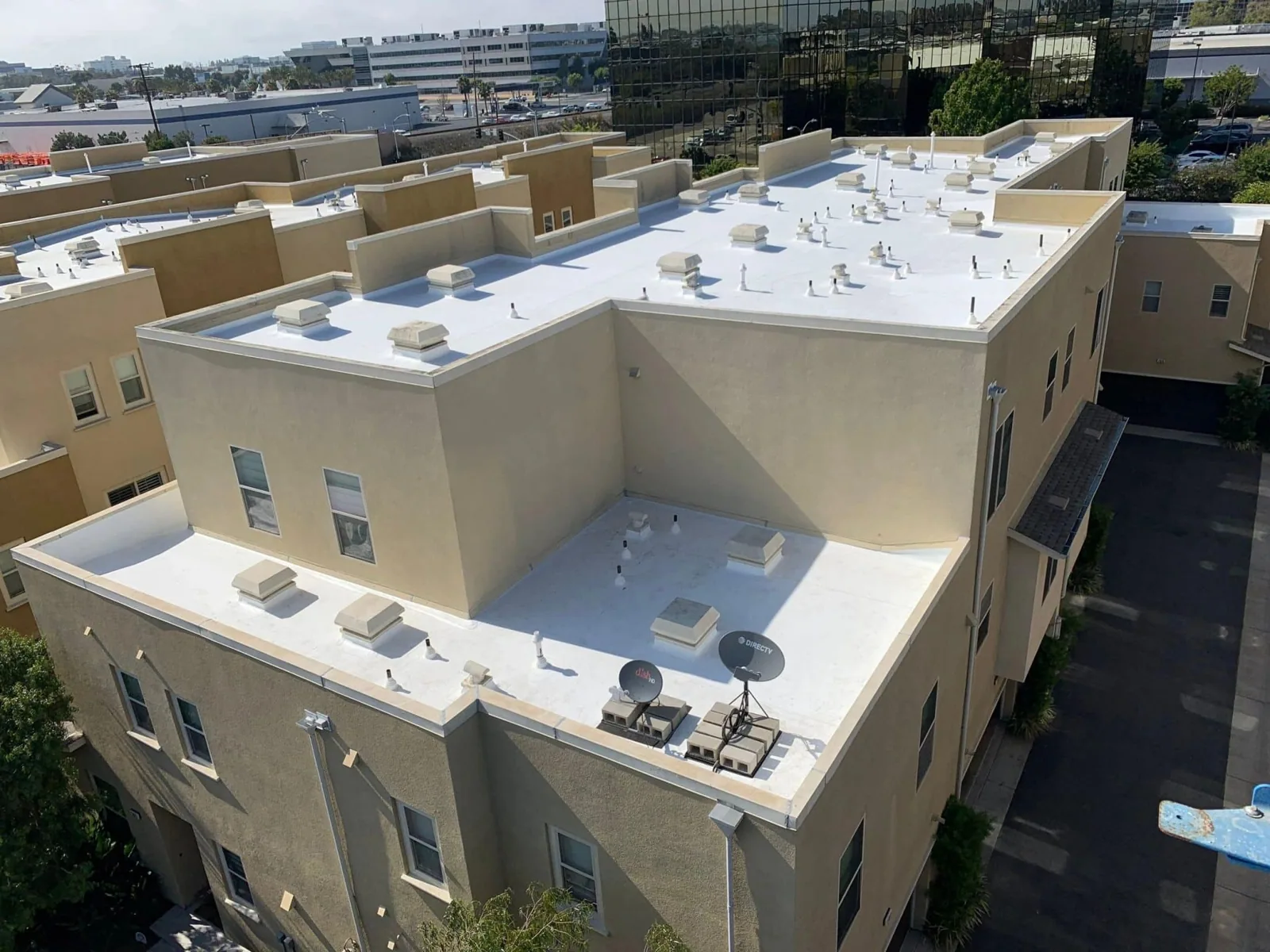
For commercial roof repair on a distribution center, we mark how far the good membrane goes and where we need to cut out. Sound TPO or PVC can be cleaned and heat-welded to. Membrane that's brittle, shrunk or delaminated gets removed down to a solid substrate. Older built-up or modified bitumen roofs need their own repair materials. The total square footage of the roof doesn't tell us how much tear-off a drain repair needs, so we price the cut-back on what we actually find, not a generic patch allowance.
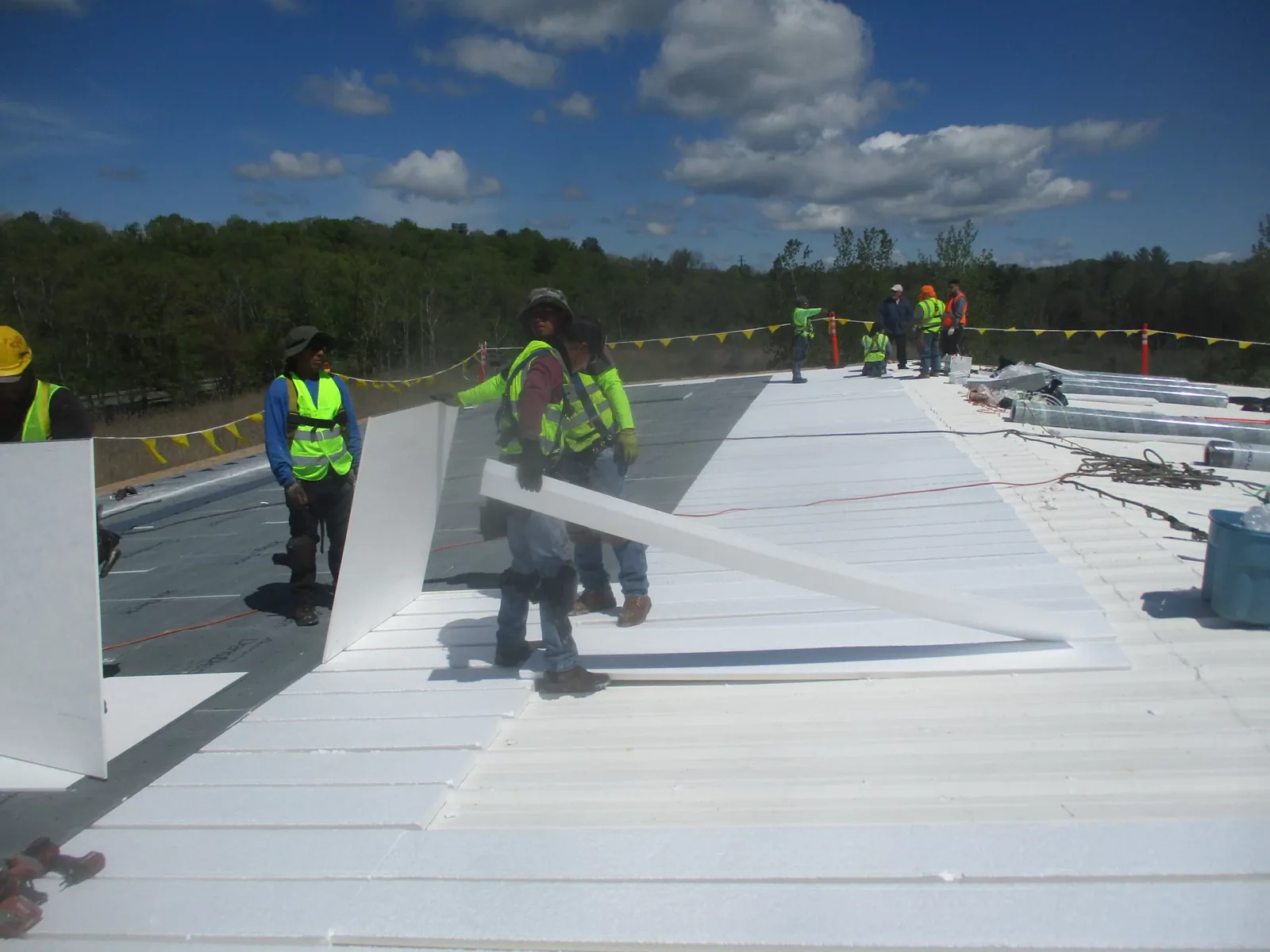
If we plan to leave the insulation in place, we need to know it's dry. Wet insulation under a big roof can spread well past the leak and adds weight on the deck. Past repair records help, and an infrared scan can point to likely wet areas, but we confirm with core cuts where the answer changes the plan. Each core gets sealed, and we protect whatever sits below it. Questions about the deck or structure go to an engineer. Our recommendation reflects what's on the roof today, not the 2020 tornado or the building type.
Coordinating other trades
When a leak runs to a rooftop unit or exhaust fan, our curb and equipment support repair checks the curb, the flashing and the stand. If the unit has to be disconnected, lifted or moved, the mechanical contractor does it, and an engineer reviews any change to the support. The estimate states what they need to finish before we flash the curb and what flashing we'll install after. We don't fold mechanical work into a membrane price.
Along office walls, firewalls or parapets, our wall flashing repair includes the counterflashing above and the membrane tie-in below. If the wall itself is cracked or the backing is soft, the wall contractor fixes that first. A new patch at the base won't stop water coming through the wall above it. The facility manager gets one list showing what each trade does, in order, and which roof repair follows each one. Anything still open stays visible on that list.
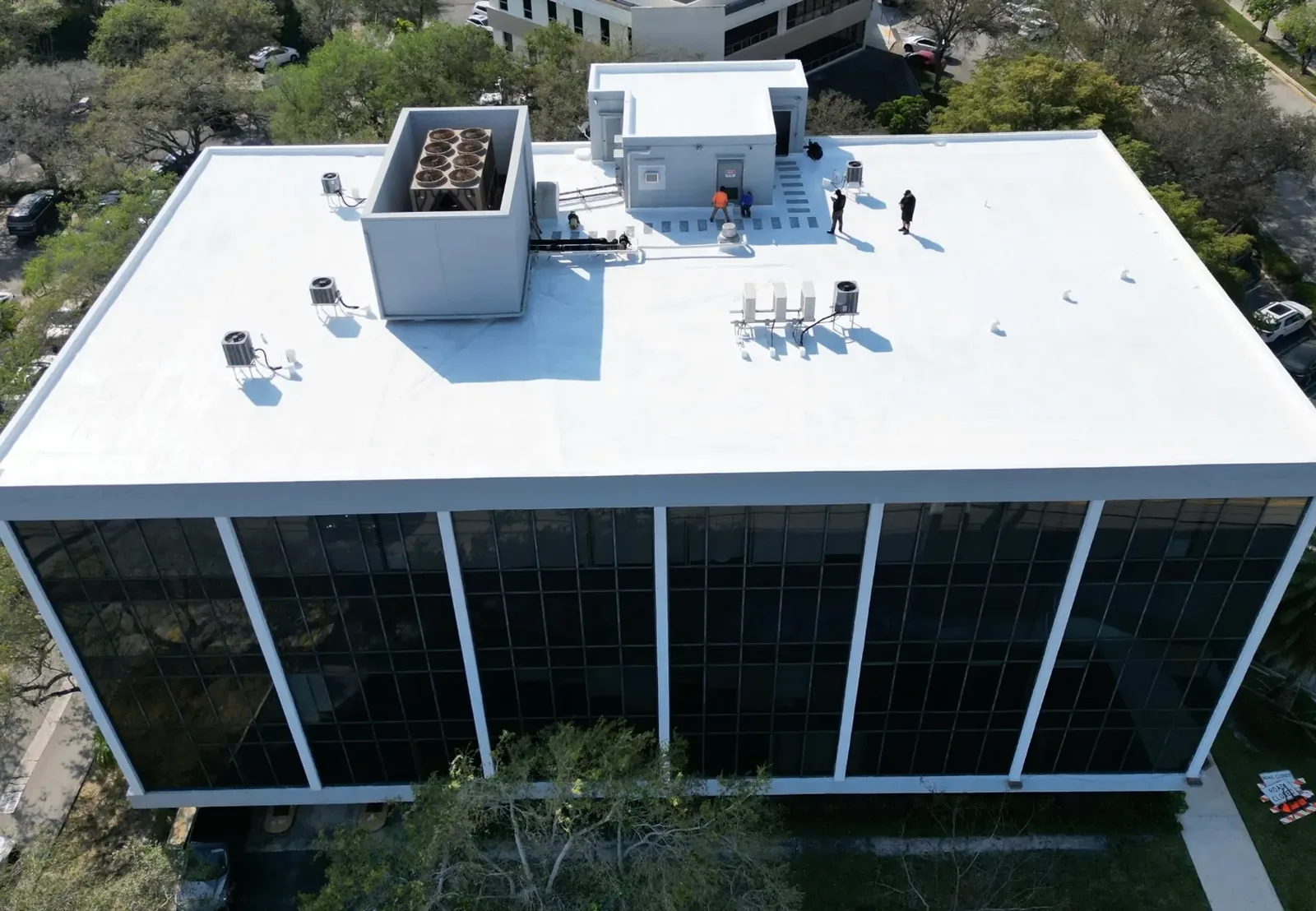
Working over the warehouse floor
Most distribution centers keep running while we work. For reroofing over an occupied building, we show the facility manager where we'll cut, how material comes off the roof and where the lift or crane sits. The operations team tells us what's below: racked inventory, conveyors, dock doors, forklift traffic, office space. They decide what gets moved, tarped or roped off, and we build that into the schedule and the price. An inspection visit doesn't clear a route through the truck yard or mean the floor below is empty. We plan around this building's actual operations, not a general idea of how distribution centers run.
Sometimes opening the roof shows more wet insulation or deck rust than expected. When that happens, we photograph it, explain why the repair area needs to grow, and get approval before going further. The floor under the larger area gets checked and protected first. If the permanent repair has to wait on a plumber to replace a drain body or a mason to fix a wall, we install a temporary watertight seal and list what's left for the permanent job. The change order shows the extra roofing and the extra floor protection together, so the manager can see what it will actually take.
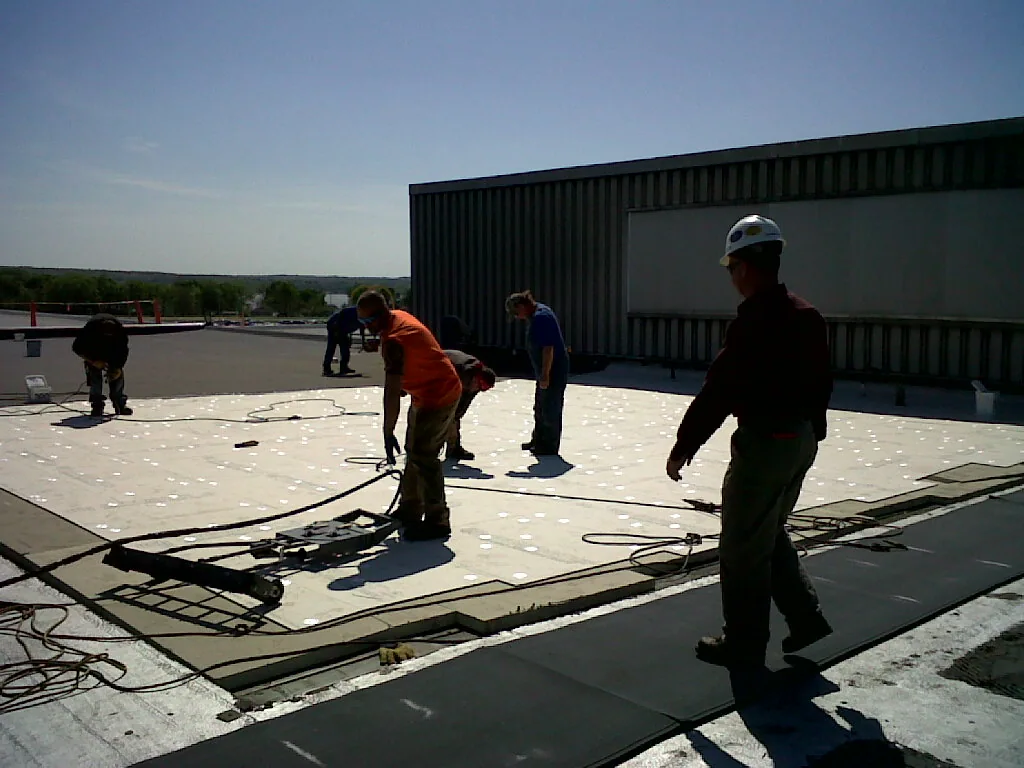
Closeout records
The closeout report shows what we did at the drain: membrane removed, drain prep completed, new membrane clamped in, plus core cuts sealed and photos of what we found while the roof was open. Plumbing, mechanical or wall items still waiting on another contractor are listed separately. A new drain tie-in doesn't fix a cracked pipe below the deck, and one repaired drain doesn't mean every leak in the building is solved. If another spot needs a look, the report says where.
We inspect distribution roofs throughout the Great Southwest Industrial District. We also handle warehouse roofing and cold storage roofing, and each building gets its own inspection and plan. The drain report stays in the building file so the asset manager can compare options and the next crew on that roof knows what was done.
Common Questions
Did the 2020 Arlington tornado damage our distribution center roof?
Possibly, if the building was near its path. Wind damage often shows up as loose edge metal, lifted membrane or torn flashing. We inspect the roof and review any repair records to see what condition it's actually in.
What should come with a membrane price at a roof drain?
The drain prep: checking or replacing the clamping ring, strainer and bowl as needed before new membrane is clamped in. If the drain body or the pipe below needs work, that's priced as plumbing. The estimate should show both so nothing falls through the gap.
How do you plan access and protection at a working distribution center?
We set it up with the facility manager and the operations team. We show where we'll cut and how material moves, and they tell us about racking, docks and traffic below. We don't assume a route or an empty floor.
What changes if the repair area gets bigger?
We document the extra damage and explain why it has to come out. The floor under the larger area gets checked and protected, and the change order includes the added roofing, any temporary seal and the floor protection together.
Get the drain area inspected
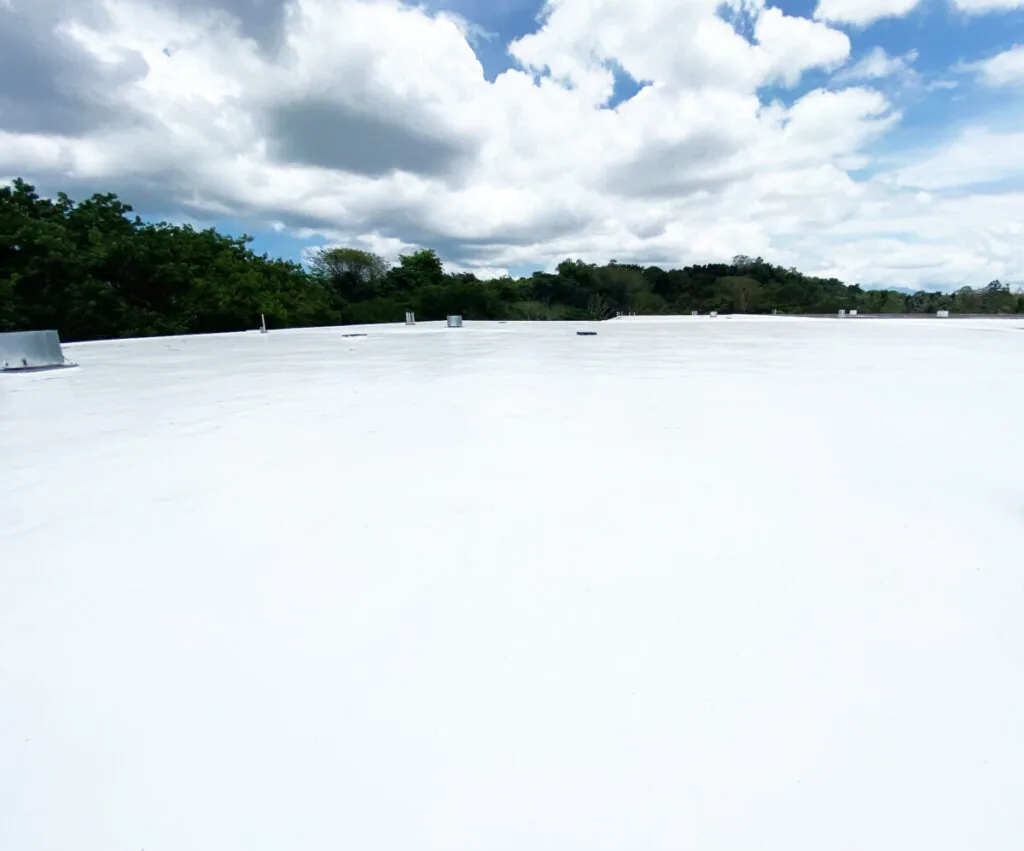
Ask the building's facility manager to set up a visit. We'll check the drain, the membrane around it, and what it takes to protect the floor below during the repair.
- distribution roof fitting and membrane connection review
- distribution membrane preparation and removal quantities
- distribution roof component and flashing preparations
- distribution building wall backing and flashing review
- distribution roof removal and affected-space review
- Great Southwest-area distribution roof examination
- warehouse roofing with inspected seam preparation
- cold storage roofing and affected-space protection review