
Commercial Roof Inspection in Arlington, TX

Commercial Roof Inspection
Commercial roof inspection in Arlington, TX: we check the membrane, seams, flashing and drains, test for wet insulation where needed and give you a clear report with photos and next steps.
A commercial roof inspection in Arlington, TX should leave you knowing exactly what was checked, what is wrong and where, and what still needs a closer look. North Texas roofs deal with hail, high winds, long stretches of summer heat and the occasional hard freeze, like the winter storm that hit North and Central Texas from February 14 through 17, 2021. Events like that are good reasons to have a roof looked at. The condition of your roof, though, comes from inspecting your roof.
We start by asking for your roof records and any problems tenants or staff have reported. Then we walk the roof, identify the system and compare what you have told us with what we see. The report ties every photo to a spot on the roof and explains the next step in plain terms you can use to get a repair priced.
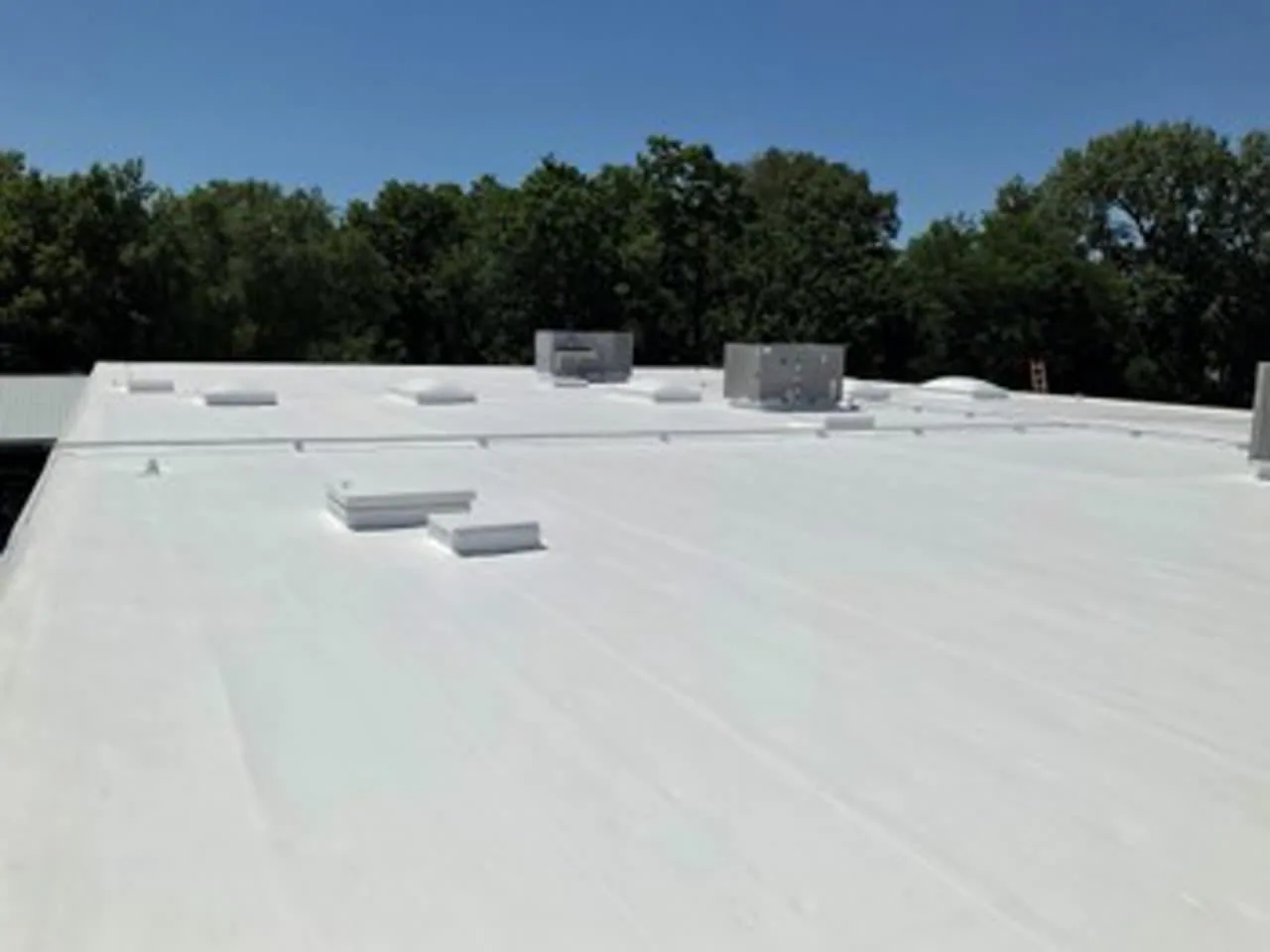
Before we go up
Before the visit, we ask for drawings, past repair invoices, warranty paperwork and any product information you have. Those help us tell the original roof apart from later patches or additions. Leak reports from inside matter too: where the stain is, when it showed up and whether it happens every rain or only in heavy storms. That gives us a place to start, though a stain inside does not always sit right under the hole.
If the main question is an active leak, a leak investigation may be the better first step. A general inspection covers more ground: the agreed roof areas, their condition and anything we could not get to. We settle the scope ahead of time, whether that is the whole roof or one section, and the report lists any area we could not inspect.
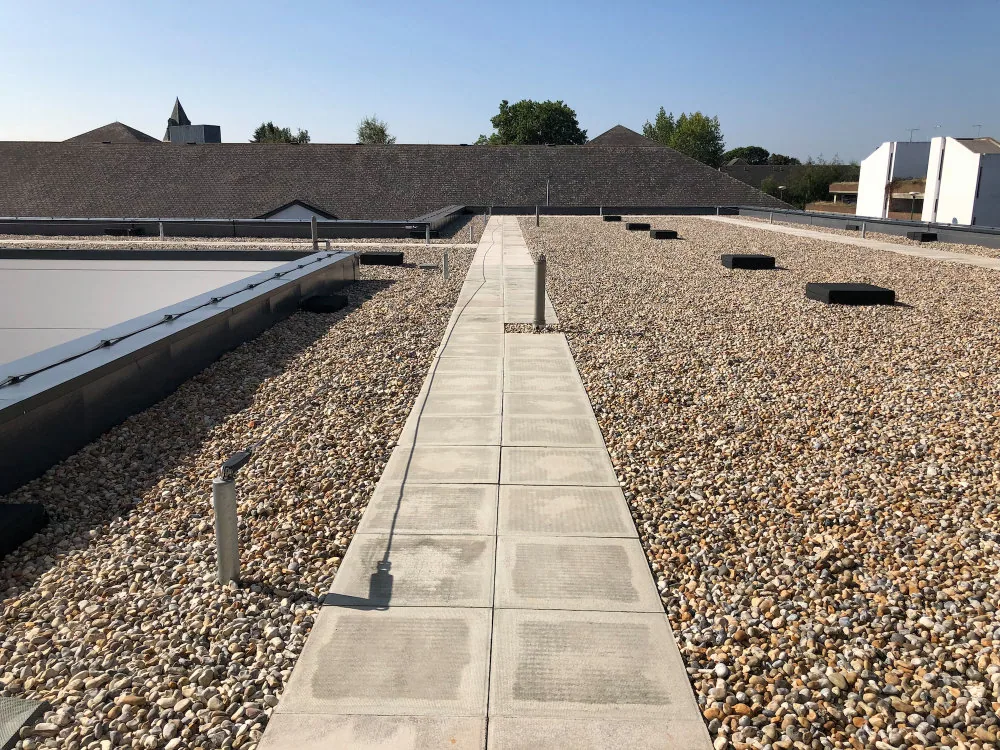
On the roof
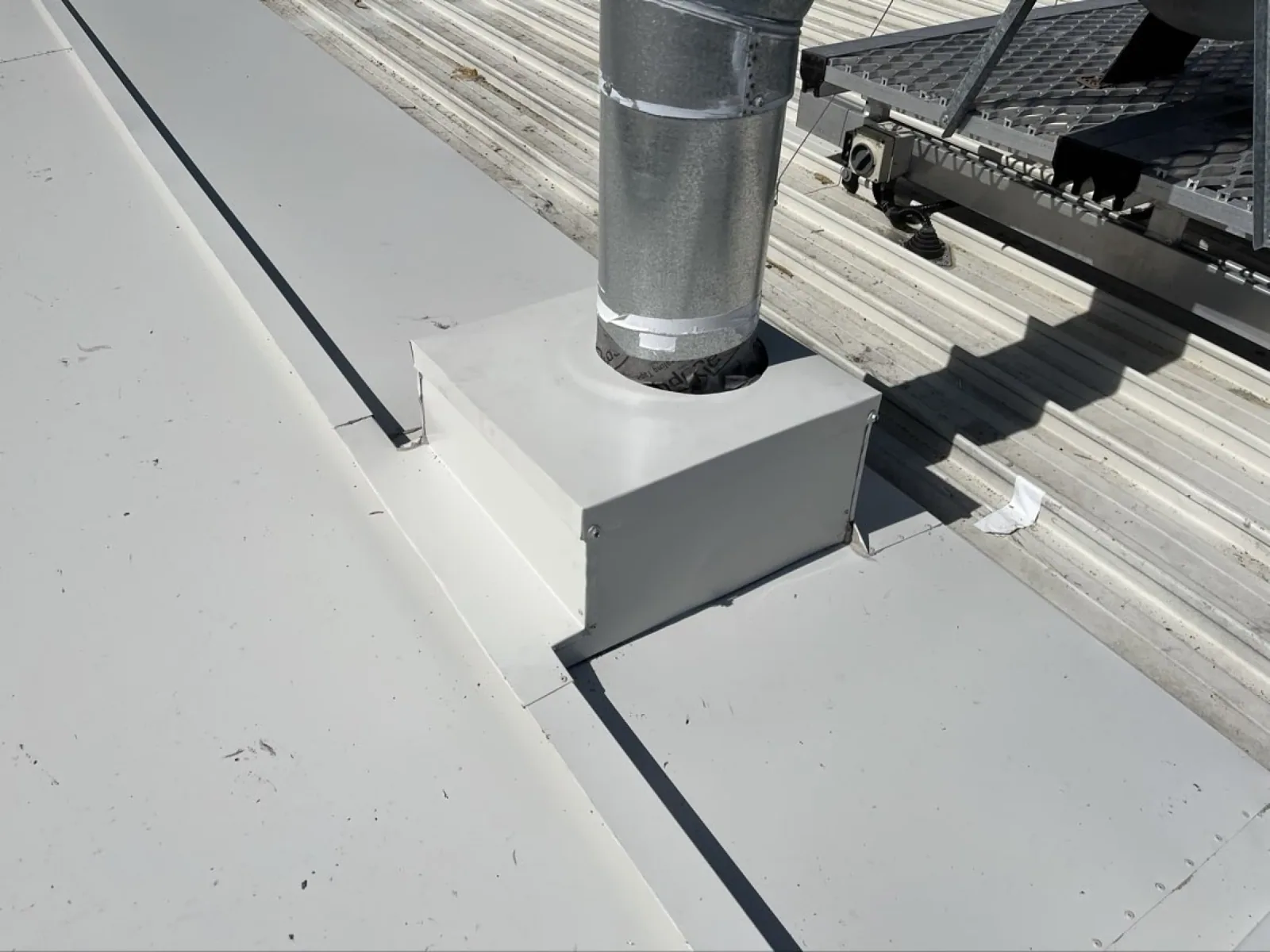
We identify the roof system and check the field membrane, the seams and the places where the roof meets something else. At walls and curbs, we look at how the flashing attaches and whether the wall or curb behind it is sound. At the edges, we check the metal, the fasteners and the membrane behind them. Each photo shows the close-up detail and enough of the surrounding roof to find it again. A tight shot of a crack does not help much if nobody can locate it later.
We describe splits, open seams, loose flashing, worn patches, punctures and other defects without lumping them all together. The report separates confirmed problems from questions that need more testing. If a seam needs a probe test or a core cut to confirm, we say so. A membrane that looks fine on top does not prove the insulation under it is dry, and we do not pretend it does.
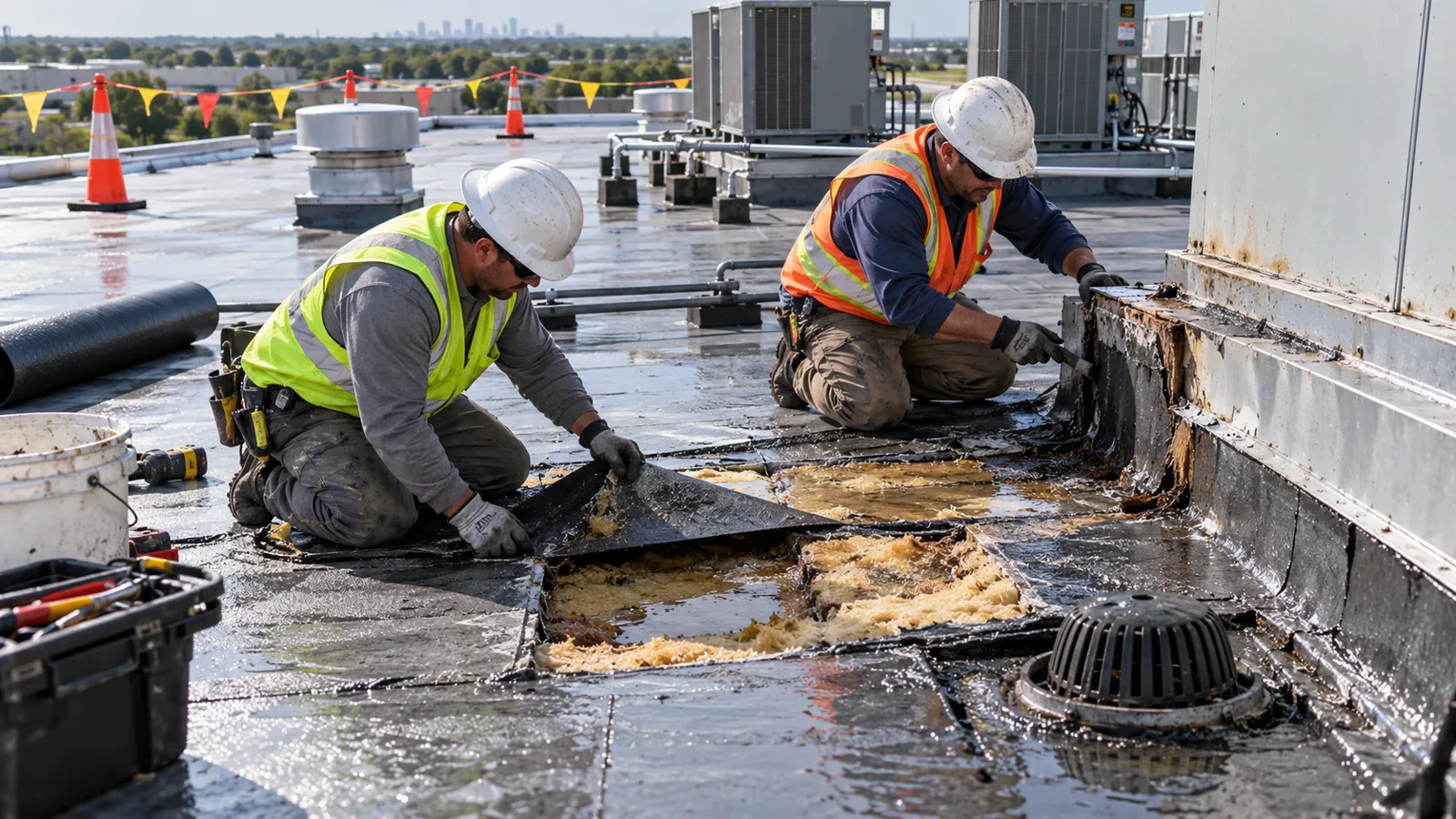
Drains and ponding
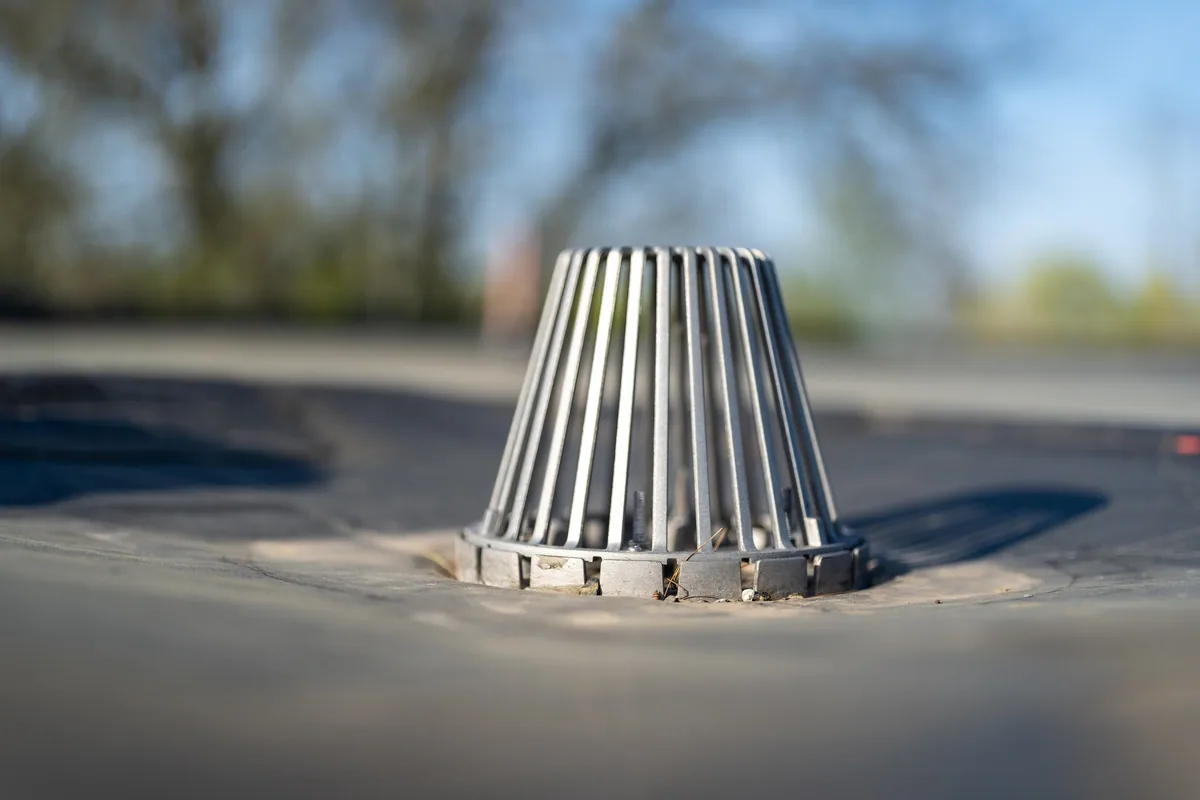
Drainage gets its own attention. We check the drains, scuppers and gutters, note debris and look at the flashing around each outlet. Photos of each drain show where it is and how the membrane meets it. If you have seen water standing on the roof after rain, tell us where and how long it stays. A dry-day inspection cannot show everything about how the roof drains in a storm, so your observations help.
Findings here can lead to a drain and scupper repair. The next step might be clearing a clogged drain, fixing torn membrane at the drain bowl, or having a plumber look at a cracked drain body or leaking leader. Those are different jobs, and the report lists them separately. Clearing debris is not the same as fixing a low spot in the roof, and a drain that looks clear on top has not necessarily been tested all the way down.
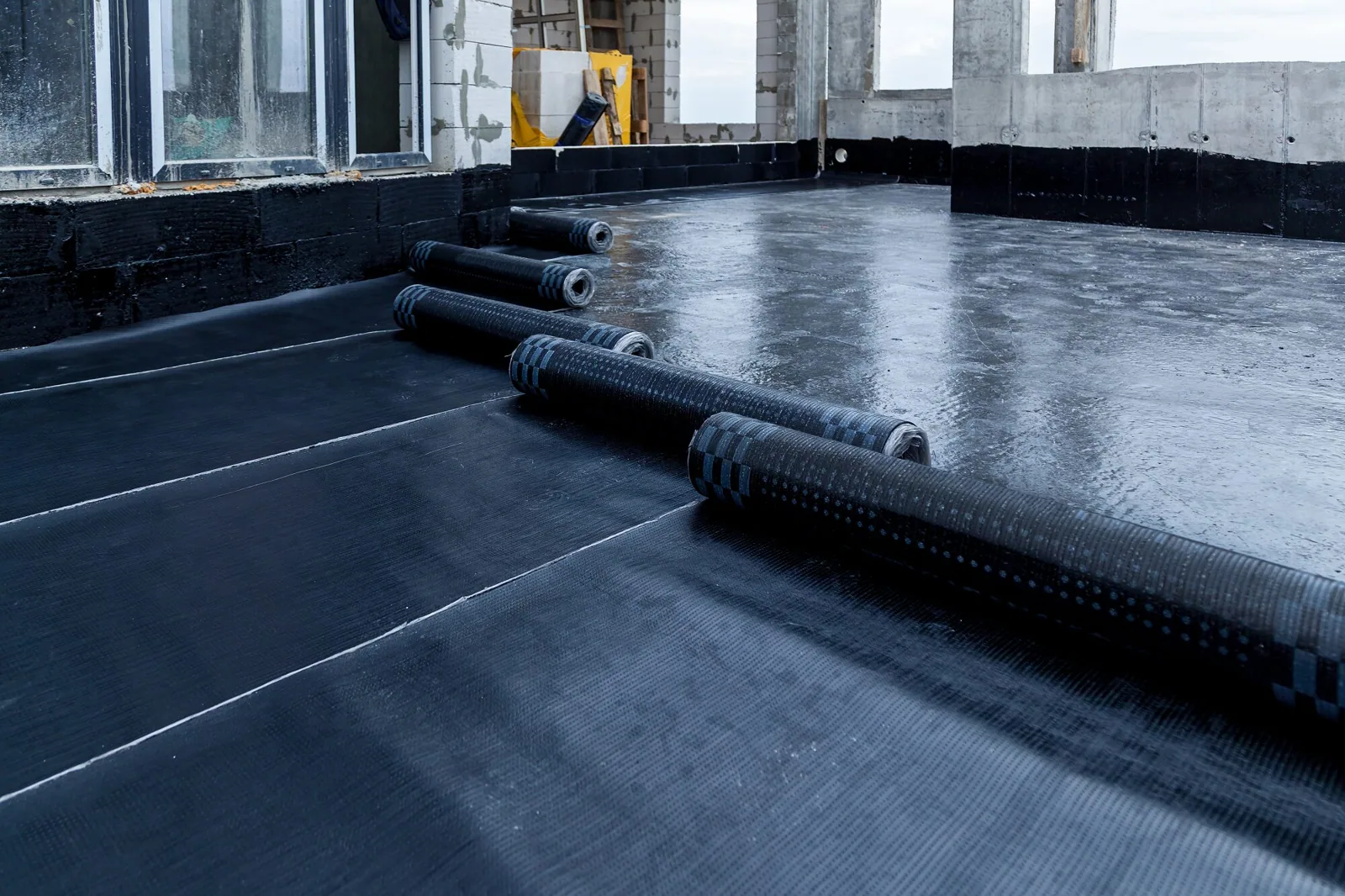
When a closer look is needed
Sometimes a visual inspection leaves a question about wet insulation or hidden damage. When that happens, we explain the question first, then recommend the right test. An infrared moisture survey can show likely wet areas under the right conditions, usually on a clear evening after a sunny day. It points to suspect areas, and core cuts confirm them. A warm spot on a thermal image is not a proven leak until a core shows wet insulation.
Different roof systems call for different checks. On TPO roofing, we note the product and where old patches start and stop, because that affects how a repair will be welded. On built-up roofing, we look at the gravel surface, the plies we can see and the flashing details. If we need to cut into the roof to check, we agree on the location, the reason and how it will be patched before we cut. The report then says what that opening showed. One core tells you about that spot, not the whole roof.
A good report also lists what we could not check. It names the roof sections we walked, the areas we could not reach and why. Each finding gets a photo with a nearby landmark, and a note saying whether it is a surface repair, a drainage issue or a question about what is underneath. That keeps the next estimator from treating a stain, a loose fastener or a single moisture reading as the whole story. If we recommend opening the roof, the report says what we are trying to find out, who needs to approve it and how the opening will be closed. That way, when you get bids, every contractor is pricing the same findings.
What the report gives you
The report combines a roof plan, photos and a plain description of each finding. We sort them into three groups: problems that need repair, items to keep an eye on, and questions that need more testing. Each repair item says what part of the roof is involved and what has to happen first, such as replacing wet insulation or fixing a curb. You can hand that to a contractor and get a real price, instead of trying to turn a vague condition rating into a repair plan.
A roof condition report explains what each recommendation is based on. If it includes a forecast of future work, it says what that forecast assumes, because no visual inspection can tell you the exact year a roof will fail. Questions about lease responsibilities, insurance coverage and manufacturer warranties need their own review. Our photos and notes support those conversations by showing exactly what we saw.
Making the next visit easier
For any building we inspect, we ask the property manager or building engineer to tell us which roof areas to cover, share the records they have and explain any site rules for access. We inspect what we can reach and report it. We do not guess at the roof type or condition based on the kind of building or its address. Those come from the roof itself.
An inspection of a downtown Arlington building, or anywhere else in the city, should help the next crew find each finding quickly. Marked locations, dated photos and a clear note of what was and was not inspected make that possible. We also list open questions and what it would take to answer them. That gives you a record you can use to schedule the next repair, with confirmed problems kept apart from the ones that still need checking before a permanent fix is priced.
Common Questions
How will the next contractor find what you found?
Every finding is marked on a roof plan with a photo that shows the detail and a nearby landmark. The report also lists which areas were inspected and which were not.
What should an inspection say about the layers under the membrane?
It should say what was confirmed and what was not. A sound-looking surface does not prove the insulation is dry, so the report lists any areas that need a core cut or moisture survey to confirm.
When is a moisture survey worth adding?
When the visual inspection raises a real question about wet insulation, such as soft spots or blisters. An infrared survey can map suspect areas, and core cuts confirm what it shows.
Is a condition rating enough to get a repair priced?
No. A rating needs the findings behind it. Our report lists each defect, its location and what has to happen first, so a contractor can price the actual work.
Schedule a roof inspection in Arlington
Send us your roof records and any problems you've noticed. We'll inspect the roof, show you what we find and give you a clear report with the next steps.
- leak investigation guided by reported interior locations and exterior details
- drainage review focused on reported water retention and outlet construction
- thermal survey interpreted alongside roof construction and confirmation needs
- TPO examination with sheet identity and patch boundaries recorded
- built-up roof review documenting exposed layers and detail condition
- condition report connecting each conclusion with its examination limits
- Arlington downtown inspection record organized for later construction review