
Built-Up Roofing in Arlington, TX
Built-Up Roofing
Built-up roof repair in Arlington, TX: we check gravel surfacing, felt plies, drains and insulation, then give you a clear estimate for ply repair or replacement.
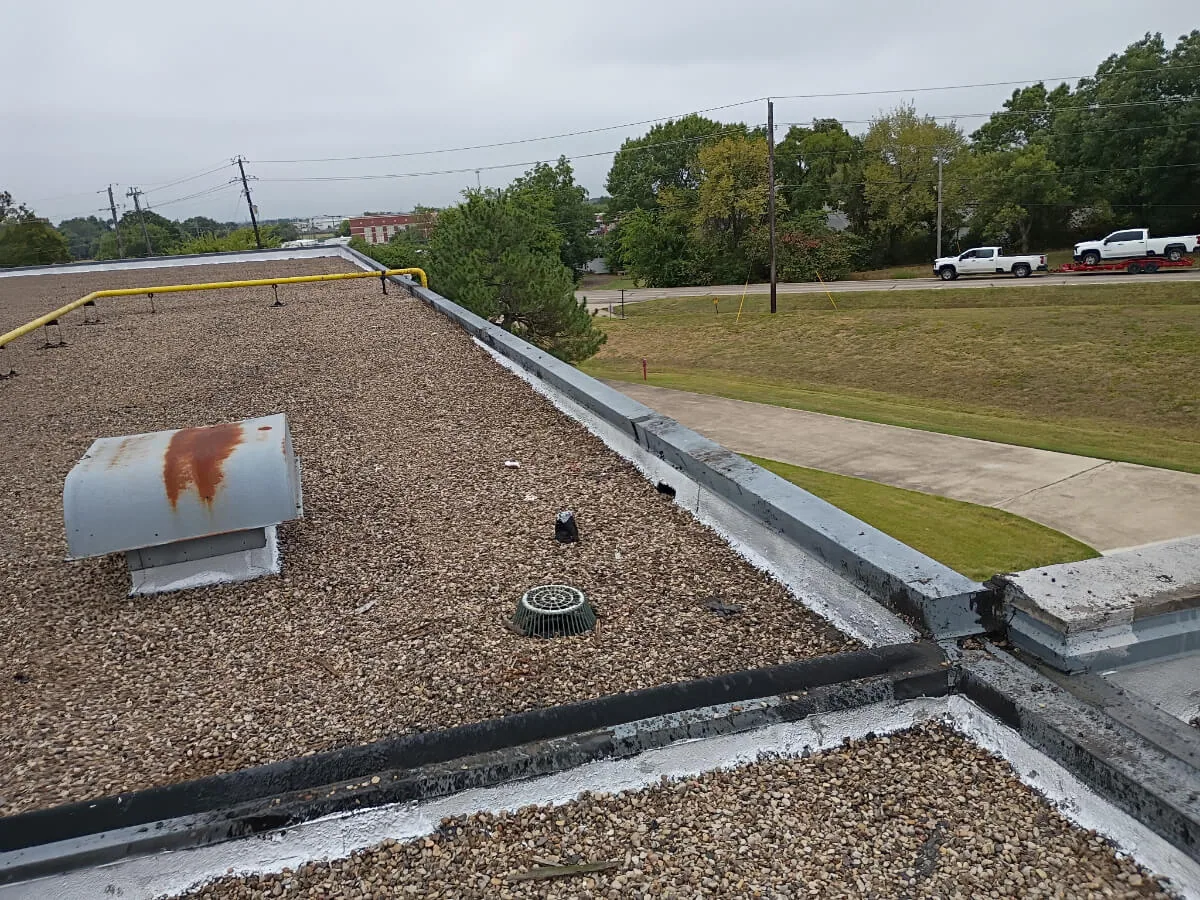
Built-up roofing is the old workhorse of flat commercial roofs: alternating layers of reinforcing felt and asphalt, finished with a cap sheet or a flood coat of gravel. It holds up well on Arlington, TX buildings when it's maintained, but it ages in ways you can't always see from the surface. Long North Texas summers are hard on the top layers, drying out the asphalt and loosening gravel. Before we price a repair, we need to know what's actually up there: how many plies, what surfacing, and which old patches are already in place.
If your buildings extend to Burleson or Coppell, each roof gets checked on its own. A gravel roof on one building tells us nothing about the next.
We start by walking the roof and looking at the surfacing, flashings, drains, curbs and any spots where water sits. You get a written estimate that says what's sound, what needs a closer look, and what the repair involves.
Getting past the gravel
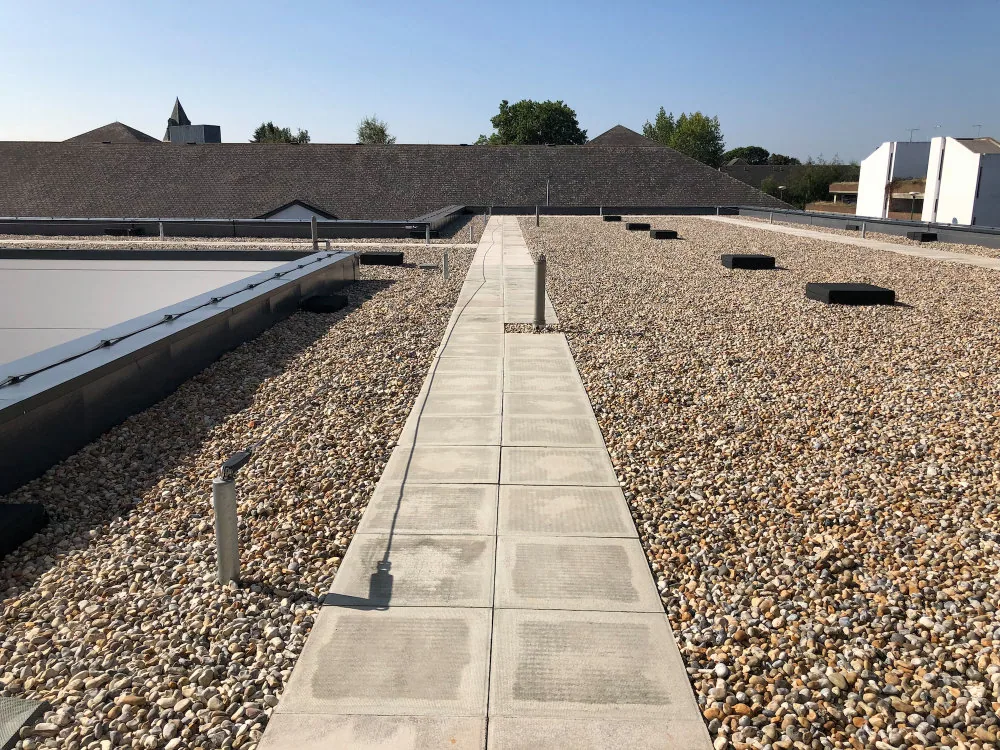
Gravel protects the asphalt from sun and foot traffic, but it also hides the plies underneath. A blister, split or dry spot can sit under the aggregate and never show up in a photo. So the first question on any built-up repair is what the surface is at that spot: loose gravel, a smooth cap sheet, or a coating someone rolled on years ago. Each one is prepared differently. On gravel, the crew scrapes the aggregate back to bare felt around the repair and puts surfacing back down when the work is done.
Our built-up roof inspection notes where we could actually see the plies and where the gravel stayed in place, so you know which findings are confirmed and which are still a judgment call. If a roof has three different surfaces across its sections, each repair is priced for the surface it sits on rather than copied from the easiest one.
What a patch should actually fix
There's a big difference between mopping hot asphalt over a crack and cutting out damaged plies and rebuilding them. The first is a stopgap. The second restores the roof at that spot. When we quote a built-up repair, we say which one it is, how big the area is and how many plies are being replaced. If we can't tell how deep the damage goes without a core cut, we say that too, and the core becomes part of the plan instead of a surprise later.
Where the roof was built with Johns Manville built-up products, we look for felts and asphalt that work with what's already there. That lets you compare a cheap surface treatment against a real ply repair and see why the prices are different. If the crew opens the roof and finds wet insulation or damage past the agreed area, they stop and call you before cutting any further.
Drains on built-up roofs
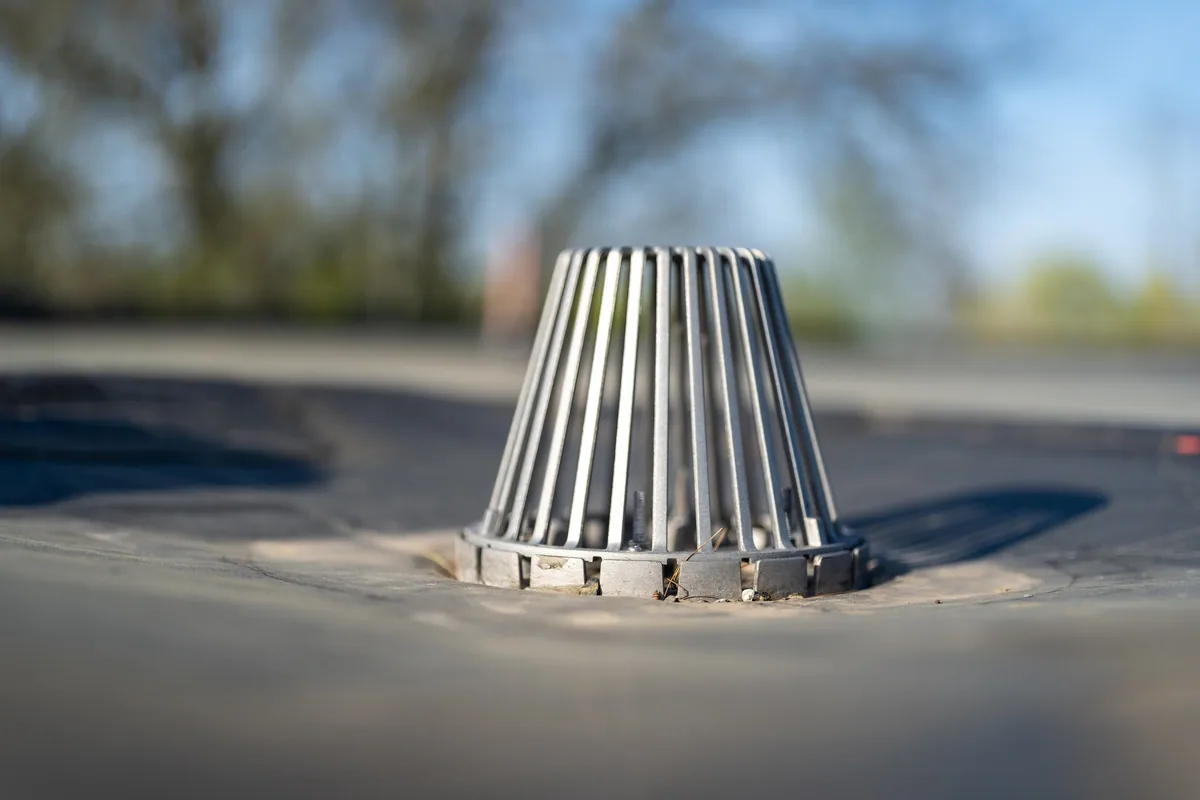
Drains are where many built-up roofs leak first. Water collects there, the plies fold down into the drain bowl, and the clamping ring and metal flashing age differently than the rest of the roof. We check the drain body, the ring and bolts, the flashing and the plies around it, and we note any mastic or patches that have piled up over the years. If the drain is cracked or the pipe below is leaking, that's plumbing work, and it needs to happen before we rebuild the plies around it.
A drain and scupper repair estimate should spell out both parts: what the plumber fixes and what the roofer rebuilds afterward. We mark each drain on a roof plan with one wide photo and one close-up, so anyone sent up later can walk straight to it.
Testing what's under the plies
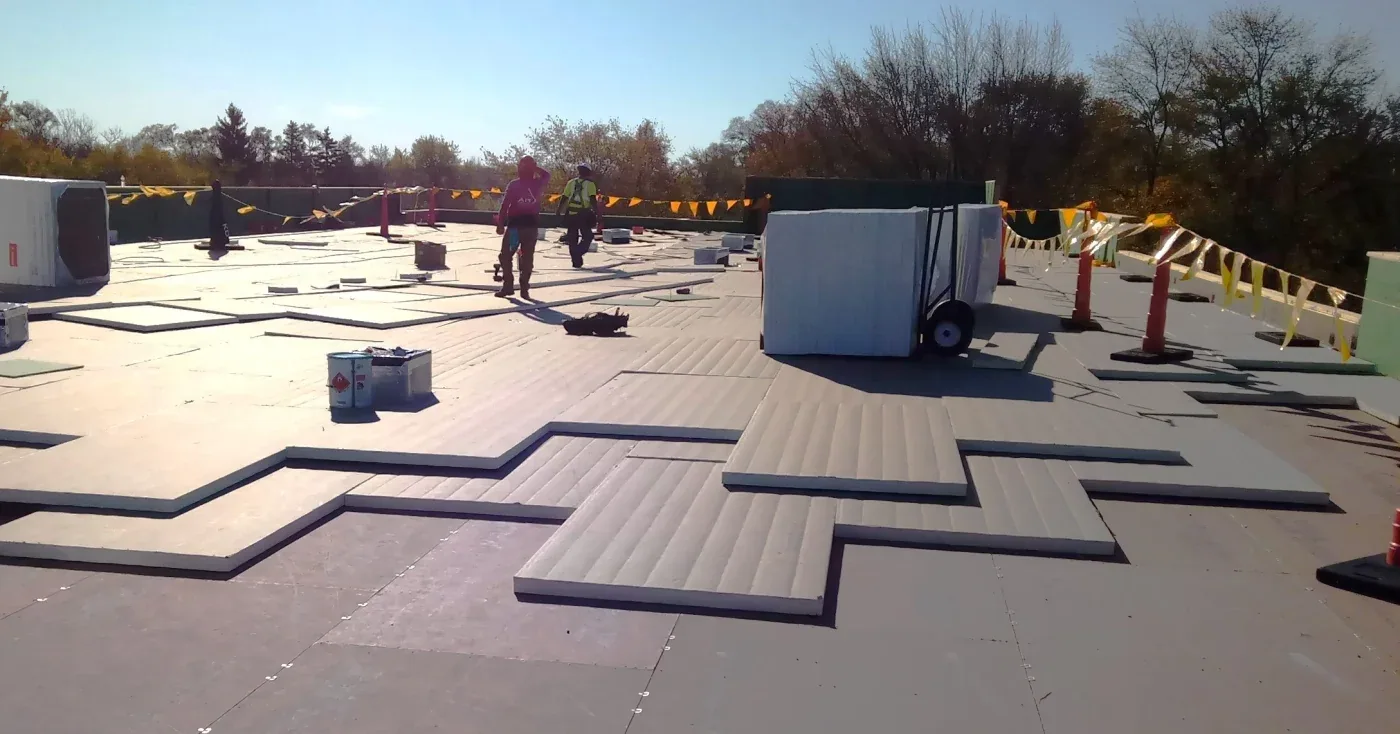
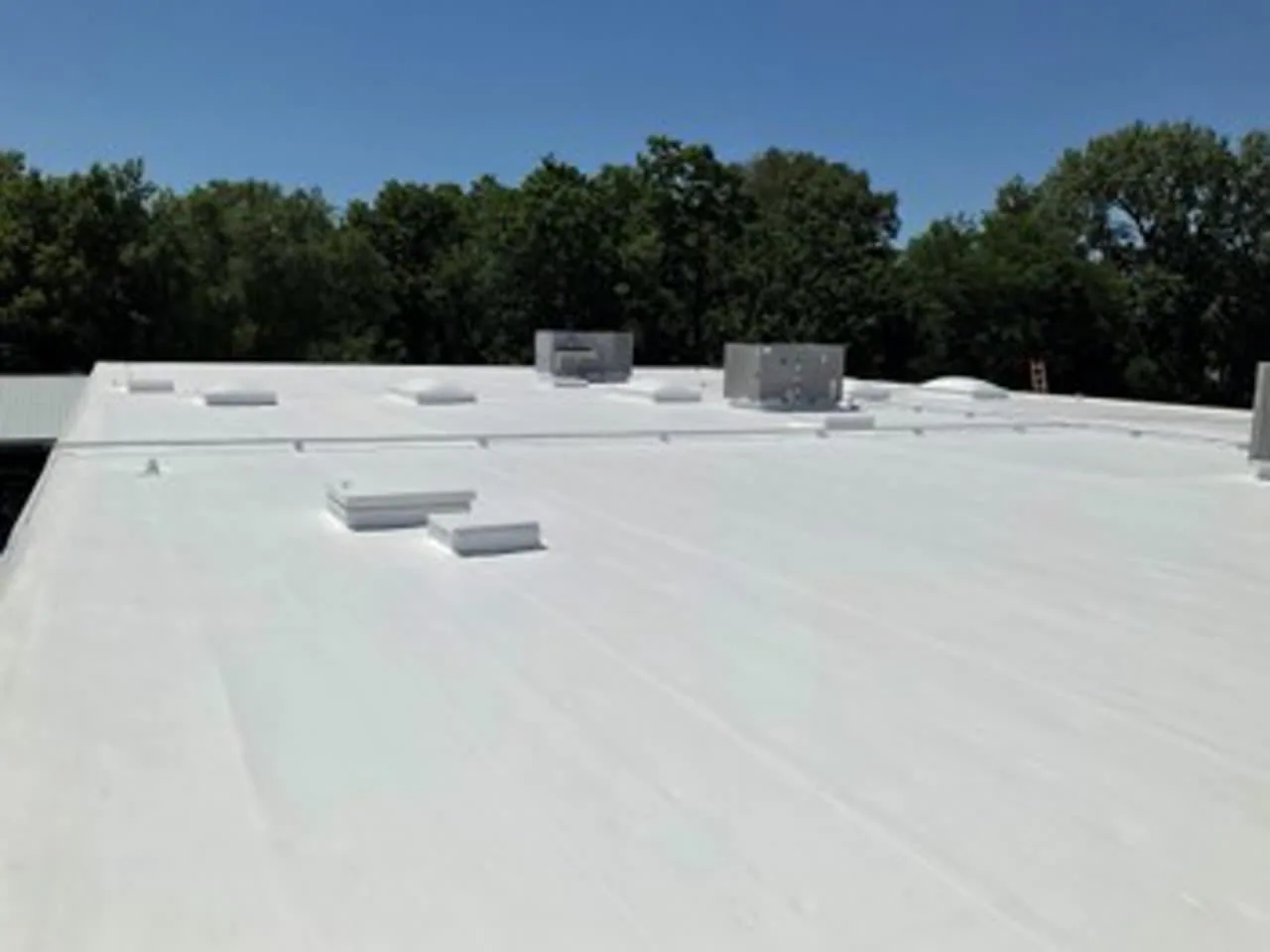
Many built-up roofs in Arlington sit over insulation that has been there for decades. Whether you can patch, recover or need a tear-off depends on whether that insulation is dry. Before recommending a recover, we take core cuts at chosen spots and check the plies, the insulation and the deck surface. Each core has a reason: near a drain that ponds, above a stained ceiling, in an area that feels soft underfoot. Each one is patched the same day.
A core tells you about the spot it came from, not the whole roof. If a large section was never tested, the estimate says so instead of assuming it's fine. When the cores turn up wet insulation, we show you where it is, roughly how much area it covers, and whether it moves the recommendation from repair to partial replacement.
Comparing other roof systems
If the roof is past repair, you'll probably see a few options: another built-up roof, modified bitumen, or a single-ply membrane like PVC. Each one treats the existing roof differently. Some can go over a sound built-up roof once the gravel is removed; others need a full tear-off to the deck. The bids should say what stays, what comes off, and how edges, curbs and drains get flashed, so you're comparing complete jobs and not just product names.
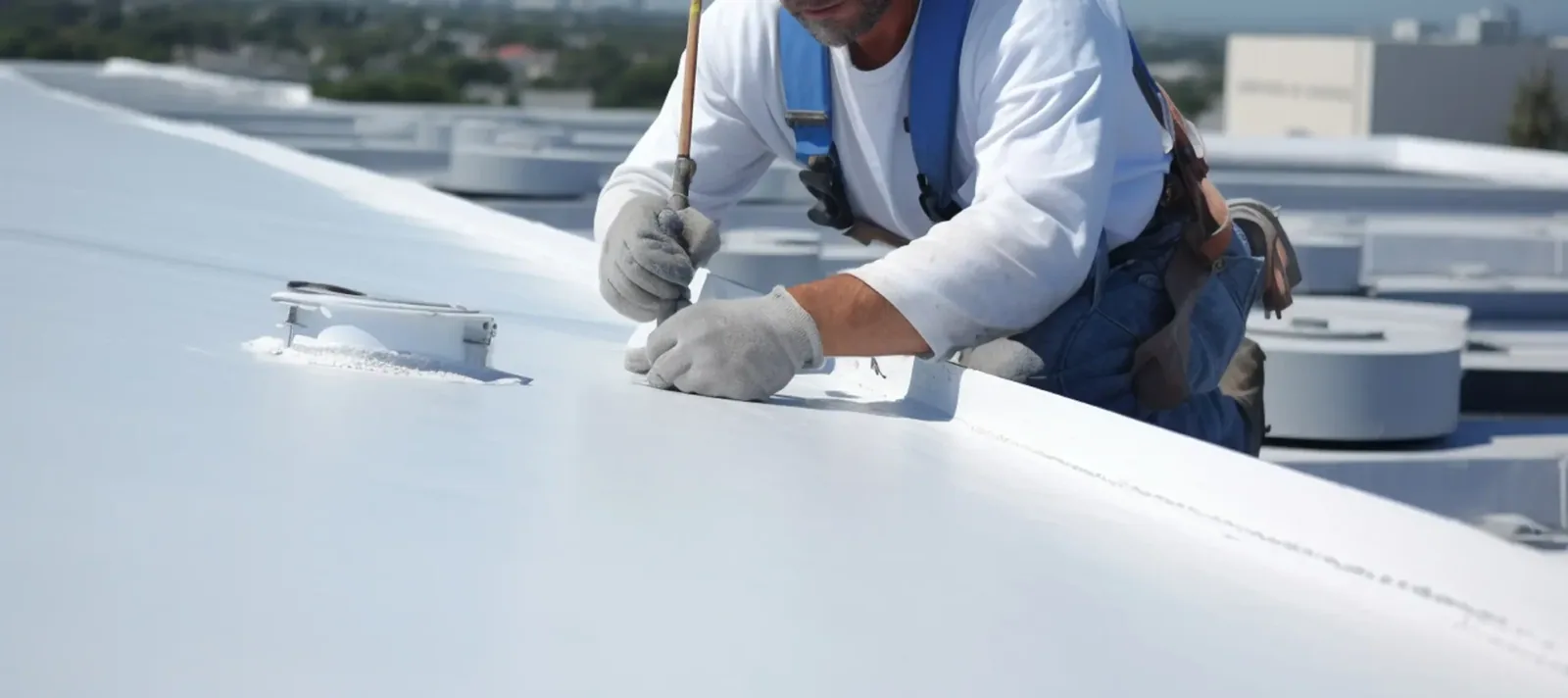
Modified bitumen roofing is the closest relative, using factory-made asphalt sheets instead of plies built up on site. A PVC roof is a different animal, with heat-welded seams and its own rules about what it can be installed over. We tie each option to what we found on your roof, not to a generic spec sheet.
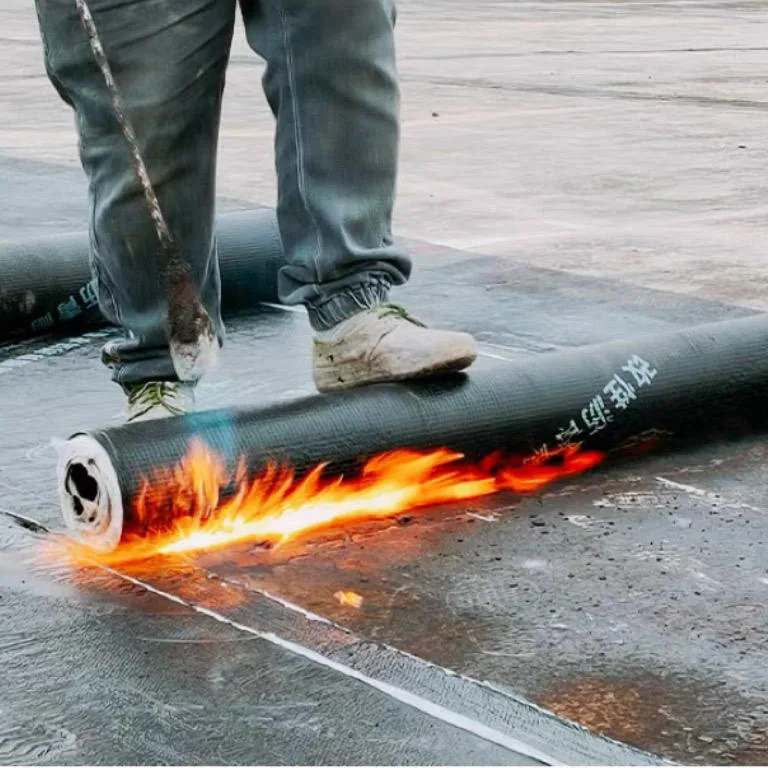
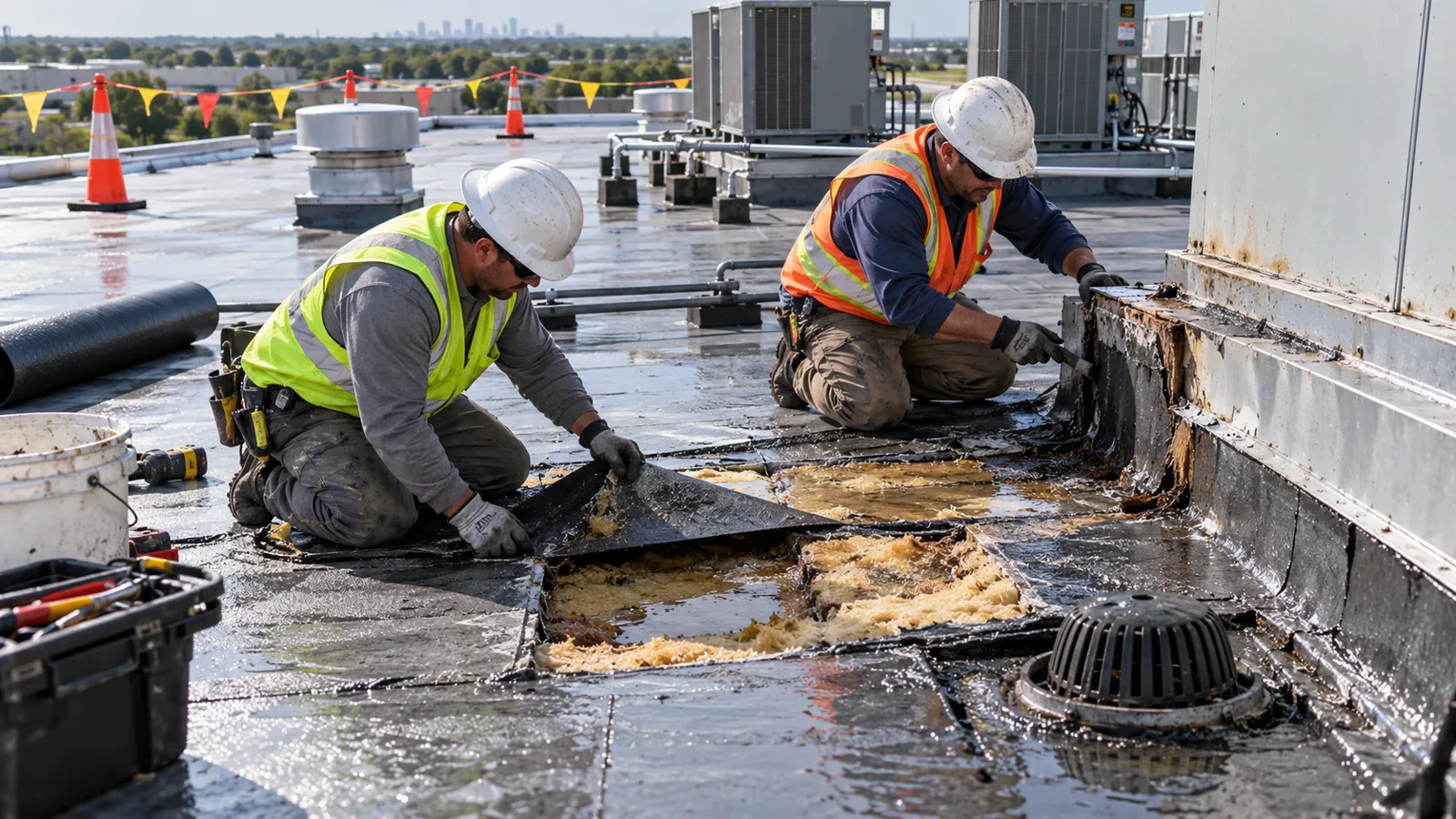
For a repair on an existing built-up roof, the work usually goes like this. The crew clears surfacing only as far as needed to see the plies, then works out whether the problem is in the gravel, a single ply, a flashing or the insulation underneath. At a drain or curb, new plies run up into the detail instead of stopping short where it's easier. The estimate lists how many plies are replaced and over what area, how the asphalt goes down, and how the surface is restored. Hot-asphalt work brings kettles and open flame onto the roof, so a fire watch and coordination with building staff are part of the plan whenever that method is used. When the job is done, you get photos and notes showing exactly which areas were rebuilt, which makes the next repair faster and cheaper to scope.
Records you can use next time
Before work starts, we compare what we found on the roof with any drawings, warranty papers or product records you have, so the repair fits the roof that's really there.
For built-up roofs in downtown Arlington, the closeout package shows each repair on a roof plan with photos and the materials used. Anything we couldn't finish or still have questions about, such as an untested section or a drain waiting on a plumber, is listed separately. That way the next contractor, or your own maintenance staff, can find the spot and pick up where we left off.
Common Questions
What's under the gravel on a built-up roof?
Layers of felt and asphalt, and below those, insulation and the deck. Gravel hides cracks and blisters, so we clear it back at each repair area to see the plies. If the condition still isn't clear, a core cut answers it.
Who fixes a leaking drain on a built-up roof, the plumber or the roofer?
Often both. The plumber handles a cracked drain body or leaking pipe, and the roofer rebuilds the plies and flashing around the drain afterward. A good estimate lists both so nothing falls between the trades.
What should I agree to before you cut into the roof?
Where each core cut will go, why it's being taken and how it will be patched. After testing, we report what each core showed and which areas were not tested.
How do I compare a built-up bid with a modified bitumen or PVC bid?
Look at what each bid keeps and what it tears off, how drains, curbs and edges are flashed, and what prep the existing roof needs. If a bid leaves wet insulation as an open question, ask how finding it would change the price.
Get your built-up roof checked
Send us your Arlington roof locations and any drawings or past repair records. We'll inspect the surfacing, plies and flashings and give you a plain estimate of what needs repair.
- built-up roof inspection locating surfacing changes and accessible detail findings
- Johns Manville asphaltic product review connecting material identification with preparation
- drain and scupper assessment identifying asphaltic flashing and adjoining correction
- modified bitumen comparison defining its sheet preparation and asphaltic detail work
- PVC option establishing its receiving surface and permanent flashing requirements
- downtown Arlington built-up roofing with examined layers and delivered detail work located