KEE Roofing in Arlington, TX
KEE Roofing
KEE roofing in Arlington, TX: we confirm the KEE membrane and old repairs, run trial welds, fix curbs and blocking first, and keep a clear record of every repaired detail.
Hail was reported in parts of Arlington on May 27, 2024. A storm report is background; a roofing decision still needs the actual membrane and repair area inspected. KEE roofing in Arlington, TX starts with identifying the product, including whatever was used in older patches. FiberTite describes its membrane as KEE, short for ketone ethylene ester. That name has to be matched to the actual membrane and its detail instructions before anyone specifies work.
For portfolios with buildings in Fort Worth and Duncanville too, we confirm the system on each repair section.
We find the existing membrane, check for changes at old repairs and note any open material questions. The scope then explains the prep and any curb or wall repair needed for the new work, so you can schedule it knowing exactly what's on the roof.
Identifying the membrane at the repair
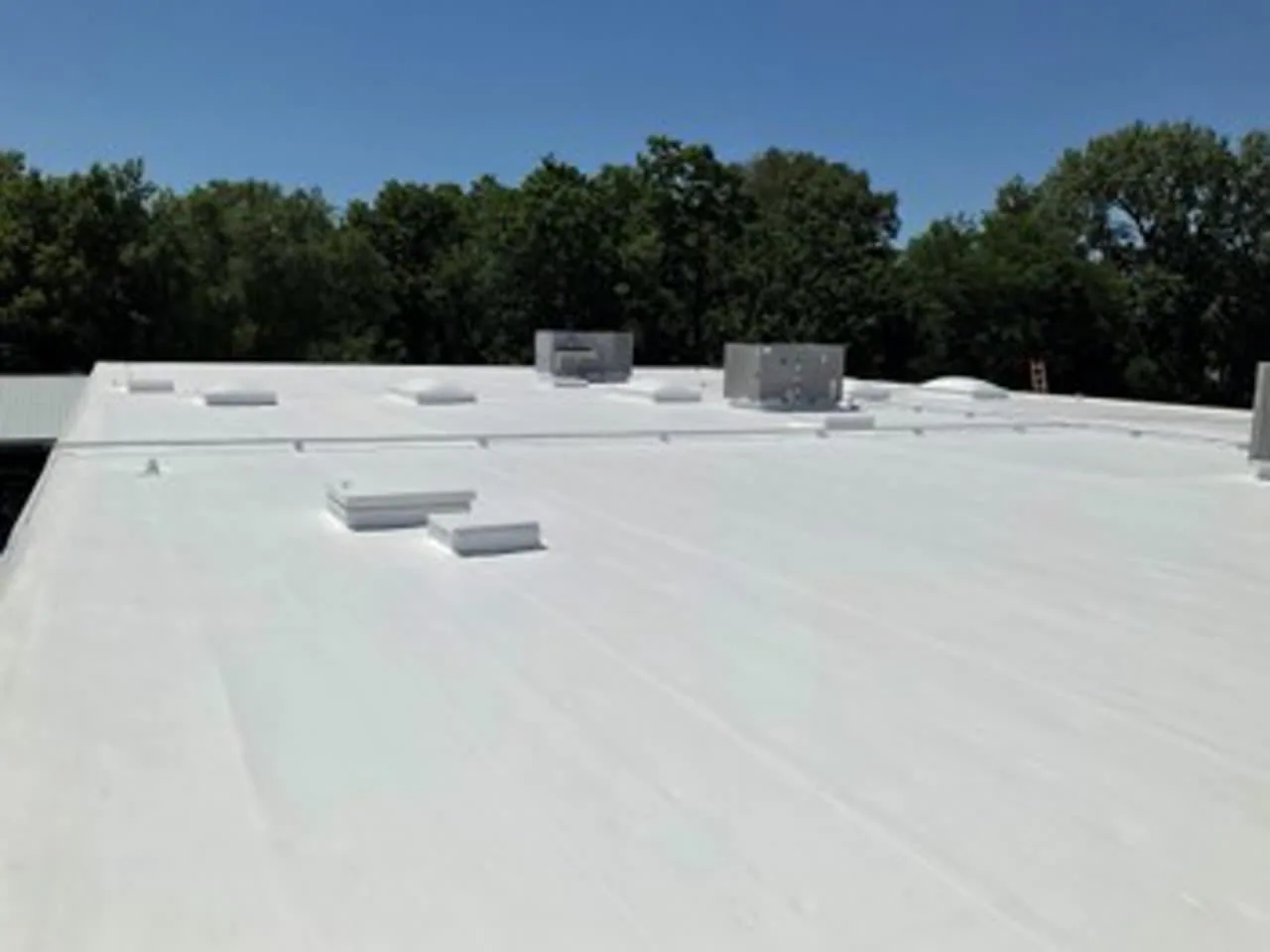
A product record helps, but it has to be matched to the area we're actually repairing. We look for markings on the membrane, earlier patches and changes in material. If the records don't settle what's there, the allowance says what we need to confirm before choosing the prep. The point is to describe the material where the crew will actually be welding.
A PVC roof has its own product requirements, and a TPO roof needs its own scope too. We don't borrow a repair method from another membrane just because the surfaces look alike. You get a product description that supports the chosen repair, and a clear note of where more identification is still needed.
Welder setup: test before the real seams
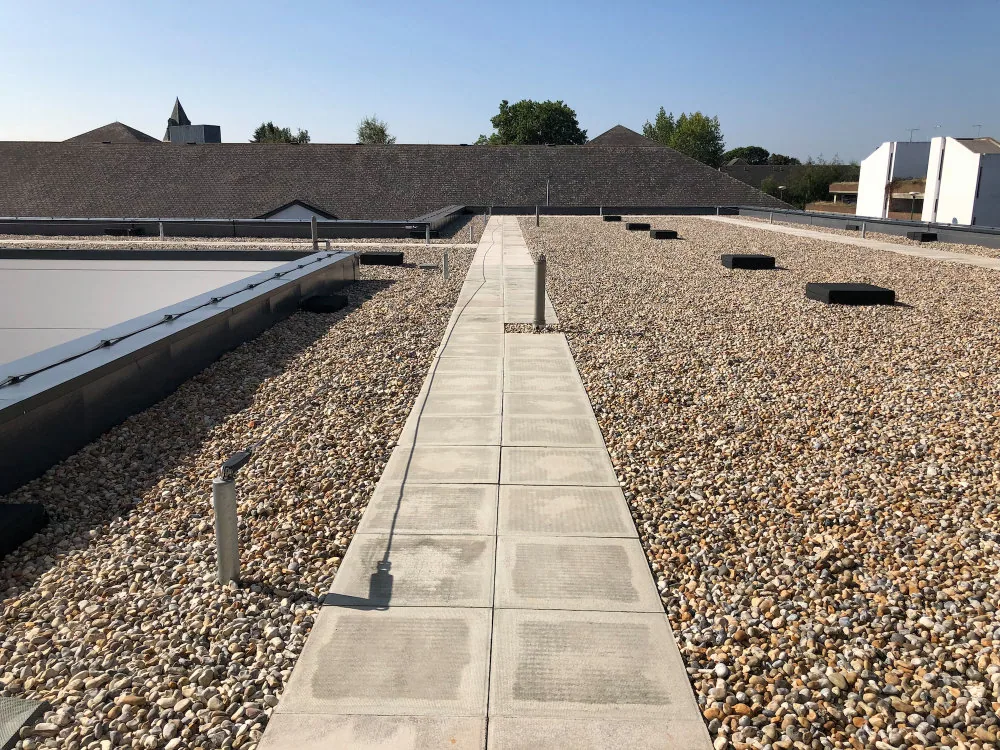
For FiberTite KEE welding, the installation guidance calls for trial welds to set alignment, heat and speed before field welding starts. Weather and air temperature affect those settings. The crew follows the instructions for the actual membrane instead of using a setting remembered from another roof. A useful allowance includes the setup and testing for each seam, not just the length of membrane being welded.
A commercial roof inspection identifies the existing membrane that's ready to weld and the areas that need more prep. Where an automatic welder can't reach a corner or curb, the plan covers how that seam gets finished by hand. We find those spots before work begins, so a switch from a long seam to a tight detail doesn't leave an unwelded gap.
Curbs, walls and edges: the work behind the membrane
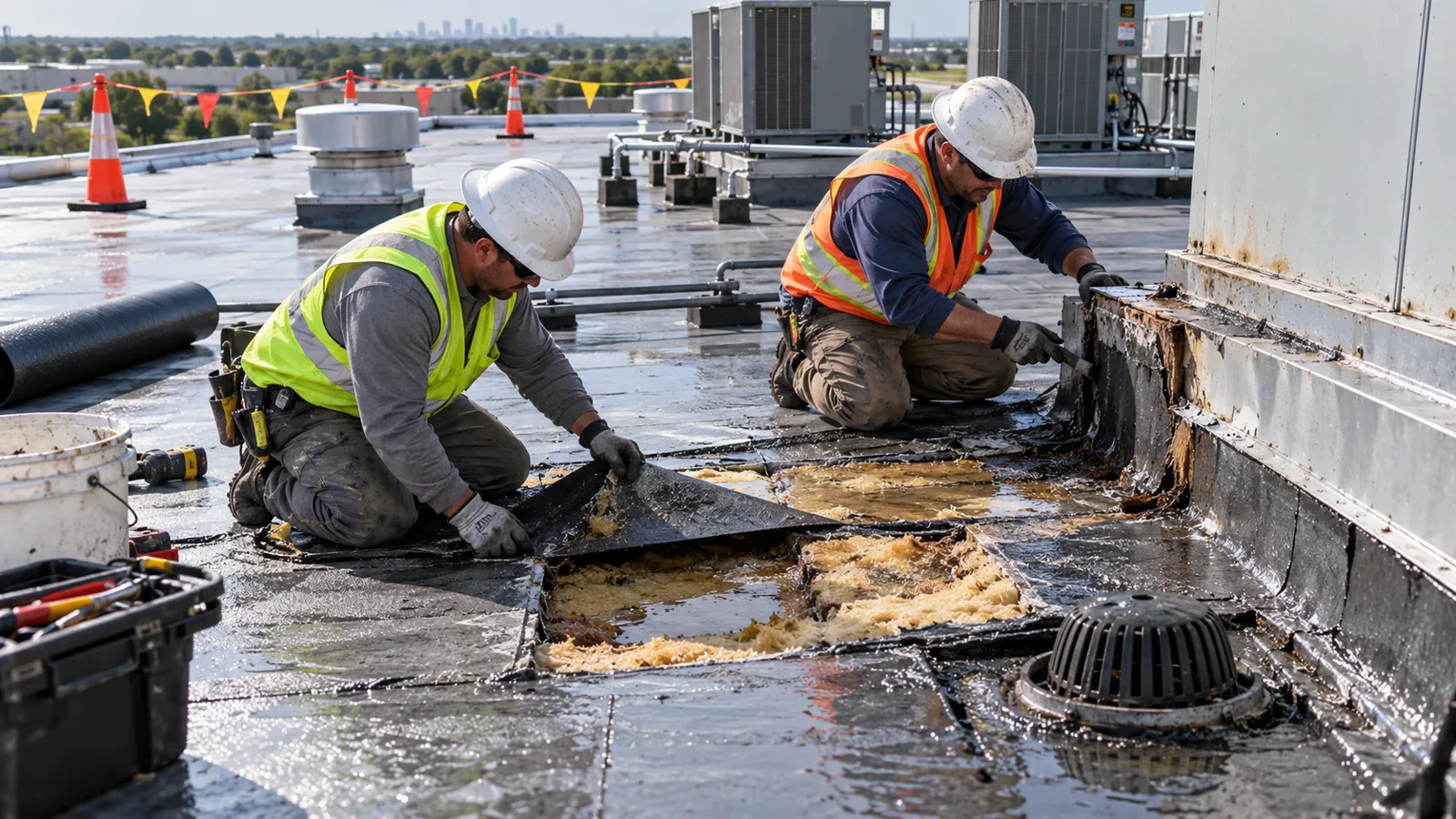
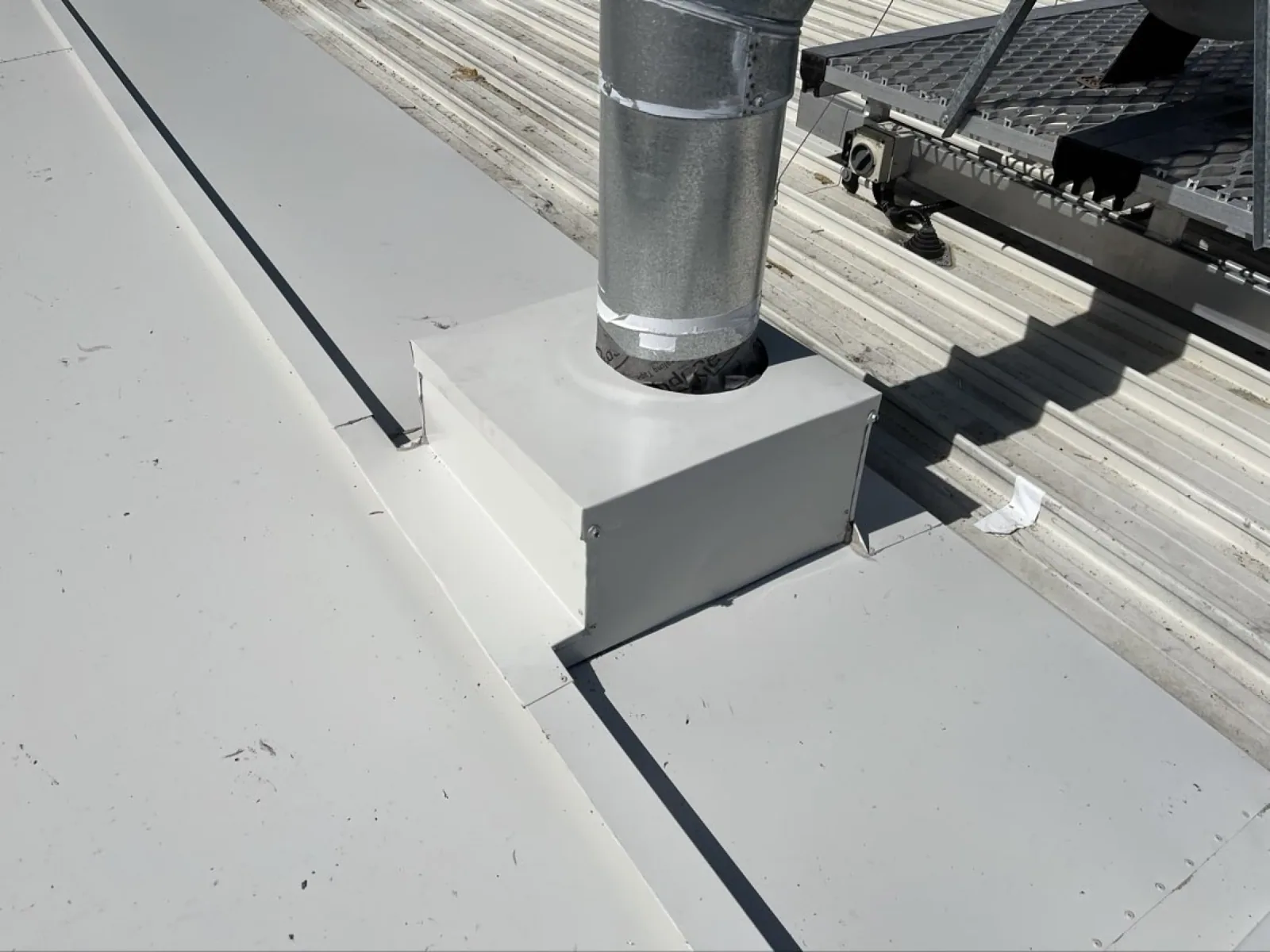
A flashing may depend on a curb, wall or edge whose wood blocking needs repair. We inspect those areas along with the membrane and describe any damage that affects the repair. The scope says which repair comes before the roofing and who handles it, so the permanent flashing is designed around a sound curb, not one nobody has checked.
The allowance also explains what stays, what prep is included and where another trade has to finish their work first. Located photos show both the problem and the area around it; a close-up alone may not tell the next crew where to go. We keep the curb or blocking repair visible in the scope so you can schedule it before the roofing crew seals that detail.
Hidden layers: test before deciding what stays
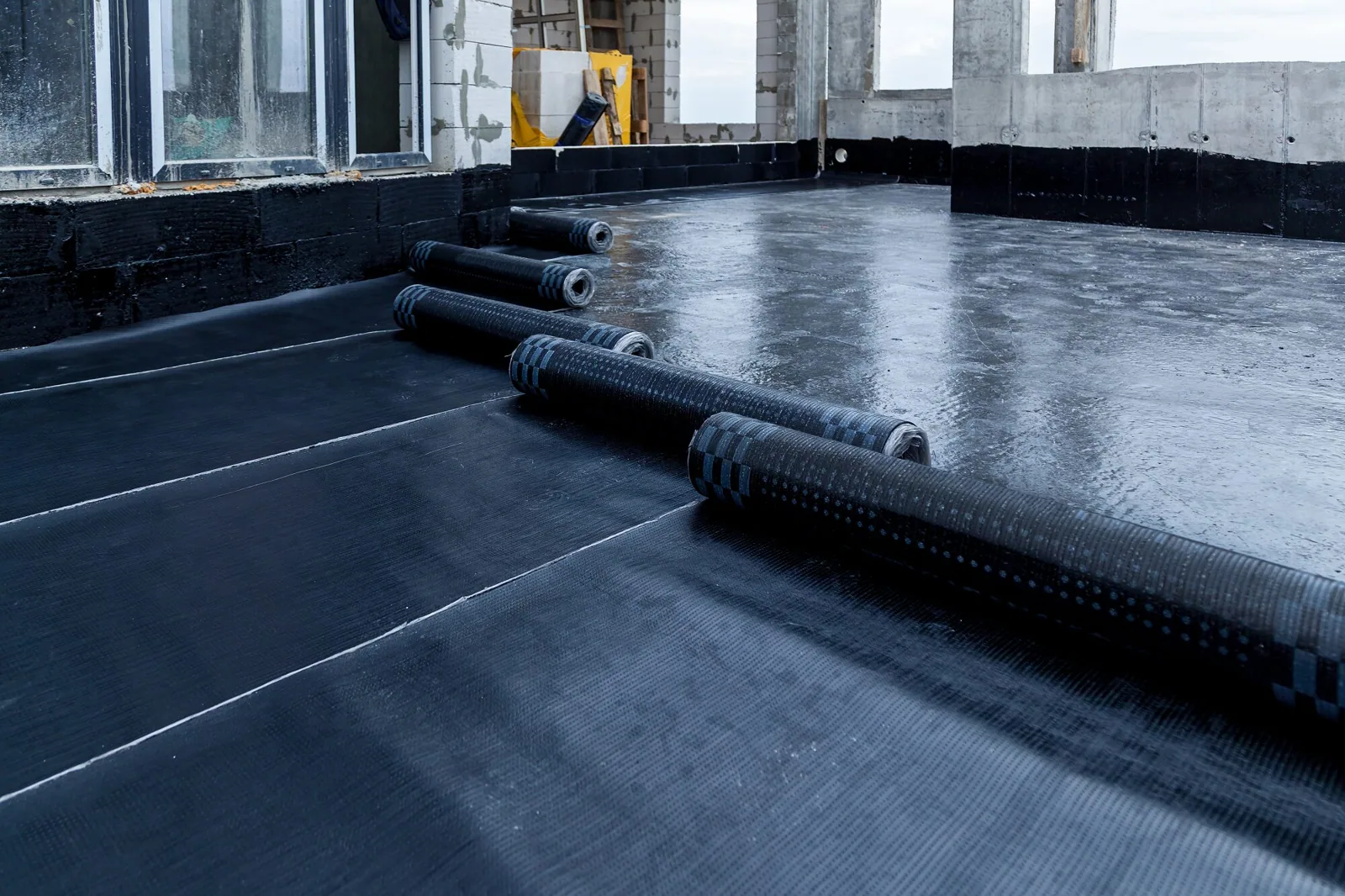
The membrane surface only tells part of the story. The insulation, cover board and other layers underneath need checking where their condition affects the work. We name the question and the testing needed to answer it. Installation records help, and any test cut has its purpose, location and patching planned before work starts.
An infrared moisture survey can help under the right conditions. Thermal readings have to be interpreted and confirmed with cores; on their own, they don't pinpoint a leak or describe every layer. We tie the findings to the areas surveyed and keep open questions listed. You'll see what supports keeping the existing layers and what needs to be settled before the membrane work goes ahead.
Scope: seam repair vs. replacing a section
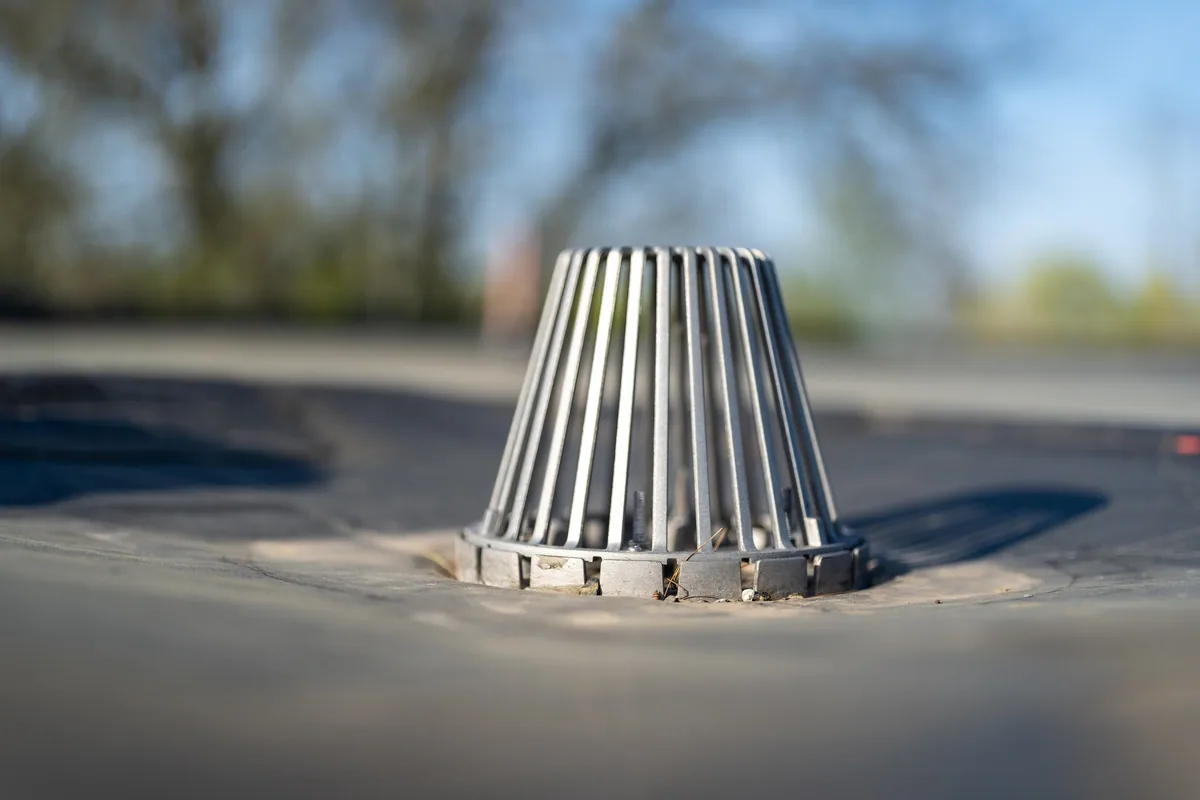
Fixing a KEE seam and replacing a larger section solve different problems. A seam repair handles one failed joint where the membrane around it is still sound. A larger replacement removes old membrane and creates new seams around the edges. We ask what each proposal does at those edges and which existing accessories it keeps. A bigger quantity of membrane doesn't tell you whether the hard wall or equipment details are included.
A roof replacement assessment should show the new seam layout and the roof components affected by tear-off, separate from the roofing itself. We compare that with the local repair, including where each one starts and stops. If both options skip the same problem penetration, you need to know that before choosing. Then the comparison is about which roof problem each scope actually fixes.
KEE identification should come from product records or a reliable assembly review, not color or appearance alone. Once the sheet is identified, define whether the work is a heat-welded repair, a flashing detail, a coating or a larger replacement, because each operation changes the preparation and material boundary. Trial welds help establish an appropriate setup for the actual membrane and conditions before production seams begin. Repair the adjoining backing and component work before closing the weld, then probe completed seams after they have cooled using the selected system's procedure. If the existing sheet is contaminated or altered, state the additional preparation or test needed rather than assuming a standard cleaning step will restore it. Keep the product name, weld and flashing methods, and repaired areas together in the completion record.
Records: the product and the finished repair
Your site contact gives us the roof areas and any records. We inspect the installed membrane and old repairs, then describe the prep and any curb or blocking questions for the KEE detail. The permanent work follows what we find on that roof.
For KEE roofs in Downtown Arlington and nearby, we keep the installation information together with located photos. The record shows the repair completed and any work still open. Another reviewer can find the same seam, identify the product and plan the next job with the real work record in hand. Project and manufacturer paperwork stays with it.
Common Questions
What needs to be confirmed before a KEE repair is specified?
The actual product and any earlier patch materials in the work area. Then we define the surface prep and any curb or wall repair the detail requires.
How should a KEE proposal handle unfinished curb or blocking work?
It should name the curb and the repair needed before the flashing goes on. That work stays listed next to the membrane work so it isn't forgotten.
Can comparing membranes answer questions about hidden layers?
No. The existing insulation and deck need their own testing. We describe the question, the test and how the opening gets patched before using the results to decide what stays.
What should I keep after the repair is finished?
The identified product, the roof location, the prep and the completed repair, together. Located photos and any open questions help the next crew plan future work.
Get your KEE repair defined
Send us your Arlington roof product records and repair locations. We'll inspect earlier work and identify the membrane prep, curb repairs and detail work needed.
- PVC material comparison with the installed sheet and older repairs identified
- TPO alternative defining its proposed connection and surface preparation
- KEE detail inspection locating preparation and adjoining component questions
- infrared investigation with its interpretation and confirmation duties defined
- replacement assessment explaining removal and permanent roofing preparation separately
- downtown Arlington KEE work with product identification and completed detail preparation recorded