
Commercial Roofing in Kennedale

Kennedale
Commercial roof curb and equipment flashing repair in Kennedale, TX: TPO curb flashing, rotted curb and wet insulation checks, HVAC coordination and photo records.
On many Kennedale commercial roofs, the leaks start at the rooftop equipment. HVAC units, exhaust fans and vents all sit on curbs, and the flashing around those curbs takes a beating from heat, foot traffic and service visits. When a curb starts leaking, the fix may involve the roofer, the HVAC contractor or both. We figure out which, and we write an estimate that keeps the two separate.
We also handle curb and flashing repairs in Dalworthington Gardens and Crowley, inspecting each building on its own.
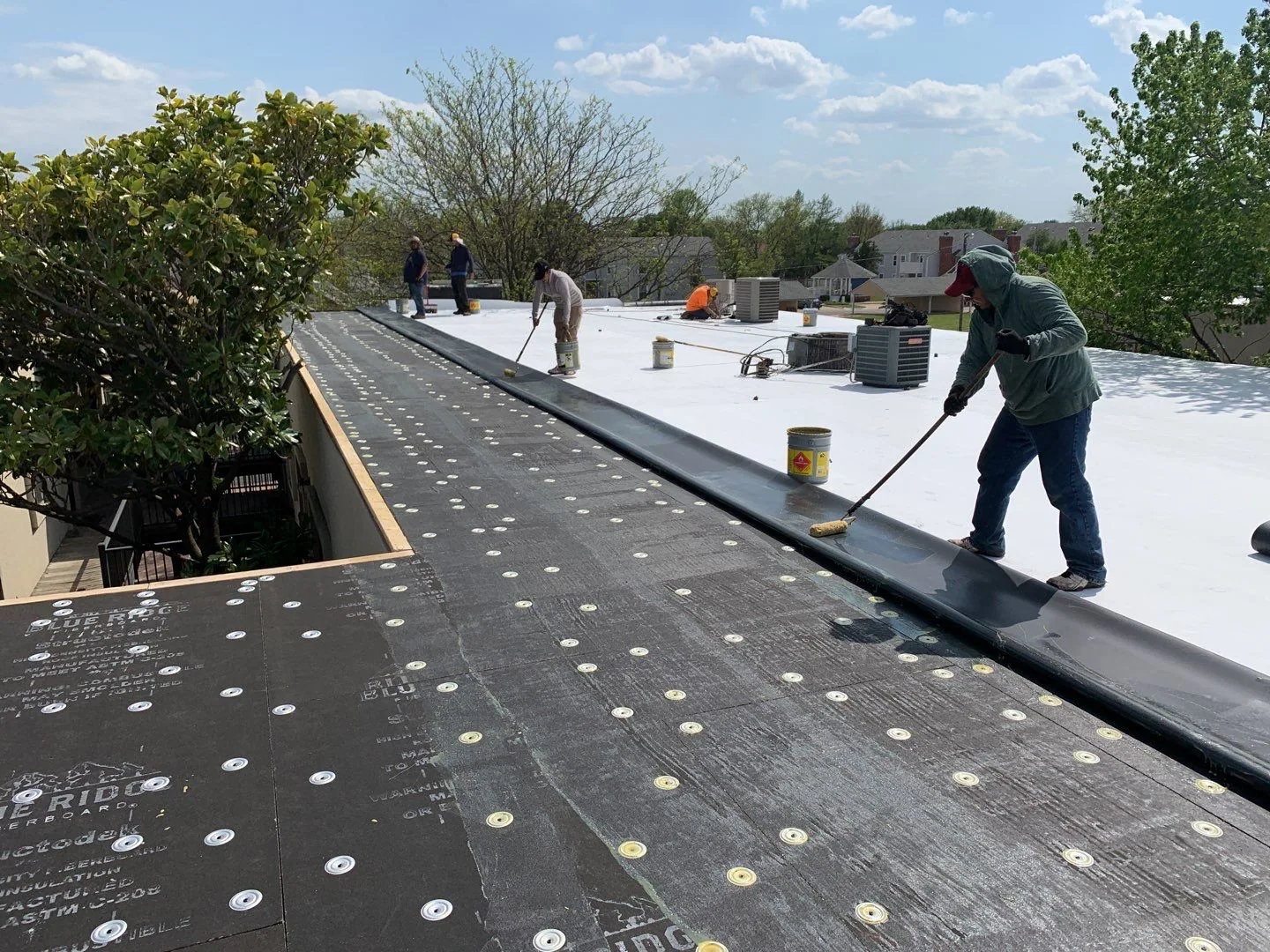
What's wrong at the curb
We check each curb in the problem area. Is the membrane flashing still bonded to the curb, or has it pulled away at the corners? Is the counterflashing loose or missing? Is the curb itself sound, or is the wood rotted or the metal rusted? Does the unit sit flat on the curb, or are there gaps? Has a newer unit been set on an old curb that does not quite fit?
Our rooftop curb and equipment estimate lists the roofing repair separately from anything that belongs to the HVAC contractor or a carpenter, such as lifting the unit, rebuilding the curb or sealing the cabinet. You can see which trade is responsible for what.
If a tenant reported a leak near a unit, we check whether it lines up with the curb flashing. Condensate lines, clogged drain pans and unit cabinets leak too, and that water can look a lot like a roof leak from inside. We note what we found and what we could not rule out.
We also check the curb height. Flashing needs to run high enough up the curb to stay above standing water and wind-driven rain. Older curbs, or curbs buried by a roof recover, are sometimes too short to flash properly. If that is the case, the curb may need to be raised, which is a bigger job and usually involves the HVAC contractor. We point that out up front so it does not come as a surprise mid-project.
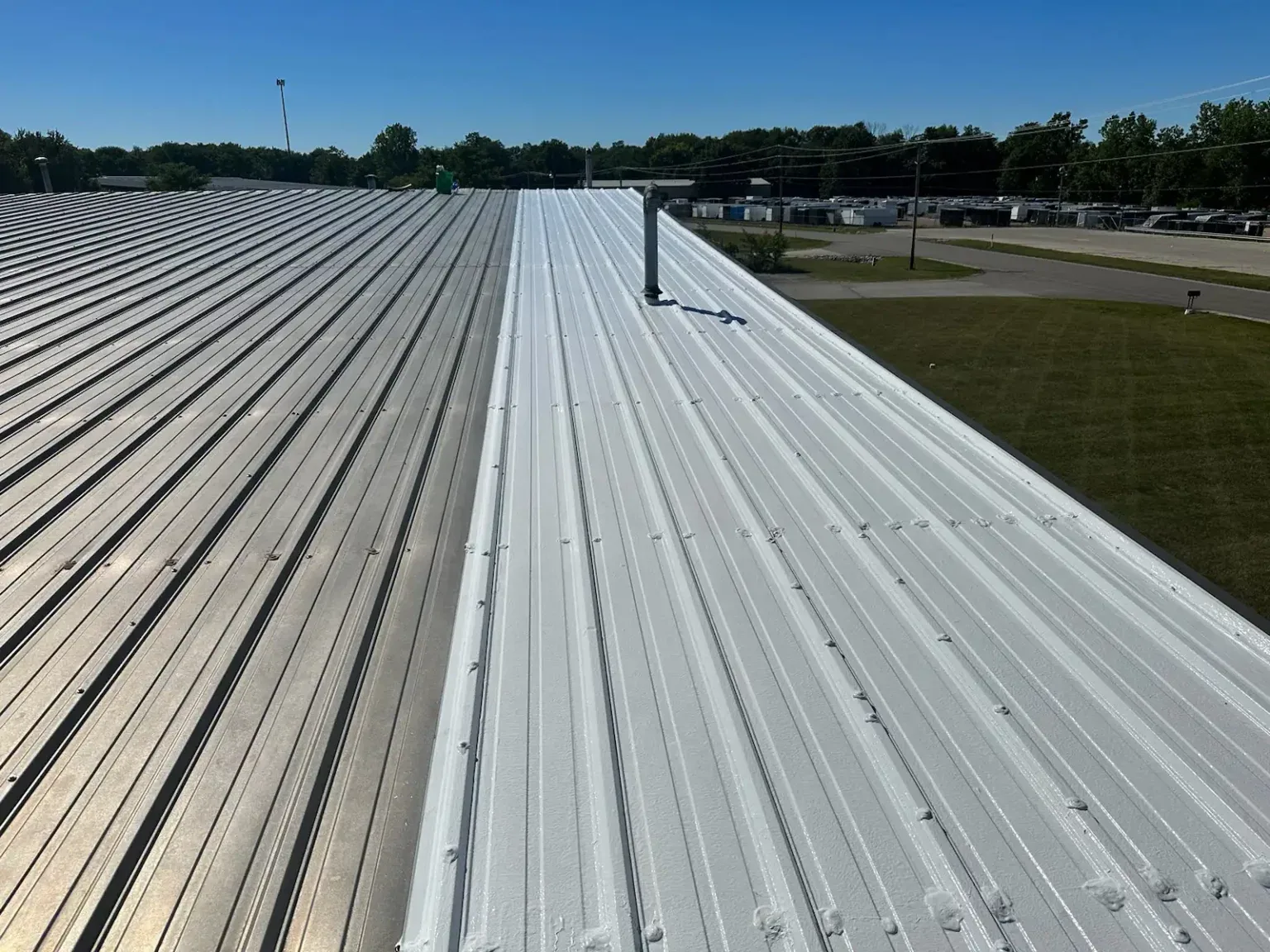
Flashing the TPO around the curb
New curb flashing has to bond to the membrane on the roof. We confirm the roof system and check the membrane around the curb, which usually gets more wear than the rest of the roof because technicians kneel, set tools and walk there.
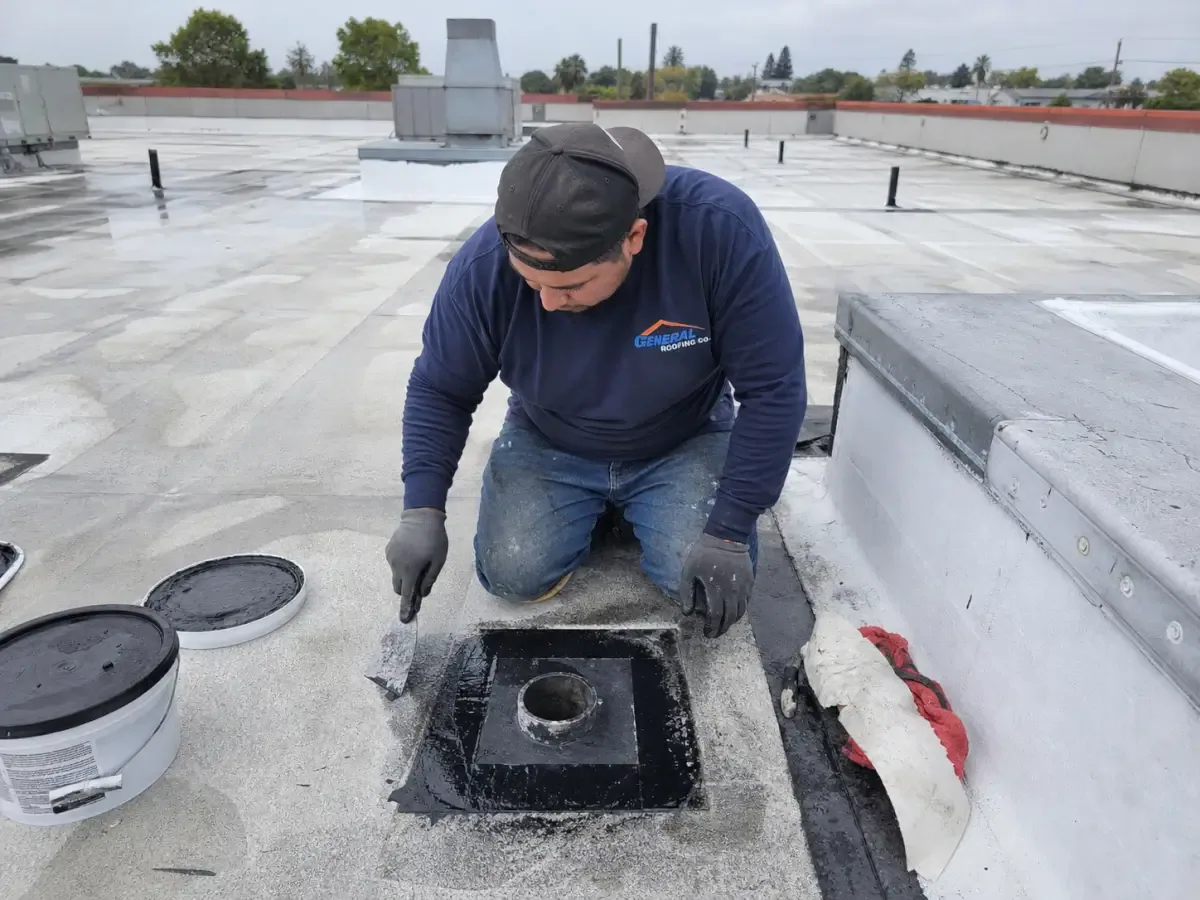
For TPO roofing, we clean the existing membrane, weld new TPO flashing up the curb and out onto the field, add pre-formed or field-fabricated corners and probe the welds after they cool. If the TPO around the curb is scorched, brittle or too dirty to weld, we cut back to sound membrane first. EPDM, PVC or modified bitumen roofs get repairs suited to them.
We also check seams near the curb. An open seam a few feet away can send water to the curb and make it look like the flashing failed. Those fixes go in the estimate as separate items.
Pipe penetrations, gas lines and electrical conduit near the unit get checked too. Their flashing boots and pitch pans are common leak points, and fixing the curb while leaving a cracked boot a foot away means another call later.
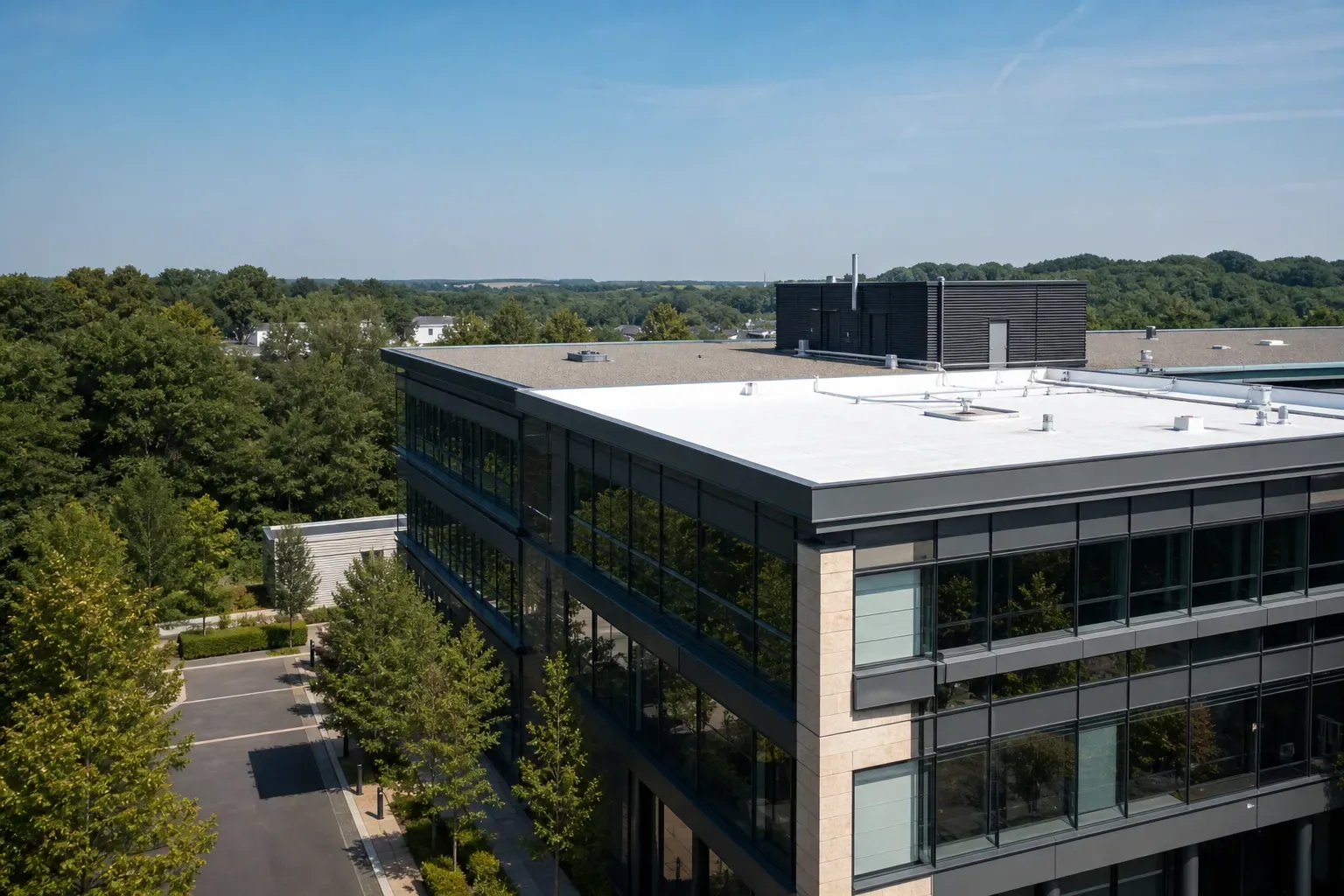
Rot and wet insulation
Curbs that have leaked for a while often leave rotted wood and wet insulation behind. A rotted curb will not hold fasteners, so new flashing installed over it will pull loose again. Wet insulation around the curb loses its R-value and can rust the deck. When we see soft spots, stains or high moisture readings, we open the area or cut a core to check.
On an office building roof, we coordinate any openings with the building manager. Tenants are right below, and some will want to know before anyone cuts into the roof or shuts down a unit.
Rotted wood and wet insulation are replaced before the new flashing goes on. A core at one curb tells us about that curb only. If we find more damage than expected, we photograph it and talk with you before closing it up.
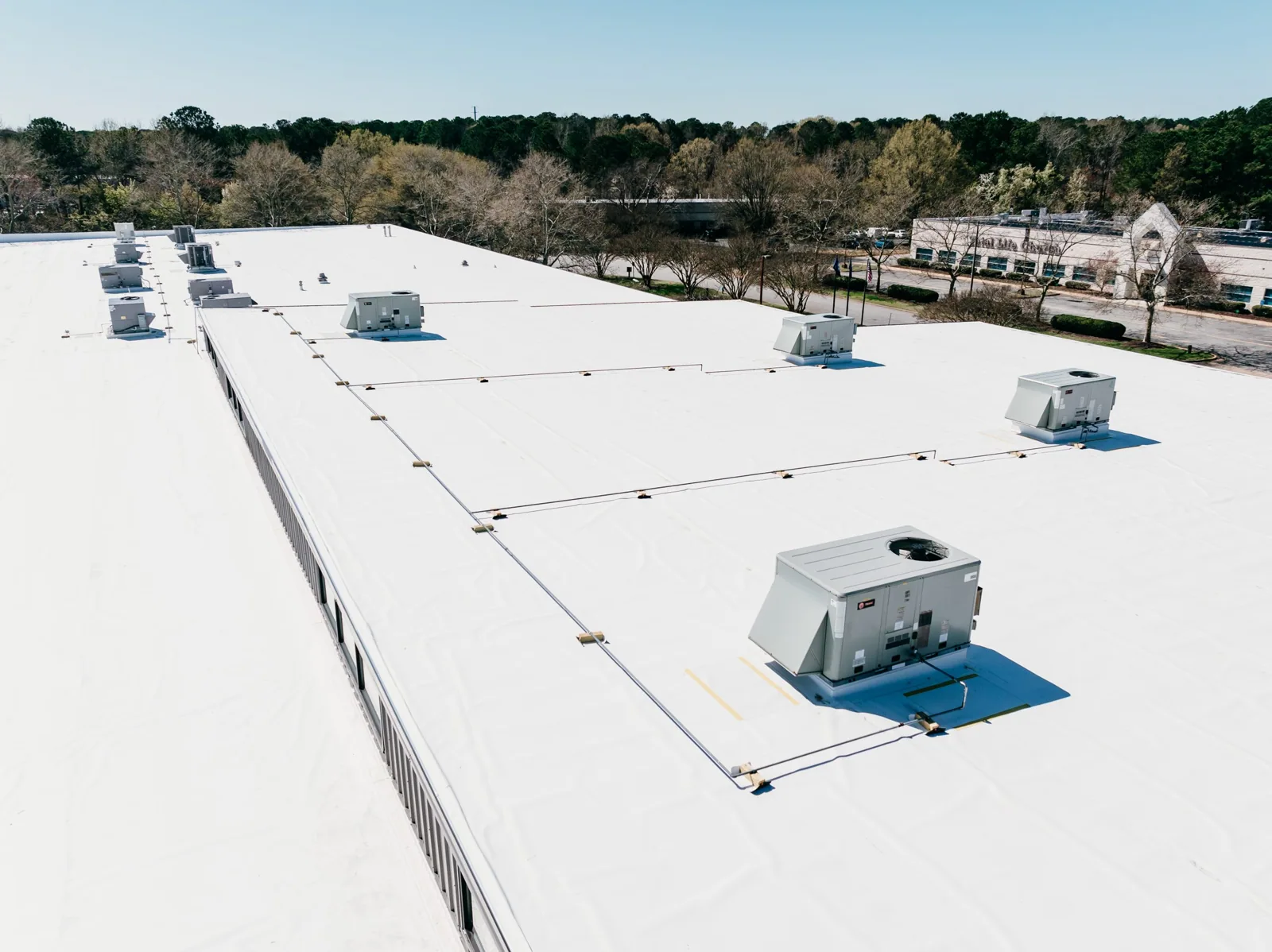
Working with the HVAC contractor
Most curb repairs need the HVAC contractor at some point. They may need to disconnect and lift the unit so we can flash the curb all the way up, or repair a rusted curb before we can flash it at all. We list who is doing what and coordinate the timing so the unit is down for as short a time as possible. On an office building, that usually means scheduling around tenant comfort, especially in summer.
Once the curb is sound and nearby seams are fixed, we clean and prep the TPO and weld the new flashing. The HVAC contractor resets the unit, and we install or reseal the counterflashing. If anything still keeps the flashing from sealing, we tell you what it is and show it as its own line.
We confirm roof access, parking, staging and work hours with the building contact. If a unit has to be lifted with a crane, the HVAC contractor usually arranges it and we schedule.
You get a status report as each step is completed. A curb that looks finished is not necessarily one where every step was completed, so you get a status on each item.
When you call about a Kennedale building, tell us which building and which units or curbs are leaking, and send photos if you have them. If you know who services your rooftop equipment, let us know. We can coordinate with them from the start. If several curbs are leaking, each one gets its own line in the estimate, because their condition can vary a lot even on the same roof.
Photos and the curb record
We photograph each curb as found, any rotted wood or wet insulation, the curb repairs, the prepped membrane and the finished flashing. Each photo is tied to the curb's location on the roof plan.
A roof condition report for a Kennedale building lists each curb we repaired, any HVAC work still pending and any part of the roof we did not inspect. If we put down temporary protection while waiting on the HVAC contractor, the report says so.
That record helps when a unit is replaced later. The new installer can see how the curb was flashed and what to watch for, and you are less likely to pay for the same curb twice.
Common Questions
What should we tell you before you look at a Kennedale roof?
Which building, which units or curbs are leaking, who services the rooftop equipment and who can give us roof access.
How do you keep curb work separate from roofing work?
The estimate lists the membrane flashing as roofing and anything involving the unit or the curb's structure as HVAC or carpentry. Each item shows who does it and in what order.
Why fix nearby seams before flashing the curb?
An open seam near a curb can carry water to it and make the new flashing look like it failed. Fixing nearby seams first means the new flashing ties into sound roof.
What happens if you find a rotted curb or wet insulation?
We photograph it and talk with you before going further. Rotted wood and wet insulation get replaced before new flashing goes on, and the estimate is updated.
What photos will show the curb repair was done right?
Photos of the curb as found, any rot or wet insulation, the repairs, the prepped membrane and the finished flashing, each tied to its location on the roof plan.
Get your Kennedale roof curbs checked
Tell us which building and which curbs or rooftop units are leaking. We'll inspect the flashing, separate the roofing work from the HVAC work and give you a clear estimate.
- Dalworthington Gardens premises reviewed through their own component and roofing findings
- Crowley commercial concerns with individually agreed roof assessment scopes
- rooftop curb review separating the roof correction from a preceding component duty
- TPO curb reconstruction using verified sheet and a suitable retained joining boundary
- office property with an individually assigned curb and supporting material investigation
- roof condition record locating Kennedale component duties and completed membrane corrections