
Commercial Roofing in Arlington West District, Arlington, TX
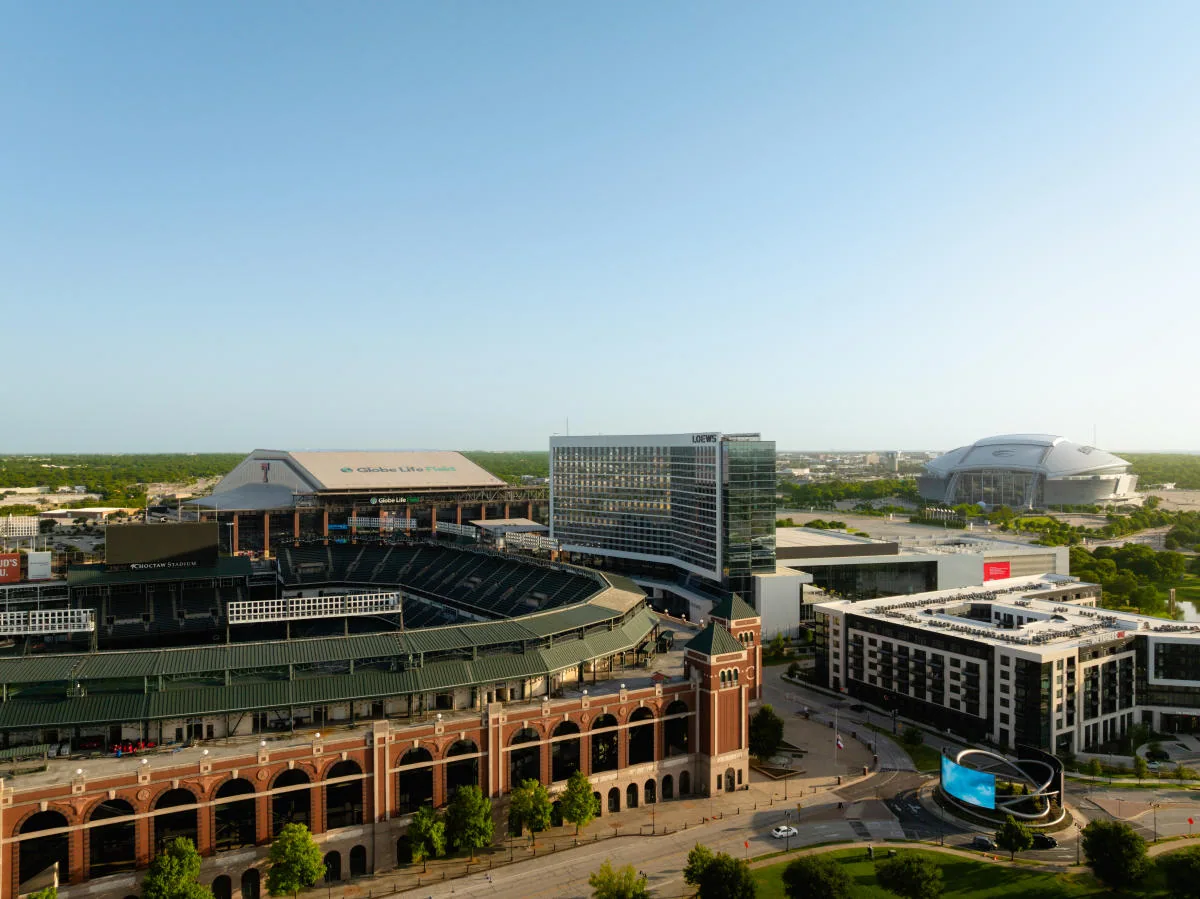
Arlington West District
Commercial roof flashing repair in West Arlington, TX: we find failed flashing at walls, curbs and penetrations, weld new PVC to sound membrane, check for wet.
Arlington's West District, Council District 4, covers the city's west side, roughly bounded by I-30, I-20, Matlock Road, Bowen Road and US 287. It holds a mix of offices, retail, medical buildings and public facilities. Hail is a fact of life here. Arlington had hail reports again on May 27, 2024. But whether a particular roof was damaged, and what it needs now, can only come from inspecting that building.
When a West Arlington roof leaks, the cause is often flashing at a wall, curb or penetration. We find what failed, check what is behind it and repair it so it stays put. If you own several buildings in the district, each one gets its own inspection and its own estimate.
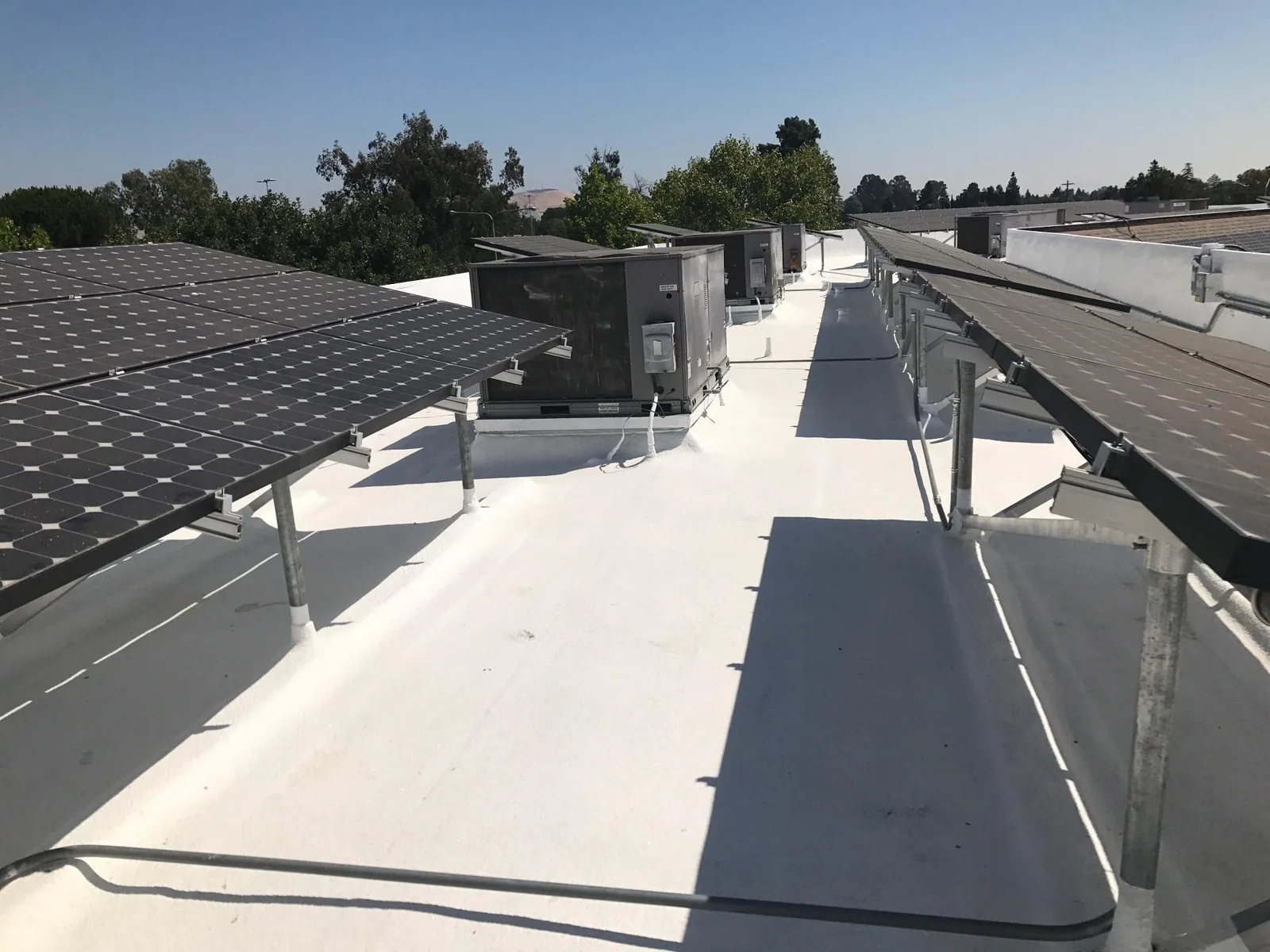
Finding the failed flashing
We start with the leak or problem you have noticed, then walk the flashing in that area: at parapet walls, rooftop curbs, pipe penetrations, skylights and roof edges. We look for flashing that has pulled away from the wall, split corners, loose or missing counterflashing, dried-out sealant and empty pitch pans.
We also handle flashing repairs for commercial roofing in Benbrook and provide roof service in Hurst, with every building inspected on its own.
Our flashing failure repair estimate lists each failed spot with a photo and its location on a roof plan. We also check what the flashing attaches to. If a wall has cracked mortar, a parapet cap is letting water in from above, or a curb is rotted, the new flashing will not hold until that is fixed. Some of that may be masonry, sheet-metal or HVAC work, and the estimate says so.
If a leak was reported inside near a wall, we check whether it lines up with the flashing. Water can also come through windows, wall caps or cracked masonry, so we note what we could not rule out.
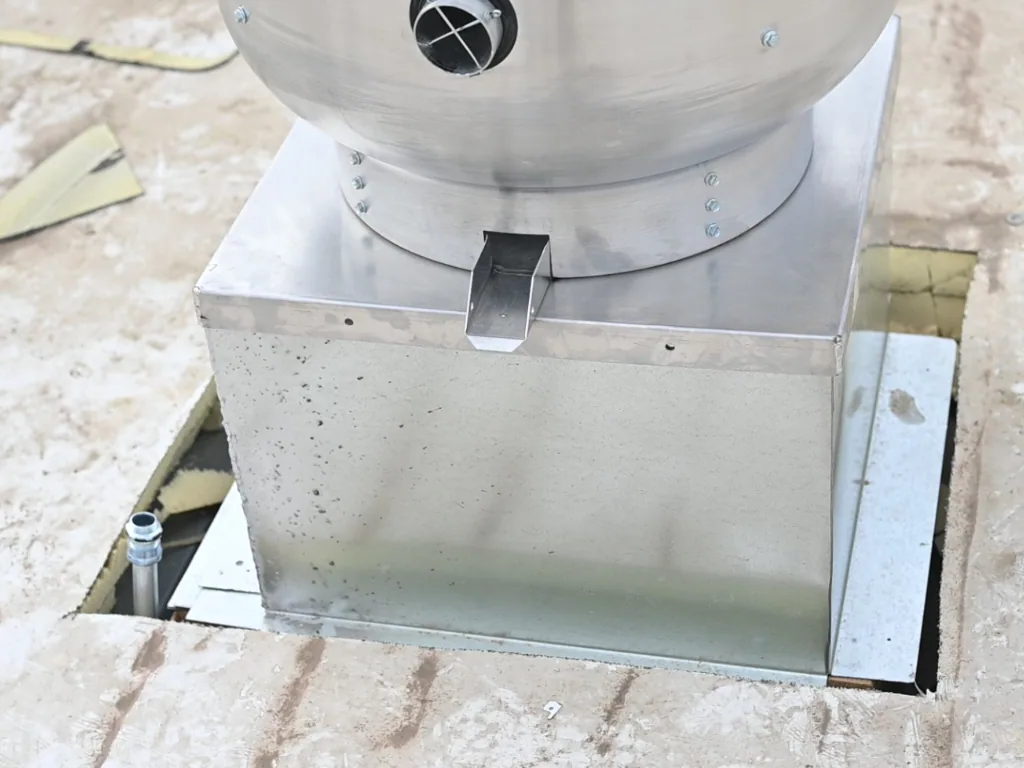
Matching the PVC
New flashing has to bond to the membrane on the roof. We confirm the roof system and check the sheet where the flashing ties in. The membrane at the base of a wall takes more heat and movement than the rest of the roof and may be more worn.
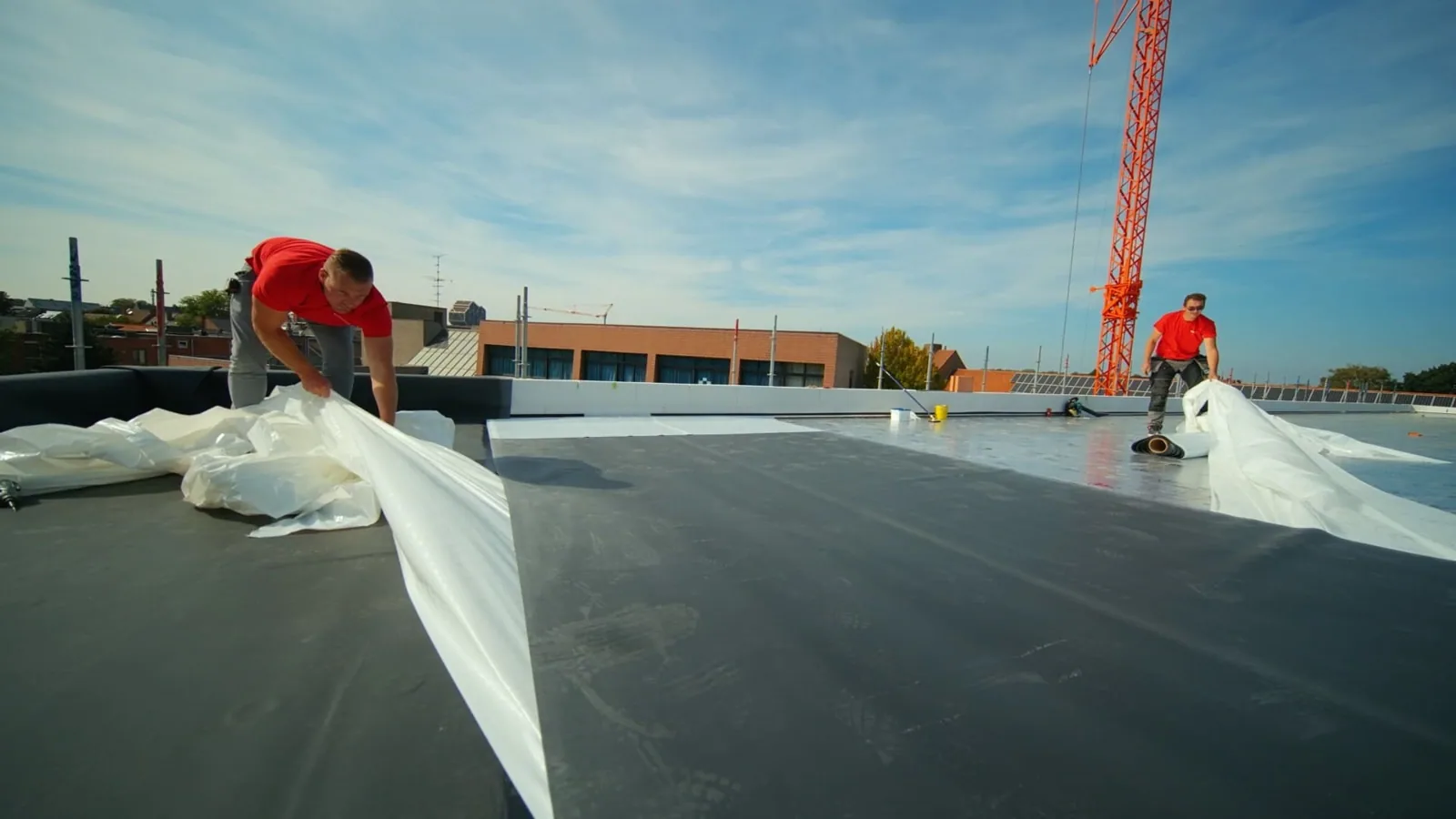
For PVC roofing, we clean the existing sheet, hot-air weld new PVC flashing up the wall or curb and onto the field, and probe the welds once they cool. Older PVC can stiffen with age and sun, so we run a test weld first. If the test weld fails, we cut back to sheet that welds well. TPO, EPDM or modified bitumen roofs get their own method.
We also check nearby seams. If one is already open, we fix it at the same time so water cannot get behind the new flashing.
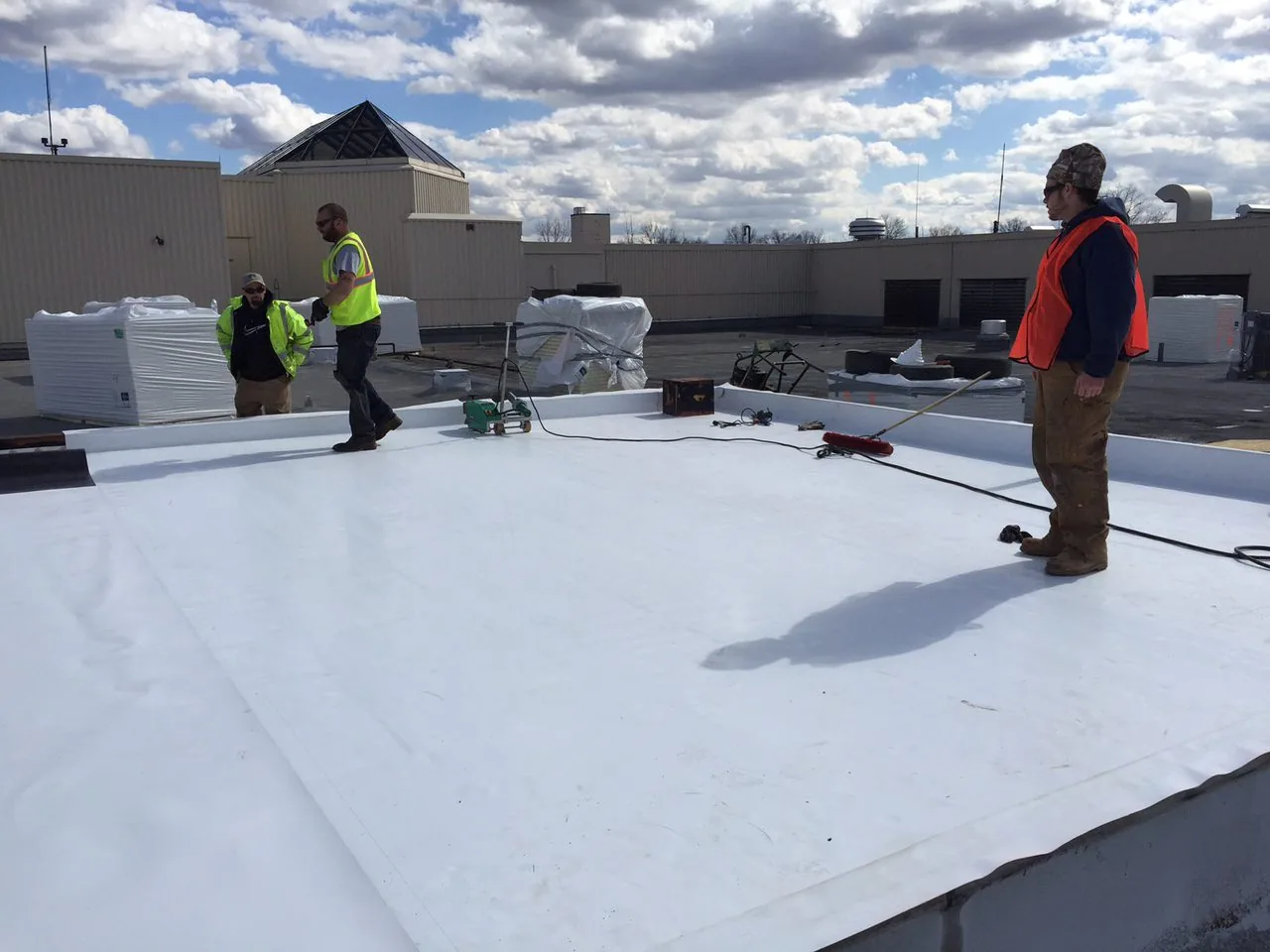
What's behind the flashing
When flashing has been loose for a while, water gets behind it and soaks the wood blocking, wall sheathing and insulation at the base of the wall. Rotted wood will not hold fasteners, so new flashing fastened into it will pull loose again. If we see soft spots, stains or high moisture readings, we open the area or cut a core to check. Rotted wood and wet insulation are replaced before new flashing goes on.
On a hospital roof, any opening is planned with the facilities team well ahead of time. Patient areas, operating rooms and air intakes may be nearby, and hospitals usually have strict rules on dust, odors, noise and infection control.
If we find more damage than expected, we photograph it and talk with you before going further. A check at one wall tells us about that wall. Other walls and curbs get their own look.
Order of work and site rules
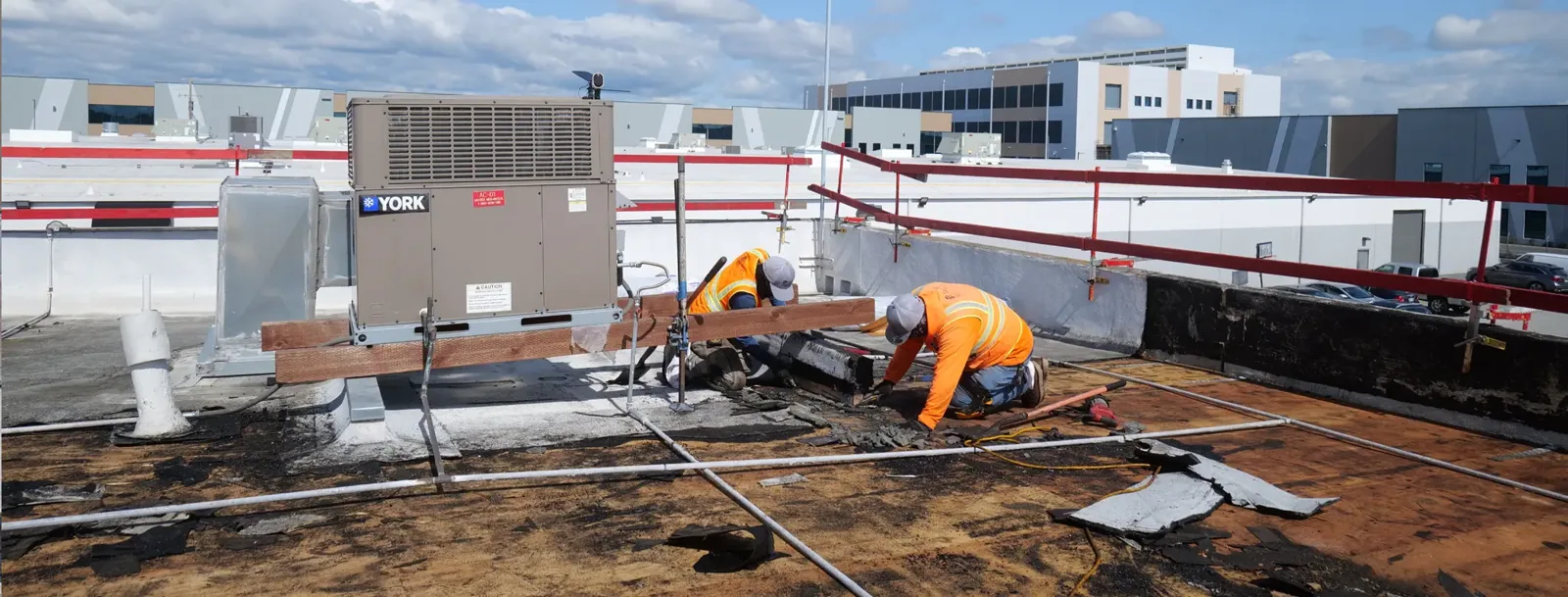
Flashing repairs follow a set order. Old flashing and counterflashing come off. Rotted blocking, wet insulation and damaged sheathing are replaced. Any masonry or wall repair by another trade is finished. Nearby seams are fixed. Then we clean and prep the existing PVC, weld the new flashing, install termination bar and fasteners and reinstall or replace the counterflashing. If something still keeps the flashing from sealing, we tell you what it is and list it in the estimate.
We confirm roof access, parking, staging and work hours with the building or facilities manager. Hospitals and medical buildings often require badges, escorts, after-hours work for noisy tasks and covering air intakes during welding or adhesive work. Offices and retail centers have their own rules. We follow whatever applies to your building.
If a mason needs to repoint a wall or an HVAC contractor needs to reset a unit before we can flash around it, we name that task and coordinate the timing. You get updates as each step is done.
When you call about a West Arlington building, tell us which building, where the leak or loose flashing is and who can give us roof access. Photos help, even from the ground. If you have past repair invoices or warranty paperwork, send them. We will inspect the flashing and what is behind it, then send an estimate that shows the flashing repair, any backing or insulation replacement and any other trade's work that has to happen first.
Photos of the finished flashing
We photograph each stage: the failed flashing as found, the opened wall base, any rotted wood or wet insulation, the replaced materials, the prepped membrane and the finished flashing and counterflashing. Each photo is tied to its location on the roof plan. Once the counterflashing is back on, the work underneath is hidden, so the photos are how you know it was done right.
A roof condition report for your building lists each flashing repair, any wall or curb work still pending and any area we did not inspect.
If we installed temporary protection first, the report says so. If hail becomes part of an insurance claim, the hail photos stay separate from the repair record. That makes the next visit easier, whether it is a routine check or a new leak at another wall.
Common Questions
What should we tell you before you look at a West Arlington roof?
Which building, where the leak or loose flashing is, who can give us roof access and any site rules we need to follow.
How do you decide how much flashing to replace?
We replace the failed section and extend the repair until it ties into sound membrane and solid backing on both ends. The estimate shows those limits on a roof plan.
Why fix nearby seams and backing at the same time?
An open seam or rotted blocking next to new flashing lets water get behind it or keeps fasteners from holding. Fixing them together means the repair lasts.
Who approves a change if you find more damage?
You or your facilities manager. We photograph what we find, explain what it means and update the estimate before going further. Nothing gets closed up until you have seen the change.
What records show the work under the flashing?
Photos of each step, from the opened wall base to the finished counterflashing, tied to locations on the roof plan, plus a written report.
Get your West Arlington roof flashing checked
Tell us which building and where the leak or loose flashing is. We'll inspect it, check what's behind it and give you a clear estimate for a lasting repair.
- commercial roofing in Benbrook
- roof service in Hurst
- flashing failure repair located at the examined roof and adjoining component relationship
- PVC flashing reconstruction after identification of the covering and retained joining material
- hospital property with a separately authorized roofing and retained layer investigation
- roof condition account locating Memorial-area flashing repairs and unresolved component questions