VA Medical Center Roofing in Arlington, TX
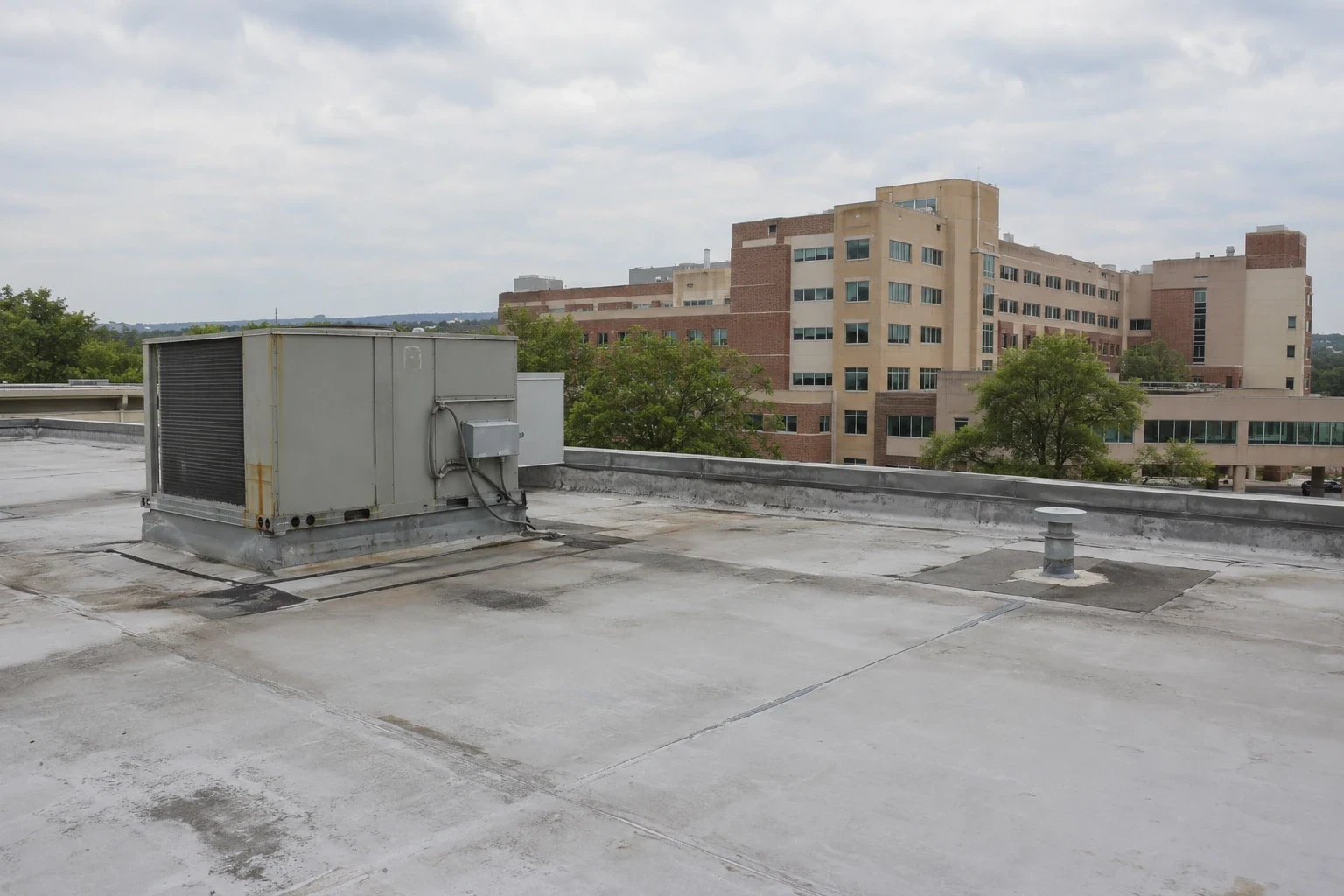
VA Medical Center Roofing
VA and federal medical building roofing in Arlington, TX: wall flashing and backing repair, membrane work, rooftop equipment and protecting patient areas below.
North Texas summers are hot and the winters still bring hard freezes, and that swing is hard on roofs: membranes expand and shrink, sealants dry out, and the wall flashing along parapets and penthouse walls takes a beating. On a VA or other federal medical building in Arlington, TX, a leak at that wall flashing is one of the most common calls we get. The fix is rarely just new flashing. If the wood or sheathing behind it has rotted, the wall has to be repaired first or the new flashing has nothing solid to fasten to. Our estimate shows that wall repair, the new roof work and the protection for the rooms underneath as one job.
If your portfolio also includes buildings in North Richland Hills and Southlake, we look at each roof on its own and plan access around how that building is actually used.
To get started, tell us which building has the problem, where the leak or damage shows up, and what you know about the roof. The facility staff who run the floors below know which areas hold patients, sensitive equipment or records, and they decide what protection and access rules apply. We plan the roof work around their answers rather than guessing.
Fixing the wall behind the flashing
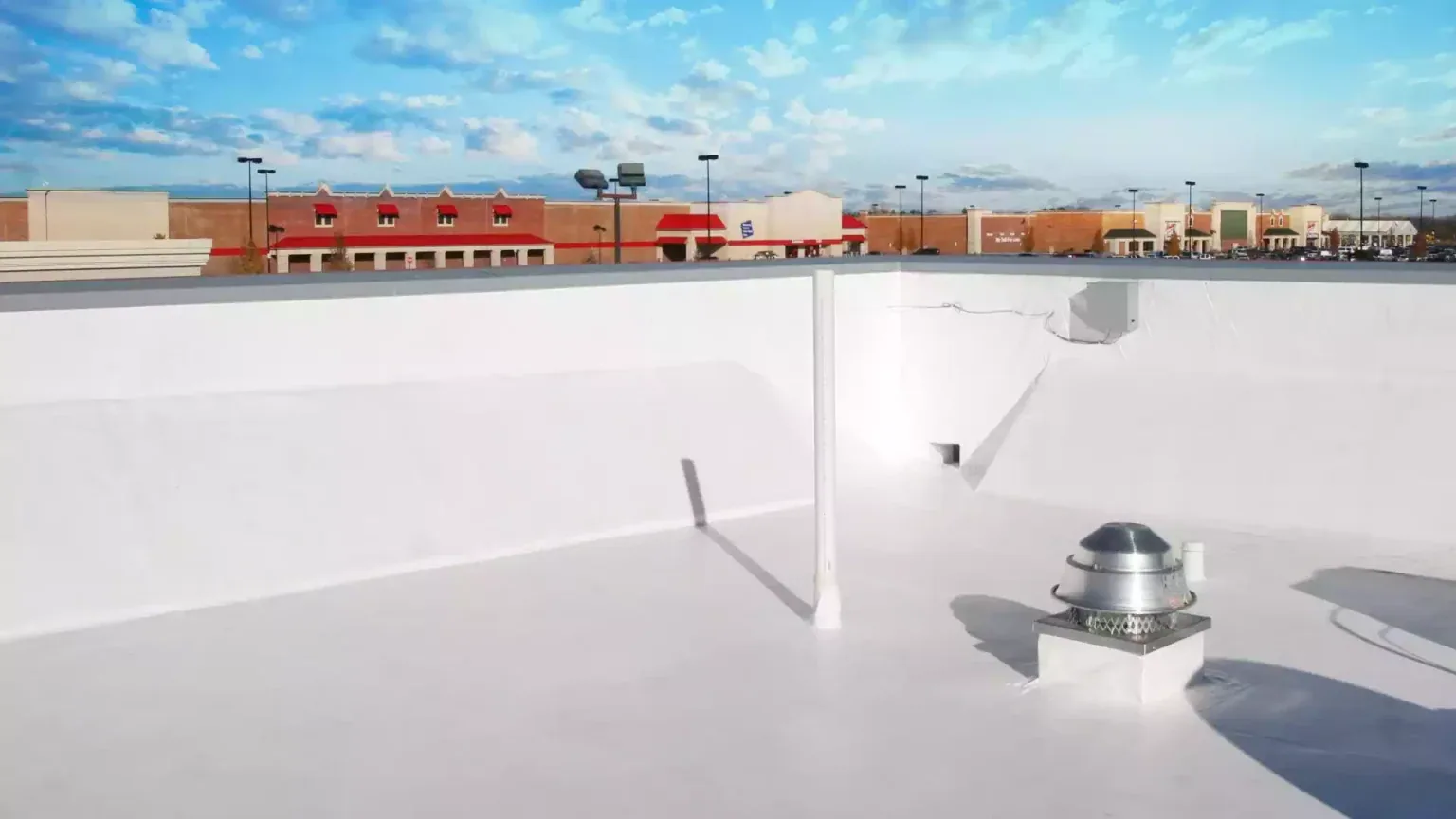
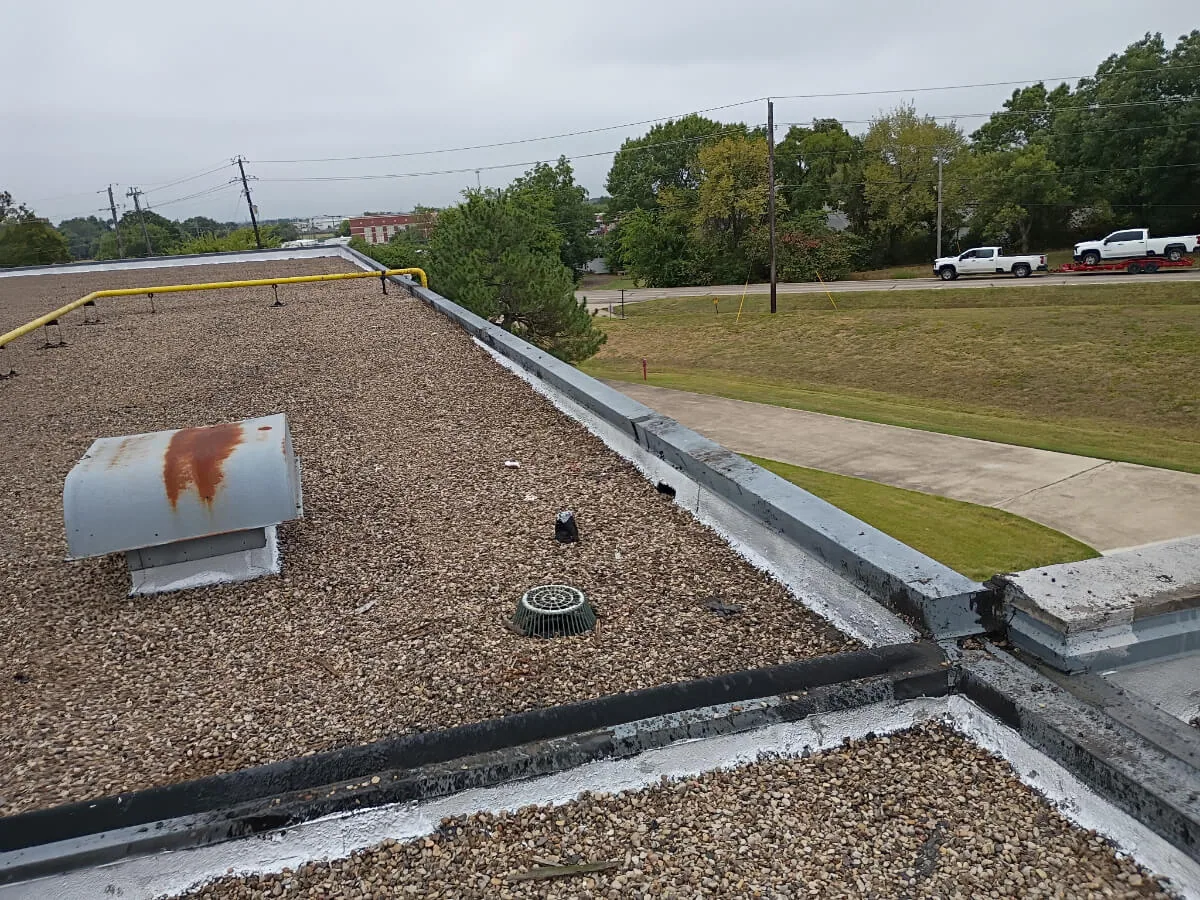
For flashing failure repair at a parapet or penthouse wall, we pull back the old flashing far enough to see what it was fastened to. Sound sheathing and blocking can stay. Rotted or soft material has to be replaced, usually by the wall or carpentry contractor, and if the framing itself needs changes an engineer or architect should sign off. Once the wall is solid, we install the new counterflashing at the top and tie the membrane into it at the bottom. Our estimate lists the wall repair next to the roofing so you can see the whole job. A bigger patch on the roof can't fix a rotten wall above it, and it will leak again.
We photograph the wall while it's open, because once new flashing goes on nobody can see what was behind it. If we can't tell how far the damage runs without opening more, we say so before recommending what stays. A ceiling stain inside tells us where to start looking, not where the water got in. We base the repair on what we find at that wall, not on assumptions about the rest of the building.
Membrane repair and checking for wet insulation
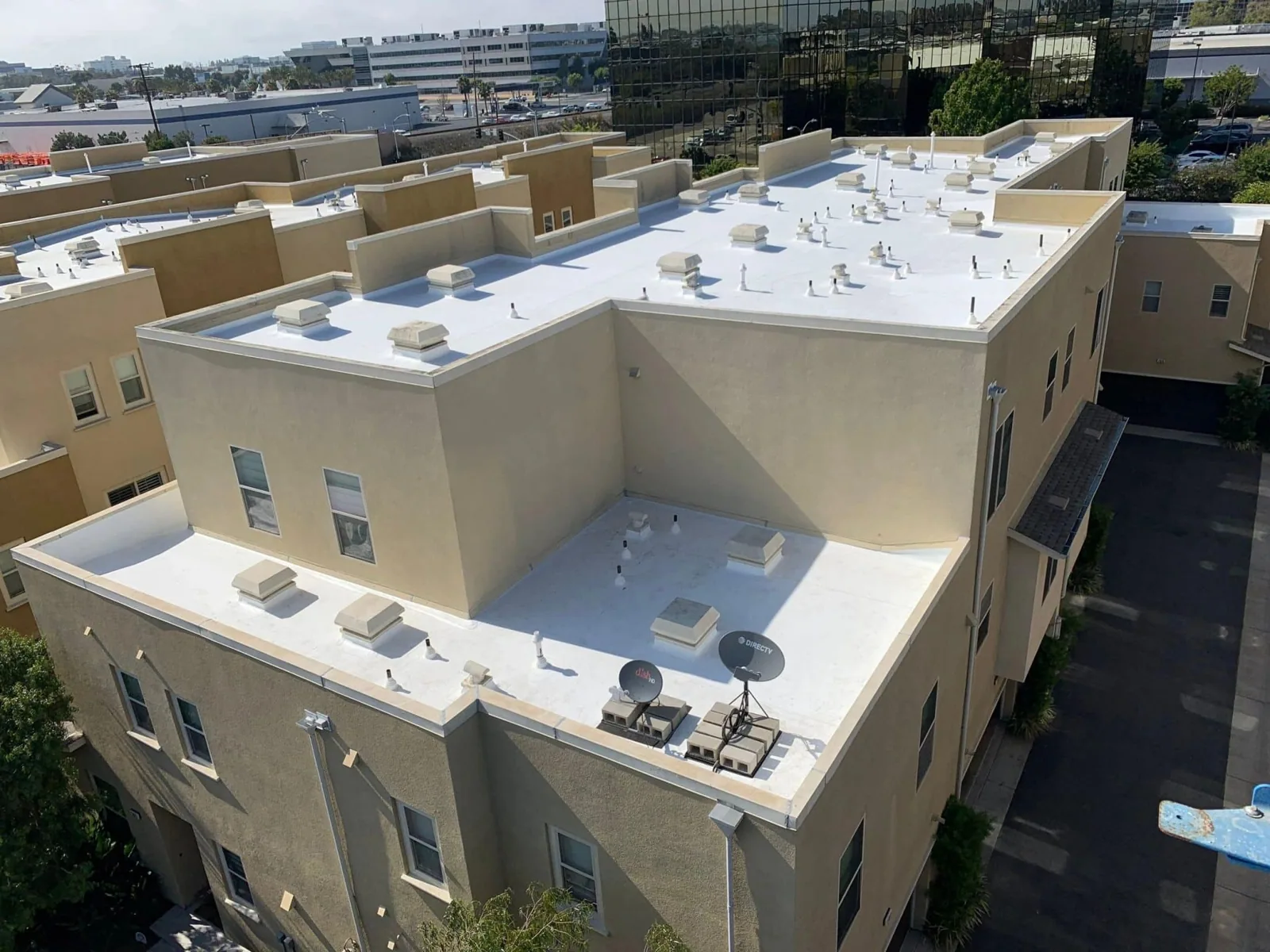
A commercial roof repair at that wall has to match the roof system already there. We cut back membrane that's brittle or wet to sound material, clean the edges that stay, and tie in the new piece the way that system requires. TPO and PVC get hot-air welded seams; modified bitumen and EPDM use their own laps and adhesives. The membrane quantity sits next to the wall repair in the estimate. A roof coating priced on its own only covers the coating. It won't replace rotted wall backing or move a piece of equipment that's in the way.
If we think the insulation around the repair may be wet, an infrared moisture survey can help narrow it down, but the readings depend on weather and timing and have to be read with care. A warm spot on the scan is a clue, not proof. Where it matters, we take a core cut to see the actual layers, then patch the hole the same day. Before cutting over an occupied area, we check with facility staff about what's below. The decision on what to keep comes from what we find on this roof, not from a weather chart or the type of building.
Rooftop equipment and drains
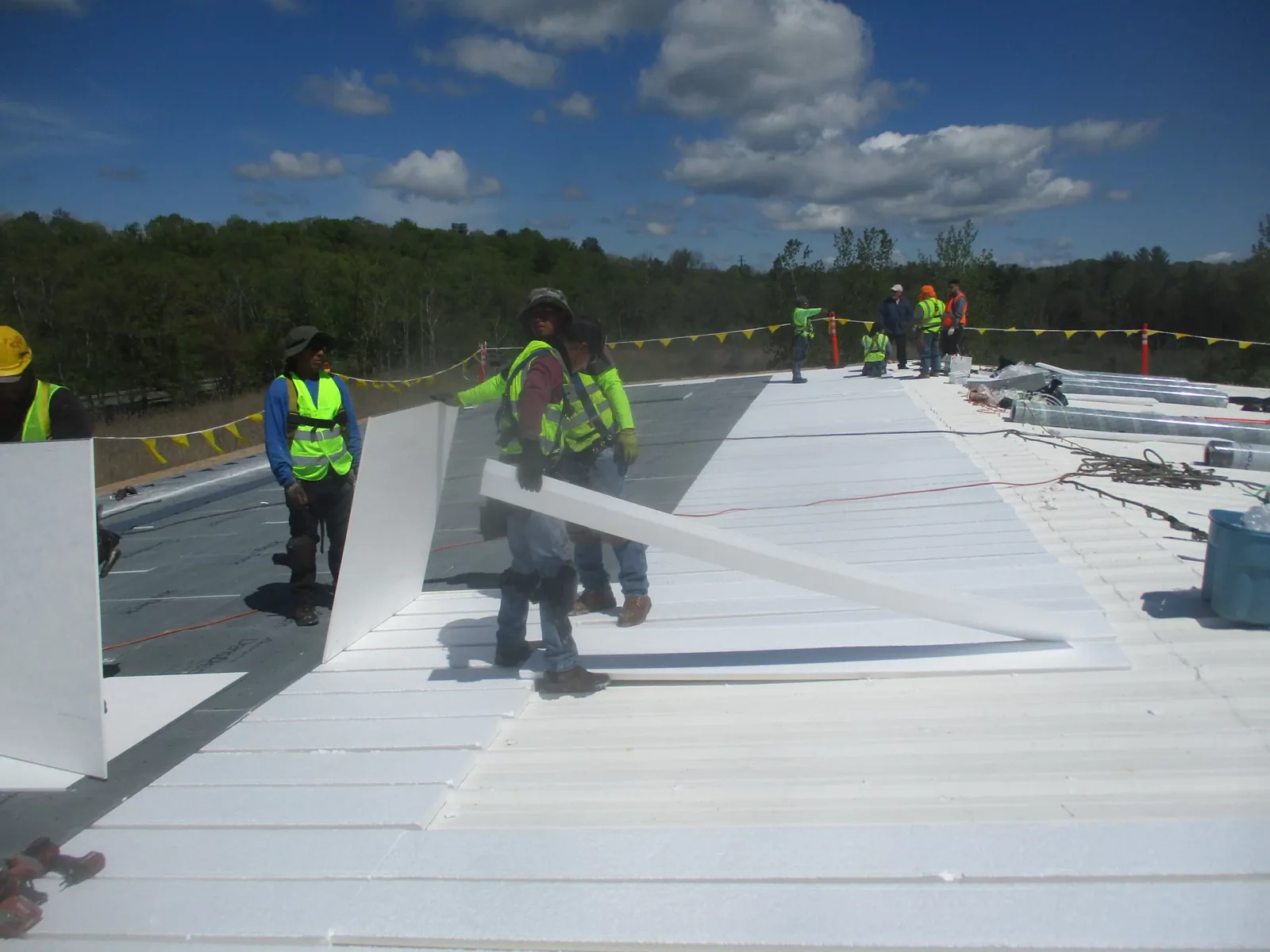
Medical buildings carry a lot of equipment on the roof: air handlers, exhaust fans, and piping on stands. When a repair runs into a unit's curb or support, we bring in rooftop equipment curbs and supports work early. The mechanical contractor handles shutting the unit down, disconnecting it, lifting it if needed and reconnecting it. An engineer reviews any change to the curb or support. Our part is the flashing around the curb once it's ready. Your schedule should show the mechanical work and the roof work it unlocks side by side. We can finish the membrane, but that doesn't finish the mechanical contractor's part, even when both crews are working at the same curb.
Drains are similar. If a drain sits inside the repair area, we check the drain body and clamping ring before tying in new membrane. Problems in the pipe below the roof belong to a plumber, and changes to the drainage layout need a designer's review. Each of these jobs has a different trade, but they all have to be lined up before we can close the roof. Our estimate lists what's ready, what's still waiting on another trade, and what we'll finish once it is.
Protecting the rooms below
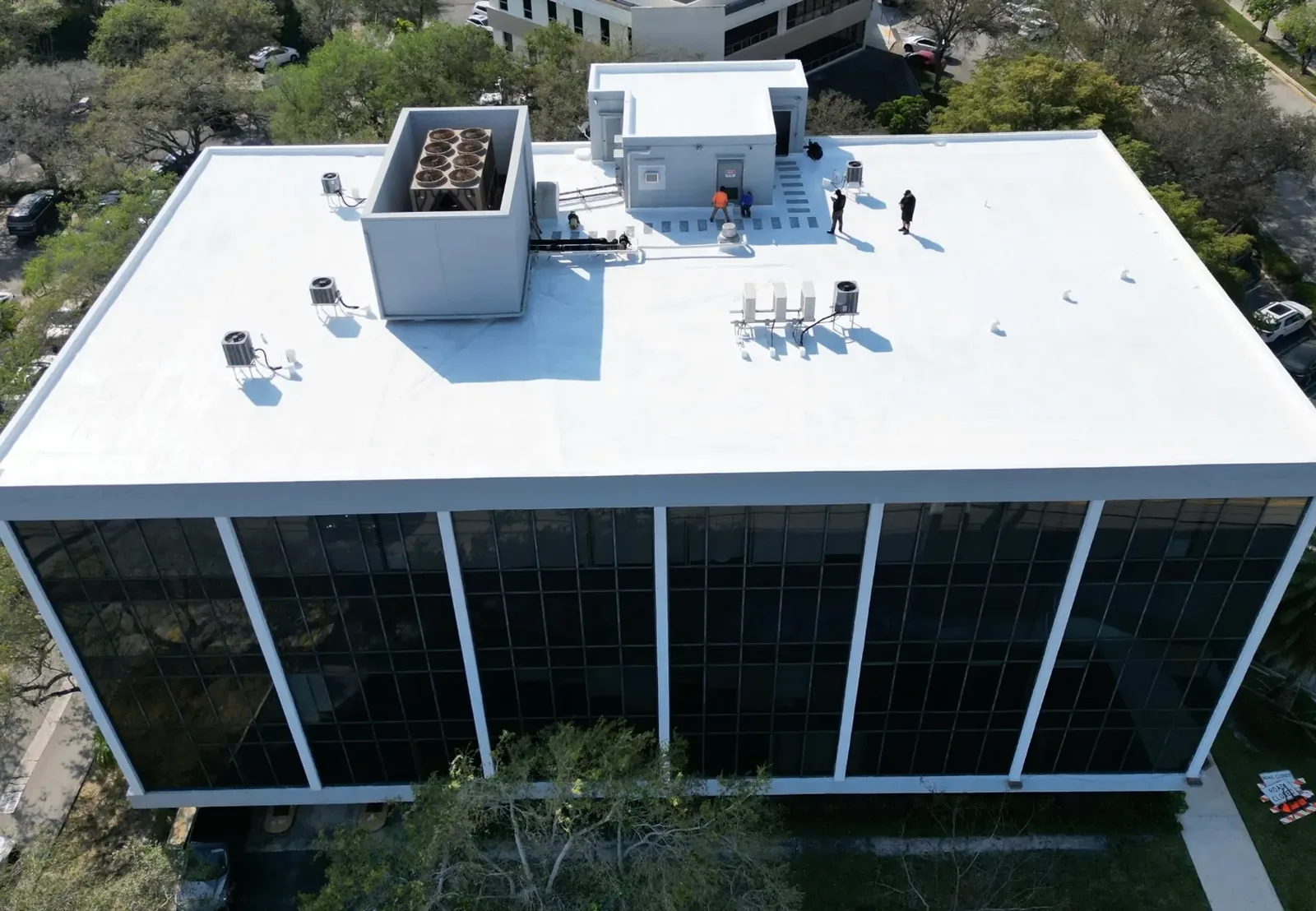
Before we open any roof over an occupied area, we walk the facility manager through what comes off, how debris leaves the roof and where materials get staged. That's part of occupied building reroofing. The staff who run those rooms decide what needs moving, protecting or shutting down, and their infection-control or safety people set the dust and air rules. We build those precautions into the plan for each opening. Getting permission for an inspection doesn't mean it's safe to tear off roof over the same room next week. Every opening gets checked against what's actually happening below it, not against rules we assume a VA facility follows.
Sometimes the damage runs past the first opening. When that happens, we stop, show the facility manager what we found and explain why more roof or wall has to come out. Then the new area below gets the same review before we keep going. If we're waiting on the wall contractor or the mechanical crew, we put down a temporary roof seal so the building stays dry. The change order shows the added material, the protection and the reason, so nobody assumes a room that was never checked is ready.
What you get at the end
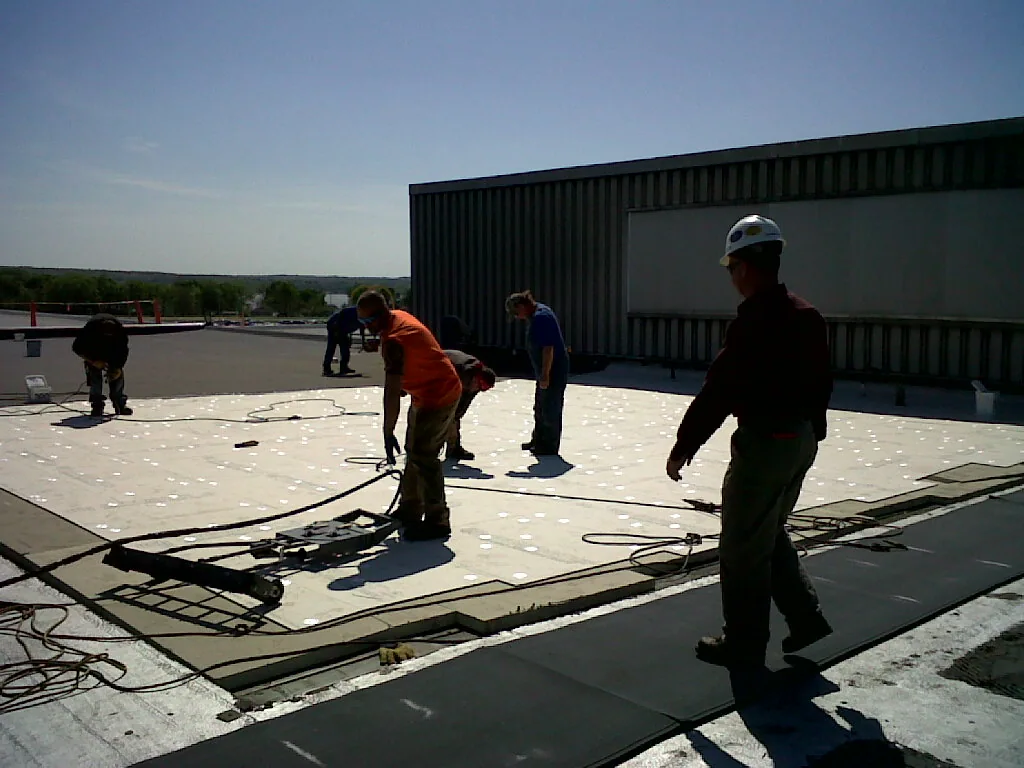
When the job is done, you get a record showing the wall repair, the new flashing, the roof that was removed and replaced, and any core cuts we patched. We include the photos taken while the wall was open. Anything still waiting on a plumber, the mechanical contractor or the wall contractor is listed separately from the finished roof work. If an area still needs a closer look, the record says where and why, so the next facilities manager can pick it up. Signing off on our flashing doesn't mean signing off on piping or equipment changes another trade still owes.
We look at federal and medical buildings around Downtown Arlington and across the city, with access set up through the building's own staff. A VA name on the door doesn't tell us what's on the roof, so we treat each building on its own terms. Hospital roofing follows what we find on that roof, and medical office roofing follows that building's own system. For this building, the recommendation comes from what we find on the roof today, with the rooms below, the other trades and access handled through your facility team.
Common Questions
What else gets fixed when wall flashing is replaced?
Often the sheathing or blocking behind the flashing. If it's rotted, the wall contractor replaces it first, then we install the new counterflashing and tie the membrane into it. A patch over the outside can't fix rotten material behind it.
Does being a medical building decide how the area below is protected?
No. The staff who run the rooms under the work decide what protection is needed, along with their infection-control or safety people. We show them exactly where we plan to open the roof, and they tell us what has to happen below before we start.
What should be clear when the roof work is finished?
What we installed, which core cuts we patched, and any plumbing, wall or mechanical work still waiting on another trade. Those open items stay on their own list so a finished roof isn't mistaken for a finished building job.
What information do you need before opening a roof over a medical area?
Which roof section, what the roof is made of if you know, and what's in the space below. We then work out access, protection and any equipment shutdowns with your facility team before anything is removed.
Get the wall flashing on your building looked at
Set up a visit with your facility manager. We'll inspect the wall and flashing, then lay out the wall repair, the roof work and how we'll protect the rooms below.
- VA building upper flashing and supporting wall examination
- VA roof covering repair against reconstructed wall backing
- VA roof temperature findings and retained material investigation
- VA roof equipment preparation and covering construction review
- VA building roof openings and reviewed interior preparations
- subject VA building roof examination near Downtown Arlington and surrounding business districts
- hospital roof repair with supporting wall reconstruction
- medical office roofing and reviewed component handoffs