
National Guard Armory Roofing in Arlington, TX
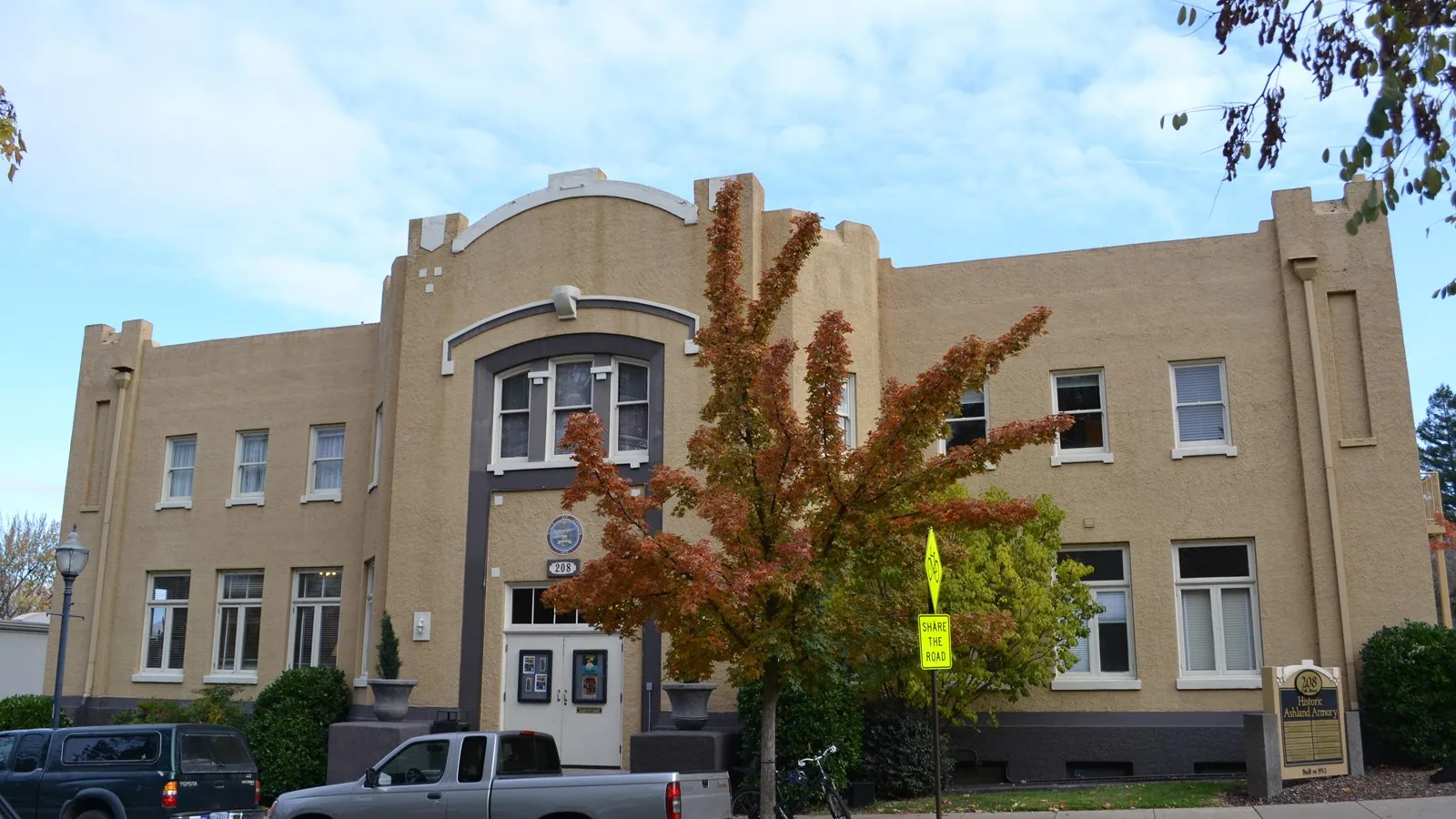
National Guard Armory Roofing
Armory roof repair in Arlington, TX: rooftop unit curbs, wall flashing, drains and membrane repairs, planned around the rooms and equipment below.
Arlington took an EF-2 tornado on November 24, 2020, but most armory roof calls start at one detail: a leak at a rooftop unit curb, a wet ceiling tile under an exhaust fan, or flashing pulling loose where a low roof meets the drill-hall wall. Those spots need someone on the roof looking at the flashing and whatever holds it up. Sealant over the seam won't fix a rotted curb or a loose equipment stand, and it hides the problem from the next inspector.
Nearby, the Texas Air National Guard's 136th Airlift Wing is based in Fort Worth, and Fort Wolters in Mineral Wells is a historical Texas Army National Guard training site. Neither tells us anything about a specific building in Arlington. We work from the actual facility: its roof, its leak history, and the facility manager who can get us access and tell us what's stored and used below.
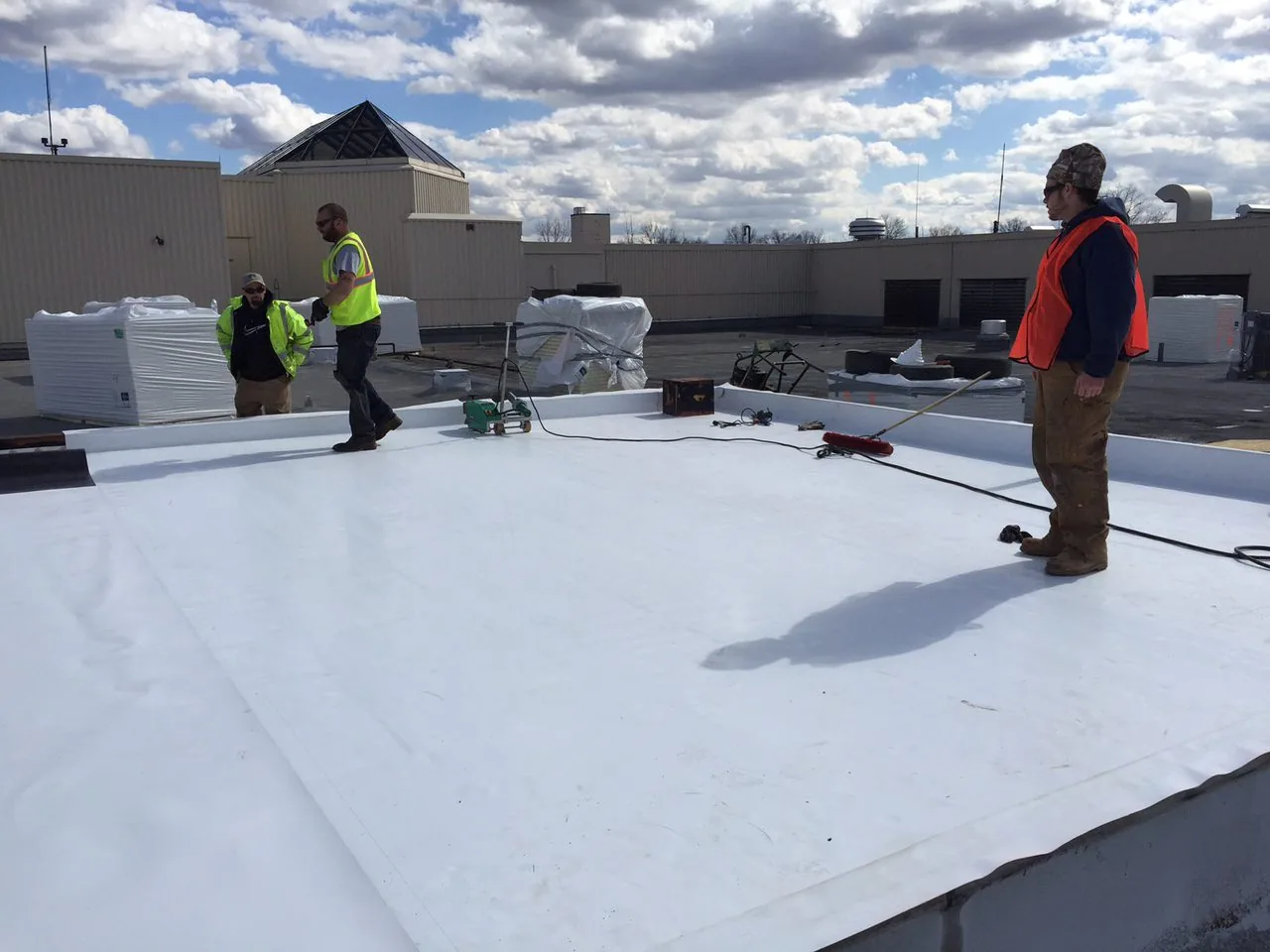
Rooftop equipment curbs and supports
Armories often carry heavy rooftop units, exhaust fans and antenna mounts on curbs and stands. When a leak traces back to one of them, we check the curb height, the base flashing, the counterflashing, and whether the curb or stand itself is solid. Our rooftop curb and support repair handles the roofing side. If the unit has to be lifted, disconnected or moved, that's the mechanical contractor's job, and a structural engineer should weigh in if a support needs to be changed rather than just reflashed. The estimate shows what they need to finish before we flash the curb, so the facility manager can book both trades in the right order.
We photograph what we find as we open things up: wet insulation at the curb, rusted deck, a rotted wood nailer. Once new flashing goes on, that evidence is hidden for good. If we can't see enough to know whether a support is sound, we say so and recommend a core cut or a closer look before pricing the fix. We also keep findings to the curb we inspected. One bad curb doesn't mean every unit on the roof is failing, and a drip inside doesn't always mean the water came in right above it.
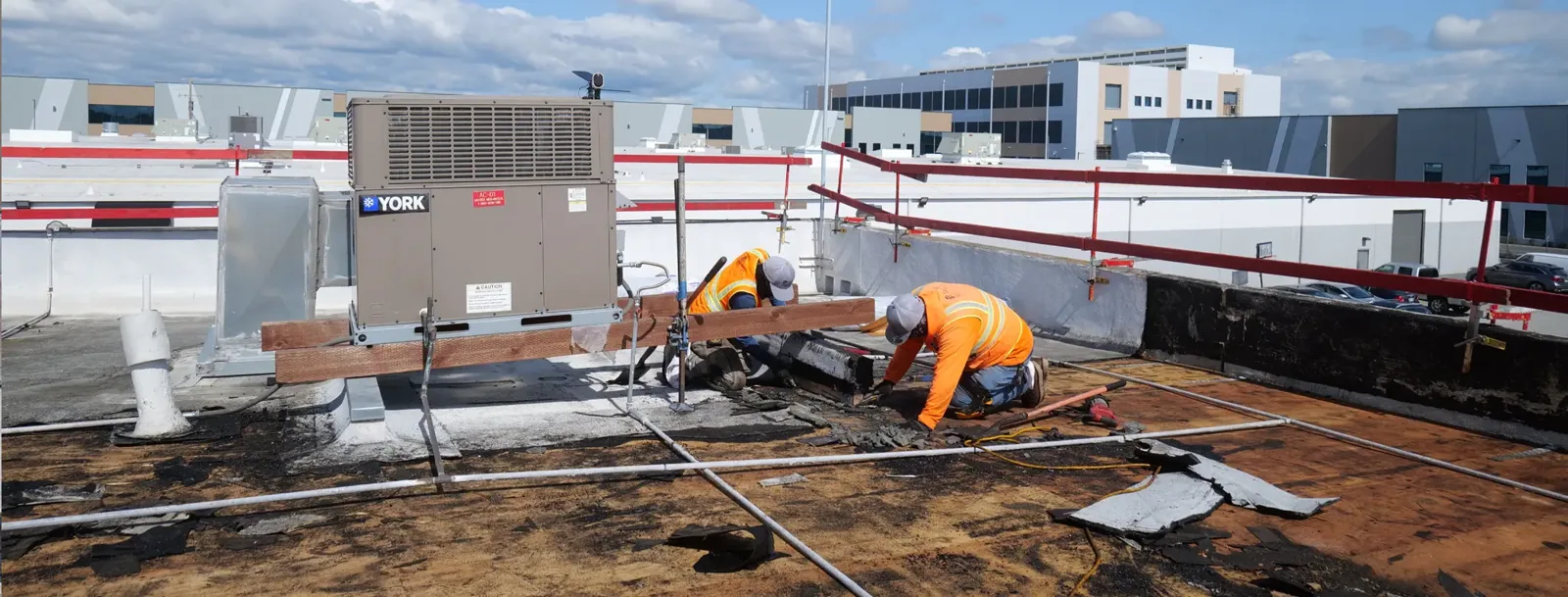
Membrane repair and moisture checks
A membrane repair on an armory starts with figuring out what's actually up there. Many of these buildings have been reroofed or patched more than once, so you might find single-ply over an older built-up roof, or different materials on different sections. We cut back to sound material, clean what stays, and use the method that matches it: heat-welded seams for TPO or PVC, the right adhesives and flashings for EPDM or modified bitumen. A roof coating can extend the life of a sound field, but it can't fix a soft curb or rebuild a rotted nailer, so we don't price it as if it could.
If we recommend keeping the existing insulation, we want to know it's dry. An infrared moisture survey done on the right evening can flag likely wet areas, but it's a list of suspects, not proof. We confirm with core cuts where the answer would change the recommendation, then patch each core and protect the room below while we work. None of this assumes damage from the 2020 tornado or anything else. The roof tells us what it needs.
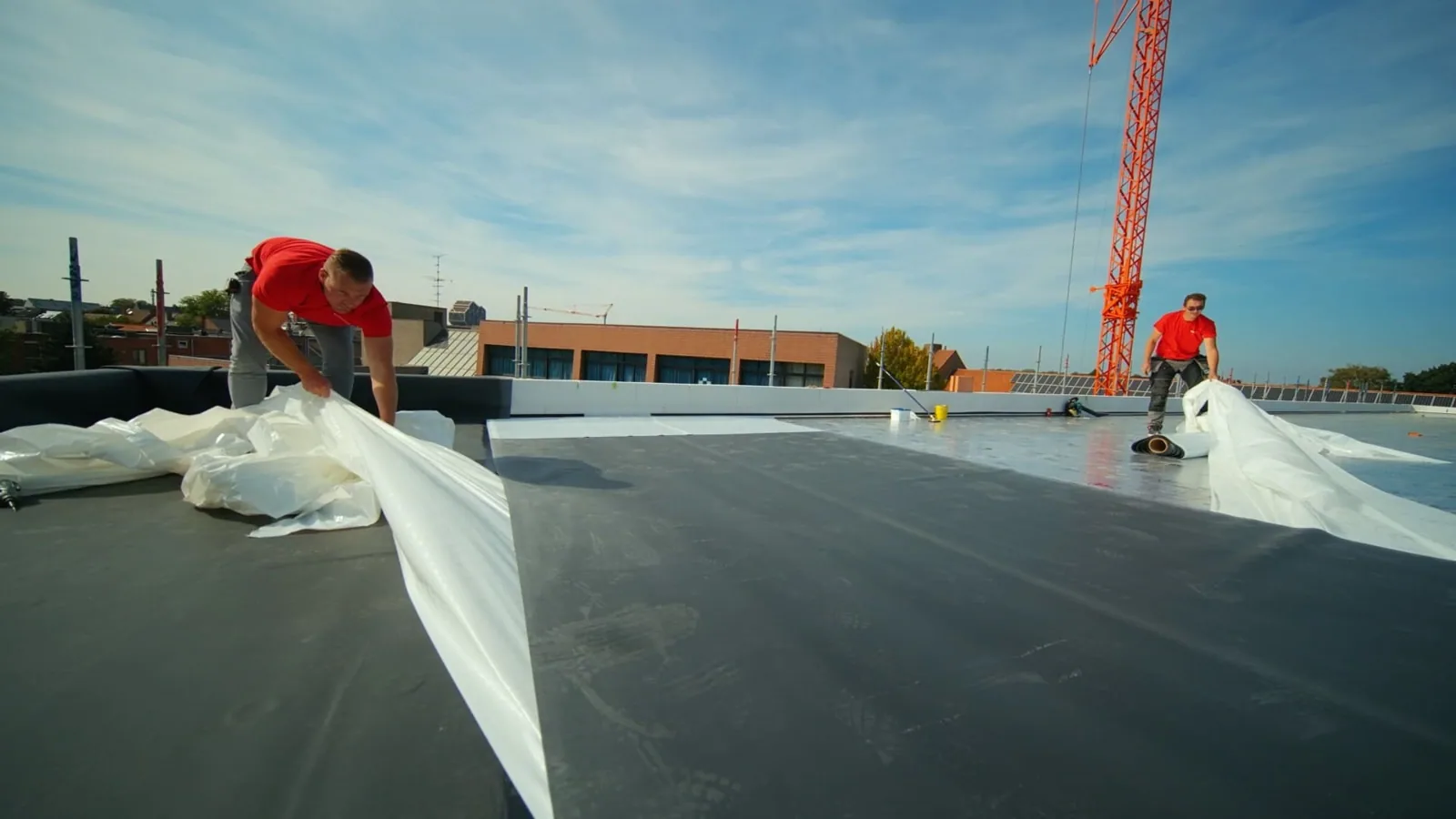
Wall flashing and drains
Armories often have a tall drill hall or vehicle bay next to lower office and storage wings, which means long runs of wall flashing. When water shows up along that line, our flashing failure repair checks the counterflashing, the termination bar and the wall behind it. If the masonry is cracked, the sheathing is soft, or the parapet cap is letting water in from above, a mason or wall contractor fixes that first, sometimes with an architect or engineer involved. Then we install new base flashing and tie it into the membrane. Patching the seam at the bottom of a wet wall just moves the leak a few feet.
Drains get the same treatment. We check the drain bowl, the clamping ring and the membrane around it, and we look for ponding that tells us the drain sits high or the deck has sagged. If the drain body is cracked or the pipe below is the problem, that goes to the plumber. Our estimate lists the wall, equipment and plumbing items next to the roofing that depends on each one, so it's clear what's ours, what belongs to another trade, and what order the work has to happen in. When we finish our part, the record still shows anything the other trades haven't done yet.
Working above an occupied armory
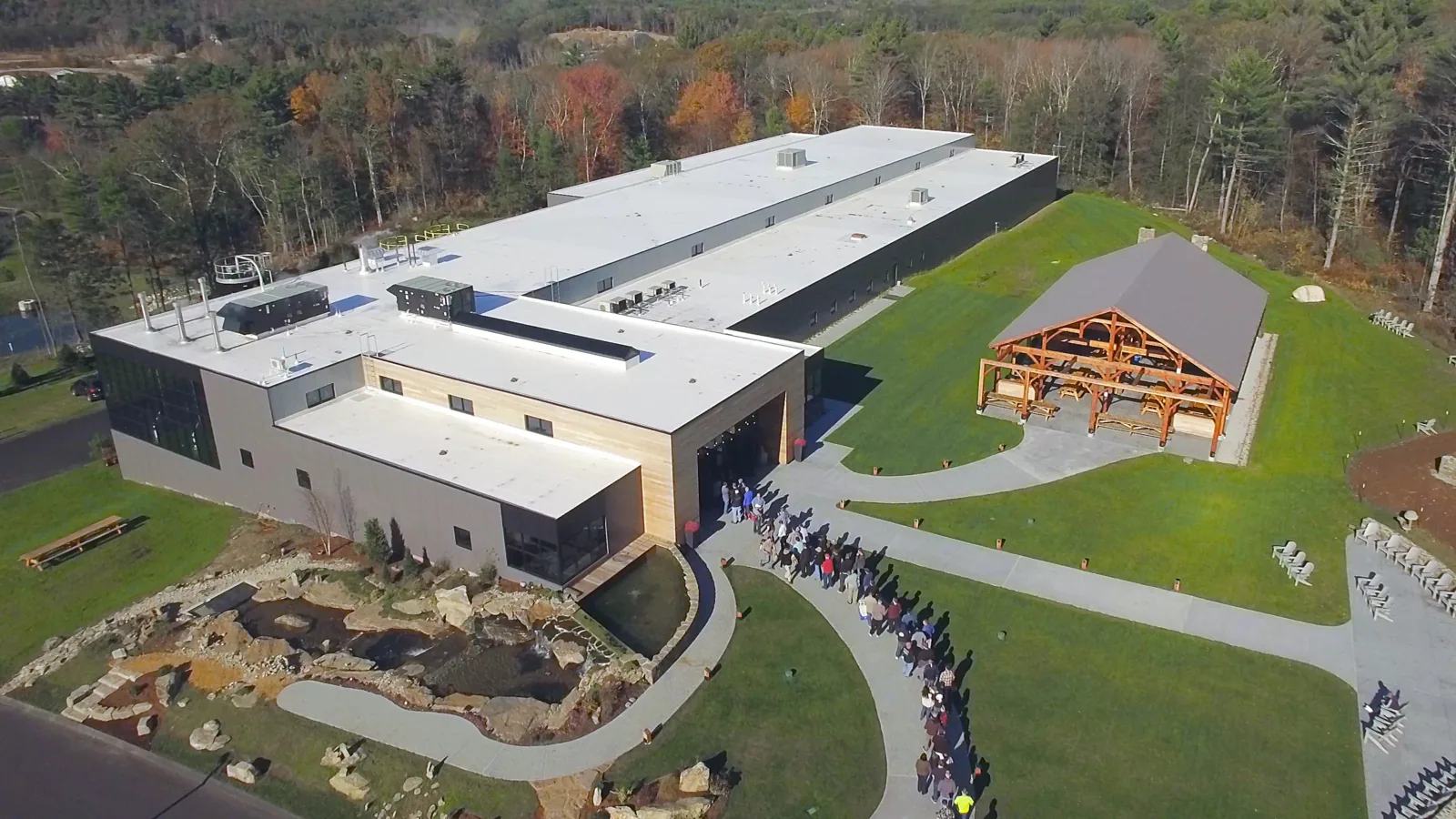
Before we open a roof, we walk the facility manager through where we'll cut, how material comes off the roof, and where the hoist or crane will sit. Our occupied building reroofing plan depends on what's underneath: offices, a drill floor, supply rooms, vehicle bays, or sensitive equipment. The people who run those spaces tell us what has to be moved, covered or shut down, and we build those steps into the schedule. A walk-through for the estimate isn't permission to start tearing off later. Access rules, escorts and work hours come from the facility itself, not from a general idea of how military sites operate.
Sometimes opening the roof turns up more wet insulation or rusted deck than anyone expected. When that happens we stop, show the facility manager what we found and why the repair area needs to grow, and price the change before going further. If the room under the larger area hasn't been checked yet, it gets checked first. And if we're waiting on a wall or mechanical repair before we can finish, we install a temporary watertight seal and spell out what's still needed to complete the permanent roof.
Closeout and records
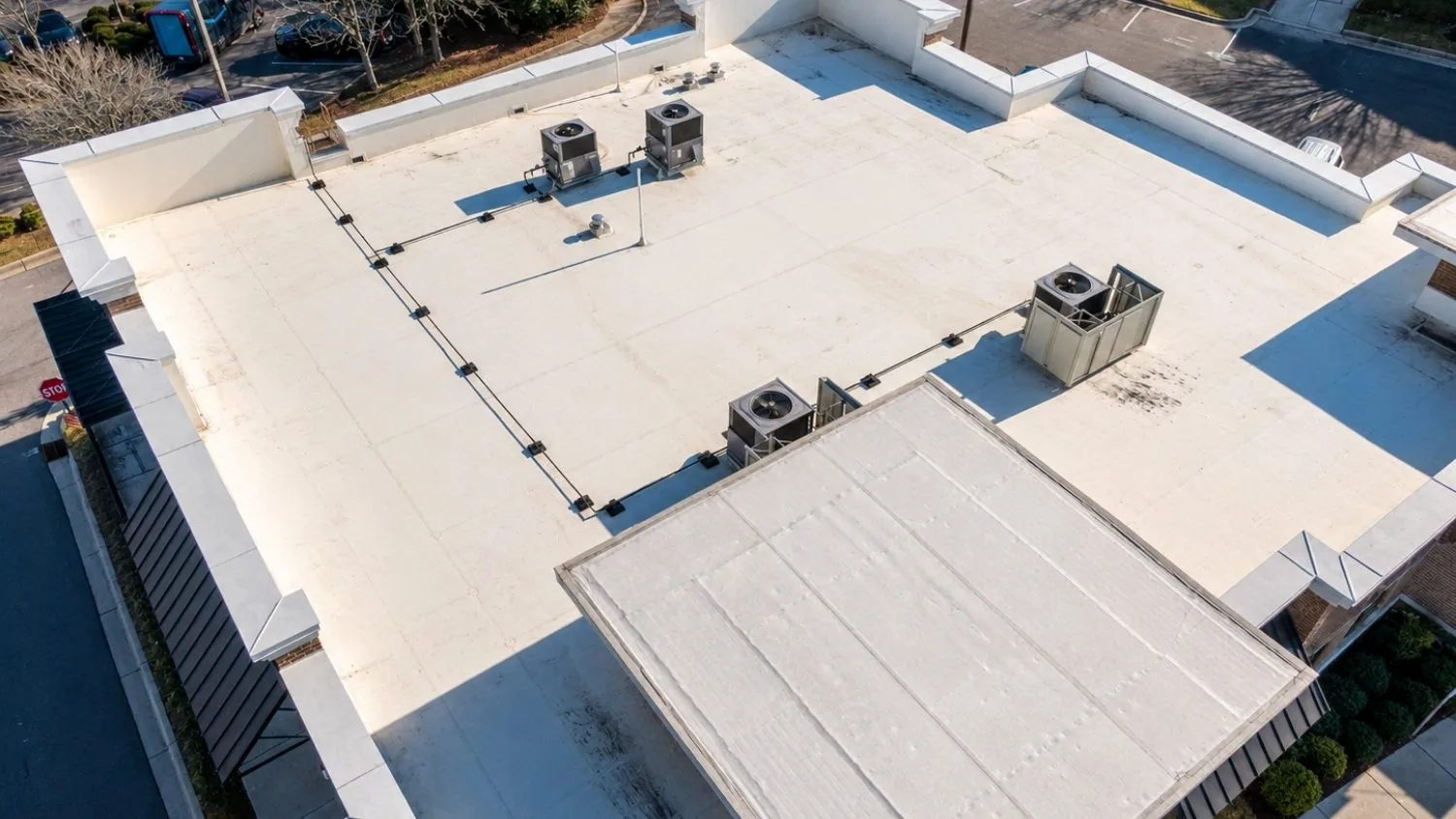
At closeout, the facility gets a short report: what we repaired, what we found when we opened the roof, which core cuts we made and how we sealed them, with photos tied to spots on a roof plan. Anything still open, like a wall repair or an equipment change waiting on another contractor, is listed by trade so whoever picks up the file next knows exactly what's left. We don't present a new patch as the answer to every leak in the building. If another area needs a look, the report says where and why.
We handle commercial roofing around Downtown Arlington and the surrounding business districts, scheduled through whoever manages the specific building. See also our pages on Army installation roofing and Air Force base roofing. Each of those buildings gets its own inspection, and we don't carry assumptions from one site to the next.
On a typical armory job, the first site meeting covers the rooms under the work area, any equipment or supplies stored there, and how our crew gets to the roof without getting in the way of training or daily operations. Those details differ from one building to the next, so the scope describes this roof section, not a base-wide plan. The estimate spells out how far the tear-off goes, how we keep the building dry if weather stops work, and who looks at exposed deck or insulation before it's closed up. If hidden damage means the opening has to grow, we mark the location and the extra work before cutting further. When we wrap up, the facility manager gets the finished-area summary, the photos, and a list of any remaining items for other trades.
Common Questions
Do the Fort Worth and Mineral Wells Guard references tell you anything about an Arlington armory?
No. The 136th Airlift Wing is a Texas Air National Guard unit based in Fort Worth, and Fort Wolters in Mineral Wells is a historical Army Guard training site. We base every recommendation on the building we actually inspect and what its facility manager tells us.
What has to happen before you flash a rooftop unit curb?
The curb or stand has to be solid and tall enough, and the unit has to be out of our way. If it needs to be lifted, disconnected or its support changed, the mechanical contractor does that first, with an engineer if needed. Then we install new base flashing and tie it into the membrane.
How does wall repair show up in your estimate?
We list the wall work, like masonry repair, new sheathing or a parapet cap fix, as a separate item for the wall contractor, marked on the roof plan. Next to it we price the base flashing and counterflashing we install once the wall is sound. A patch at the bottom of a wet wall won't stop the leak.
What happens if the repair area has to get bigger?
We stop, show the facility manager what we found, and price the added work. The space under the larger area gets checked and protected before we cut further. If we're waiting on another trade, we seal the roof temporarily and note what's left for the permanent repair.
Schedule an armory roof inspection
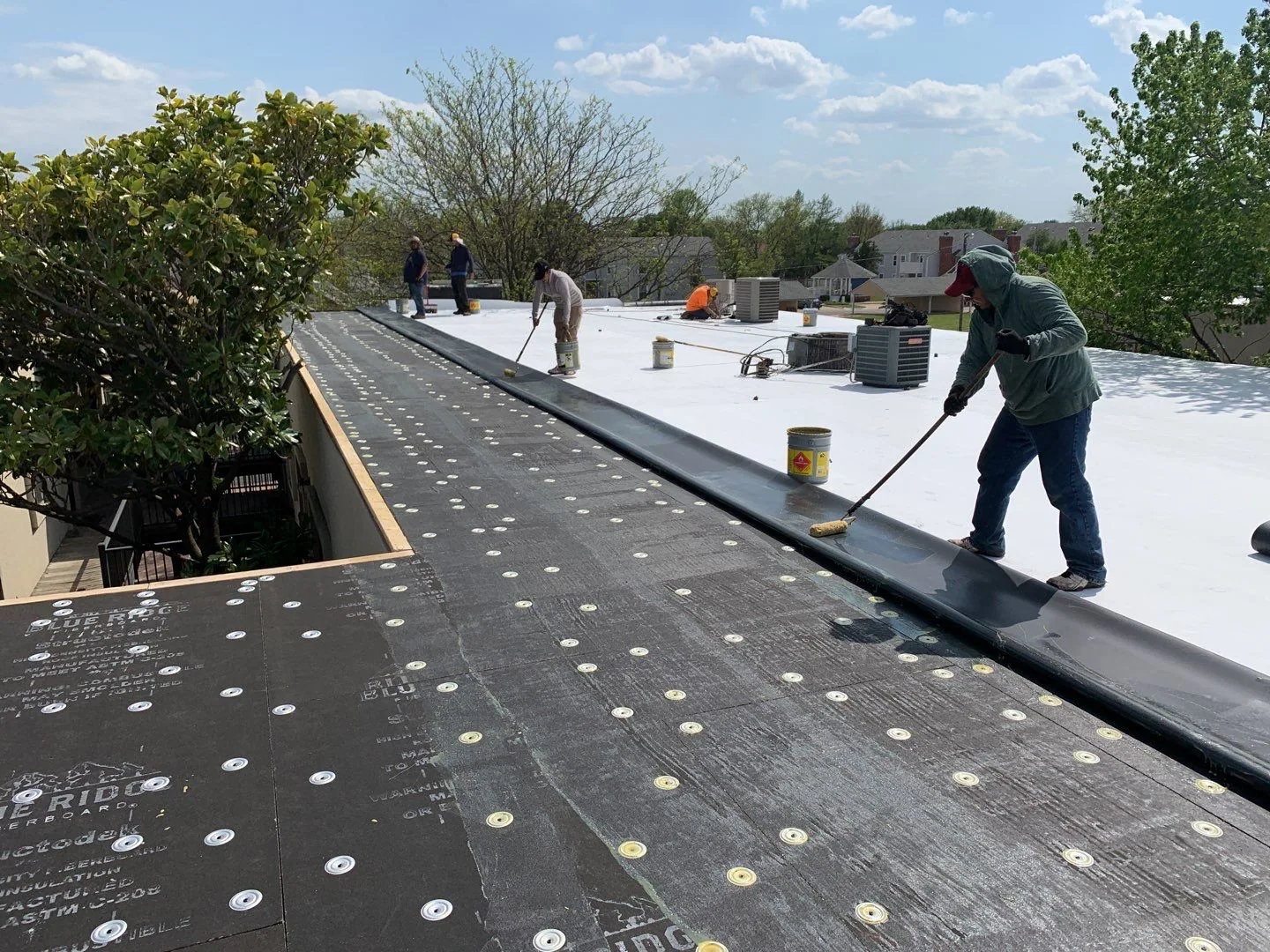
Have the building's facility manager reach out to set up a visit. We'll inspect the leak area, explain any curb, wall or drain work involved, and lay out how we'll protect the space below.
- Guard building roof component support and attachment review
- Guard building membrane repair against prepared component support
- Guard roof temperature observations and retained layer examination
- Guard wall flashing and backing reconstruction inquiry
- Guard building roof exposure and reviewed interior preparation
- Guard building roof inquiry around Downtown Arlington and surrounding business districts
- Army building roof repairs and edge support work
- Air Force building roofing with wall preparation duties