
Air Force Base Roofing in Arlington, TX
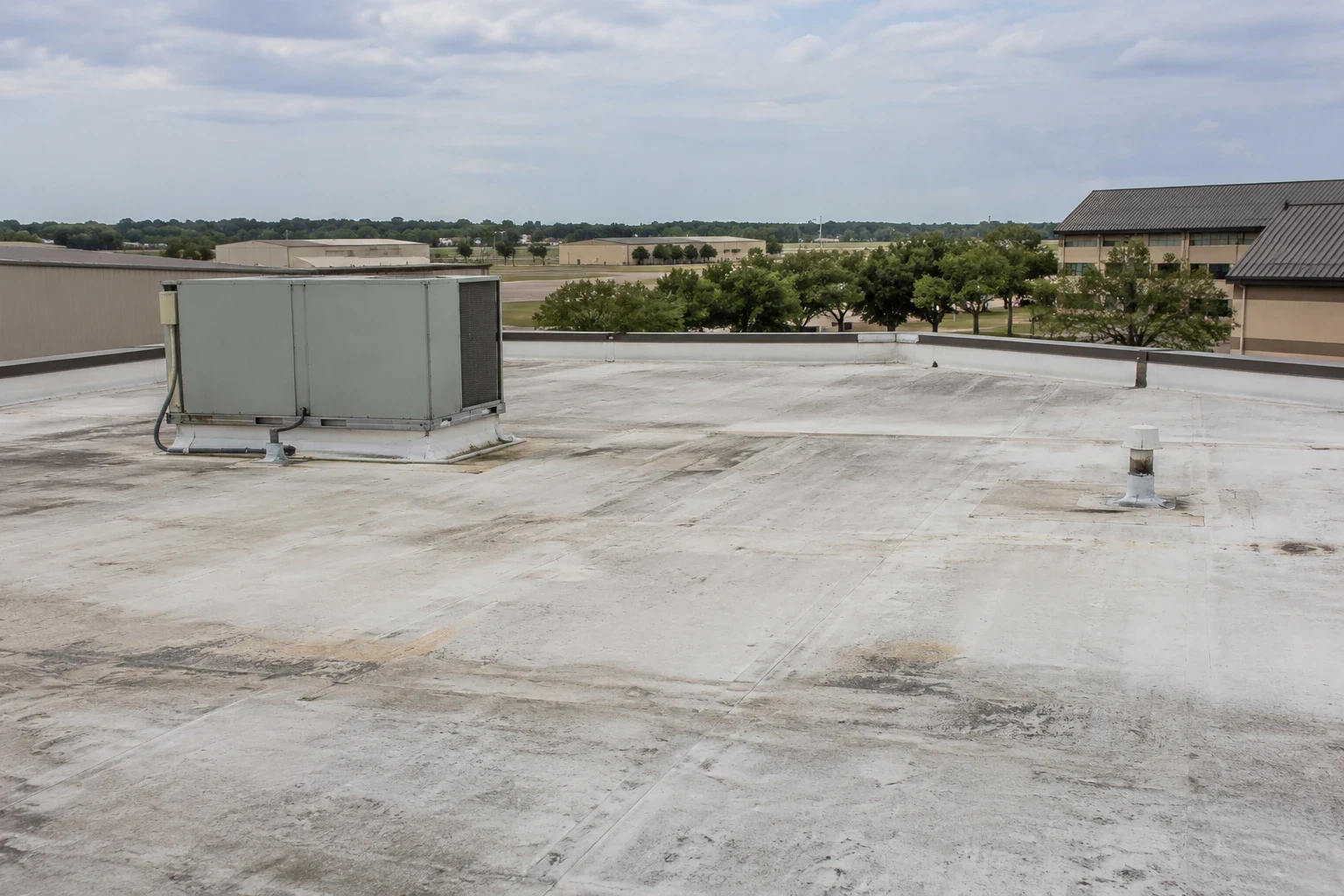
Air Force Base Roofing
Air Force facility roofing in Arlington, TX: wall flashing and sheathing repair, membrane tie-ins, moisture testing and tear-off planned with facility staff.
North Texas roofs swing from hard summer heat to winter cold every year, and that movement works flashing loose at the walls. If you're dealing with a leak at an Air Force-related building in Arlington, TX, we start with the building and the leak. For wall flashing, that means following the counterflashing up to the wall behind it. If the sheathing or masonry is rotted or cracked, it has to be repaired before new flashing can hold. A membrane price alone doesn't include wall repair or a plan for protecting the room under the work.
Naval Air Station Joint Reserve Base Fort Worth and the 136th Airlift Wing, a Texas Air National Guard unit associated with Fort Worth, are the nearby military names. Neither one gives us access to your building or tells us what's on its roof. Tell us which building and who can arrange the inspection, and your staff will tell us which rooms and systems need protecting.
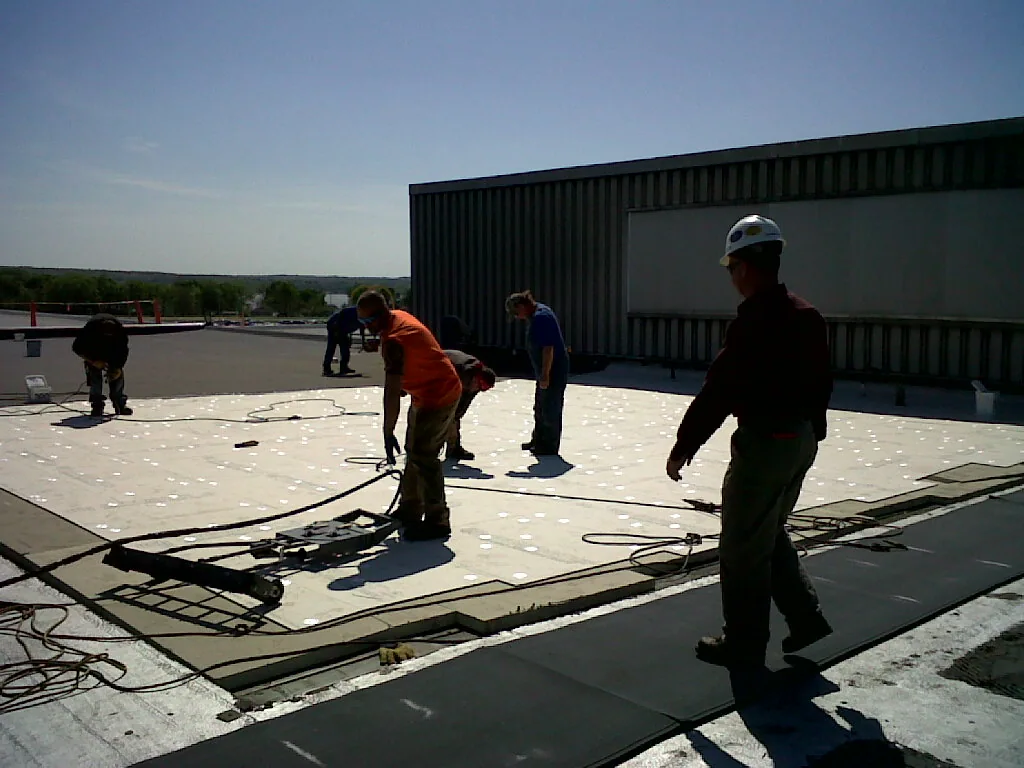
The wall behind the flashing
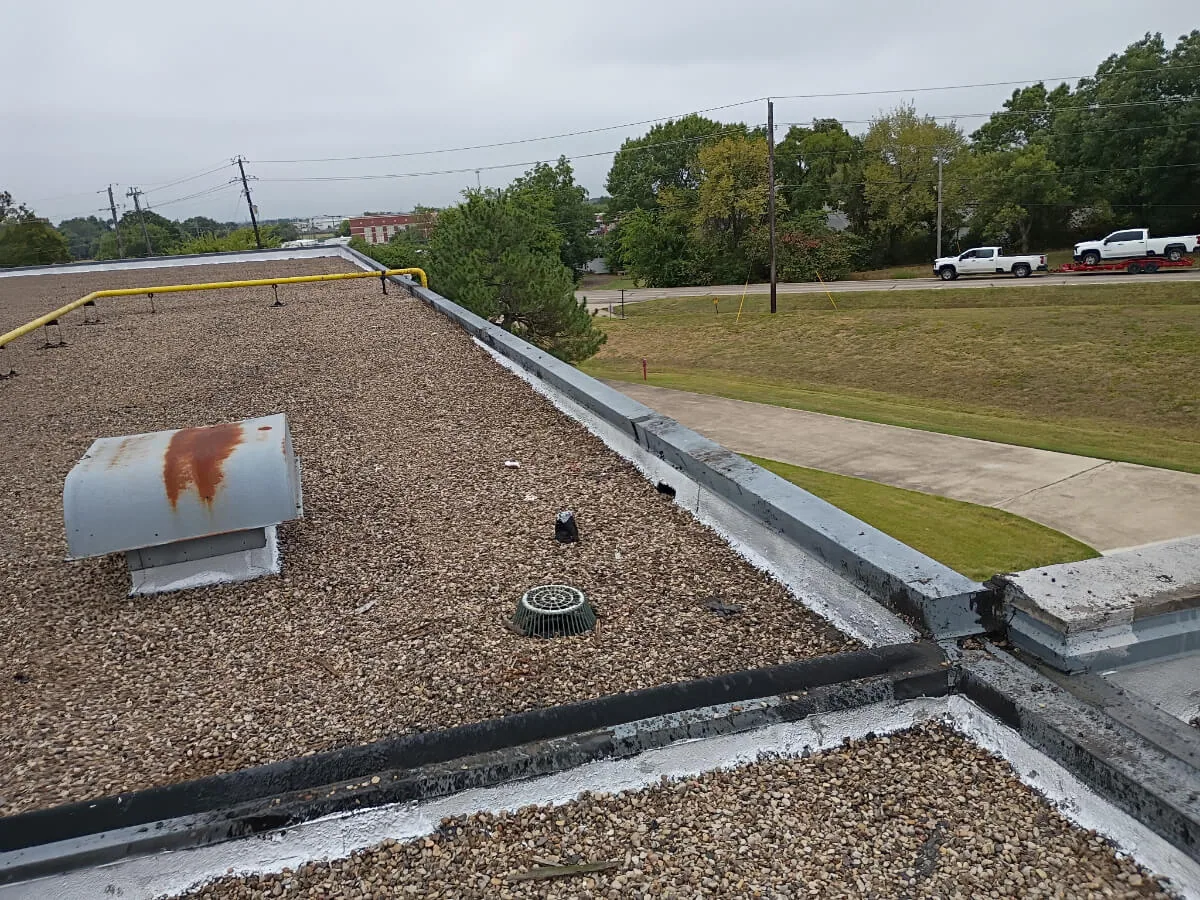
Flashing failure repair at a wall starts with what's holding the flashing up. We check where the counterflashing or termination bar fastens, look for rotted sheathing, cracked masonry or failed mortar joints, and identify what the wall contractor needs to fix. If the wall repair changes anything structural, an engineer should review it. The estimate shows the wall work first, then the new base flashing and counterflashing that go on after. A patch at the bottom of the wall won't fix a wall that lets water in above the roof line.
We take photos while the wall is open. Once new flashing goes on, nobody can see the rotted sheathing that justified the work. If hidden damage still decides what we recommend, we say what testing would answer the question. A leak reported inside points us to an area, but water can enter higher up the wall or somewhere else on the roof entirely. We stick to what we found at that wall and don't stretch one finding across the whole building or assume a roof system because of what kind of building it is.
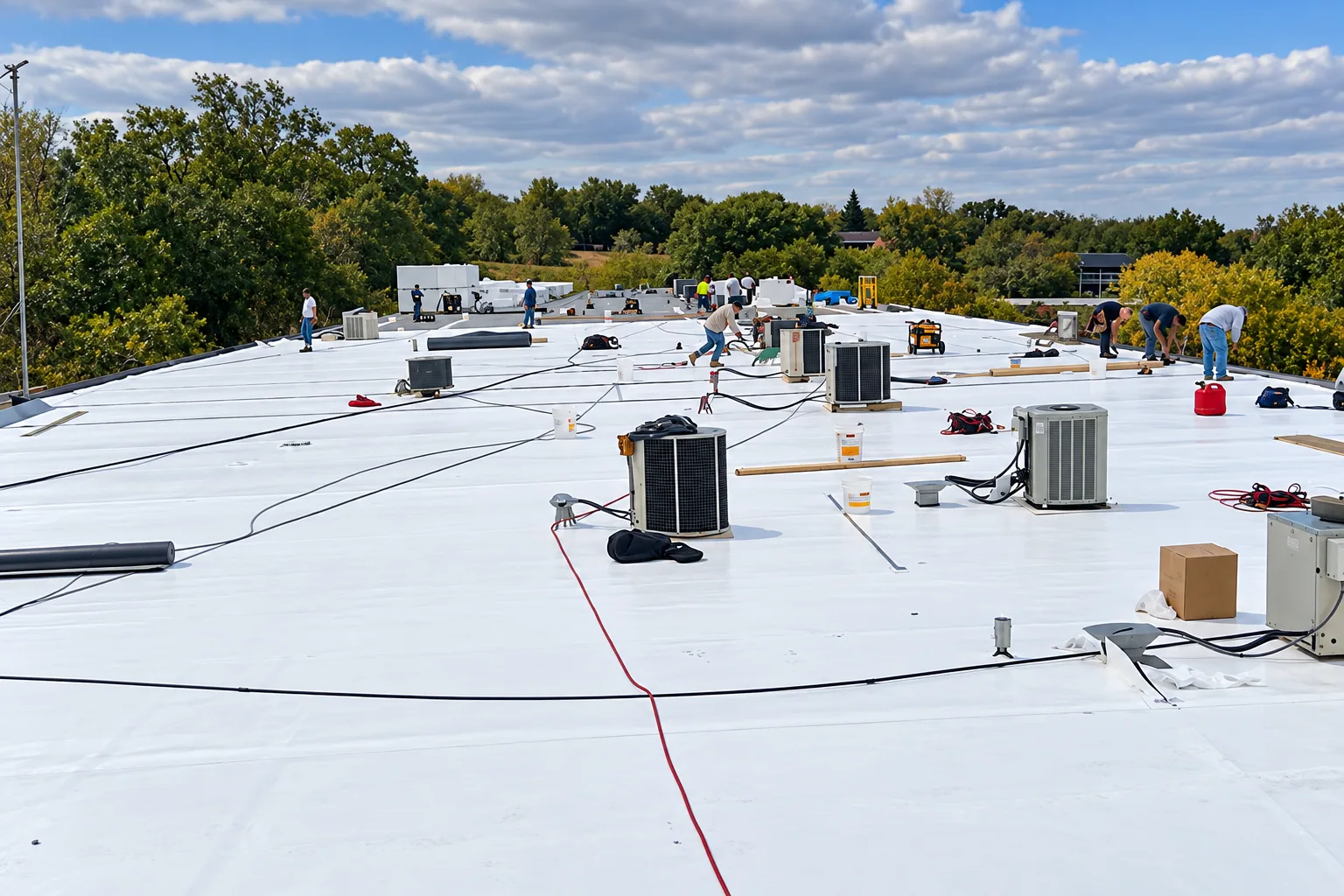
Membrane at the wall and below it
Commercial roof repair at the base of the wall depends on the roof system that's there. We cut out degraded membrane, keep what's sound and clean it for the new seal. TPO and PVC get heat-welded; other systems need their own detail. The membrane work happens only after the wall prep is done. A coating won't rebuild a wall or deal with rooftop equipment changes that belong to another contractor, so the full scope needs to be on paper before you compare roofing prices.
An infrared moisture survey reads temperature differences across the roof, and the results depend on weather, timing and what we know about how the roof is built. A warm area isn't proof that insulation is wet, and the scan can't tell whether wall sheathing is sound. Where it matters, we cut cores, patch them and protect the room below first. The call is based on what we find, not on a regional temperature chart or a nearby base.
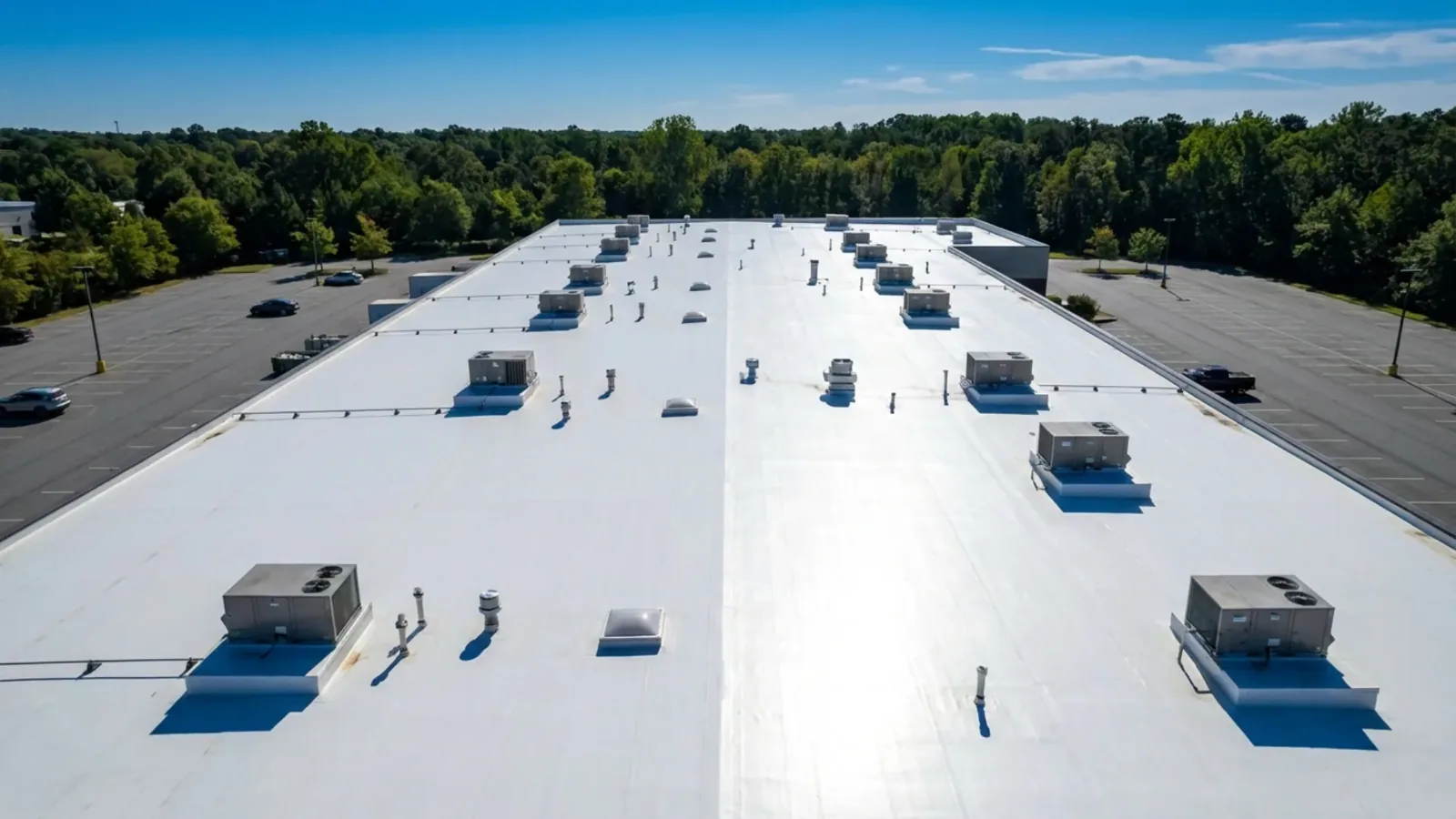
Rooftop equipment and drains near the work
If a unit sits close to the wall, its rooftop equipment curbs and supports need a look too. Your mechanical contractor handles disconnects, lifts and any changes to the unit, along with the shutdown timing your staff set. An engineer reviews structural changes to supports. We flash the curb once that work is finished. New membrane at the curb doesn't complete a pending equipment change, so we list both, and your facility contact can line them up before the flashing is closed in.
If a drain falls inside the tear-off area, we check how the membrane ties into it and what the drain needs before the new seal. Pipe condition and drain-line changes are your plumber's call, with an engineer involved if the drainage design changes. Wall, equipment and drain work are three separate jobs, and each one shows up in the scope next to the roofing that waits on it. Nobody should have to guess whether a general patch number includes them, or read a finished roof as proof that the other trades are done.
Planning the tear-off
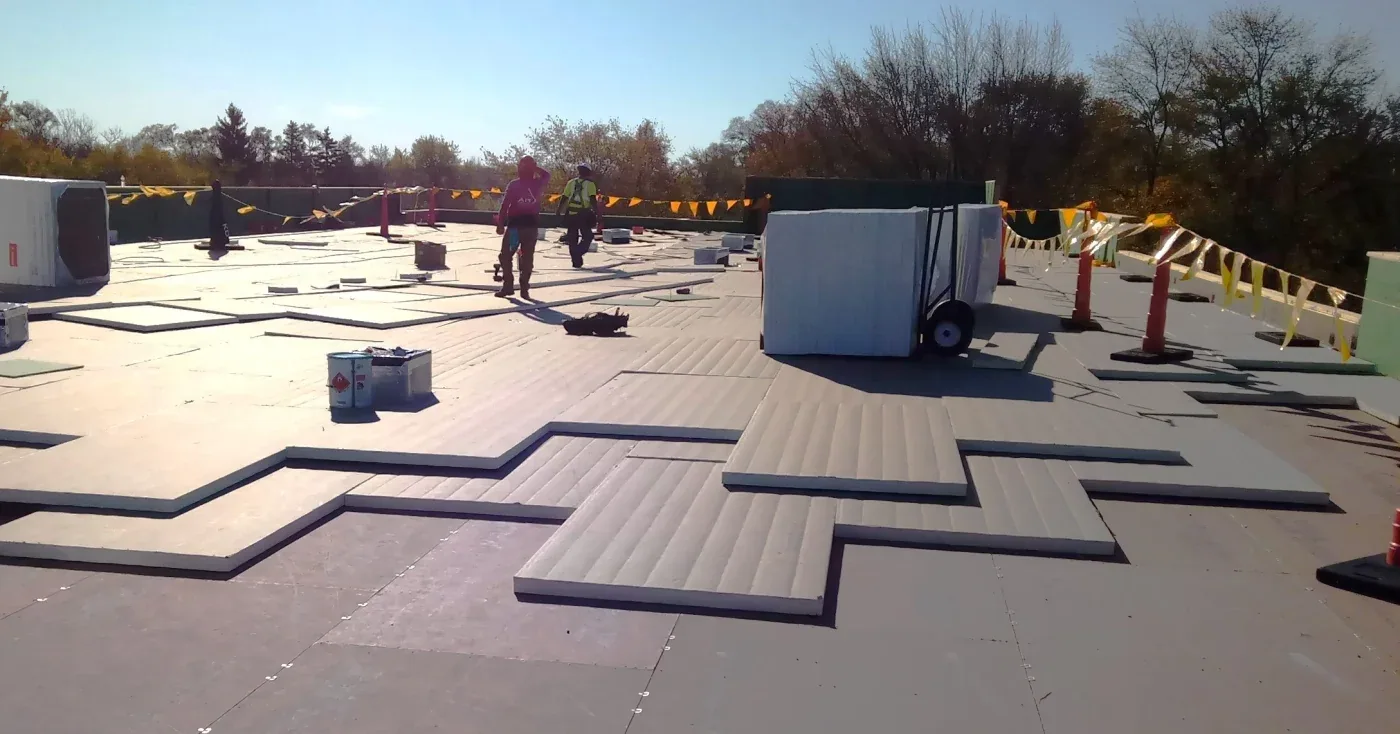
For reroofing an occupied building, we show your facility contact where we'll open the roof and how materials move on and off the site. Your staff go over what's below, such as offices, equipment rooms and storage, and what needs protecting or moving. We get approval for each opening and the route we'll use. An inspection visit doesn't clear the space below for tear-off. We follow the access and security rules the facility gives us, not assumptions drawn from a base name.
If tear-off uncovers more damage, we show you what we found and explain why more roof needs to come off. The space under the added area is checked and protected first. If wall or equipment work is holding up the permanent roof, we install a temporary seal and note the finished detail still to come. The revised scope puts the added roofing, the other contractors' work and the protection in one place, so nobody assumes protection set up for one room also works for the next.
Closeout records
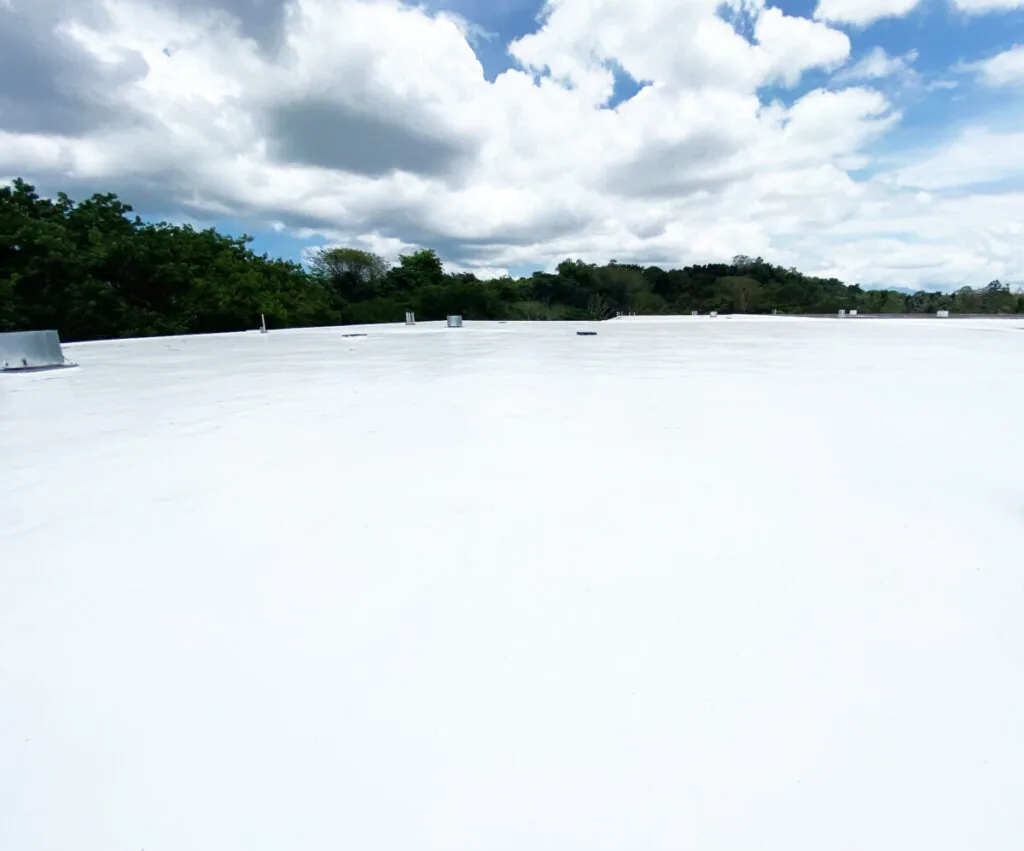
The closeout lists the wall repair done by the wall contractor and the new flashing we installed. It includes what was torn out, which cores were patched, and photos taken while the wall and roof were open. Plumbing, equipment or wall work still owed by others is listed separately from the finished roofing. Any spot that still needs testing gets a location and the question it's meant to answer, so facilities staff can review the repair without mistaking one rebuilt wall detail for a fix to everything behind it.
We take roof inspection requests around Downtown Arlington through the property's own facility contact. Naval facility roofing and military hangar roofing projects are scoped from their own inspections too. This project stays tied to your building, what we found there and the arrangements your staff approved.
Before work is scheduled, your building representative can point out which rooms, equipment and approaches could be affected by a roof opening. That review should cover the work area and the route materials will take, not assume every building on a campus is the same. The scope states where tear-off starts, how the open roof is protected if work pauses, and what finding would justify opening more. If hidden damage changes the repair, we document it and get approval before continuing. The permanent repair matches the actual roof, and your facilities staff get a clear record of each decision.
Common Questions
Do nearby military installations tell you anything about our roof?
No. NAS JRB Fort Worth and the 136th Airlift Wing are regional names, and they don't establish an installation in Arlington, what's on your roof or permission to work there. We need the actual building and a contact who can arrange the inspection.
What has to happen before wall flashing is rebuilt?
Any rotted sheathing or damaged masonry gets repaired by the wall contractor so the new flashing has something solid to fasten to. Then we install the counterflashing and tie the membrane in below it. A patch at the base won't make up for a bad wall.
How should HVAC or equipment work show up in the proposal?
The mechanical contractor's work is listed next to the curb flashing that depends on it. If supports need structural changes, the proposal notes that an engineer should review them. Finishing the roofing doesn't complete equipment work that's still pending.
What changes if more of the roof has to come off?
We show you the extra damage and identify the room under it. Access, material handling and protection are checked before we expand. The revision lists any temporary seal, the other contractors' work and the added roofing together.
Get the wall flashing inspected
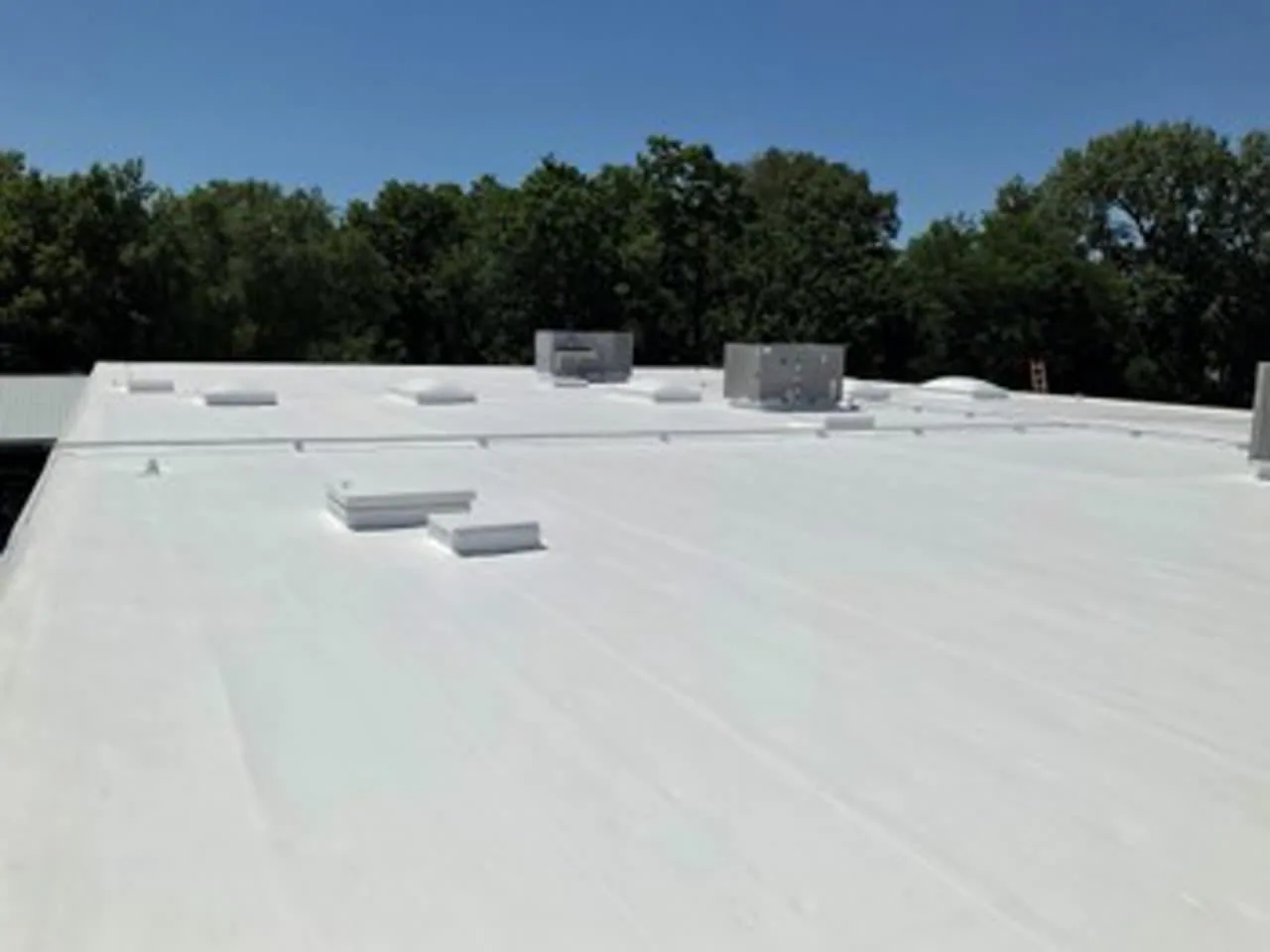
Have the facility contact who handles roof access set up the visit. We'll explain the wall repair, what roofing comes off and the protection needed before new flashing goes on.
- Air Force building wall flashing and backing inquiry
- Air Force roof covering repair beside prepared wall support
- Air Force roof survey and retained material examination
- Air Force roof component preparation and covering responsibilities
- Air Force building roof openings and affected-space precautions
- Arlington-area military building roof inquiry near downtown and Downtown Arlington
- naval building roof work with wall preparation handoffs
- military hangar roof repair and component responsibilities