Military Hangar Maintenance Facility Roofing in Arlington, TX
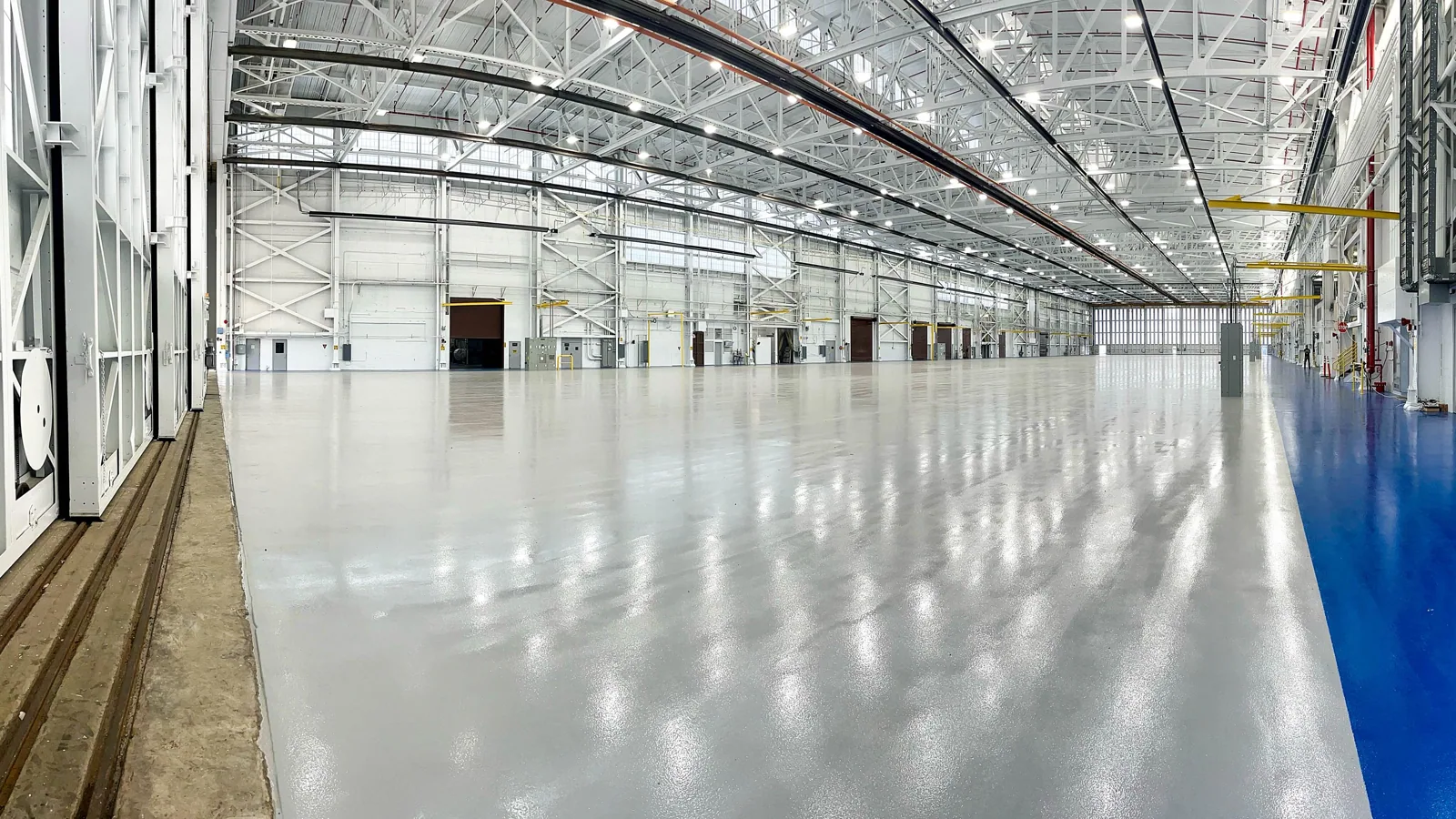
Military Hangar Maintenance Facility Roofing
Hangar and maintenance facility roofing in Arlington, TX: equipment curb and wall flashing repair, moisture surveys, and tear-off planned around active bays.
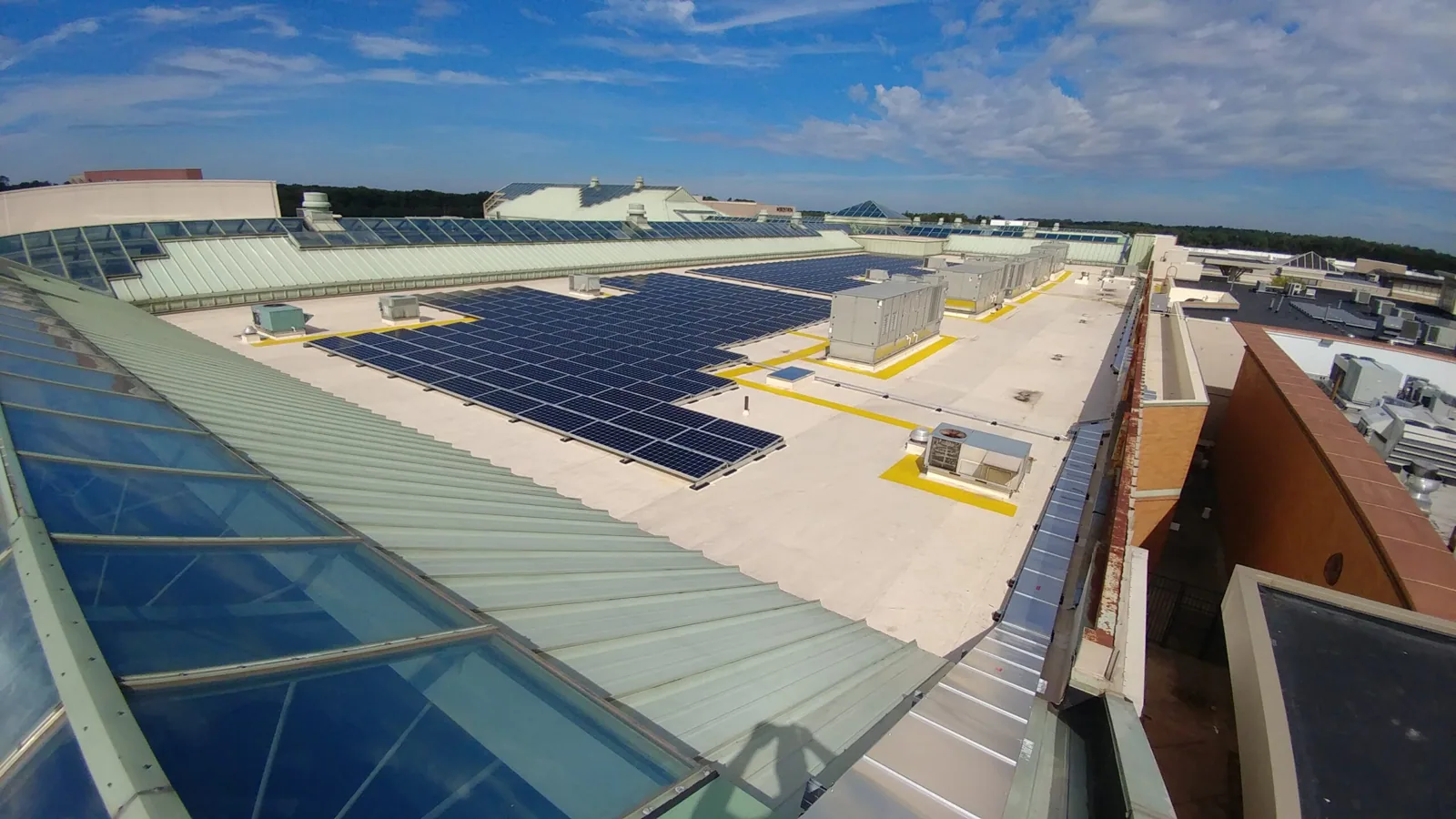
Military hangar and maintenance facility roofs in Arlington, TX tend to be big, low-slope and crowded with equipment: exhaust fans over the maintenance bays, makeup-air units, vents for shops and paint areas, and a long run of flashing where the tall hangar wall meets the lower shop and office roofs. The February 14 to 17, 2021 winter storm across North and Central Texas is a reminder of how hard freeze and thaw can be on those details. When a leak shows up at an equipment curb or a wall line, we trace it to the actual detail and tell you up front when the fix needs the mechanical contractor or a wall repair before new flashing can go on. A seam patch won't help if the curb under it is rotted.
The nearest military aviation installation is Naval Air Station Joint Reserve Base Fort Worth, where the Texas Air National Guard's 136th Airlift Wing is based. To set up a visit we need the building address, the person who can grant roof access, and any rules on escorts, badges or work hours. Facility staff know what's happening in the bay below, and that drives how we plan the work.
Equipment curbs and supports
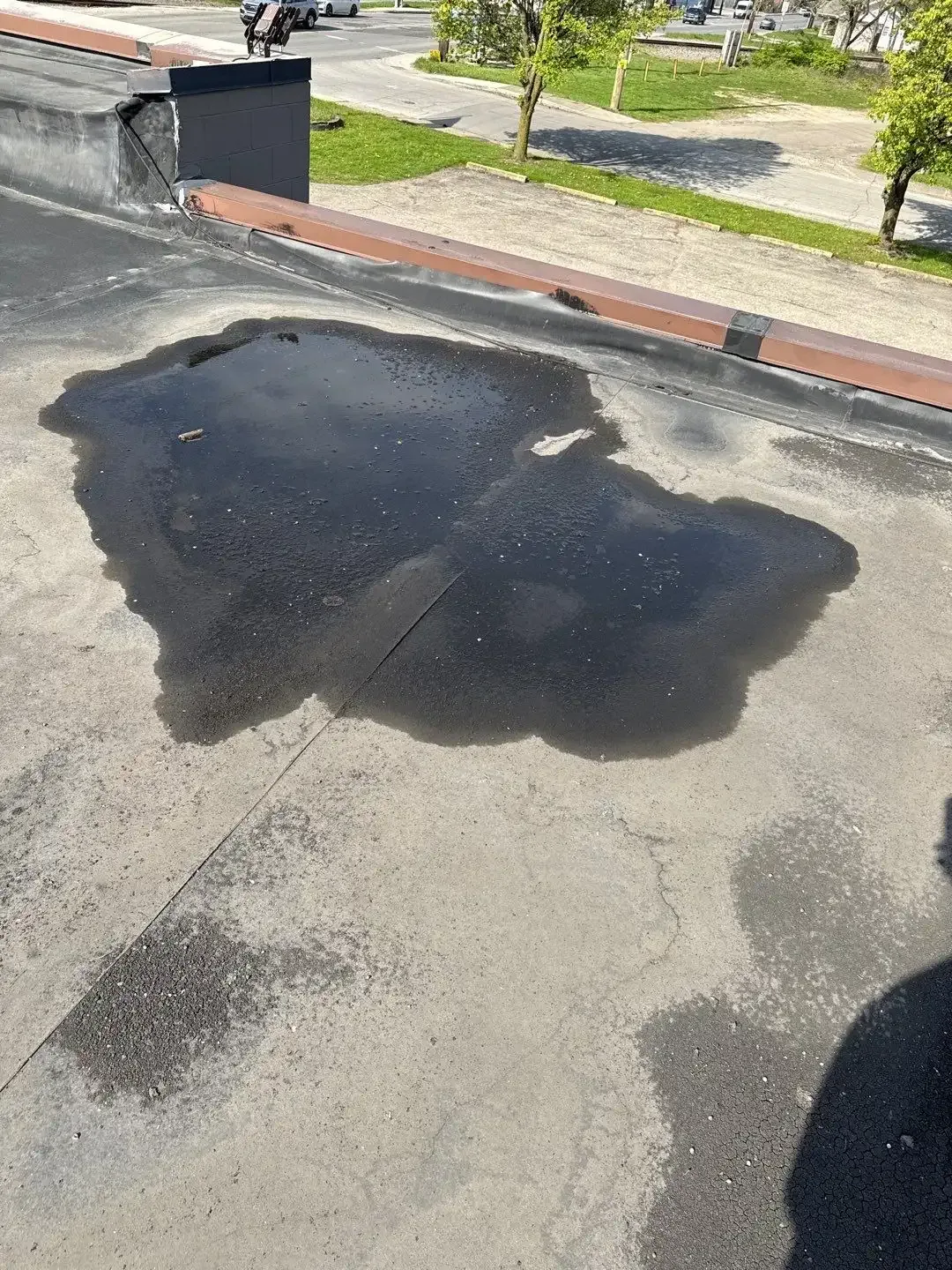
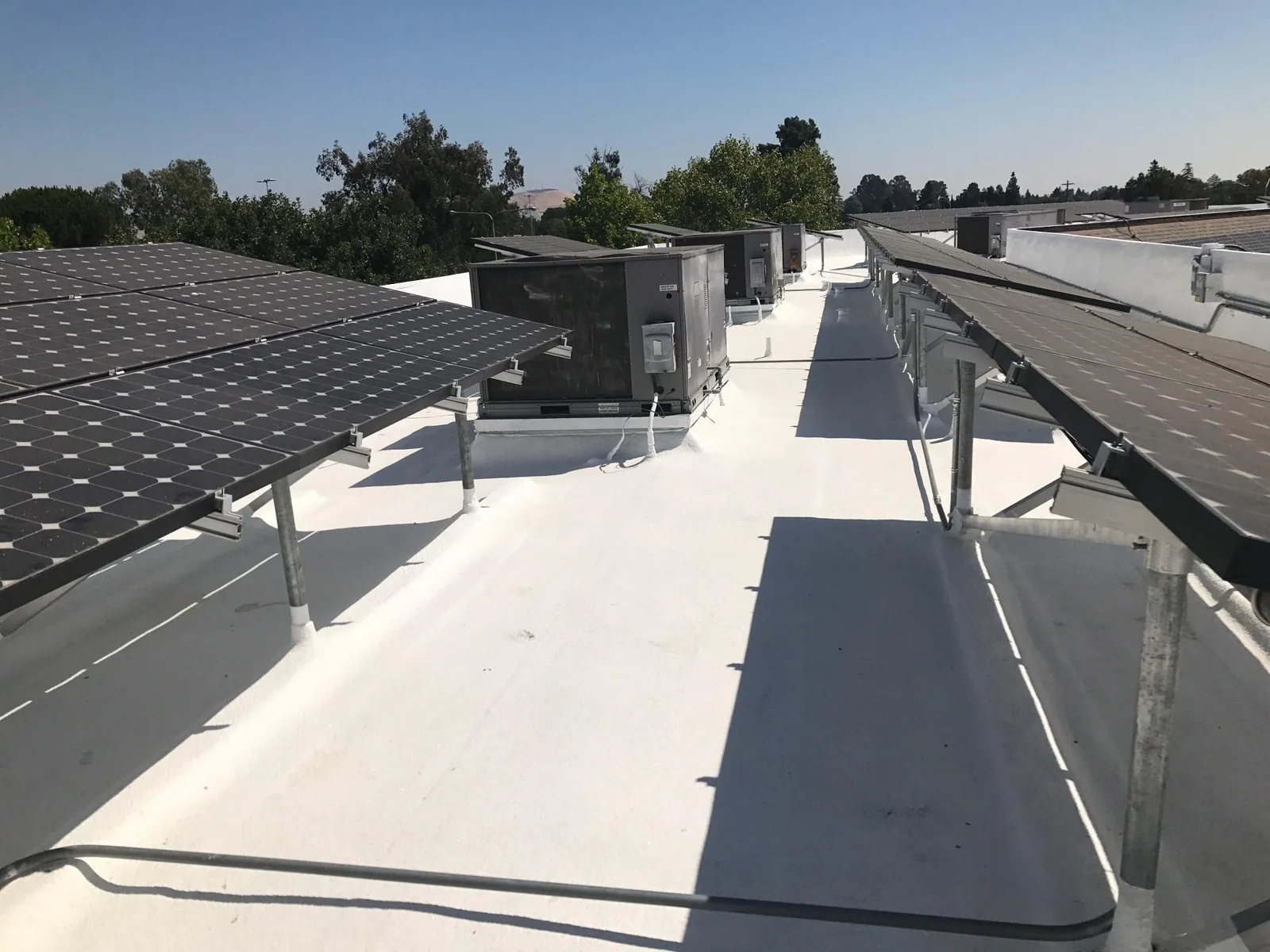
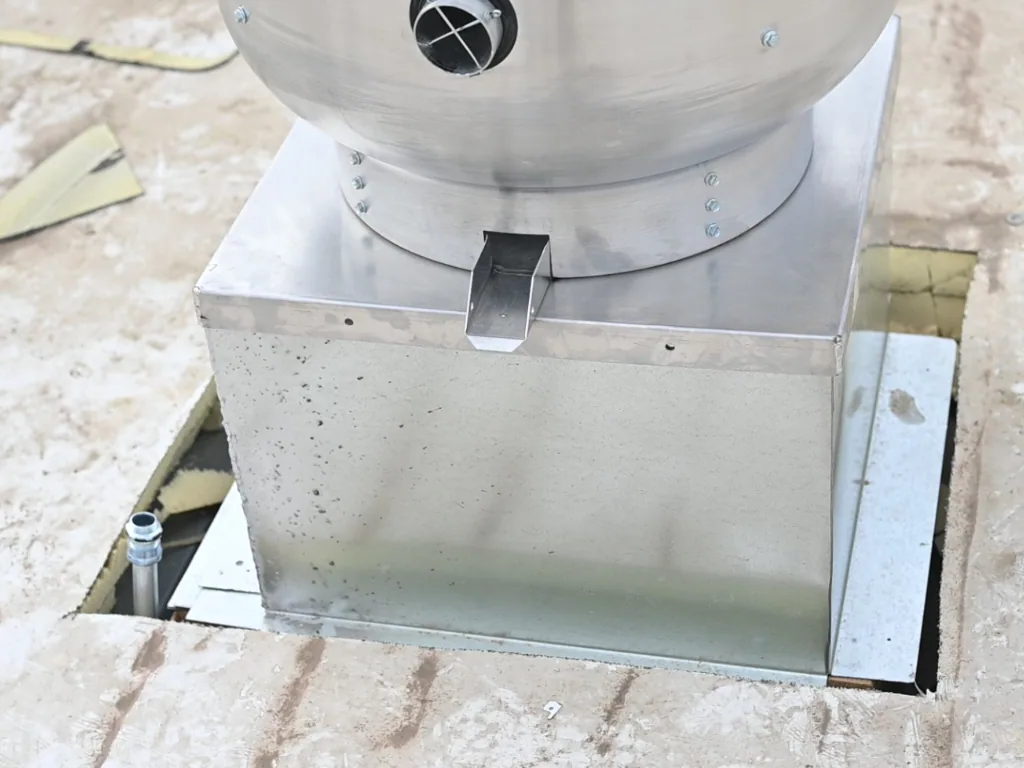
Most hangar leaks we see start at rooftop equipment, not out in the open field of the roof. With equipment curb and support repair, we check curb height, the base flashing and counterflashing, the wood nailers, and whether the unit or its support rails have shifted. If a unit has to be lifted, disconnected or moved, that's the mechanical contractor's job, and any change to the structural support should go past an engineer. We spell out what the curb needs before we can flash it, so the facility manager can line up the mechanical work and the roofing in the right order. New membrane wrapped around a bad curb just buys a few months.
We photograph what we find as things come apart, such as wet nailers, rusted curb walls and crushed insulation, because once the new flashing is on nobody can see why the extra work was needed. If something hidden still decides the repair, like whether the deck under a unit is sound, we say so and recommend a core cut or test opening instead of guessing from the surface. A drip in the maintenance bay points us to an area, but water can travel along the deck a long way before it falls, so we confirm the entry point on the roof before pricing a fix.
Membrane repair and wet insulation
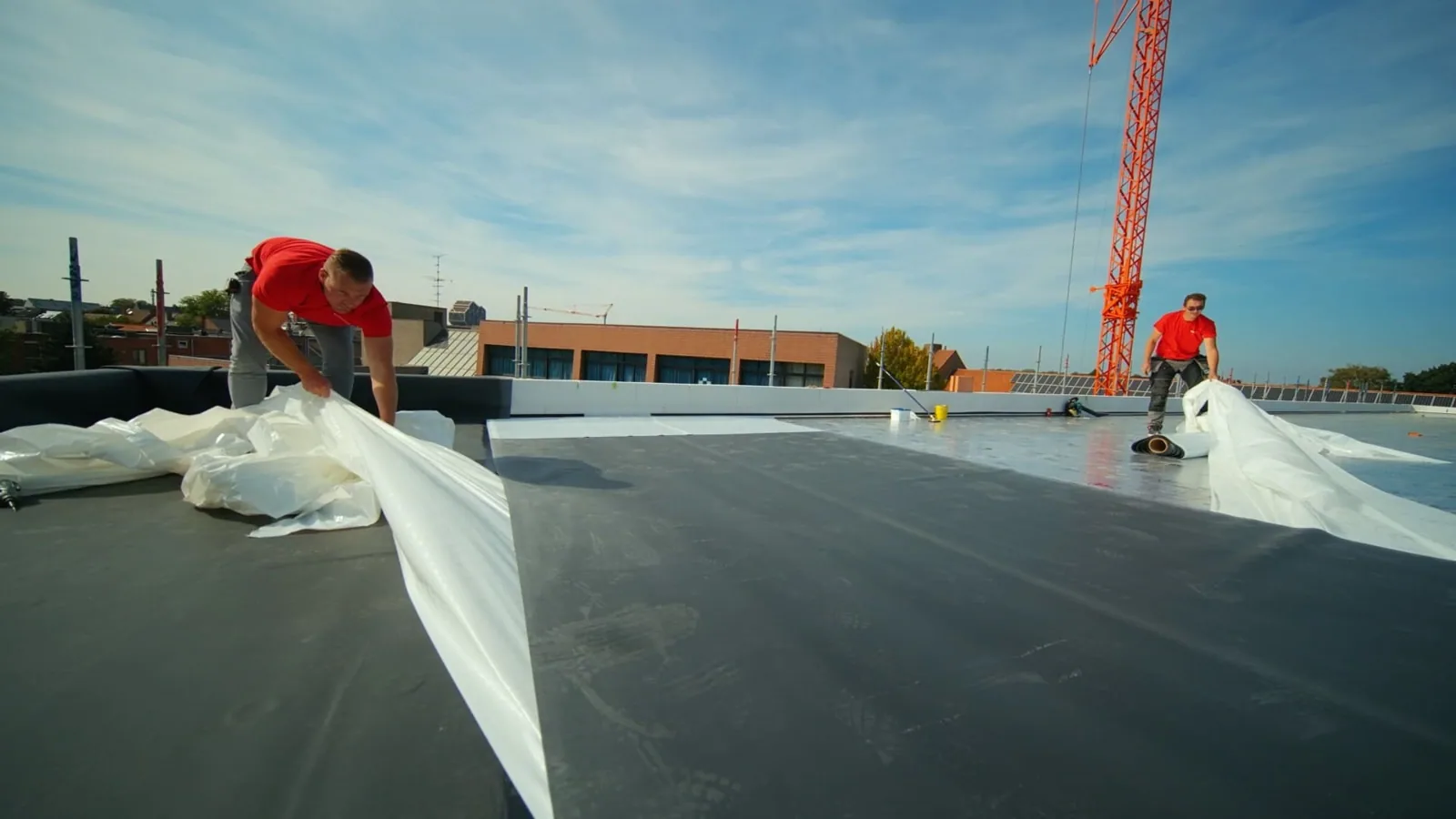
A commercial roof repair starts with knowing which membrane is up there. TPO and PVC get heat-welded seams, and the old sheet has to be cleaned and test-welded so the new weld holds. EPDM, modified bitumen and built-up roofs each have their own repair methods. The estimate should show how much material comes off, what stays, and the curb or wall work that has to be done before new membrane goes down. A coating can be a reasonable choice on a sound roof, but it won't rebuild a rotted nailer or raise a curb that's too short.
Large hangar roofs often hide wet insulation well beyond the one leak you know about. An infrared moisture survey can map suspect areas across the whole roof, but it's a screening tool, and its results depend on weather and roof conditions on the night of the scan. We confirm with core cuts where the readings would change the choice between repair and replacement, and every core gets patched. Before cutting, we check what's below: electrical runs, sprinkler lines and sensitive equipment. The recommendation comes from what we find on this roof, not from the 2021 storm or the name of the base nearby.
Wall lines, drains and other trades
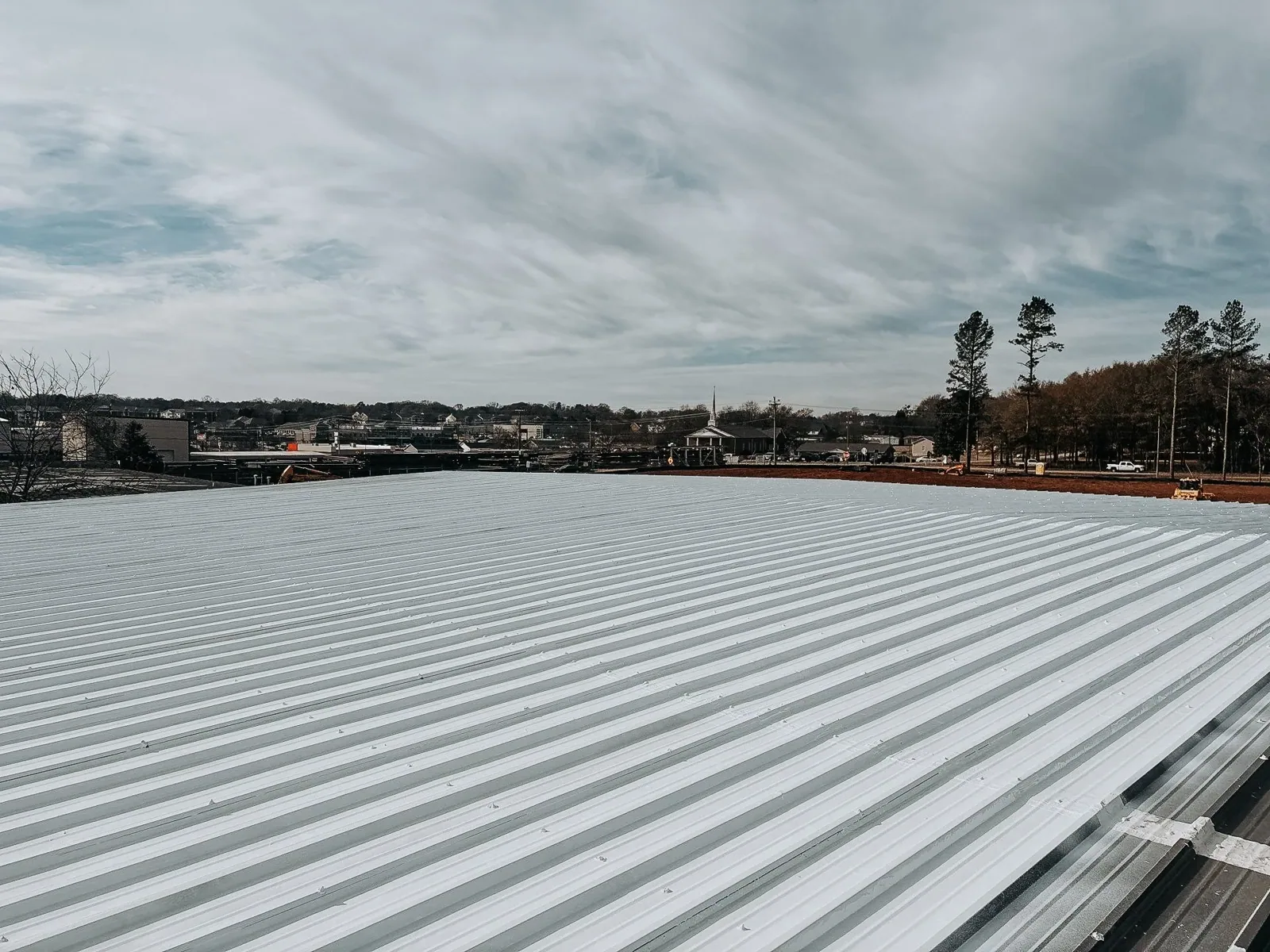
Hangars usually have a tall wall where the main bay rises above the shop and office roofs, and that wall line is a common leak path. Flashing failure repair there means pulling the old base flashing and counterflashing and checking the wall behind them. If the sheathing, metal panels or masonry have deteriorated, the wall contractor repairs them first, with an engineer involved if the wall structure needs changes. Then we install new base flashing and counterflashing. We price the wall repair and the roofing side by side, so the manager sees the whole fix instead of just the roofing half.
Drains get the same treatment. When we pull membrane around a drain, we check the drain body, clamping ring and sump, and replace what's needed so the new membrane seals properly. Anything below the roof, like a cracked drain line or a leaking joint inside the building, goes to a plumber, and changes to the drainage design go to an engineer. We list each of those items next to the roof detail that depends on it. When the roofing is finished, the other trades' items are still open, and we say so plainly so the next call gets made.
Working over an active hangar bay
Tear-off over a hangar bay means debris, noise and dust above aircraft, tooling and people. For reroofing an occupied building, we walk the facility manager through where we'll open the roof each day, how material comes off and goes on, and where the crane or hoist sets up. The facility decides what gets moved or covered below, which bays stay in service, and what safety and security rules apply. Approval for an inspection visit isn't approval to start tear-off, so we confirm the work plan separately. We don't assume aircraft positions, work hours or access routes; we get them from the people running the building.
Sometimes the opening shows more damage than expected, such as wet insulation running past the planned limit or rusted deck. When that happens we stop at a safe edge, dry the area in, show the manager what we found and price the added work before going further. That pause also lets the facility check the bay under the new area before we open it. If we're waiting on the mechanical or wall contractor, a temporary roof keeps the building dry until the permanent flashing goes on. Changes are written up in one revision that lists the added roofing, the other trades' work and the protection needed below.
Closeout records
At the end of the job you get a record of what was done: curbs rebuilt, flashing installed, membrane replaced, core cuts patched, and photos of the conditions we found before they were closed up. Open items for the wall, plumbing or mechanical contractors are listed separately from the roofing we finished, along with anything that still needs investigating. That way the next person who manages the building can tell what was repaired, what wasn't, and why. A clean-looking new roof doesn't mean every hidden problem in the building has been solved, and the record says so.
To set up an inspection near Downtown Arlington and the surrounding business districts, have the building contact reach out with the address and access rules. Civilian buildings follow a similar process, covered on our aircraft hangar roofing page, and so do naval facility roofs, though each building gets its own inspection and its own scope. We keep this hangar's repair tied to its own roof and findings, not to the name of a regional base.
Common Questions
Does being near NAS JRB Fort Worth change how you handle a hangar roof?
Not by itself. The base and the 136th Airlift Wing are regional names; they don't tell us anything about a particular building in Arlington. We work from the actual building, its roof, and the access and security rules the facility gives us.
What else is involved when equipment flashing fails?
Usually the curb itself. If the nailers are rotted or the curb is too low, it has to be rebuilt, and if the unit must be lifted or disconnected, the mechanical contractor handles that. Then we flash the repaired curb, because new membrane alone won't fix a bad one.
What if the wall behind the flashing is damaged?
The wall contractor repairs the sheathing, panels or masonry first. Then we install new base flashing and counterflashing against a sound wall. Sealing over a deteriorated wall only hides the problem until it leaks again.
What's still open after the roofing is finished?
Anything assigned to another trade, such as mechanical, plumbing or wall repairs, plus any areas we recommended investigating further. We list those separately in the closeout record so nobody mistakes them for finished roofing.
Schedule a hangar roof inspection
Have the building contact reach out with the address and access rules. We'll inspect the leak area, explain what the curb, wall or drain needs, and plan the work around the bay below.
- military hangar roof component and supporting construction review
- military hangar covering repair against prepared component support
- military hangar roof observations and concealed material inquiry
- military hangar wall flashing and backing reconstruction review
- military hangar roof openings and reviewed interior arrangements
- subject military hangar roof examination near Downtown Arlington and surrounding business districts
- civilian hangar roof attachment and support investigation
- naval building roof repairs and outlet handoffs