Grocery Store Roofing in Arlington, TX
Grocery Store Roofing
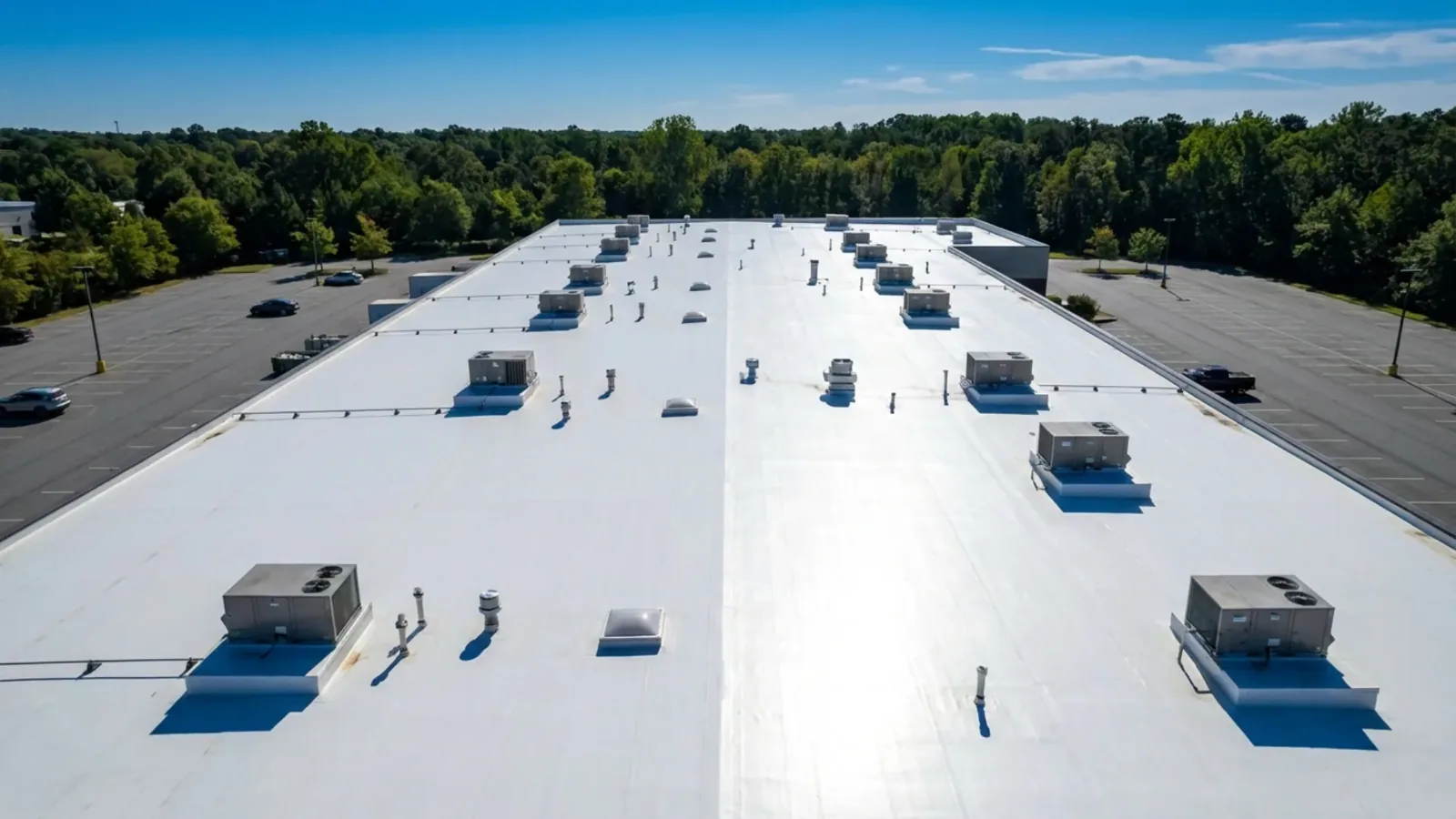
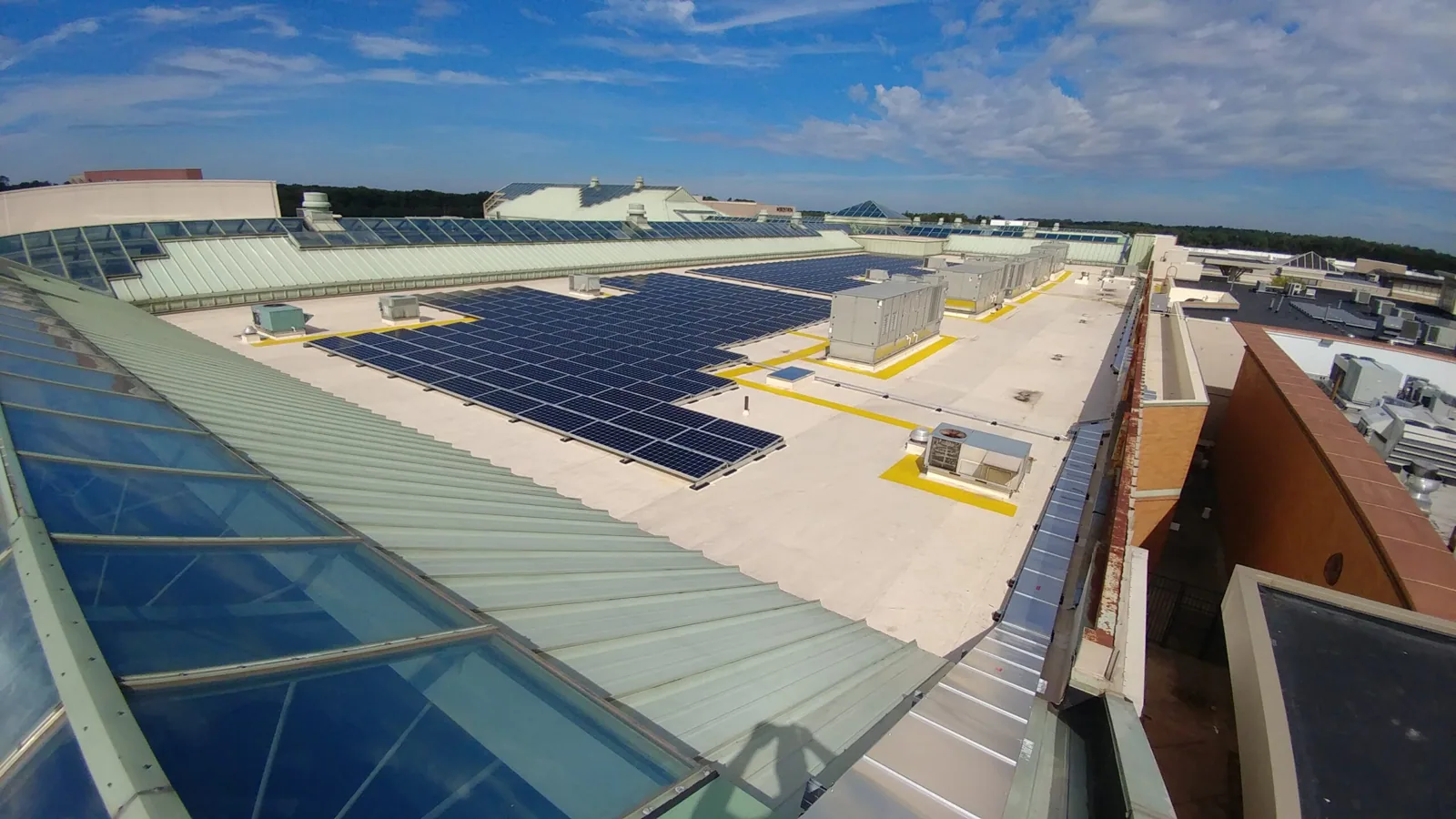
Grocery store roofing in Arlington, TX: roof drain repairs, refrigeration line penetrations, condenser curbs and night work planned around the sales floor.
During the February 2021 freeze, DFW Airport hit minus 2 F and buildings across Texas had burst pipes. When a grocery store finds water on the sales floor, the first thing to sort out is whether it came through the roof or out of a plumbing line. We start at the spot where the leak was reported, then go up and check the roof drain, the membrane around it and the drain fitting itself. The estimate keeps roof work and plumbing work separate and shows how the new membrane will tie into a sound drain. We also look at grocery roofs in Dalworthington Gardens and Coppell, and each store gets its own access and protection plan. The store manager tells us which aisles, coolers and stockrooms sit under the work, and our recommendation sticks to what we actually found on that roof.
Roof drains and the fittings under them
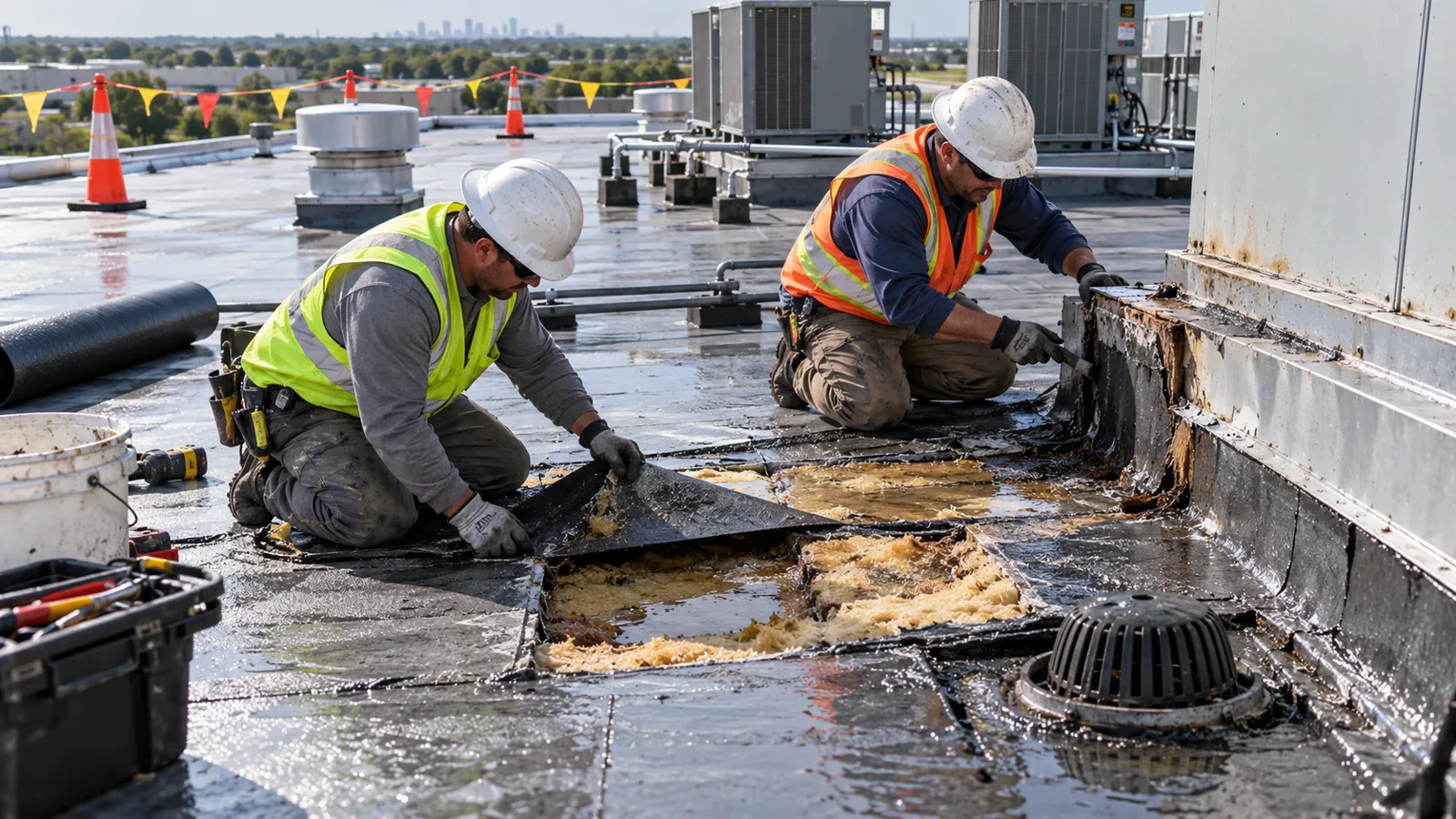
For roof drain and scupper repair, we look at the drain bowl, the clamping ring and the membrane around it. Some of that membrane can stay; some may need to come out so the new piece has good material to bond to. If the drain body is cracked, the pipe connection is leaking, or the line is clogged further down, that's work for your plumber, and it gets done before we rebuild the roof side. If changing a drain or adding one raises a design question, an engineer should review it. The estimate shows the drain condition we need from the plumber and the membrane work we'll do once it's ready.
Water near a drain inside the store points us in the right direction, but it doesn't prove where the water got in. It may have come from a split seam a few feet away or from the pipe below the roof. We check the surrounding membrane, note what we see, and flag anything we can't confirm without opening the roof. With the drain area exposed, we photograph the condition before new membrane goes down. You get the reason for the work and what it looked like when we closed it, with any open plumbing question listed separately from the finished roof repair.
Membrane repair and checking for wet insulation
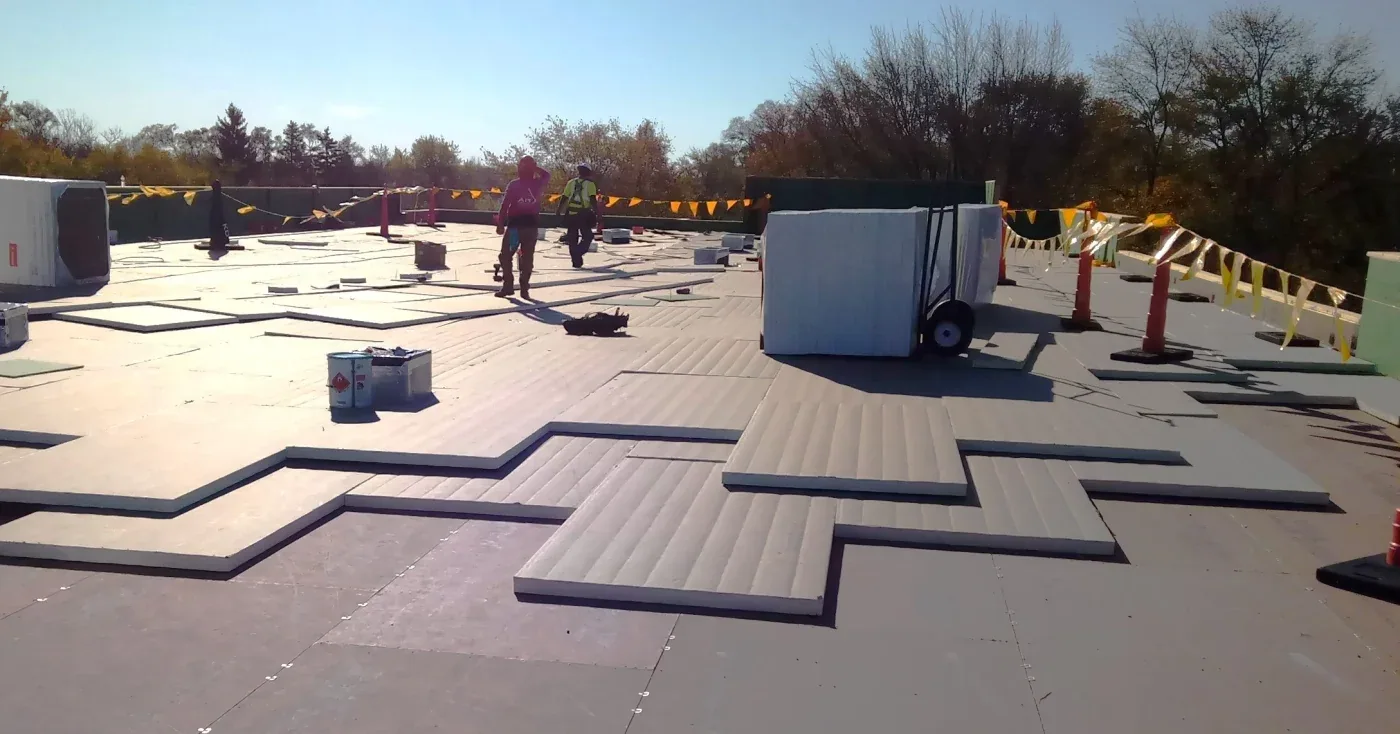
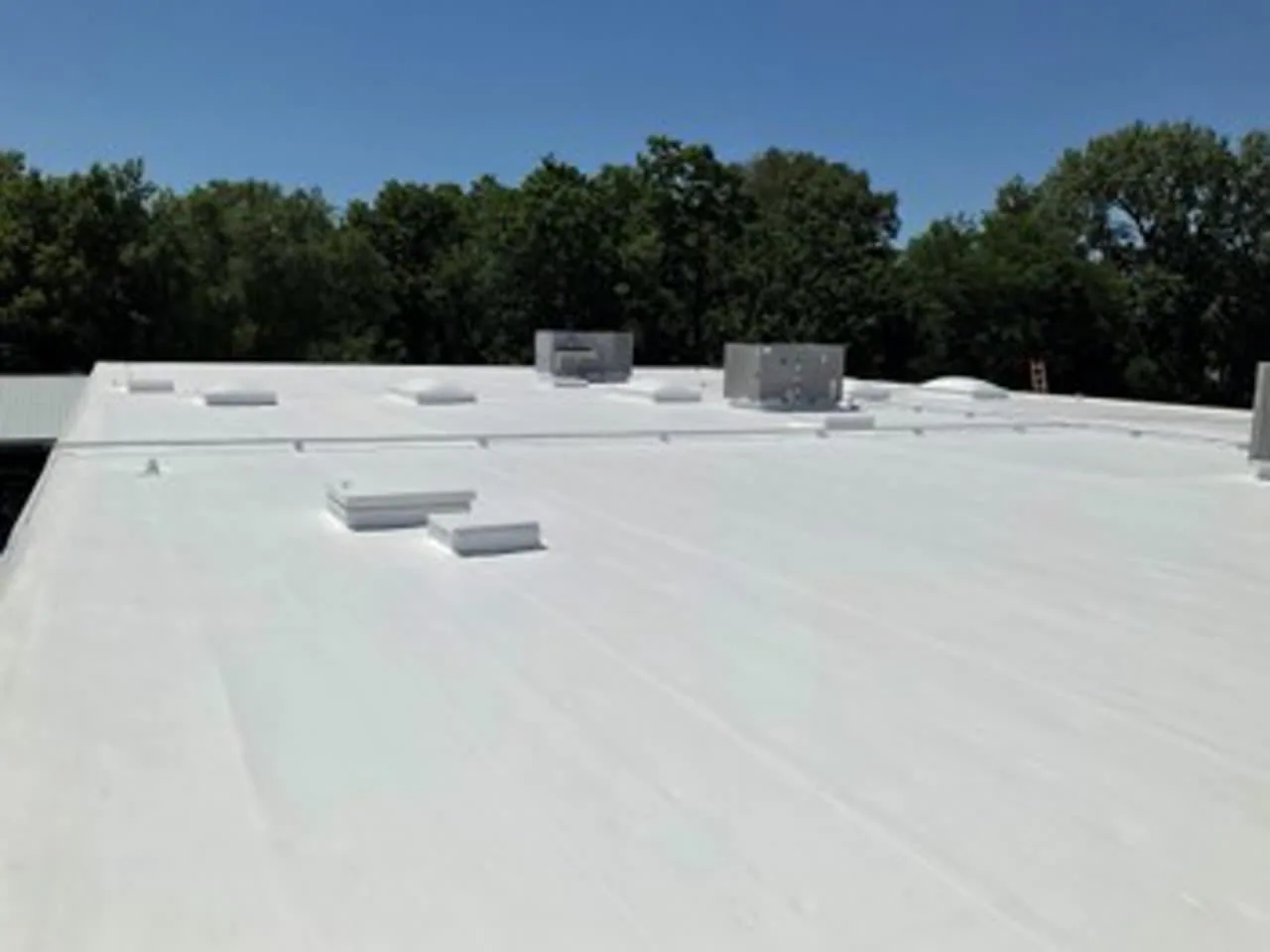
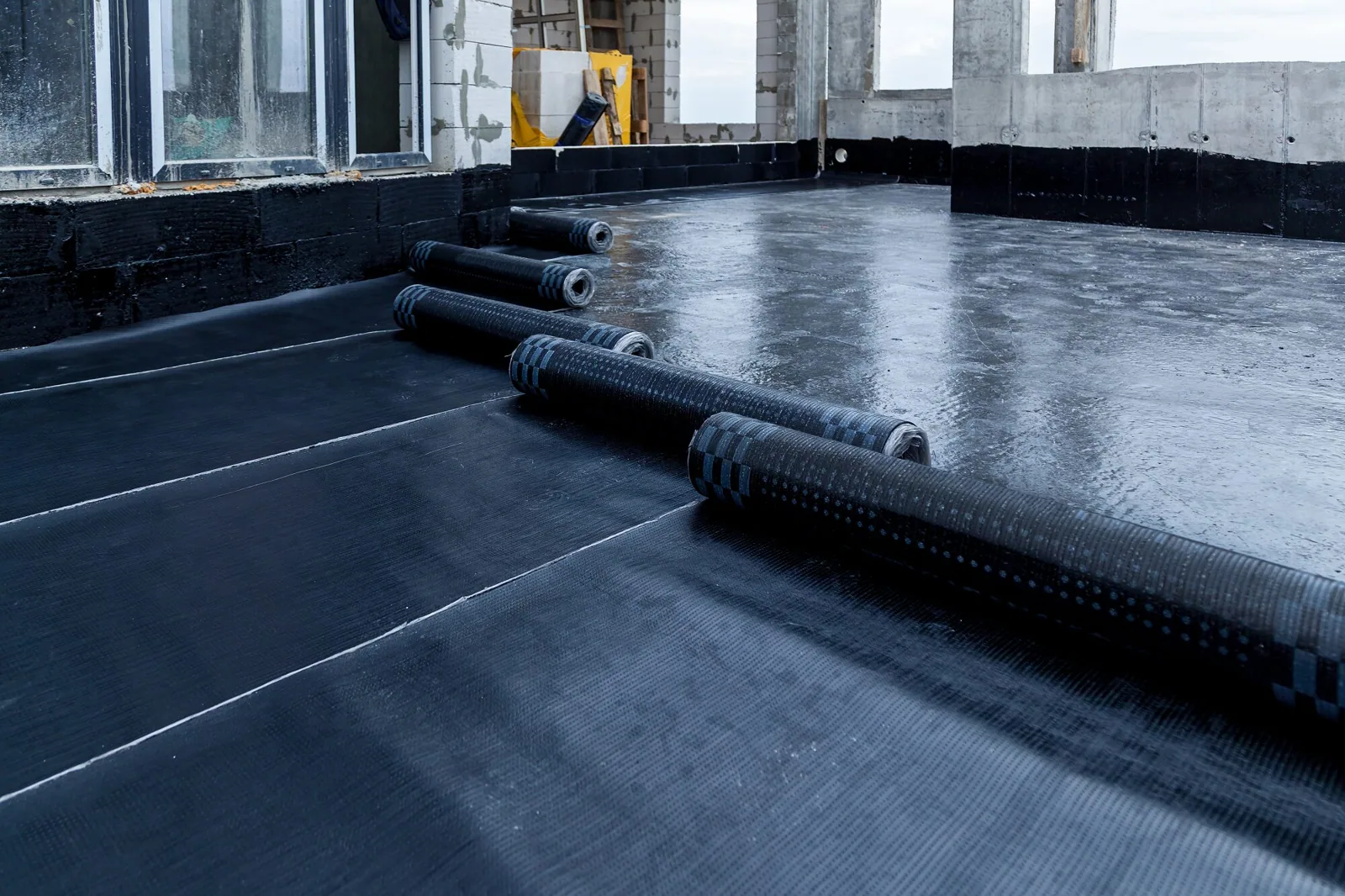
Good commercial roof repair starts with the roof that's actually there. Sound membrane around the repair gets cleaned and prepped so the new material bonds. Membrane that's brittle, blistered or patched over too many times gets cut back until we reach material worth tying into. TPO and PVC seams are heat-welded and need a clean, compatible surface; other roof types need their own detail. The estimate shows what stays, where the cut line is, and how much new material goes in. A coating price won't rebuild a drain or repair a wall, so we list that work separately next to the roofing that depends on it.
Grocery roofs see a lot of foot traffic from refrigeration and HVAC techs, and small punctures can wet the insulation long before anyone sees a drip. If the plan is to keep the existing insulation, an infrared moisture survey can point to wet areas, read alongside the roof's construction and the conditions on the night of the scan. A scan alone can't confirm every layer. Where it matters, we take core cuts, patch them, and protect the floor below while we work. The recommendation is based on those findings, not on the age of the store or a storm in the news.
Condensers, refrigeration lines and walls
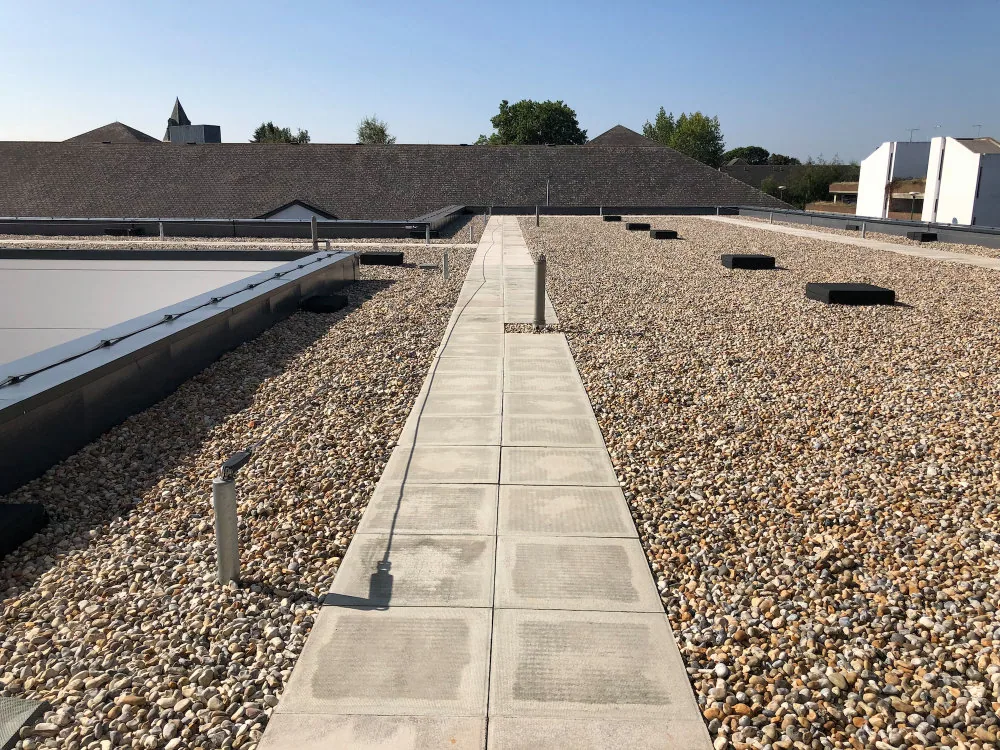
Grocery roofs are crowded: refrigeration condensers, rack system lines, rooftop HVAC units, exhaust fans, and the pitch pans and curbs where lines pass through the roof. When our repair reaches that equipment, we check the rooftop equipment curbs and supports before anything else. If a unit has to be lifted or a line has to be disconnected, the refrigeration or HVAC contractor does it, and an engineer may need to review support changes. We note in the estimate what has to happen before we flash each curb and what we install after. That way the store isn't left with a half-flashed curb waiting on another trade.
Walls work the same way. If there's a parapet or a wall where the higher roof steps down, and the backing behind the flashing is wet or rotten, it gets rebuilt first. Then we fasten the new flashing at the top and tie it into the membrane at the base. A patch on the roof surface won't hold against bad backing above it, and structural changes need the right professional. Drains, equipment and walls are each separate pieces of work, but each one has to be finished before the roofing next to it can be. A neat seam on top doesn't mean the refrigeration lines, piping and wall framing around it have been dealt with.
Working over an open store
Most grocery stores stay open while the roof is worked on, so reroofing over an occupied building takes planning with the store team. We show the store manager where we'll open the roof and how material will get up and down. Then we ask what's underneath: produce, frozen cases, the bakery, a stockroom, the checkout lanes. Your team decides what gets covered, moved or closed off, with food safety in mind, and we build our precautions around those decisions. Roof openings get scheduled around deliveries and the store's busiest hours, and we don't assume store hours or refrigeration rules from the building type.
Sometimes the damage goes past the area we first planned to open. When that happens we stop, photograph what we found and explain why more needs to come off. The new area gets its own check: what's below it, how it will be protected and how the crew gets there. If we're waiting on a plumber, a wall repair or a refrigeration tech, the roof gets a temporary seal so the store stays dry. You get a revised scope showing the added material, the temporary protection and the permanent repair still to come. The plan for the first opening doesn't automatically carry over to the new one.
We keep our sequence separate from how the store runs. Your manager knows when trucks arrive, when stock moves and which areas can't be blocked; our scope lists the access and protection each roof opening needs. If the work moves to another section of the roof, we review what's below that section before we start, instead of reusing the last plan.
Closeout and related properties
At closeout you get a record of the drain work and the new membrane connection, how much old membrane came off, what we found while the roof was open, and where each core was cut and patched. It also lists anything still waiting on another trade, like a plumbing line to finish, a wall section to rebuild or a unit to reset. A finished drain detail doesn't answer questions about the pipe below it. If another spot on the roof still needs a look, we say where and why instead of treating one drain repair as a fix for the whole store.
For stores along the South Cooper Street corridor, we set inspections around store hours and delivery traffic. Shopping center roofing and restaurant roofing each get their own inspection and estimate. The grocery estimate stays tied to what we found on that roof, which gives you numbers to compare and a clear record for the next facilities person who has to check that drain.
Common Questions
What does knowing it's a grocery store tell the roofing crew?
It tells us to expect refrigeration equipment, lots of rooftop foot traffic, roof drains over the sales floor and a store that stays open. It doesn't tell us what the roof is made of. We still inspect the building, note the membrane and the problem area, and plan access with the store team.
What has to happen at a roof drain before the membrane goes in?
The drain body and its connection need to be sound. If they aren't, the plumber fixes them first and handles anything in the pipe below the roof. Then we tie the new membrane into the drain, and the estimate shows both pieces.
How do you protect food and shoppers below the work?
We show the store manager exactly where we'll open the roof and how material will move. The store decides what gets covered, moved or closed off, with food safety in mind. We plan our precautions and timing around those decisions.
What happens if the repair turns out bigger than planned?
We stop, photograph what we found and explain the added work. The new area gets its own protection and access review before we open it, and the roof gets a temporary seal if we're waiting on another trade. You get a revised scope before the opening grows.
Get your grocery store roof drains checked
Have your store or facility manager set up a visit. We'll walk you through the drain work, the membrane repair and the protection the sales floor will need.
- grocery roof fitting preparation and membrane connection
- grocery membrane repair and removal account
- grocery roof observations and retained construction inquiry
- grocery roof component support and flashing handoffs
- grocery roof removal and interior preparation review
- South Cooper-area grocery roof examination
- retail center roofing and supporting wall preparation
- restaurant roof fitting and component duties