
College and University Roofing in Arlington, TX
College and University Roofing
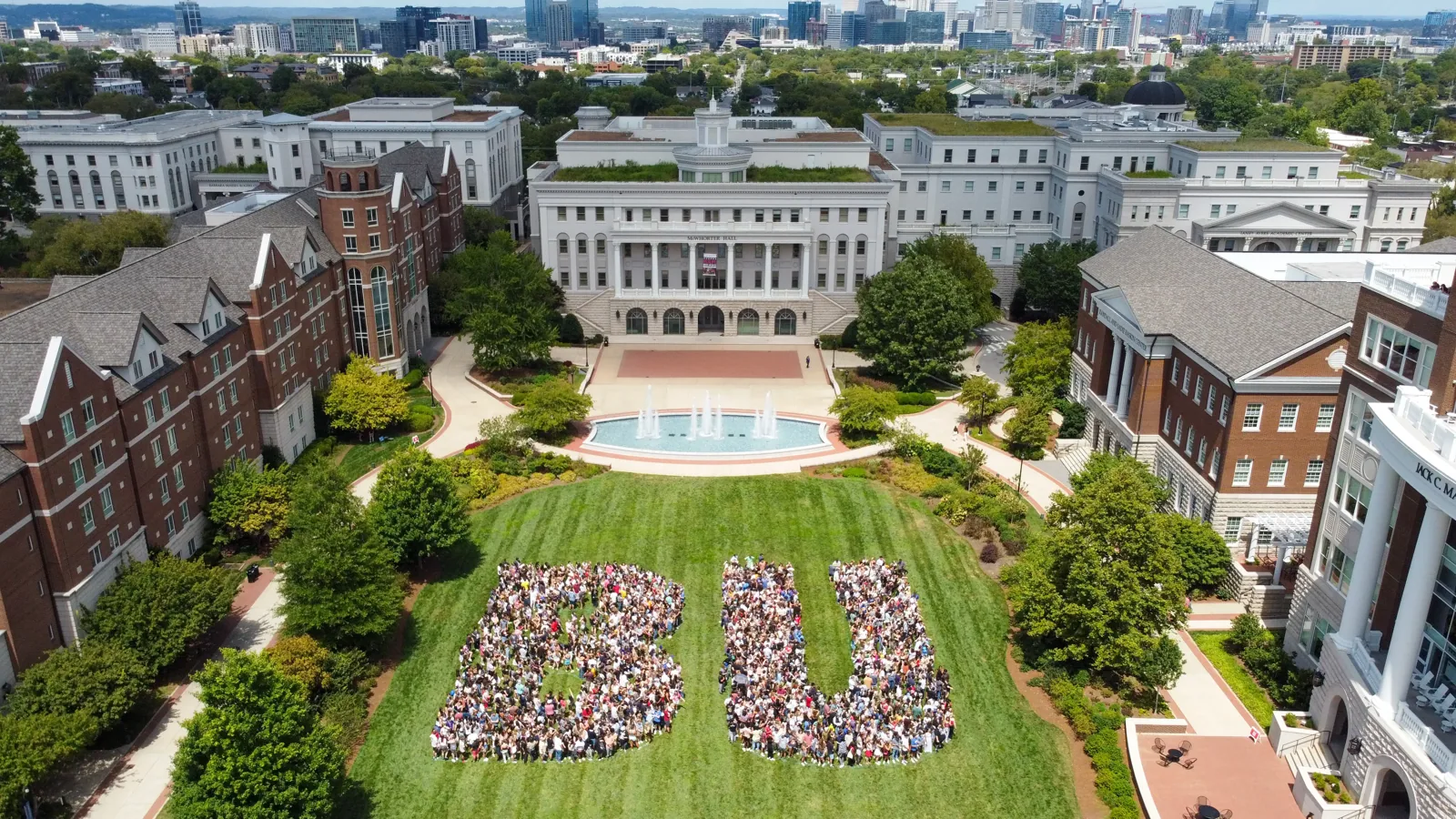
College and university roofing in Arlington, TX: wall flashing, rooftop units, drains and membrane repairs planned around classrooms, labs and offices below.
The winter storm of February 14-17, 2021 hit North and Central Texas hard, and campus roofs in Arlington, TX took their share of split flashing and burst lines. On college buildings, leaks often show up where a low roof meets a taller wall: a lecture hall against a stair tower, a mechanical penthouse, a brick parapet. If the wall behind the flashing has gone soft or the mortar is open, another patch at the seam won't hold. We show what we inspected, how far we need to cut back to reach sound material, and how the new flashing will be attached, so the facilities director is comparing complete repairs rather than a square-foot patch price.
We also work in Grand Prairie and Crowley, and we plan access and protection around how each building is actually used.
Tell us which building, where the leak shows up, and what you know about the roof: its age, the last reroof, any warranty paperwork. We schedule the inspection with the facilities office for that building, and the people who use the rooms below tell us about labs, archives, server rooms or classes that need protection. One campus can have every kind of room under its roofs, so we don't assume what's below until someone confirms it.
Inspecting the wall behind the flashing
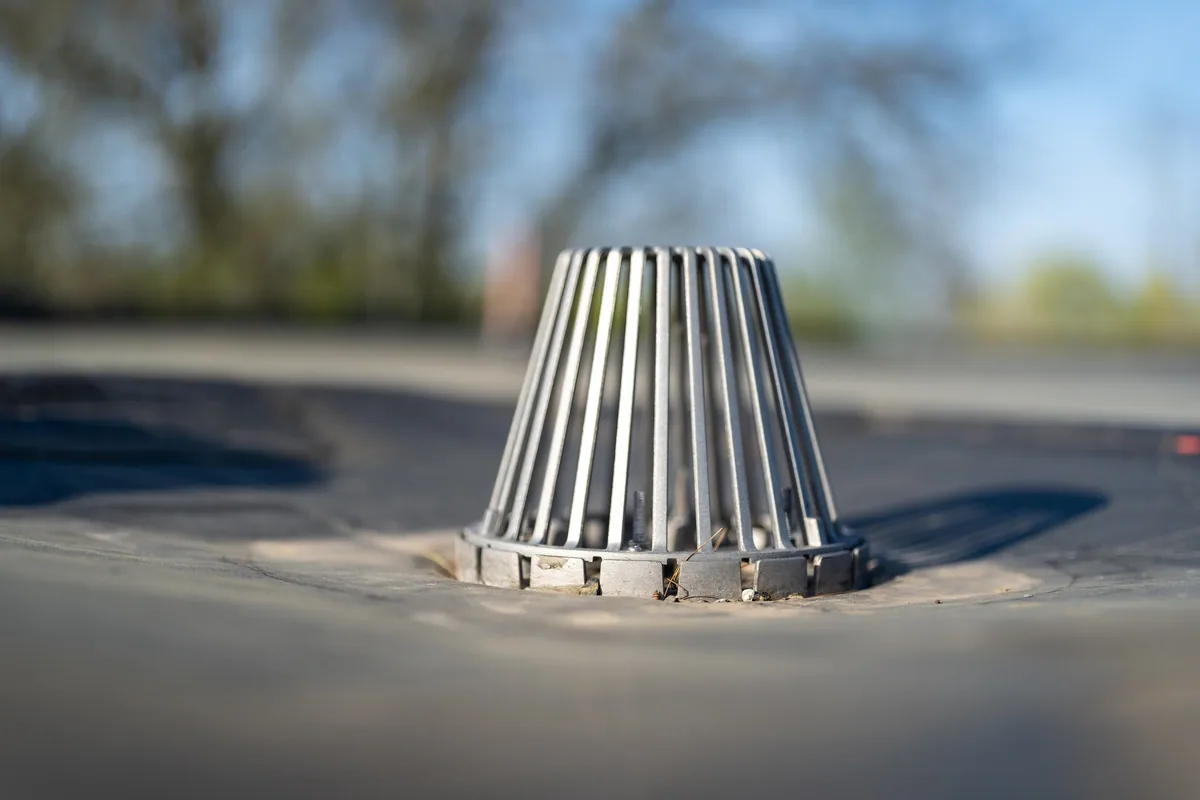
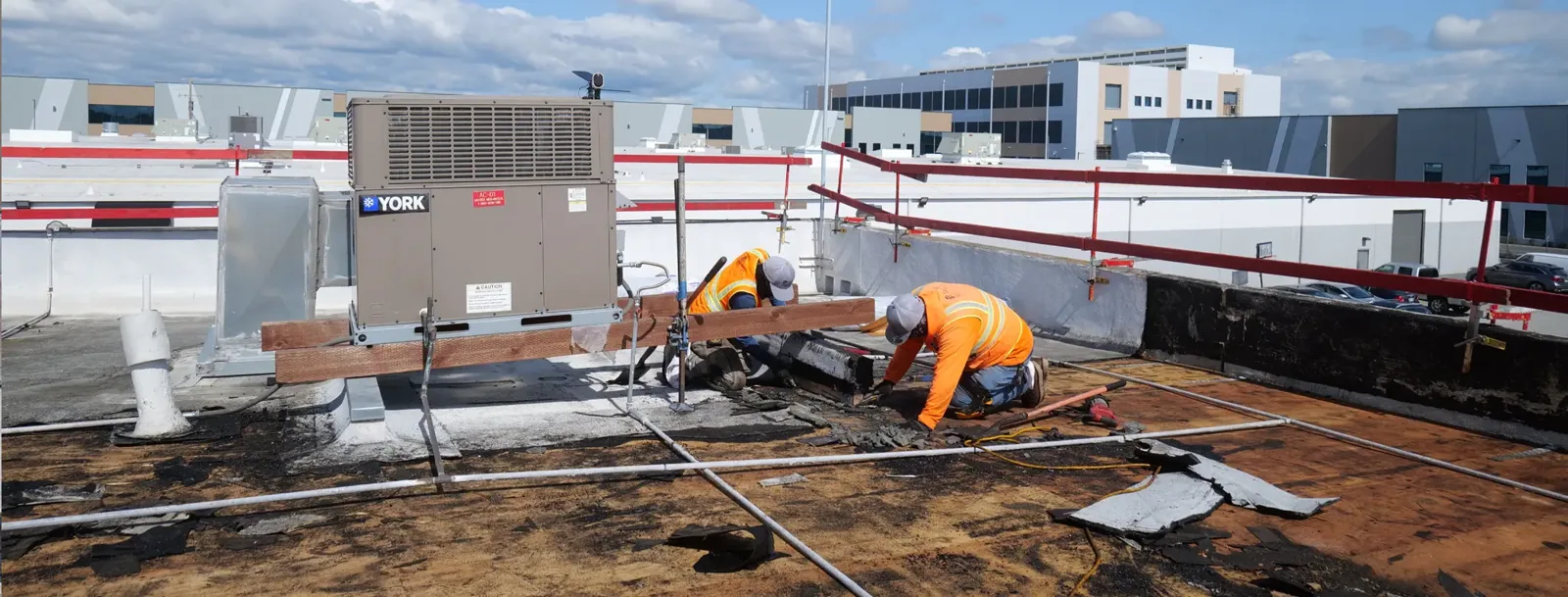
Our wall flashing repair inspection starts above the roof line. We look at the counterflashing, the reglet or termination bar, the masonry or panels above it, and the sheathing or blocking behind the base flashing. If that backing is rotted or the brick needs repointing, a masonry or wall contractor handles it, with an architect or engineer involved if anything structural changes. Our estimate shows the wall repair and the new base flashing and membrane tie-in together. If the wall work gets dropped, the seam will look fine from the roof and keep leaking.
A ceiling stain points us toward the problem, but water often travels along the deck or down a wall before it drips, so the stain rarely sits right under the entry point. We photograph soft backing, wet insulation or open joints before new flashing hides them, which gives the facilities director a clear reason for the extra work. If we still can't tell how far the damage runs, we say so and recommend a probe or core cut instead of guessing.
Membrane and insulation
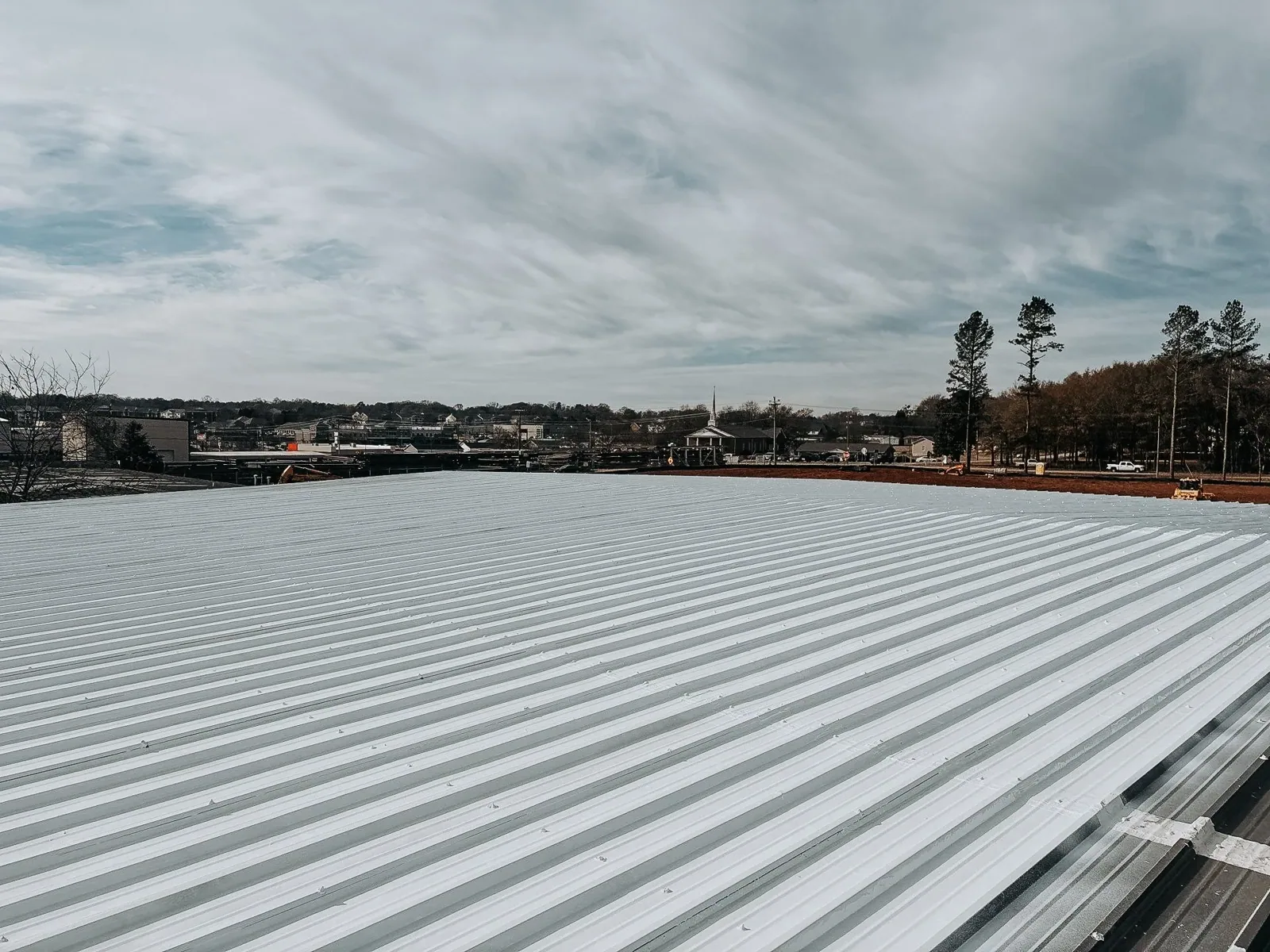
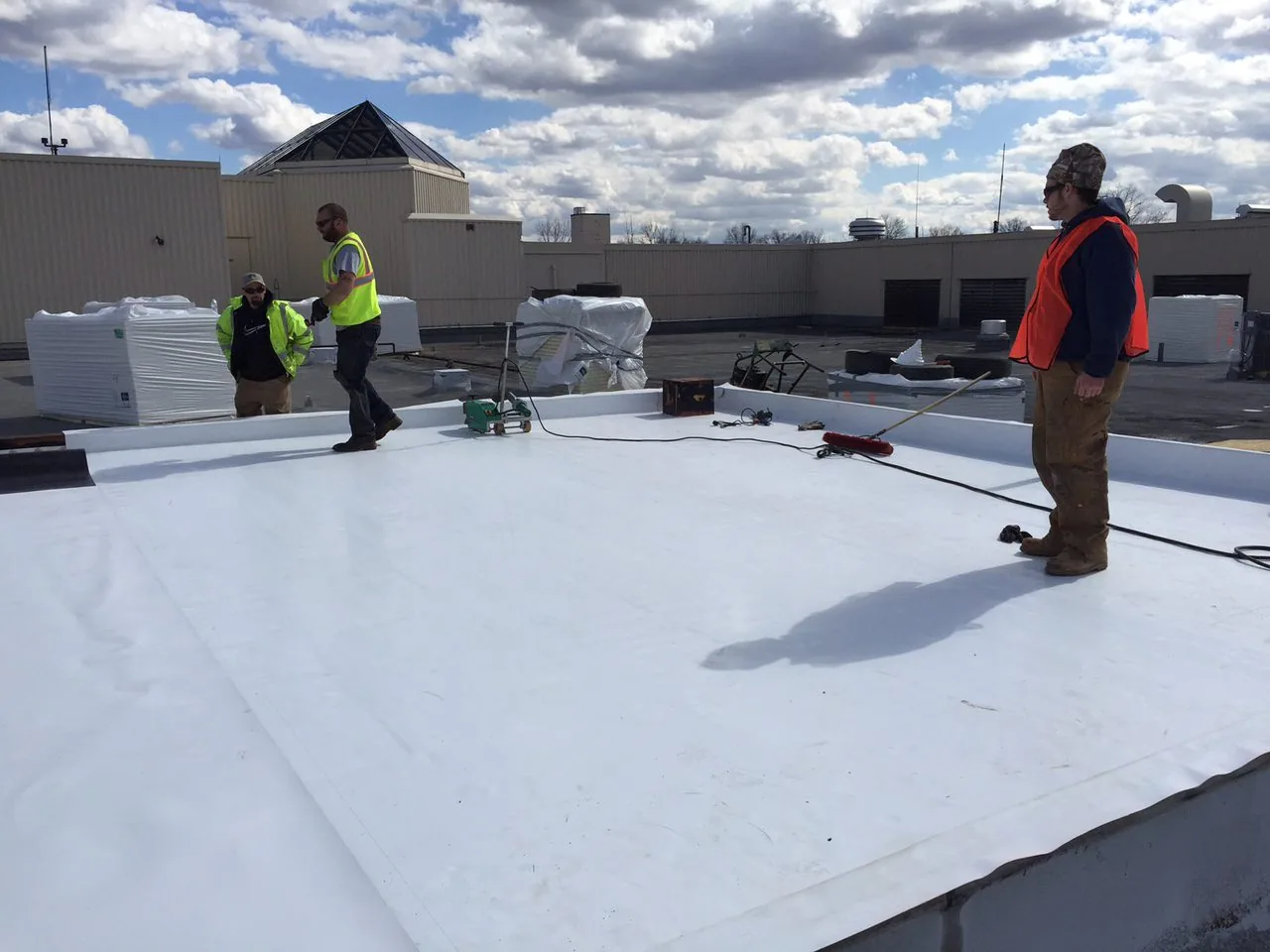
Campus roofs are often a patchwork: TPO on a newer wing, modified bitumen on an older hall, a coated built-up roof on the gym. For campus roof repair, we figure out what's at the leak and how far it's sound. Good membrane gets cleaned and prepped. Brittle, wrinkled or delaminated membrane gets cut out. TPO and PVC repairs are heat-welded; other systems need their own adhesives and flashings. A coating won't rebuild a wall behind the flashing or fix a loose curb, so we don't price it as a stand-in for either one.
If our plan keeps the existing insulation, we need to know it's dry. An infrared moisture survey taken on a clear evening after a sunny day can show likely wet areas, but it isn't proof by itself. We confirm with core cuts where the result matters, seal every core, and protect the room below while we work. Questions about the structure or building systems go to the engineer or the trade that owns them. Our recommendation is based on what we found on the roof, not on the 2021 freeze or the age of the campus.
Rooftop units and drains
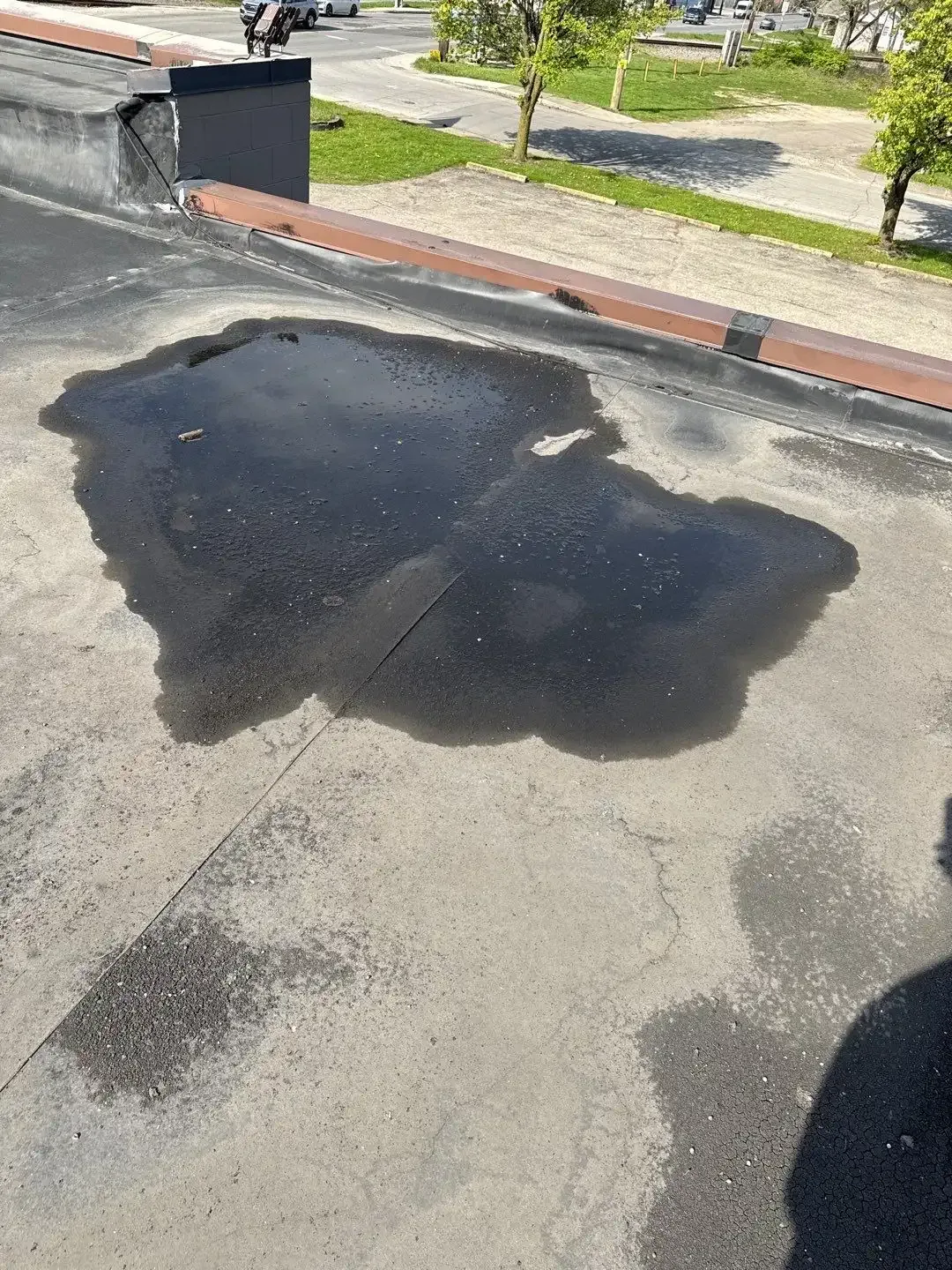
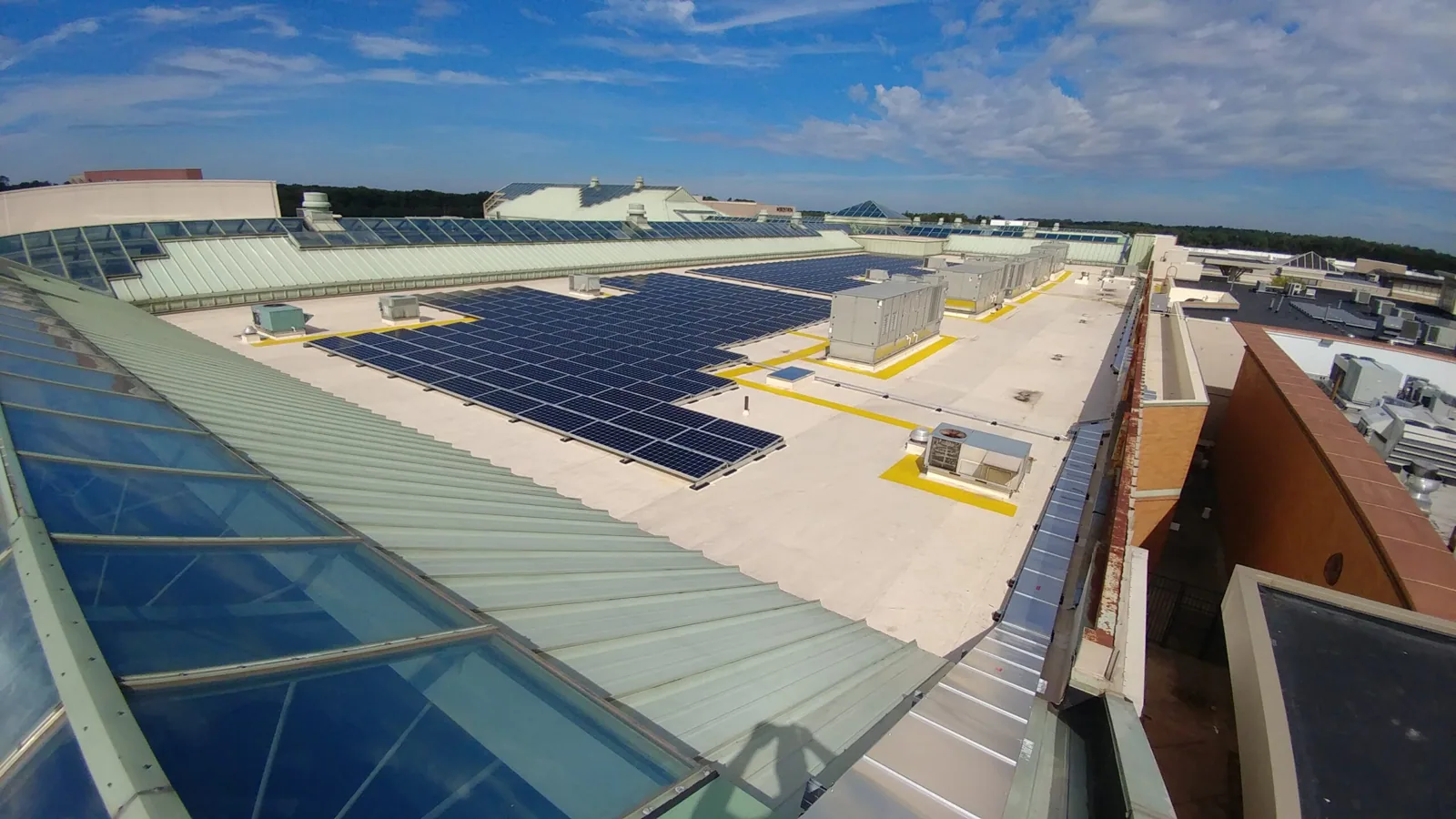
College buildings carry a lot of rooftop equipment: air handlers, lab exhaust fans, kitchen hoods, antenna mounts. For curb and equipment support repair, we check the curb, the base flashing and the stand. If a unit has to be disconnected, lifted or relocated, the campus HVAC shop or a mechanical contractor does that, and an engineer reviews any change to the support. Lab exhaust may need to be shut down before our crew works near it. We list that prep next to the flashing we'll install so facilities can book both in the right order.
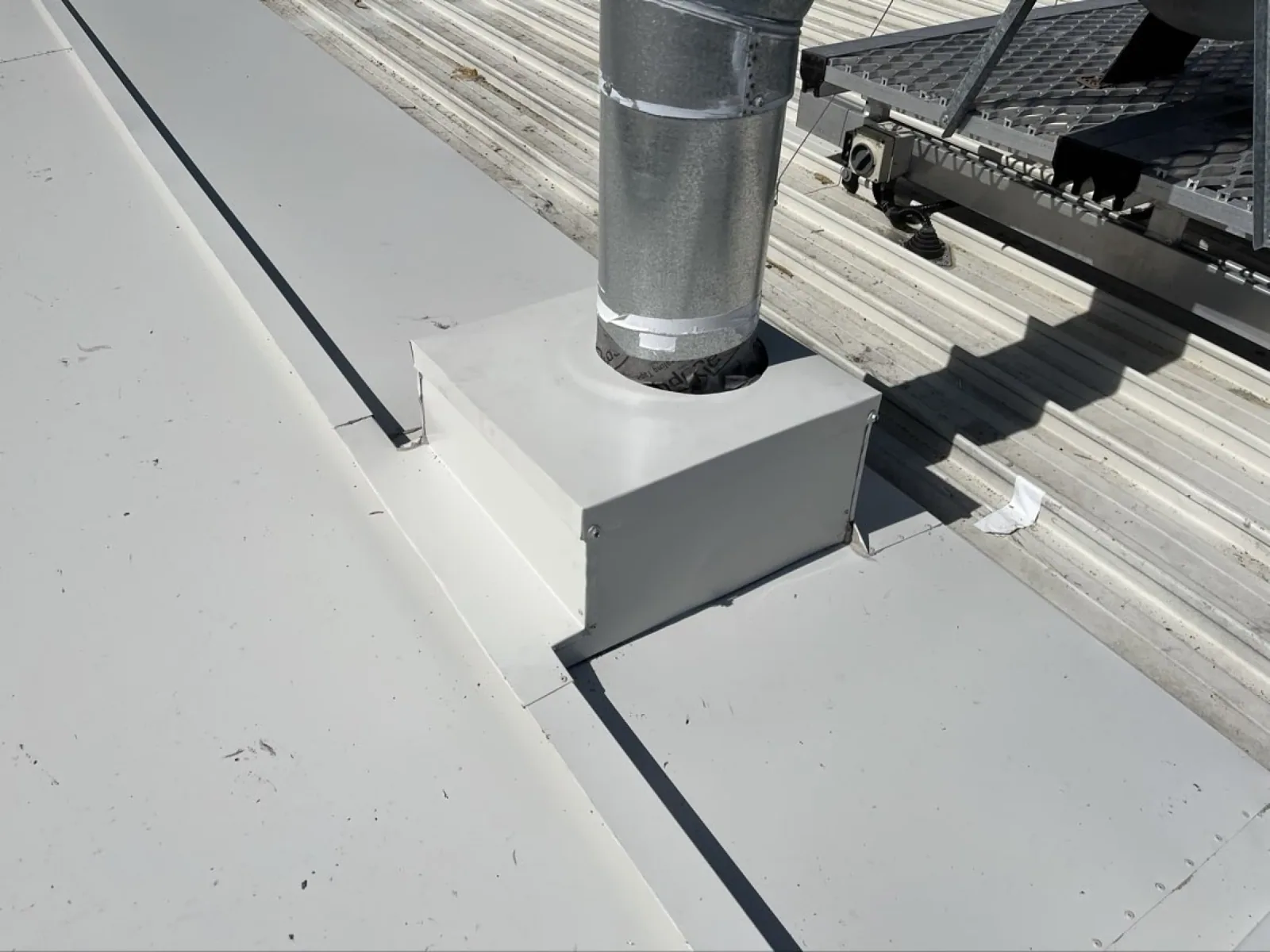
Drains work the same way. We check the drain bowl, the clamping ring and the membrane around it, and look for ponding that points to a high drain or a sagging deck. If the drain body or the pipe below is the problem, that goes to the plumber. Wall, equipment and drain repairs each sit next to the roofing that depends on them. That way the facilities director can see who does what, in what order, and what's still open if one trade falls behind.
Protecting the rooms below
Before any tear-off, we walk the facilities office through where we'll cut, how debris comes down and where the hoist or crane goes. With reroofing over occupied buildings, the people who use the space tell us what's below: classrooms, offices, labs, a server room, a library collection. They decide what gets moved, covered or shut down, and campus safety or lab staff handle anything with special protection rules. We build their requirements into the roof schedule. An inspection visit isn't permission to open the roof, and we don't assume summer break or any other work window without hearing it from facilities.
If we open the roof and find more wet insulation or rusted deck than expected, we stop and show facilities what we found and why the repair area needs to grow. The rooms under the larger area get checked before we cut further. If the permanent flashing has to wait on masonry or HVAC work, we install a temporary watertight seal and list what's still needed to finish. The change order shows both the extra roofing and the extra interior protection, so facilities is approving the whole picture, not just more square feet.
What the closeout report shows
At closeout, facilities gets a report showing where the wall was repaired, what membrane we removed, where the new flashing went, and where we cut and sealed cores, with photos of what we found. Any wall, mechanical or plumbing work still waiting on another contractor is listed separately from the roofing we finished. A new seam doesn't answer a question about a pipe inside the wall, and fixing one leak doesn't mean every complaint on campus is solved. If another spot needs a look, the report says where and why.
To set up an inspection, start with our Arlington commercial roofing page and tell us which building. We also handle school roofing and government building roofing, where each building gets its own inspection and plan. The campus report stays in the building file so the next facilities reviewer can pick up where we left off.
Common Questions
Did the February 2021 freeze damage our campus roof?
It may have. Hard freezes crack flashing and open seams, and some of that damage only shows up as leaks months later. We inspect the roof and check any repair records you have to find out what condition it's in now.
What should a campus wall-flashing estimate include?
It should show any wall repair needed behind the flashing and who does it, plus the new base flashing, counterflashing and membrane tie-in we install afterward. If the estimate only prices a patch at the seam, the wet wall behind it will keep leaking.
Who decides how the room below a roof opening is protected?
The people who use and manage that space, working with facilities and any lab or safety staff. We show them where we'll cut and how debris will move, then add their protection steps to our schedule. We don't assume a work window or what's in the room.
How do you record work another trade still has to finish?
The closeout report lists it separately, with its location and the trade responsible, apart from the roofing we completed and the cores we sealed. A finished roof seam doesn't mean the HVAC or wall work next to it is done.
Walk the campus roof with us
Have your facilities office set up a visit to the building. We'll look at the wall flashing, the membrane we'd remove, and how we'd protect the rooms below during the repair.
- campus wall-flashing and backing repair review
- college membrane repairs with prepared attachment material
- campus roof temperature findings and layer investigation
- college roof component support and flashing preparation
- campus roof opening and interior protection review
- Arlington college roof examination requests
- school roofing with examined backing preparation
- public building roofing and authorized removal review