Commercial Roofing in Euless

Euless
Commercial roofing in Euless, TX: drain and scupper leaks, membrane repairs matched to your existing roof, core cuts, and photo records of every repair.
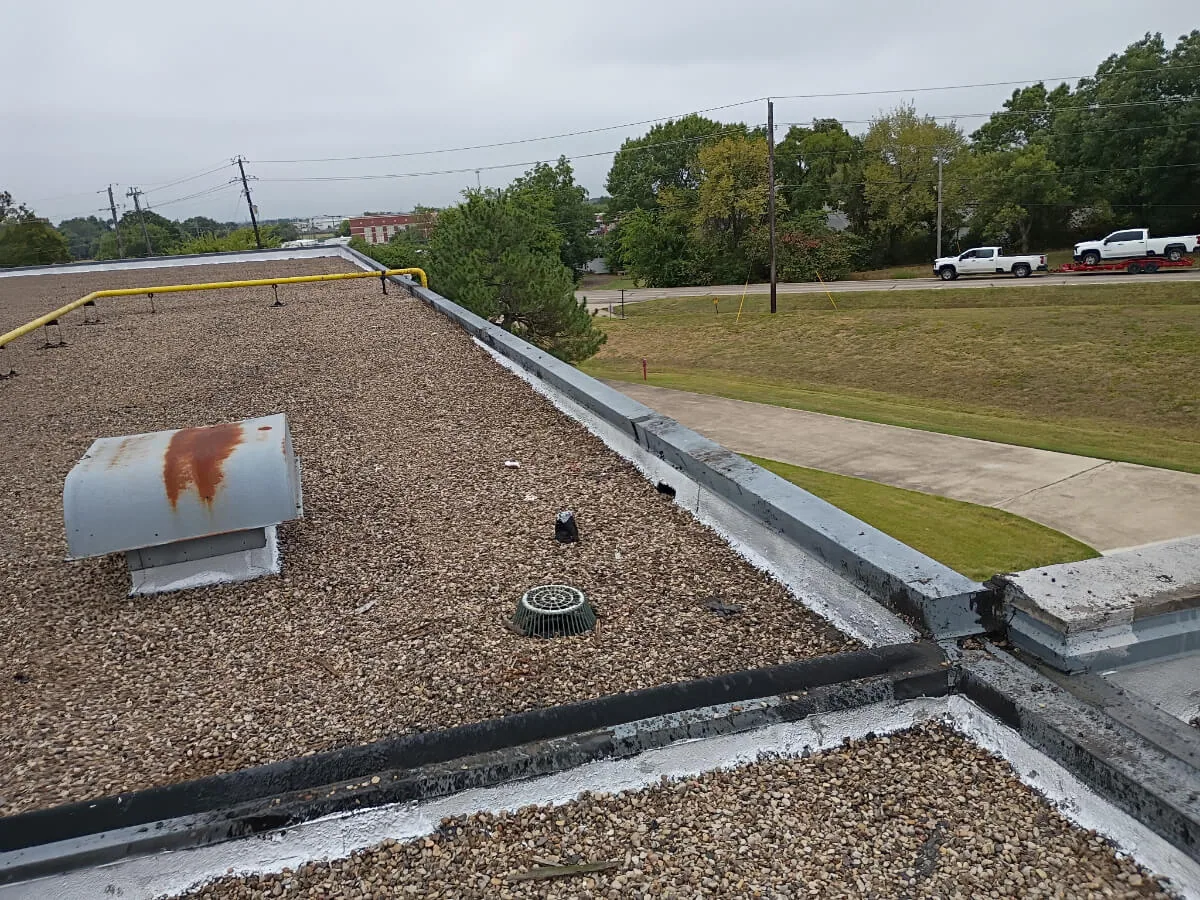
On a lot of Euless commercial roofs, the problem area is a drain or scupper. Fixing it often means two things: repairing the membrane around the outlet, and fixing something next to it, like a cracked drain bowl, a loose clamping ring or a rusted scupper box. We find where the water is getting in and explain how those pieces fit together. The estimate spells out what membrane we're replacing, where our work ends, and anything another trade has to fix first, so the owner sees a real repair sequence instead of a vague patch line.
We also cover Bedford and Passport Business Park. Each job starts with the specific roof, the leak, and access arranged by the property manager.
Finding the leak at the outlet
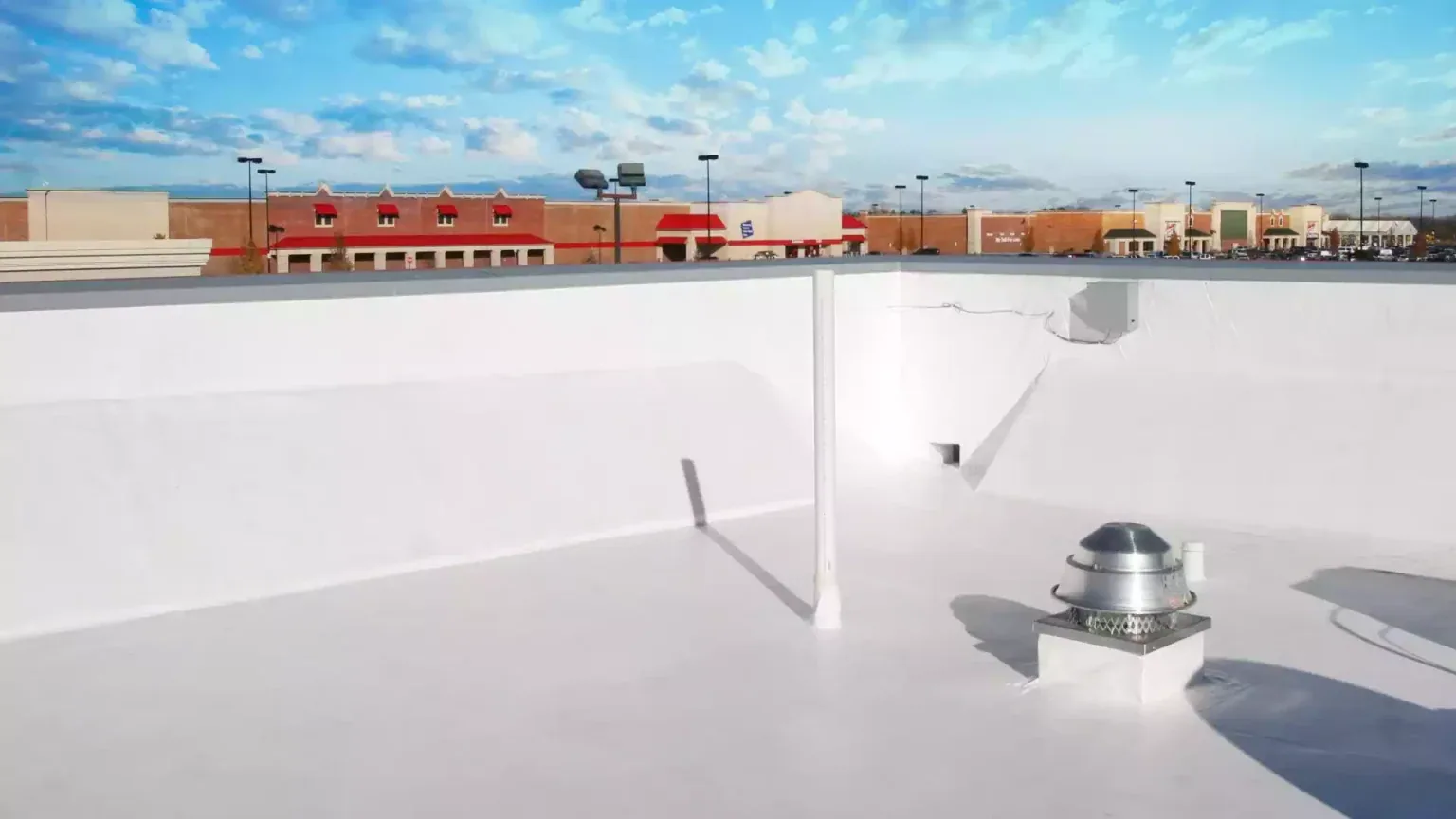
We start by asking where the water showed up and when, then inspect the roof around that area. We note the specific membrane or flashing defect and mark it on a roof plan. A stain inside tells us where to look, but water can travel along the deck before it drips, so we're clear about what we confirmed and what's still a guess. The owner should know exactly what our repair fixes and whether more inspection is needed.
A drain and scupper inspection separates the membrane repair from problems with the drain or scupper itself. If the drain body is cracked or the leader is leaking, that's plumbing work, and the estimate says so instead of implying our roof patch takes care of it. Each item stays with the trade that owns it, and our recommendation is based on what we saw at that outlet.
Every photo we take is labeled with where it was taken and what it shows. A photo of a finished drain only shows the surface, so we also keep shots of what we found before the repair. Anyone reviewing the job later can follow the leak, the drain condition and the membrane work from start to finish.
Identifying the membrane
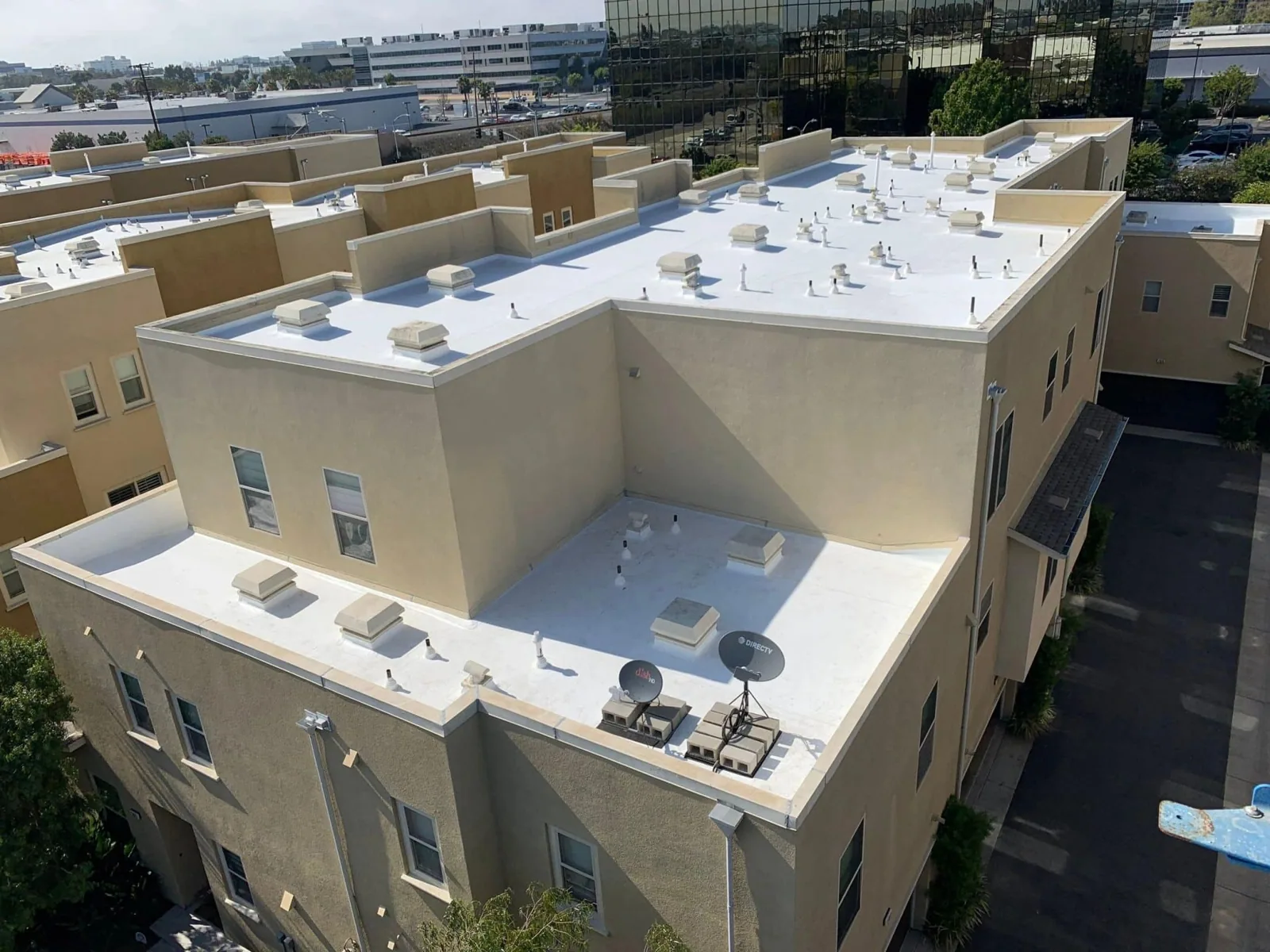
Next, we figure out what membrane is on the roof at the outlet and check the existing sheet the repair has to bond to. We find a point where the membrane is sound enough to tie into, then pick materials and prep that match. Old roof records help, but past patches or a re-cover can change what's actually there, so we confirm on the roof instead of relying on a building description.
For TPO roofing repair, we heat-weld new membrane to clean, sound TPO. If the roof turns out to be PVC, EPDM or modified bitumen, the repair method changes to match. The estimate explains what we found and why the method fits it.
We also check nearby seams and flashing. If a seam a few feet away is already open, we fix it before treating that area as a sound tie-in point. Cleaning won't reattach separated membrane, so the estimate includes those extra repairs and shows how the new work connects to good roofing once they're done.
Checking the insulation and deck
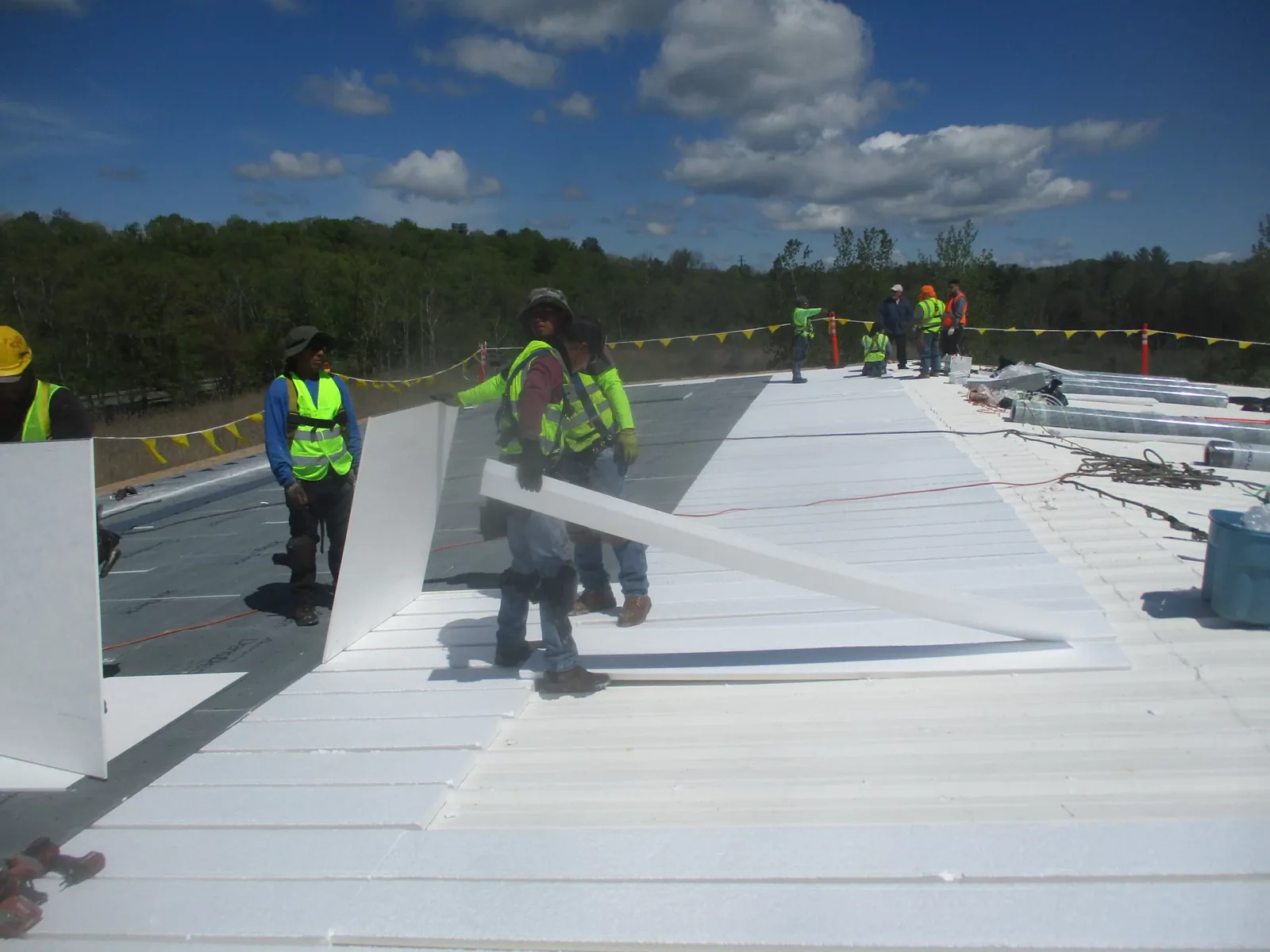
If there are signs of wet insulation or deck rust around the outlet, we explain what we need to check before deciding whether to remove or keep those layers. That usually means a core cut or two right where the repair will go. We confirm the insulation is dry and the deck is solid where the repair depends on it, and we report only what we found there. A dry core at one drain says nothing about the insulation under another drain across the roof.
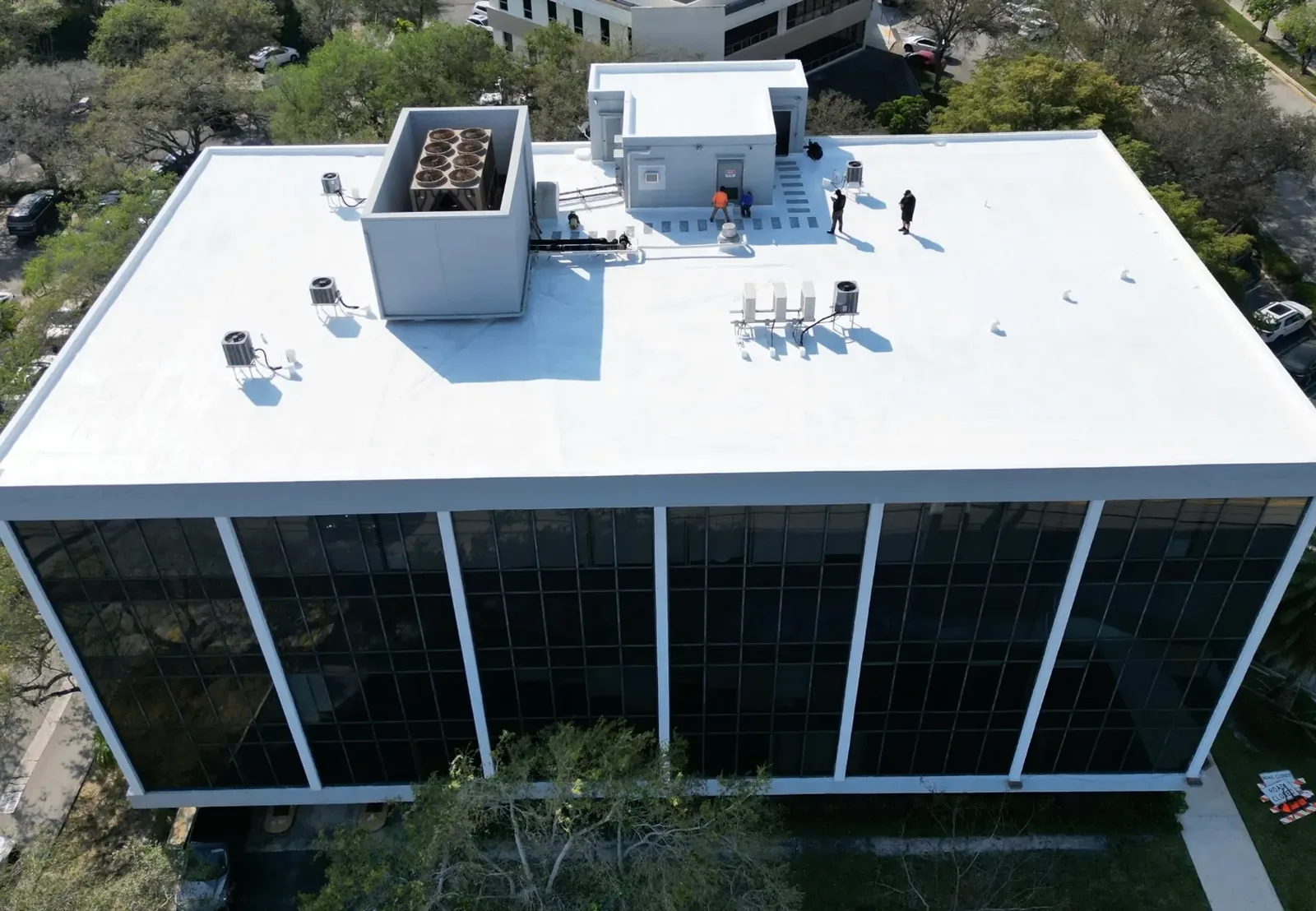
An office building roof still needs the property manager's okay before we cut into it. Knowing it's an office building doesn't tell us the deck's condition. We schedule the cores with the building, record the results by location, and leave other roof sections for their own inspection.
If opening the roof shows something different than expected, we photograph it, explain the change, and get approval before closing it up for good. If we need a temporary seal in the meantime, we say exactly what it protects and what's still pending, so a quick patch isn't mistaken for the finished repair.
Scheduling the other trades
When a drain or scupper fix has to happen before we can finish the roof, we say so in the estimate and note who's doing it. We track whether that work is done right alongside the membrane repair. That way the owner can line up the plumber or sheet-metal shop and knows the roof can't be finished until they're done. A clean-looking roof surface doesn't mean the drain under it has been fixed.
We go over crew access, ladder or lift placement, material staging and parking with the property manager. Every Euless property has its own rules and tenant schedules, so we confirm them for this building instead of borrowing them from another job. Anything still unsettled is noted next to the work it affects before we schedule the permanent repair.
Once the insulation question is settled and the other trade has finished, we clean and prep the existing membrane for the repair method we picked. If the membrane is too weathered to bond to, we say so and widen the cut-back. The owner sees the whole sequence: fix the drain, prep the membrane, make the permanent repair. That beats a surface patch hiding a problem that's still there.
For a Euless building, the roof file should start with the exact section and leak we were asked to look at. We note the membrane type, past patches, and the details around where the new repair will tie in. If we're still not sure of the cause, we explain what more inspection could confirm and keep it separate from the priced repair. The work plan includes any access or staging rules the property manager gives us. After the job, photos show the prepped surface, the finished tie-in and a nearby reference point on the roof. That helps the owner follow the repair at the next inspection, and it keeps an emergency patch from being logged as the finished job.
The repair record
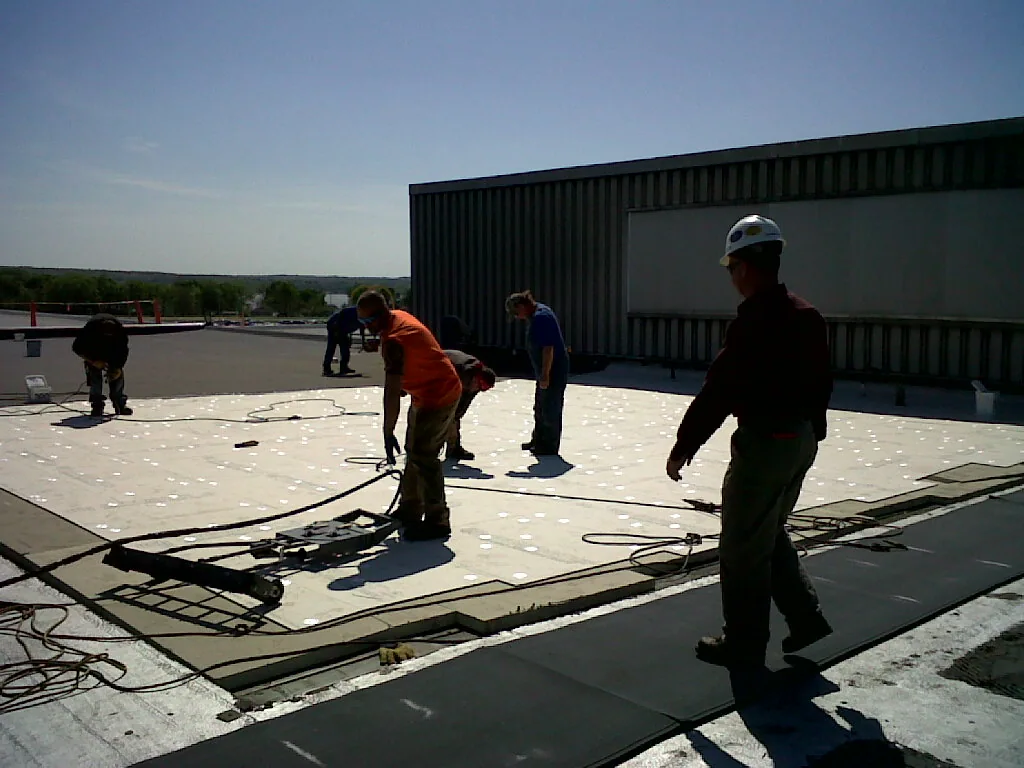
We photograph the opened layers and any nearby repairs before the new membrane goes down. The record shows the drain or scupper condition, the prepped membrane and the finished repair, each tied to a spot on the roof plan. The owner can compare what we did with the scope that was approved, and any drain work still waiting on the plumber stays listed as open.
A roof condition report for a Euless property separates what's finished from what still needs inspection. It notes which areas we didn't inspect and keeps open questions with the areas they apply to. One good drain repair doesn't tell you anything about another section of the roof.
If we put an emergency patch over an opening, the report says what it protected and what permanent repair is still needed there. It follows the job in order: inspection, membrane identification, insulation checks, other-trade work, prep and the final repair. That gives the owner a clear record for the next roof decision.
Common Questions
Can building records tell you what the roof is made of?
They help, but we confirm on the roof itself. Past patches and re-covers can change what's actually at the drain. The property manager can arrange access and share any roof records or warranty paperwork.
How do you separate drain repairs from the roofing work?
We list the membrane repair and any drain or scupper fix as separate items, with who does each. The drain work's status stays visible next to the roof repair so nobody assumes it's done.
Why do you check the seams around the repair?
An open seam next to the repair can let water in and keep the new membrane from bonding properly. We fix those first, then clean and prep the existing membrane with a method that matches what's on the roof.
Where do you record the insulation and deck checks?
On the roof plan, at the spot where we cut the core or opened the roof. We note whether the insulation was dry, what we couldn't see, and any change to the plan before the area was closed up.
What photos should show a finished drain repair?
Shots of the opened layers, any nearby repairs, the drain condition, the prepped membrane and the finished tie-in. Emergency patches and anything still awaiting inspection are labeled separately, so the owner knows exactly what was completed.
Tell us about your Euless roof
Describe the building and the drain, scupper or membrane problem you're seeing. We'll inspect it, explain what we find, separate out any plumbing or sheet-metal work, and document the permanent repair with photos.
- Bedford premises with roof and adjoining component concerns assessed separately
- Passport Business Park
- roof drain and scupper assessment distinguishing membrane repair from adjoining component needs
- TPO detail repair based on identified membrane and examined retained sheet
- office property with its own assigned outlet and supporting layer examination
- roof condition record locating Euless outlet repairs and unresolved component questions