
Commercial Roofing in Bedford

Bedford
Commercial roof leak repair in Bedford, TX: we trace the leak to its source, match the repair to your PVC or other membrane, check for wet insulation and photograph the work.
When a tenant in Bedford calls about water on the ceiling tiles, the first job is finding out where it is actually coming in. A stain inside tells us where to start looking, not where the hole is. Water can run along the deck or the top of the insulation for several feet before it drips. We go up, trace it back to the seam, flashing or penetration that is letting water in, and then price a repair for that spot. You get an estimate that says what failed, what we will fix and what we could not confirm, instead of a line that just says "patch leak."
We also work on commercial roofs in Hurst and Colleyville. Every building gets its own inspection and its own estimate.
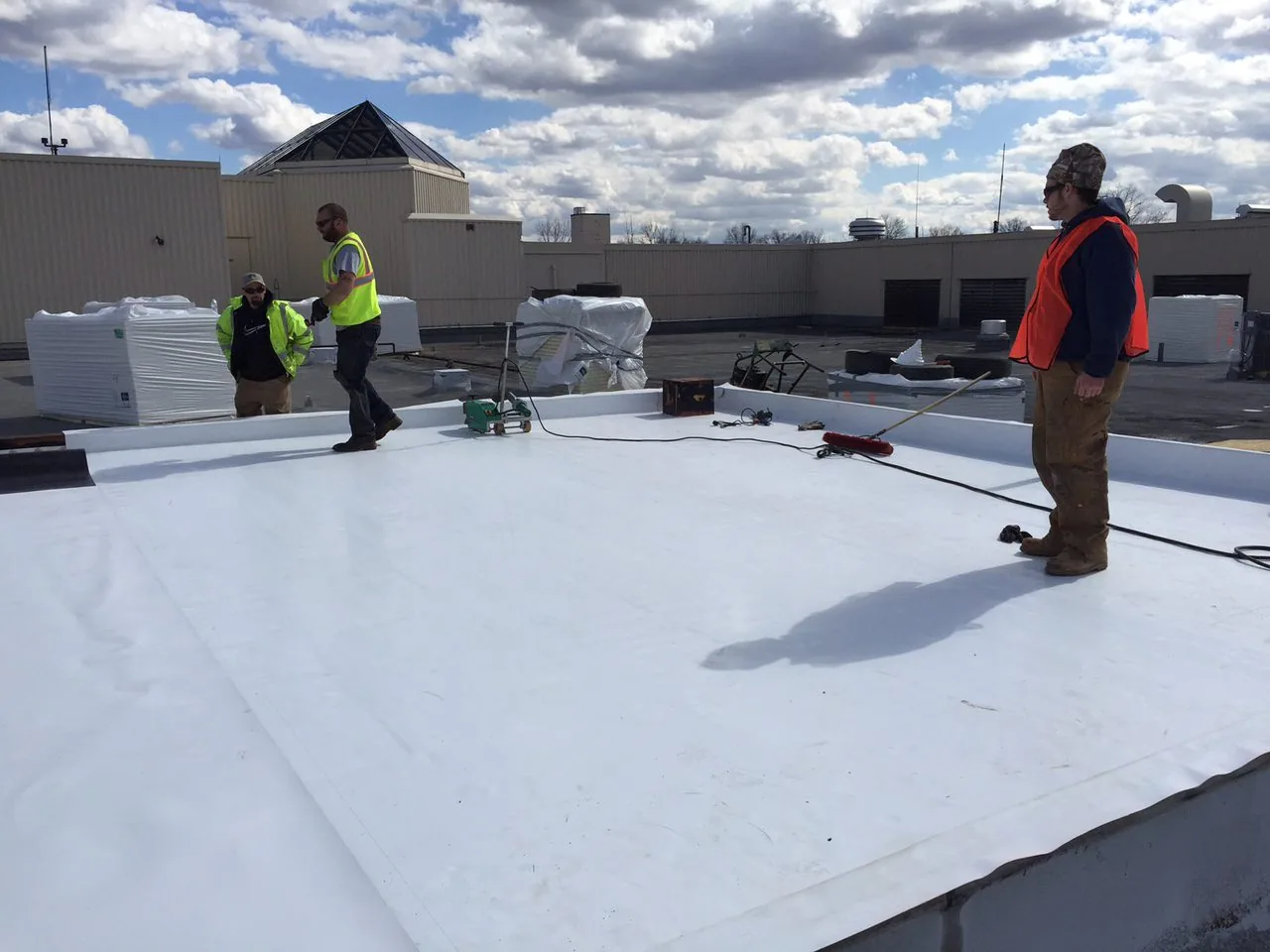
Tracking down the leak
We start with the people in the building. Where did the water show up, when, and was it after a hard rain or a long, steady one? Any record of past repairs helps too, because an old patch is a common place for the next leak. Then we inspect the membrane, seams and flashing over and upslope of the wet area and mark every defect we find on a roof plan. If the water could be getting in somewhere we could not reach, such as under a rooftop unit or behind a wall panel, we say so.
Our commercial roof leak repair ties the price to the defect we actually found. If a section next to the leak still needs a look, the estimate says that plainly. Fixing one bad seam does not mean the rest of that roof is sound, and we do not pretend it does.
Every photo is labeled with what it shows and where it was taken, with enough of the roof in frame to find the spot again. Old repair notes help us understand the roof's history, but what goes in the estimate is what we saw on the roof that day.
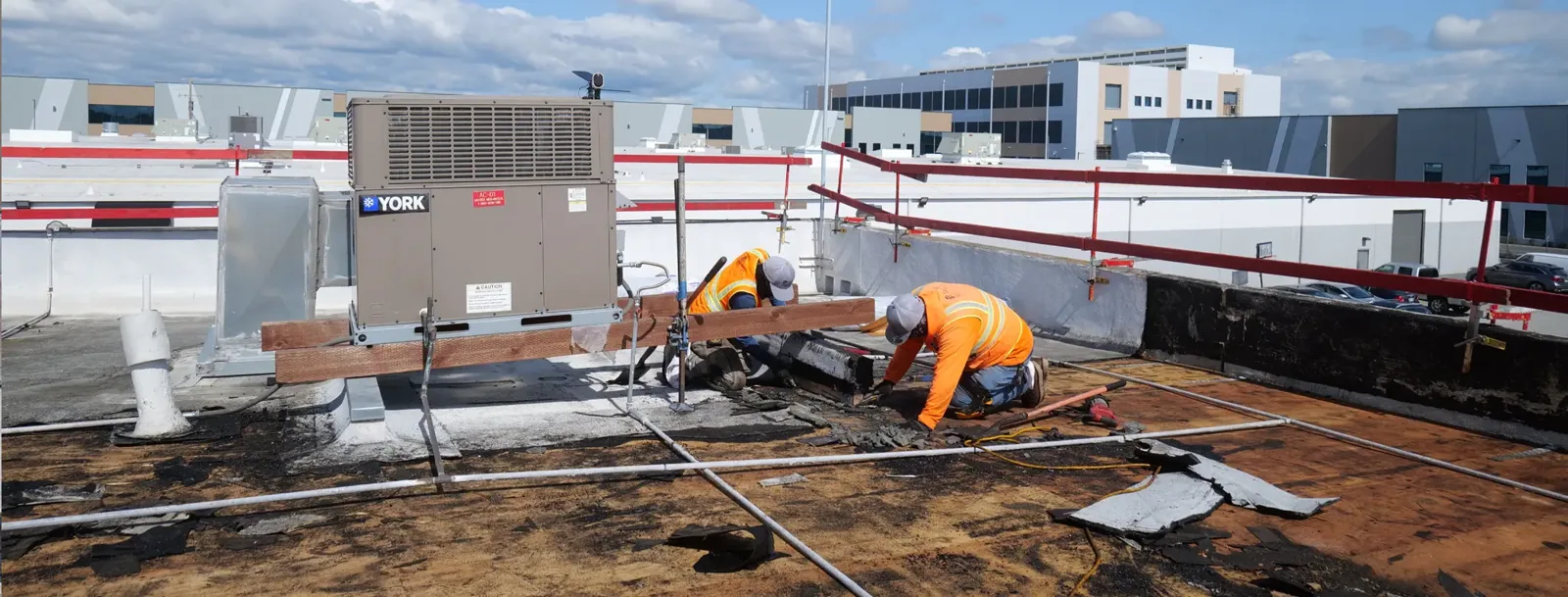
Matching the repair to the membrane
Before ordering anything, we confirm what membrane is on the roof at the leak and check the sheet the repair will tie into. Plenty of Bedford buildings have been patched or partly re-covered over the years, so the roof is not always one system from edge to edge. If we are not sure what a patch is made of, we test it or take a small sample before choosing a method. The repair has to bond to what is really there.
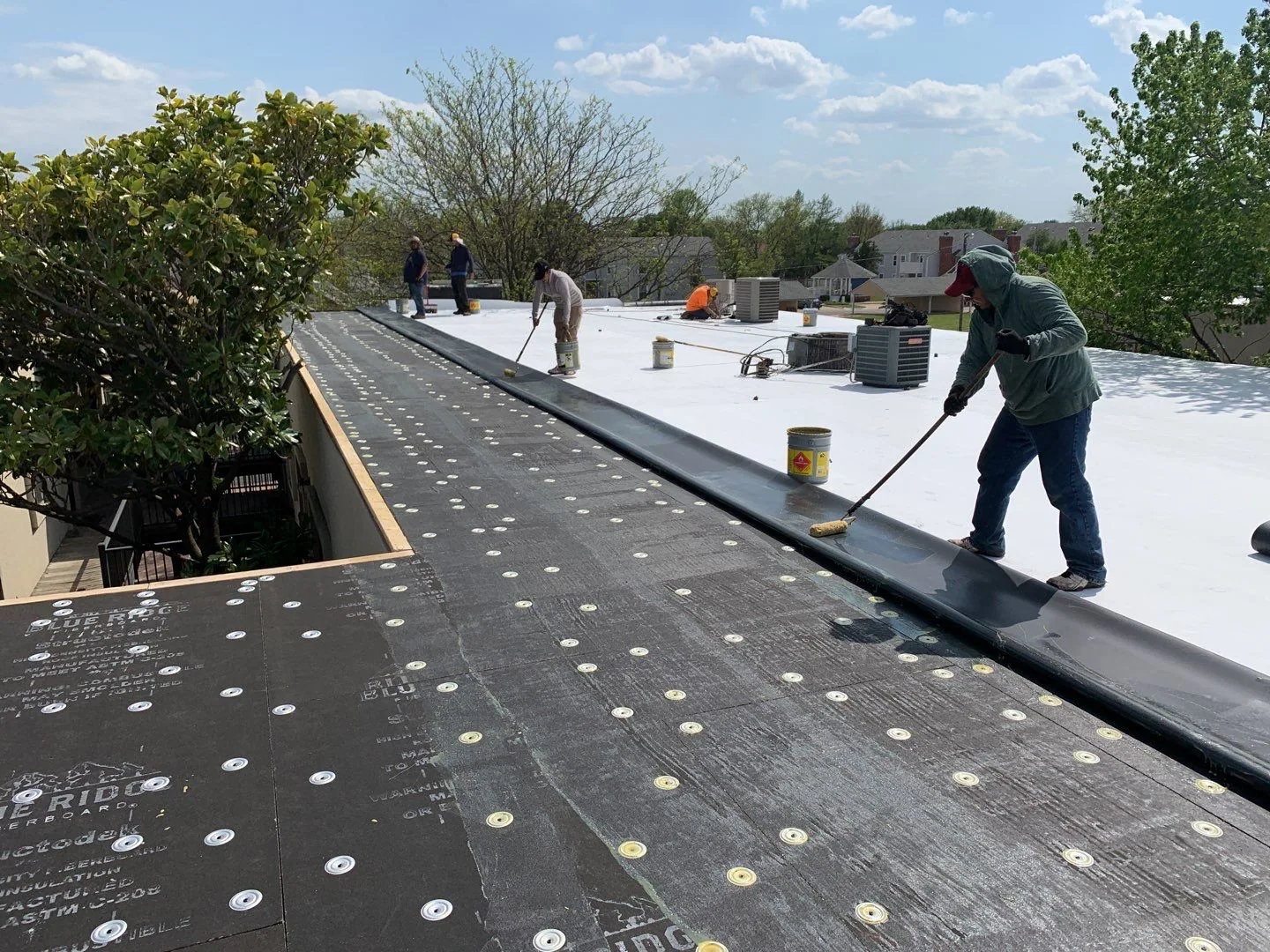
For PVC roofing, we clean the existing sheet and hot-air weld new PVC to it, then probe the weld once it cools. If the roof turns out to be TPO, EPDM or modified bitumen, the materials and method change to match.
We also look at the seams and flashing around the repair. A loose seam a couple of feet away can carry water right back under a new patch. Those nearby fixes go into the estimate as their own items, so you can see why the repair area is bigger than the hole.
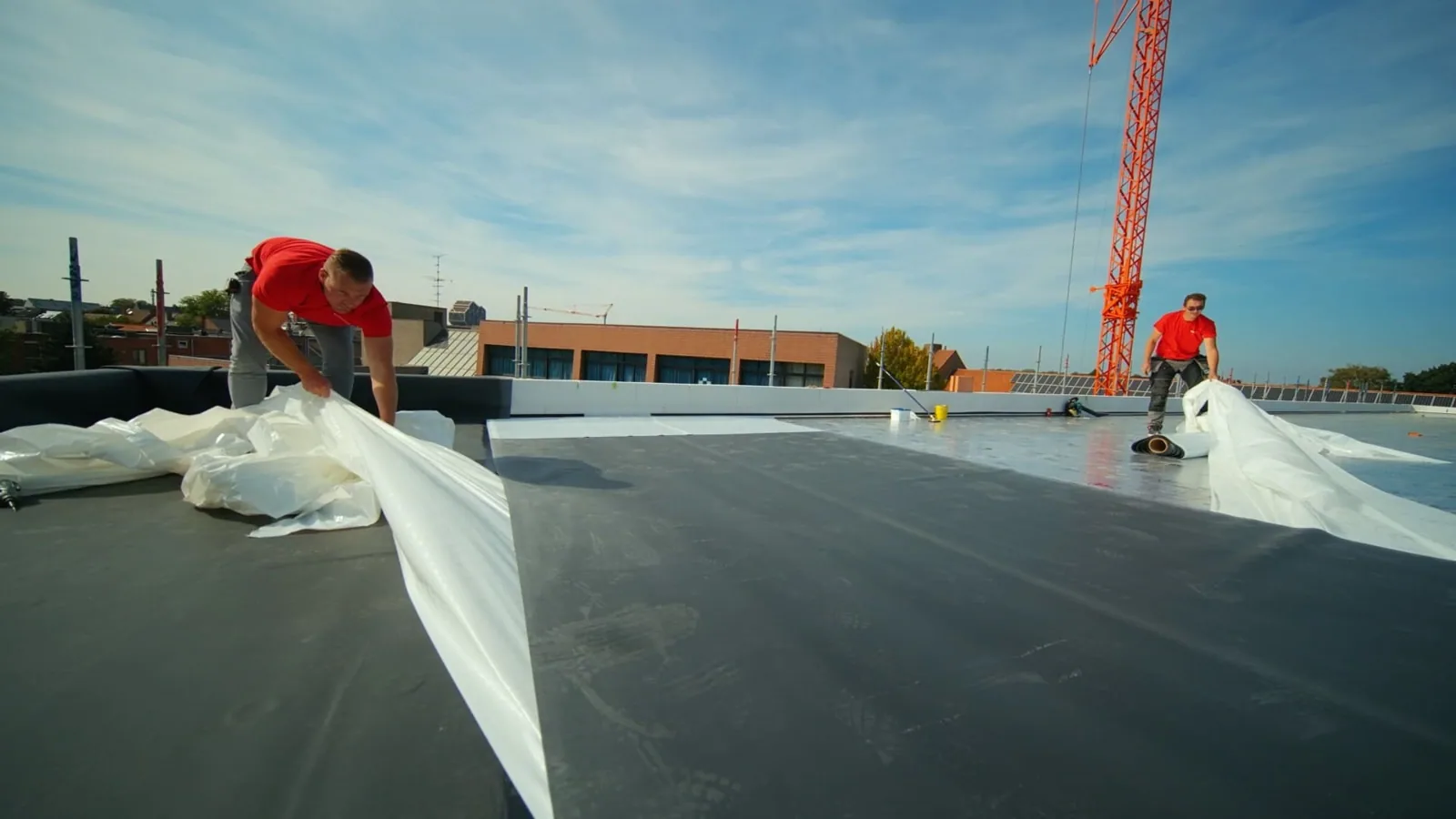
What's under the membrane
A leak that has been going for a while usually wets the insulation underneath. Wet insulation does not dry out on its own under a sealed roof, it loses its insulating value, and it can rust a steel deck or loosen fasteners over time. When we see soft spots or get high moisture readings, we cut a core at the repair to check. Dry, firm insulation stays. Wet or crushed insulation comes out and gets replaced before the new membrane goes down.
On an office building roof, we set up core cuts and any roof openings with the property manager, since tenants are working right below. Knowing it is an office tells us how to schedule the work, not what condition the deck is in. A core near the leak only tells us about that spot, so other parts of the roof get checked on their own if they are in question.
If we open the roof and find more damage than expected, we photograph it and call you before closing it up. Any temporary patch we put on to stop water is labeled as temporary, not as the finished repair.
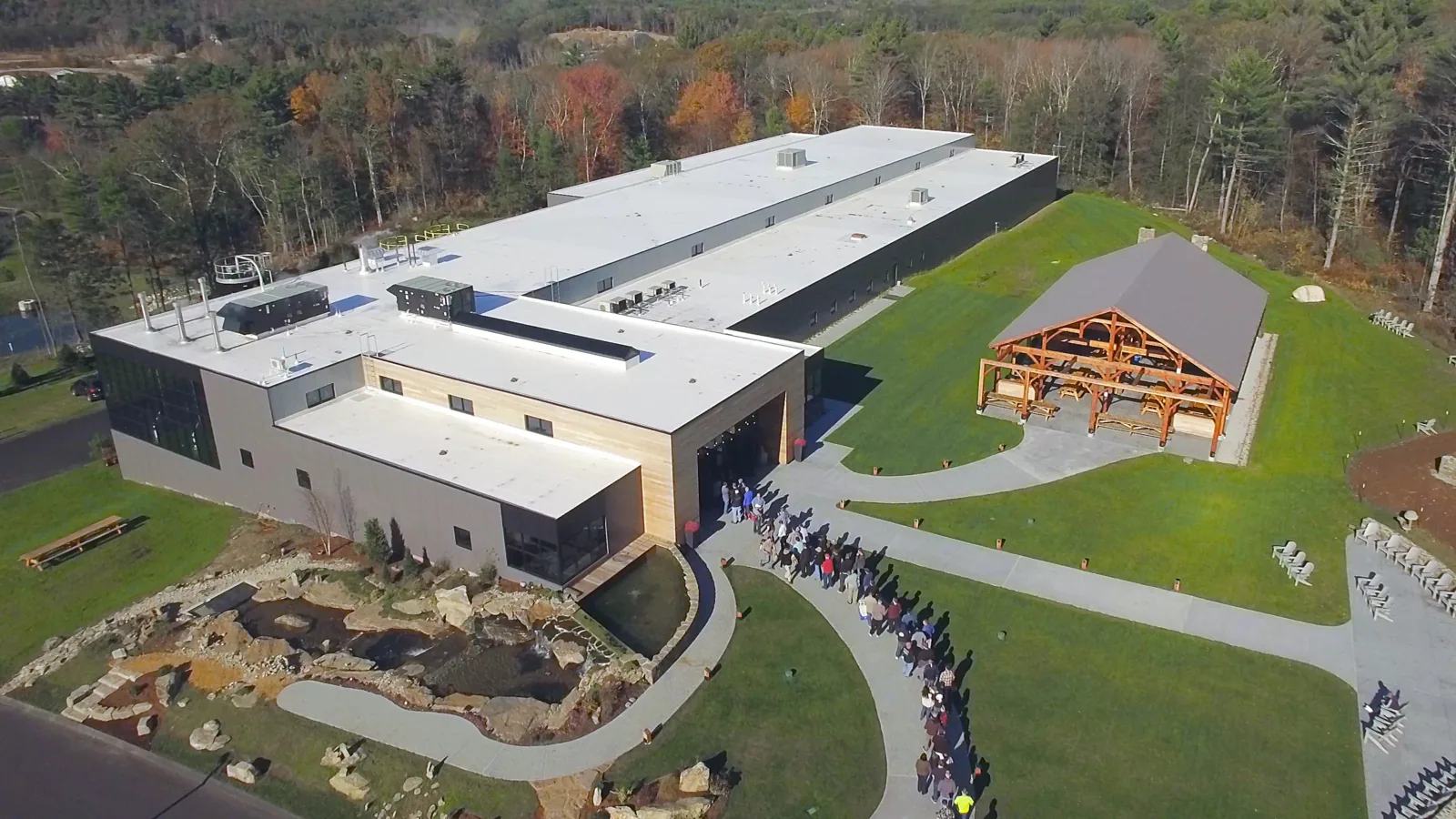
Prep, access and the order of work
Once wet insulation is replaced and the nearby seams and flashing are fixed, we clean and prep the existing membrane where the new material will join it. On PVC that means scrubbing off dirt and oxidation so the weld fuses properly. If the old sheet is too brittle or contaminated to take a good weld, we tell you before we start and cut back to sound membrane. That extra work shows up as its own line in the estimate.
We work out roof access, ladder or lift placement, where materials get staged and when the crew can be on site with the building manager. Only the people running the building can tell us tenant hours, parking rules and whether a noisy task needs to wait until after hours. If a mechanical contractor or plumber has to fix a curb or drain before we can finish, we name that task, who owns it and how it affects our schedule.
We report each step as it gets done. A roof that looks finished from the ladder is not the same as a roof where every step was completed, so you get a status on each item rather than one blanket "done."
When you call about a Bedford property, it helps to tell us which building and which part of the roof, what tenants are seeing, and who can let us up. If you own several buildings, each one gets its own inspection notes, because two roofs installed the same year can age very differently. The written estimate covers the repair area, the prep, any work another trade has to finish first, and anything we still need to check. That gives your property team something concrete to compare and schedule against.
Photos and the repair report
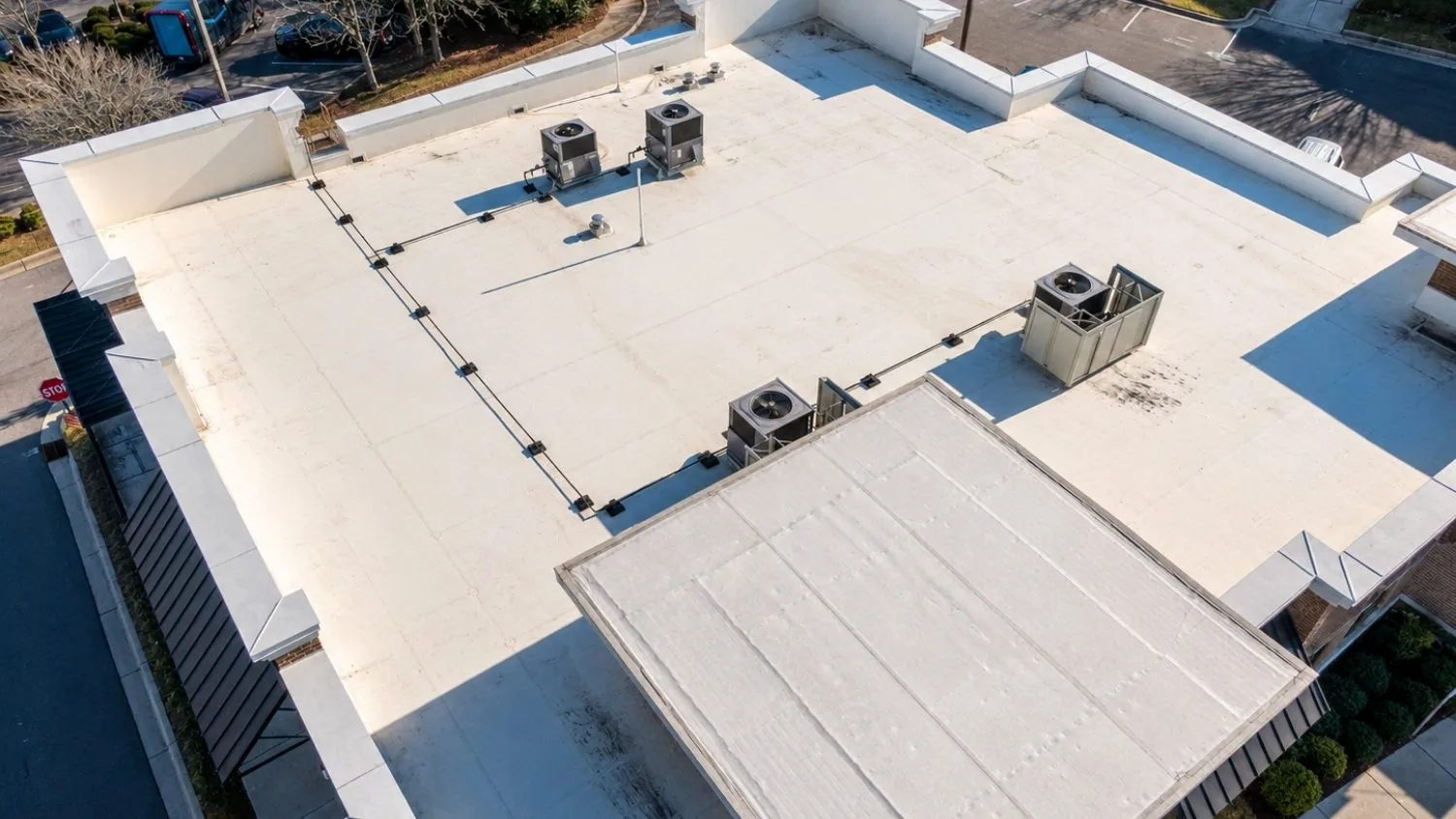
Before new membrane covers anything, we photograph the opened insulation or deck, the repaired seams and flashing, and the prepped surface. Then we photograph the finished repair. Each photo is tied to its location on the roof plan. That way you can see the work under the finished patch, not just a clean surface on top.
A roof condition report for your Bedford building lists what we found, what we fixed and anything that still needs checking. It notes which parts of the roof we did not inspect, so a repaired leak in one bay is not read as a clean bill of health for the whole roof.
If we installed an emergency patch earlier, the report says what it was protecting and what permanent work was still pending at the time. The report follows the job in order: the leak, the inspection, the membrane check, the insulation decision, the nearby repairs and the final tie-in. When the next question comes up on that roof, you have a clear record to start from.
Common Questions
Can a water stain inside tell you exactly where to repair the roof?
No. A stain tells us where to start looking, but water often runs along the deck before it drips. We trace it back on the roof and price the repair at the defect we actually find.
How do you make sure the repair will bond to our existing roof?
We confirm what membrane is at the leak and check that the existing sheet is sound enough to tie into. Any failed seams or flashing nearby get fixed first so the new material joins good roofing.
Why would you need to check the insulation under the leak?
A leak that has run for a while often soaks the insulation. Wet insulation stays wet under a sealed membrane, so we cut a core at the repair and replace anything that is wet or crushed.
Who do you coordinate access and scheduling with?
The property manager or building engineer. They tell us about tenant hours, parking and roof access, and we flag any work another trade, like a plumber or HVAC contractor, has to finish before we do.
What will we get after the repair is finished?
Labeled photos of the opened layers, the repaired seams and flashing, the prepped membrane and the finished repair, plus a report that notes anything still open and any temporary patches.
Get your Bedford roof leak tracked down
Tell us which building has the leak and where tenants are seeing water. We'll find the source on the roof, explain what failed and give you a clear estimate for a permanent repair.
- Hurst premises with separately investigated membrane concerns
- Colleyville commercial properties assessed at their actual roofing details
- commercial roof leak investigation defining observed defects and remaining source questions
- PVC detail correction after membrane identification and retained edge assessment
- Bedford office property with an individually assigned roof and retained material review
- roof condition account locating Bedford leak findings and completed construction stages