
Apartment Roofing in Arlington, TX
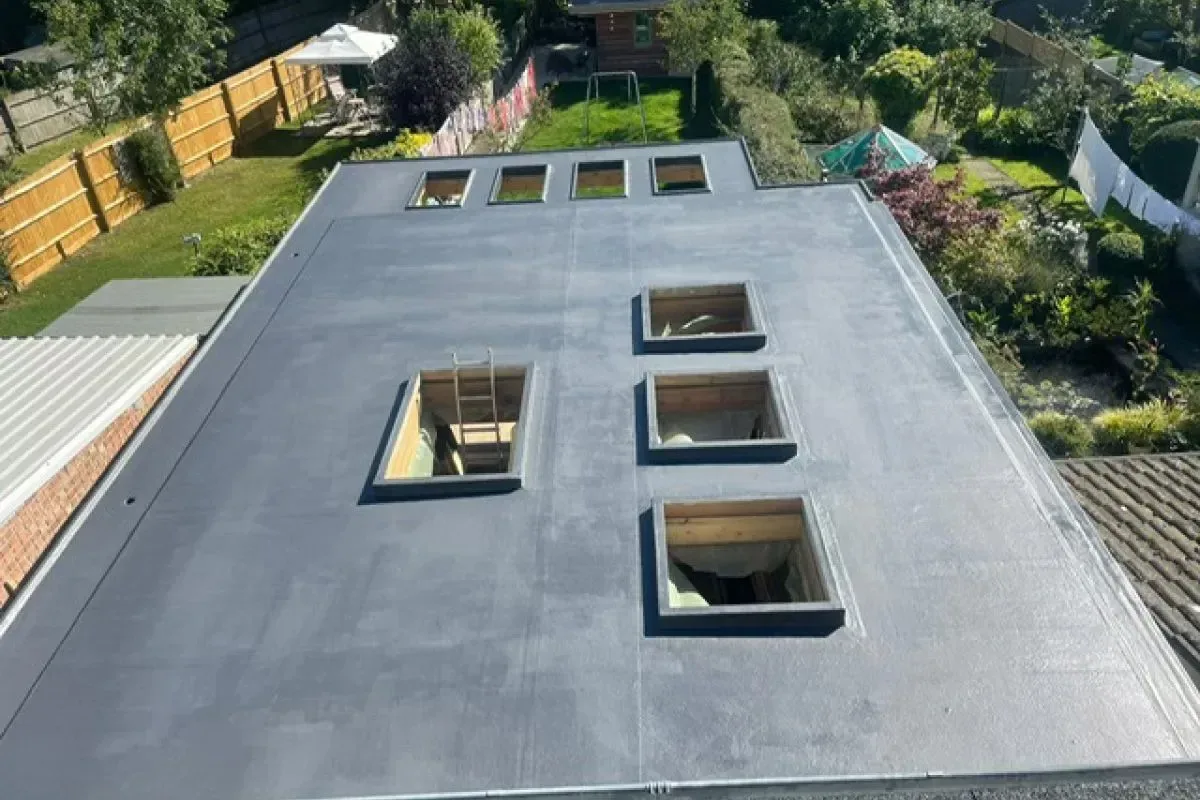
Apartment Roofing
Apartment roof repair in Arlington, TX: wall flashing leaks, rotted backing, rooftop HVAC curbs and protecting residents below during tear-off. Clear estimates.
Hail hit parts of Arlington on May 27, 2024, and plenty of apartment owners have had the roof checked since. Whatever the trigger, a repair on an apartment building in Arlington, TX starts with what's on the roof today. On apartment roofs, a lot of leaks trace back to where the roof meets a wall: a parapet, a stair tower, a raised section over a breezeway. If the sheathing or masonry behind the flashing has rotted or come loose, a patch on the membrane won't hold. The real fix is rebuilding the wall surface, then installing new flashing and tying it into the membrane. We price those together so you're comparing complete repairs, not a cheap patch that leaves the cause in place.
For portfolios with buildings in Fort Worth or Burleson, we plan access and protection around how each building is actually used.
Before we inspect, send us the property address, where residents are seeing the leak, and any roof drawings or past repair records. We'll also need the property manager or maintenance lead who can get us onto the roof and tell us what's below. A top-floor unit with a stained ceiling, a breezeway, the leasing office and a mechanical room each need different protection, and the people who run the property know which is.
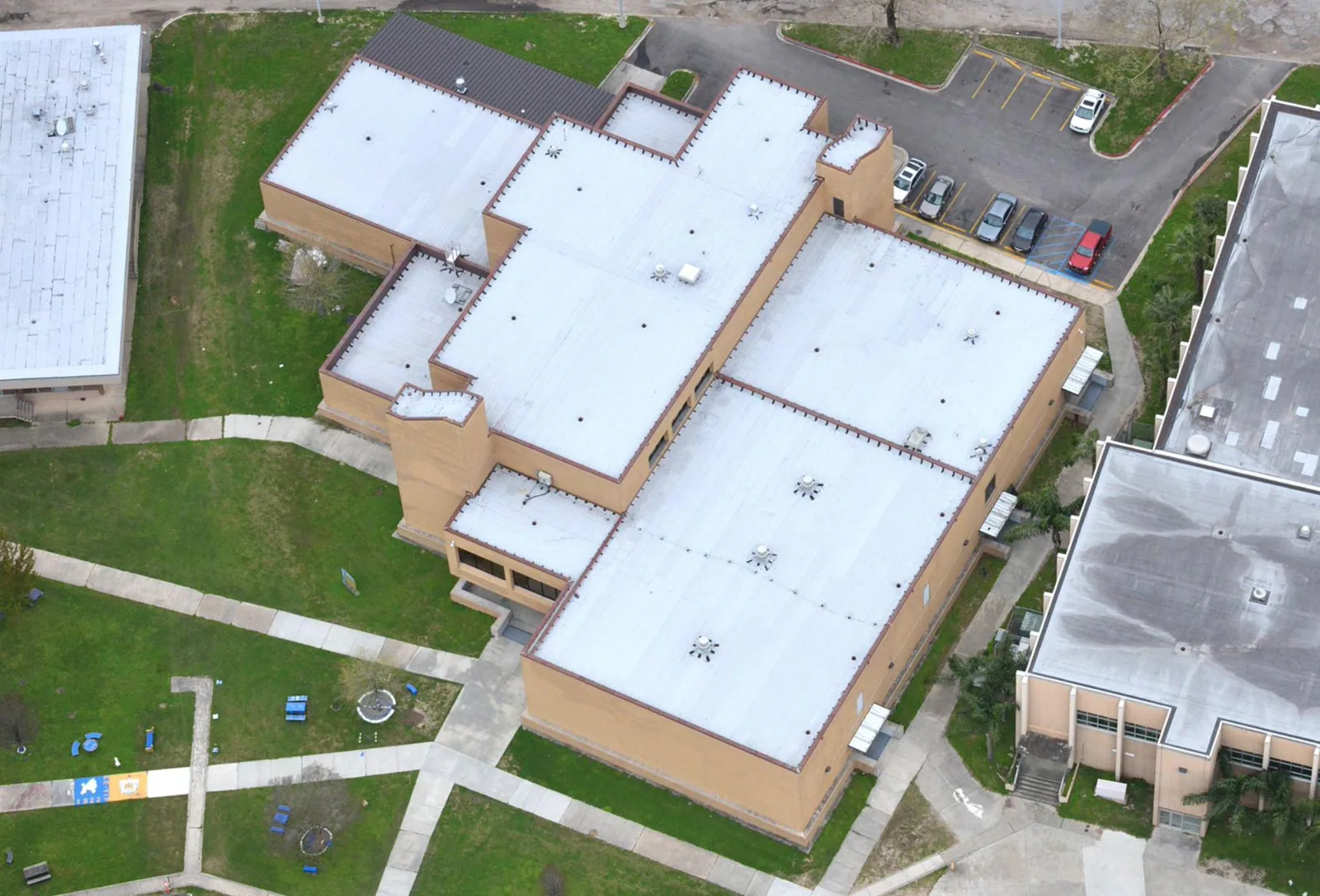
Rebuilding the wall behind the flashing
Our flashing failure repair work starts by pulling back the old flashing and looking at the wall behind it. Sound sheathing or masonry stays. Soft plywood, crumbling block or loose stucco gets repaired, sometimes by a carpenter or mason, before any new flashing goes on. If the wall needs structural changes, an engineer or architect reviews them. The new flashing runs up the wall, is fastened and sealed at the top under a termination bar or counterflashing, and is joined to the membrane at the base. The estimate shows the wall repair and the roofing as one connected job.
A water stain in a top-floor unit tells you where the water came out, not where it got in. Water can enter at a wall, run along the deck and show up two rooms away. We trace from the stain back to the likely sources on the roof and photograph any rotted wall surface before it's closed back up, so there's proof of why it was replaced. If parts of the wall were hidden and we couldn't check them, the estimate says so plainly.
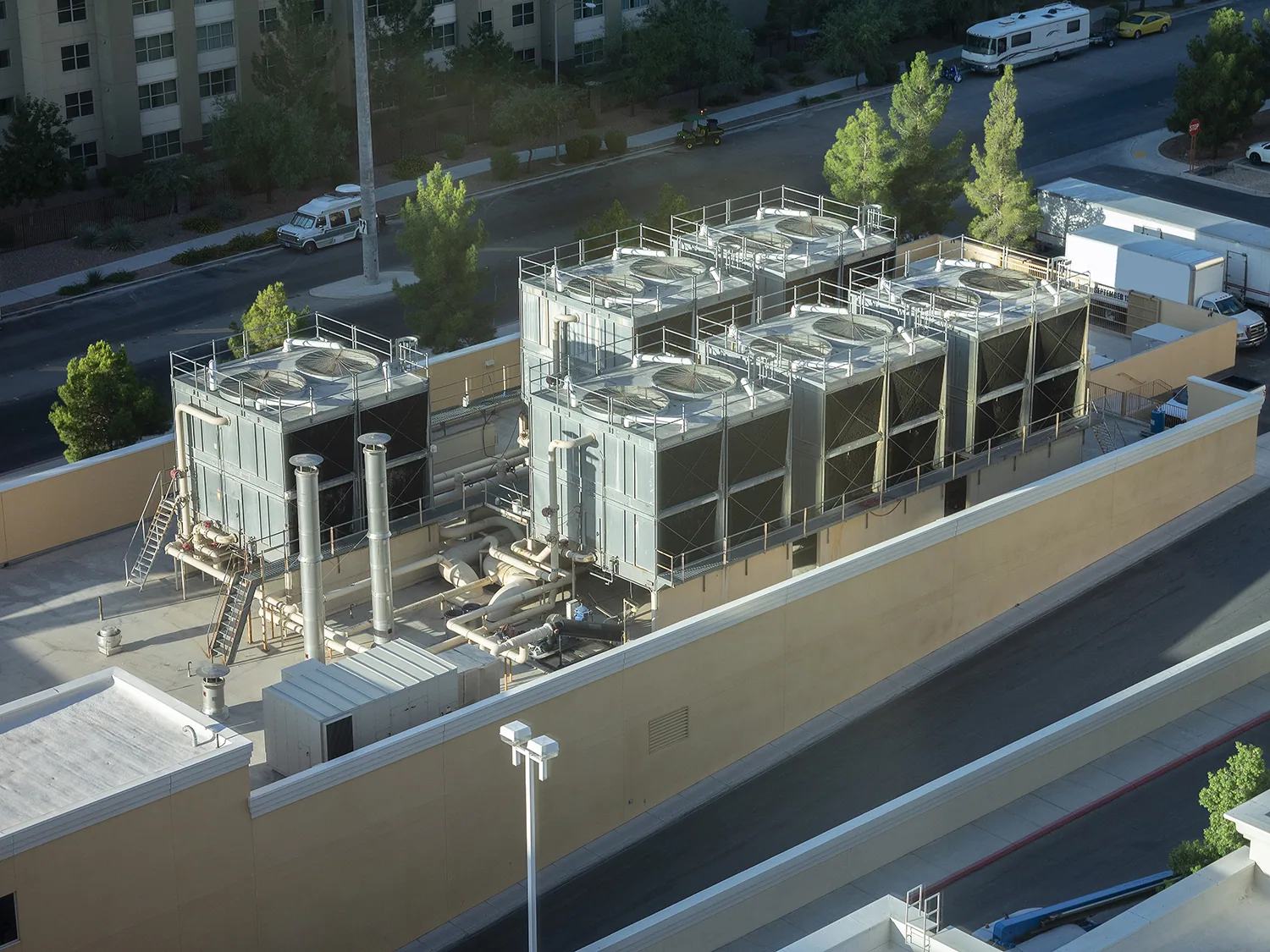
Fixing the membrane at the wall
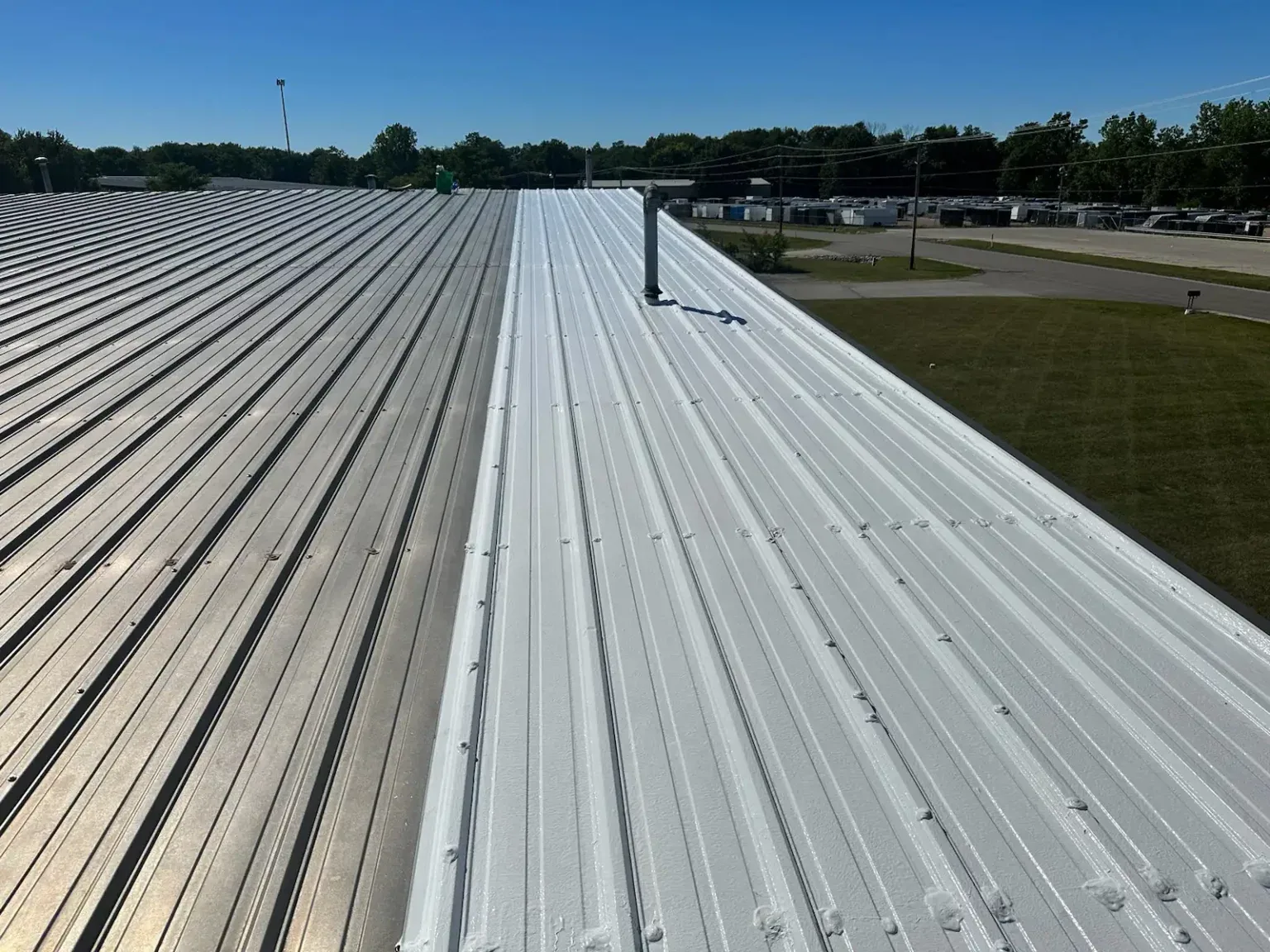
The commercial roof repair around the wall depends on the roof that's there. Good membrane is cleaned and primed so the new flashing bonds to it. Brittle or wet membrane is cut out until the crew reaches sound material. On TPO or PVC, seams are heat-welded; on modified bitumen or built-up roofs, the crew uses compatible sheets and asphalt instead. The estimate marks what stays and what comes off. A coating can't rebuild a rotten wall or reset a condenser, so if a bid relies on coating alone at a leaking wall, the cause is still there when the crew leaves.
If you plan to keep the existing roof layers, an infrared moisture survey can flag wet insulation. The scan is read along with the conditions it was taken in and any roof records, and suspect areas get core cuts before we recommend keeping the insulation. Every core is patched the same day, and if we're cutting over an occupied unit, the property manager knows ahead of time. You can't tell from the building's age or a storm date whether the insulation is wet. The cores tell you. HVAC and structural calls stay with the people licensed to make them.
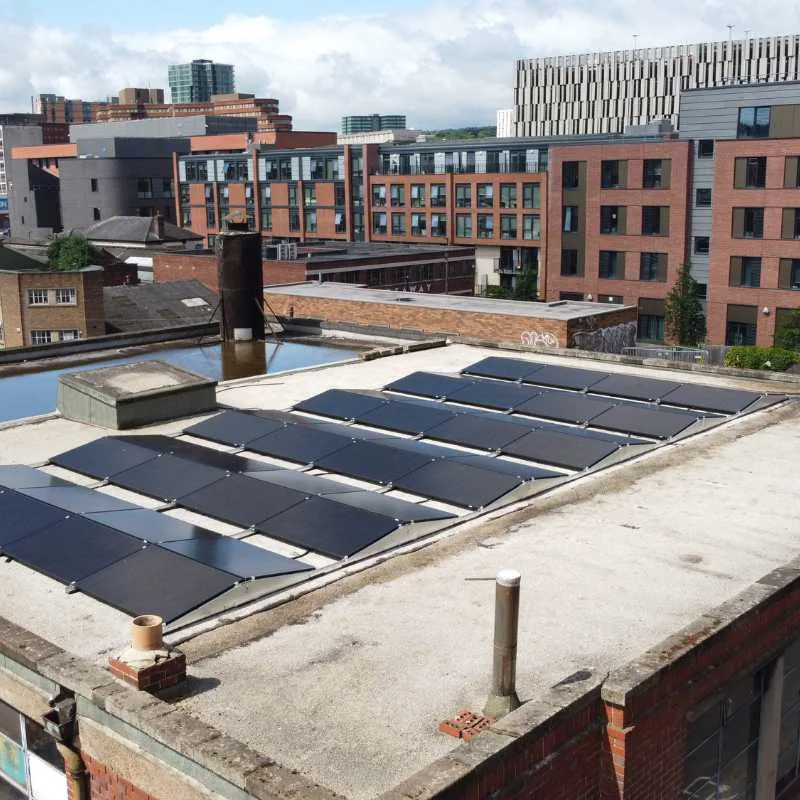
HVAC units, drains and other trades
Apartment roofs often carry rows of condensers or rooftop units on curbs and stands. For rooftop equipment curbs and supports, the HVAC contractor handles disconnecting, lifting or relocating equipment, and an engineer reviews any change to the supports. We spell out what has to be ready before we flash around a curb and what we install afterward. Laying new membrane doesn't service a unit, and the estimate shouldn't suggest it does.
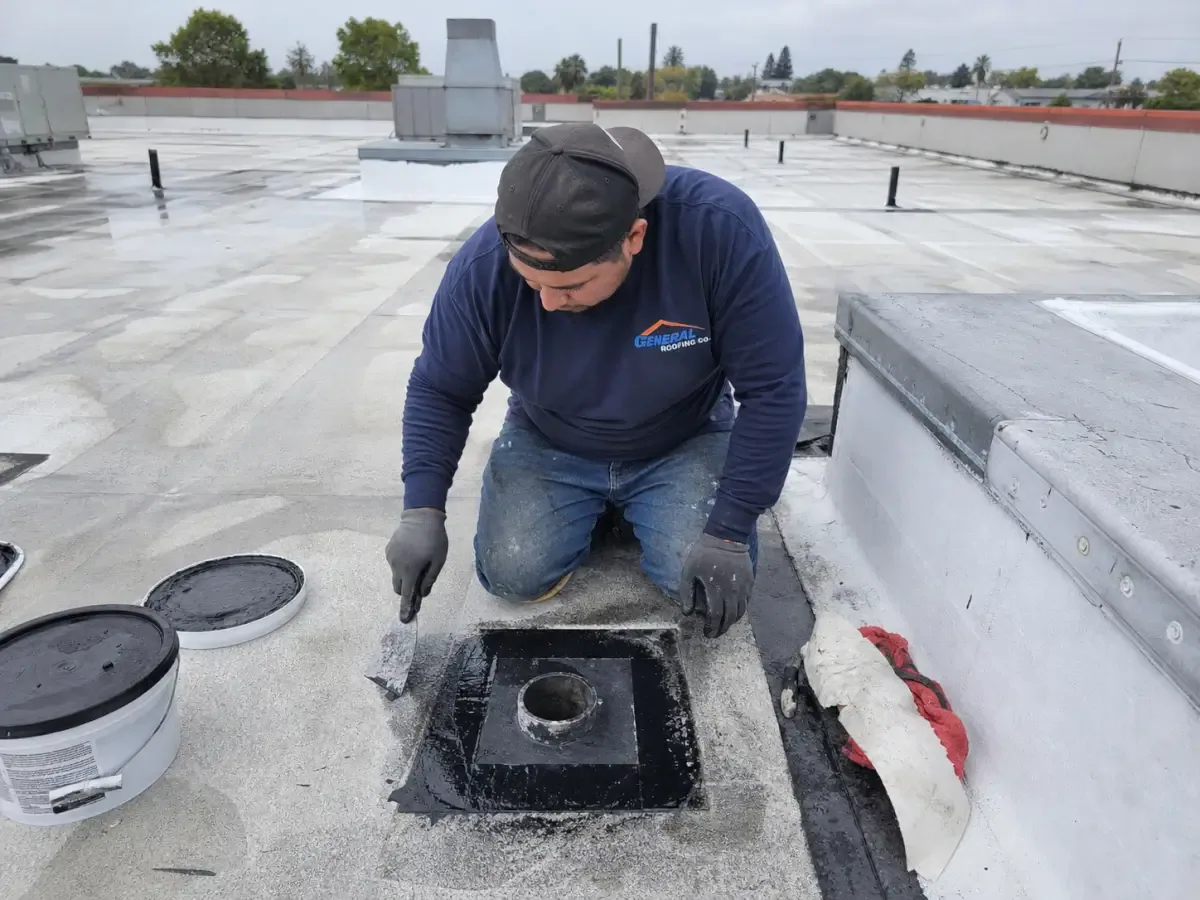
Drains near the wall get the same treatment. We check the drain flashing and clamping ring and get them ready for the new membrane. A leaking pipe below the roof or a cracked drain body goes to the plumber, and changes to the drainage get design review. Wall, HVAC and plumbing work each belong to a different trade, so the estimate lists each one next to the roofing that's waiting on it. That way you can schedule the carpenter, the HVAC tech and the plumber in the right order instead of finding out mid-job that the roofers are stuck waiting.
Working over residents
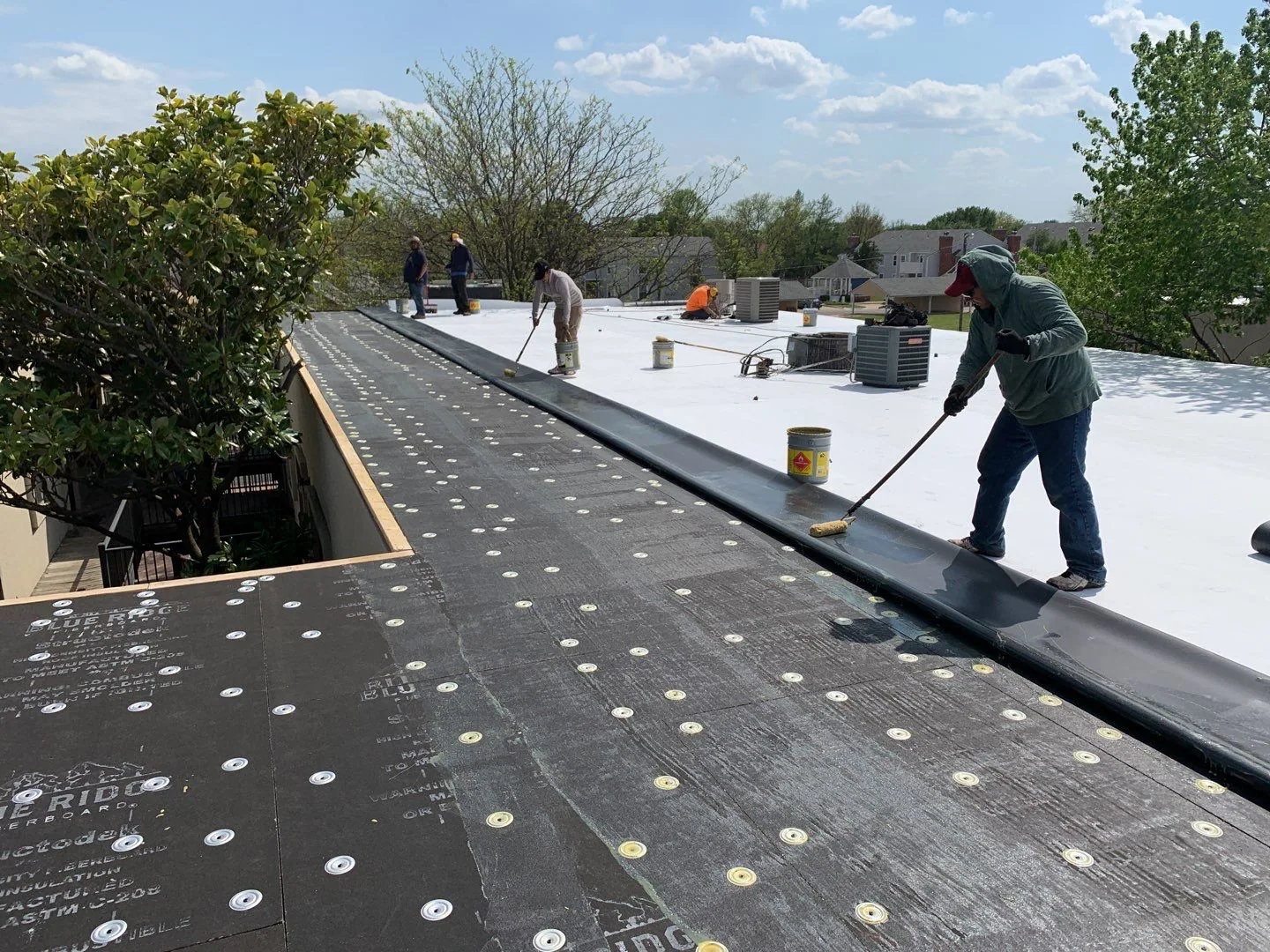
For roof work over occupied units, we walk the property manager through where we'll open the roof, how materials get up and across it, and which units, corridors or offices sit below. The manager decides how residents are notified and whether furniture inside needs to be moved or draped. If a unit needs protection, it gets set up before tear-off, not during. Being allowed on the roof to inspect isn't the same as being cleared to open it over someone's bedroom, and we don't assume every community runs on the same rules or quiet hours.
Sometimes the rot runs farther along the wall than the first opening showed. When that happens, we photograph it, explain how much more needs to come off, and check what's below the bigger area before going further. If a carpenter or HVAC tech needs time before we can finish, we install a temporary seal so the roof stays dry overnight. You get the added work, the price change and the extra protection in one update. Protection set up for the first unit doesn't mean the unit next door is ready too.
The closeout record
When the job is done, the closeout record shows the rebuilt wall section, the new flashing, the membrane removed and replaced, and every core cut that was patched, with photos taken while the roof was open. Anything still pending, such as a curb waiting on the HVAC contractor or a drain pipe for the plumber, is listed separately. One repaired wall doesn't fix every leak on the property, and the record says which areas still need a look.
We inspect apartment roofs in Downtown Arlington and the surrounding districts. Hotel roofing and senior living roofing have their own conditions and get their own inspections. For your apartment building, the record stays with the property, so when maintenance staff turn over, the next person knows what was rebuilt and what's still open.
Common Questions
Do you need to talk to anyone before working over occupied units?
Yes. The property manager tells us who lives or works below the work area and handles notices to residents. We plan the opening, the material route and any interior protection with them before anything comes off.
What should a wall flashing estimate include?
Any repair to the wall behind the flashing and who does it, plus the new flashing and how it ties into the membrane at the base. If an estimate only covers a patch at the bottom of the wall, the cause may still be there.
Can an infrared scan prove the old insulation is fine to keep?
Not by itself. The scan shows likely wet areas, and core cuts confirm them. We patch every core and coordinate with the property manager when we cut over a unit.
When one leak is fixed, is the whole roof done?
No. We record what was repaired, plus any work still waiting on other trades and areas that need inspecting. That keeps one fixed wall from being mistaken for a fixed roof.

Get the leaking wall inspected
Have your property manager schedule a roof visit. We'll check the wall and flashing, explain any wall repair needed, and plan protection for the units below.
- apartment wall flashing and backing reconstruction review
- apartment membrane repair and material preparation scope
- apartment roof observations and retained assembly investigation
- apartment roof component preparation and flashing handoffs
- apartment roof removal and affected-space preparation review
- Downtown Arlington and surrounding business districts-area apartment roof examination
- hotel roofing with backing reconstruction duties
- senior living roofing and interior preparation review