Commercial Roofing in Fort Worth

Fort Worth
Commercial roof inspection and repair in Fort Worth, TX: we check for hail and wear, confirm the PVC or other membrane, test for wet insulation and photograph every finding.
Fort Worth has seen some costly hail. The March 2016 storm that hit Fort Worth and Arlington ran to at least $600 million in insured losses by the Insurance Council of Texas estimate. Hail can bruise a membrane or crush the insulation under it without leaving an obvious hole, so a roof that looks fine from the ladder may still have damage. A good inspection finds the actual impacts and shows which repairs can be priced now and which areas need a closer look.
We start with the part of the roof you are concerned about and the membrane on it. We compare what tenants have reported and what past repairs show with what we see on the roof. Then we write up what we found, what we could not confirm and what the repair needs. That gives you something concrete to compare with other bids.
What the inspection covers
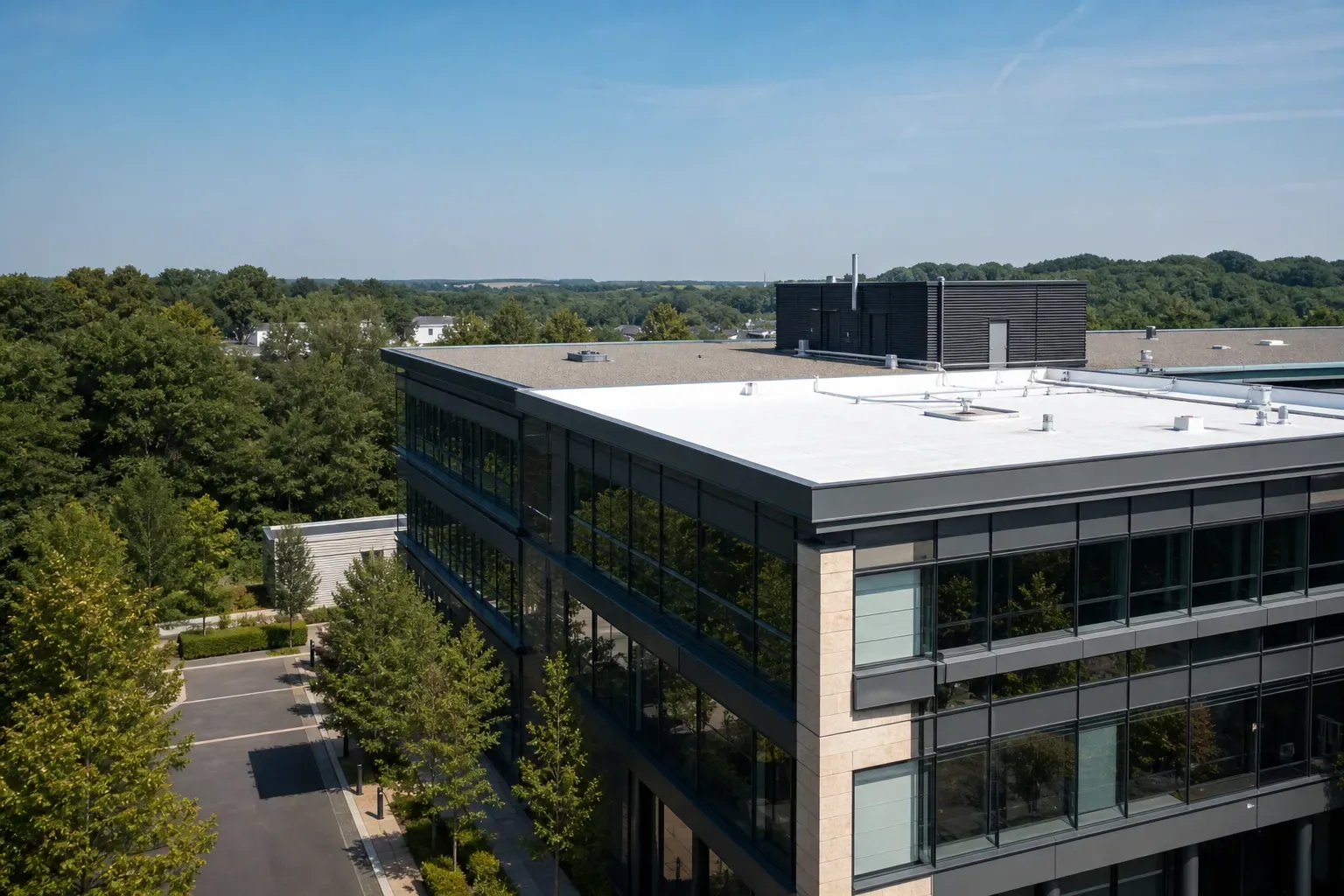
Before the visit, we ask for whatever you have: drawings, past repair invoices, warranty paperwork and any notes on leaks. On the roof, we walk the agreed area and check the field membrane, seams, flashing at walls and curbs, drains, edge metal and penetrations. We look for hail bruising, splits, open seams, loose flashing and wet spots.
A commercial roof inspection should tell you exactly what was checked and what was not. If we could not get to an area, like under a large rooftop unit or a section behind a locked door, the report says so. Every finding gets a photo and a spot on the roof plan.
We separate what we confirmed from what we suspect. A dent in the metal cap is a fact. Hail damage under the membrane is a question until we test it.
We also inspect roofs nearby in Benbrook, Haltom City and the Arlington Entertainment District, each one on its own.
Confirming the membrane
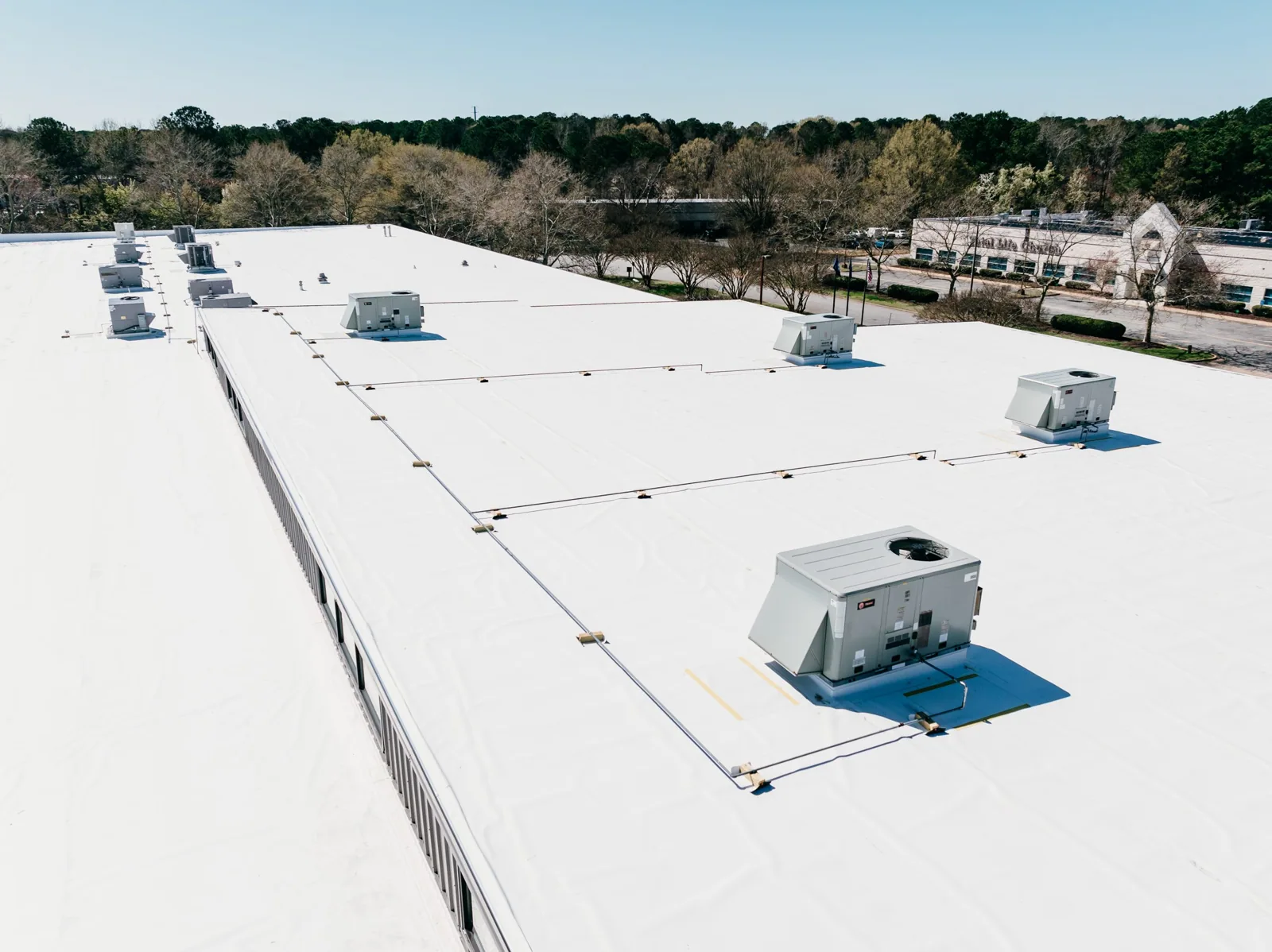
The repair method depends on the roof system. PVC, TPO, EPDM and modified bitumen each need different materials, and an old patch may be a different product from the roof around it. We confirm what is on the roof at each repair area before recommending anything.
For PVC roofing, we check whether the existing sheet is still flexible enough to weld. Older PVC can lose plasticizer and stiffen, especially on roofs that get full Texas sun. If a test weld does not take, we cut back to better membrane or recommend a different approach.
Nearby seams and flashing get checked as part of every repair. An open seam a few feet away can let water right back under a new patch. Those fixes go in the estimate as their own items, so you can see why the repair area is bigger than the damage you can see.
When we recommend an infrared survey, we explain the conditions it needs. It works best on a clear evening after a sunny day, when wet insulation holds heat longer than dry insulation. The scan points to suspect areas; core cuts confirm them. We do not call a warm spot on a thermal image a leak until a core shows wet insulation underneath.
Checking for wet insulation
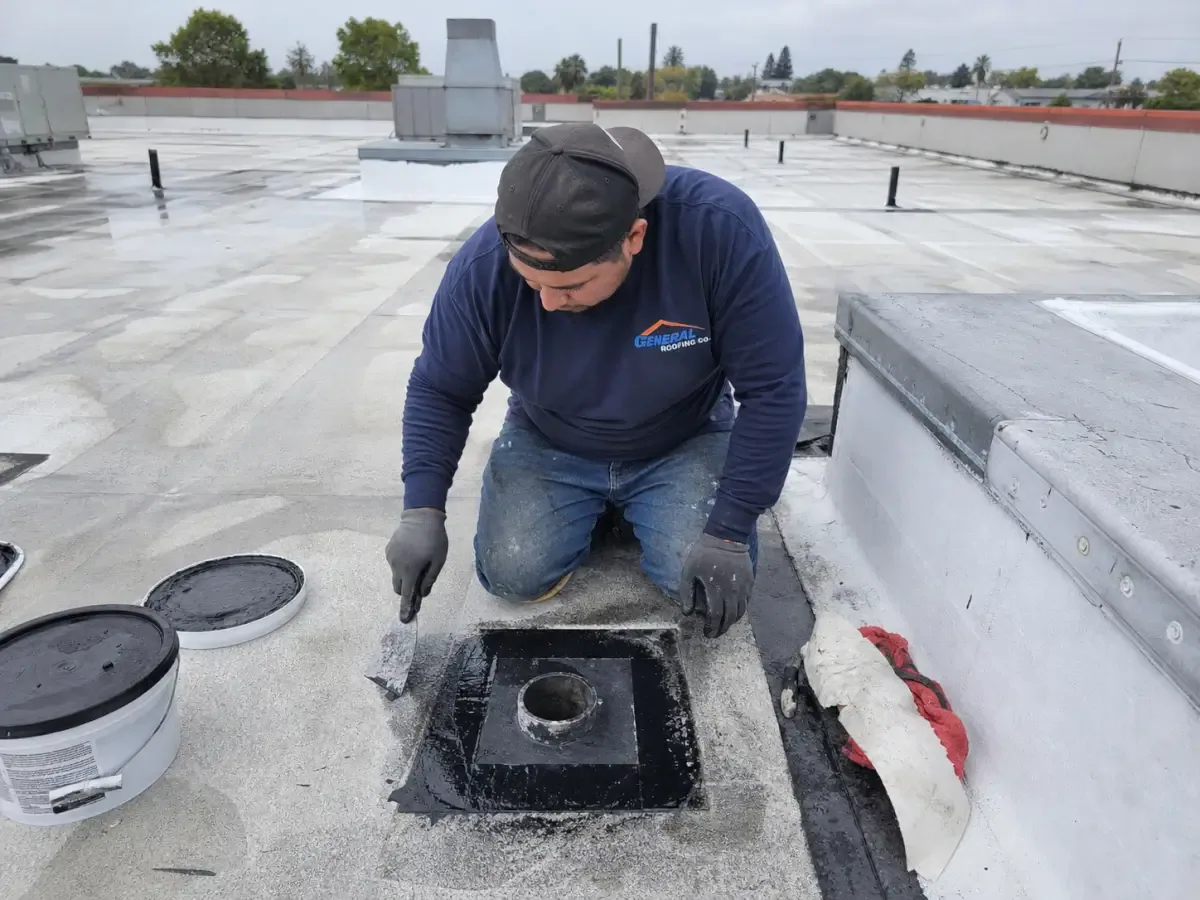
Hail and slow leaks both wet insulation without leaving obvious signs on top. Wet insulation loses its R-value, adds weight and can rust a steel deck. If we see soft spots or get high moisture readings, we recommend core cuts or an infrared survey to find out how much is wet. We explain what each test can and cannot tell you before you decide.
On an office building roof, we schedule core cuts and any openings with the property manager. Tenants are right below, and some will want notice before anyone cuts into the roof.
A dry core at one spot does not clear the rest of the roof. If other areas are in question, they get their own check. If we find more damage once the roof is open, we photograph it and talk with you before closing it up.
If hail is the concern, timing matters too. Insurance policies usually set a deadline for reporting storm damage, so it helps to get the roof inspected soon after the storm rather than waiting for a leak to show up inside. We can inspect, document what we see and give you the photos to share with your adjuster, while keeping the repair estimate separate from the claim.
Prep and the order of work
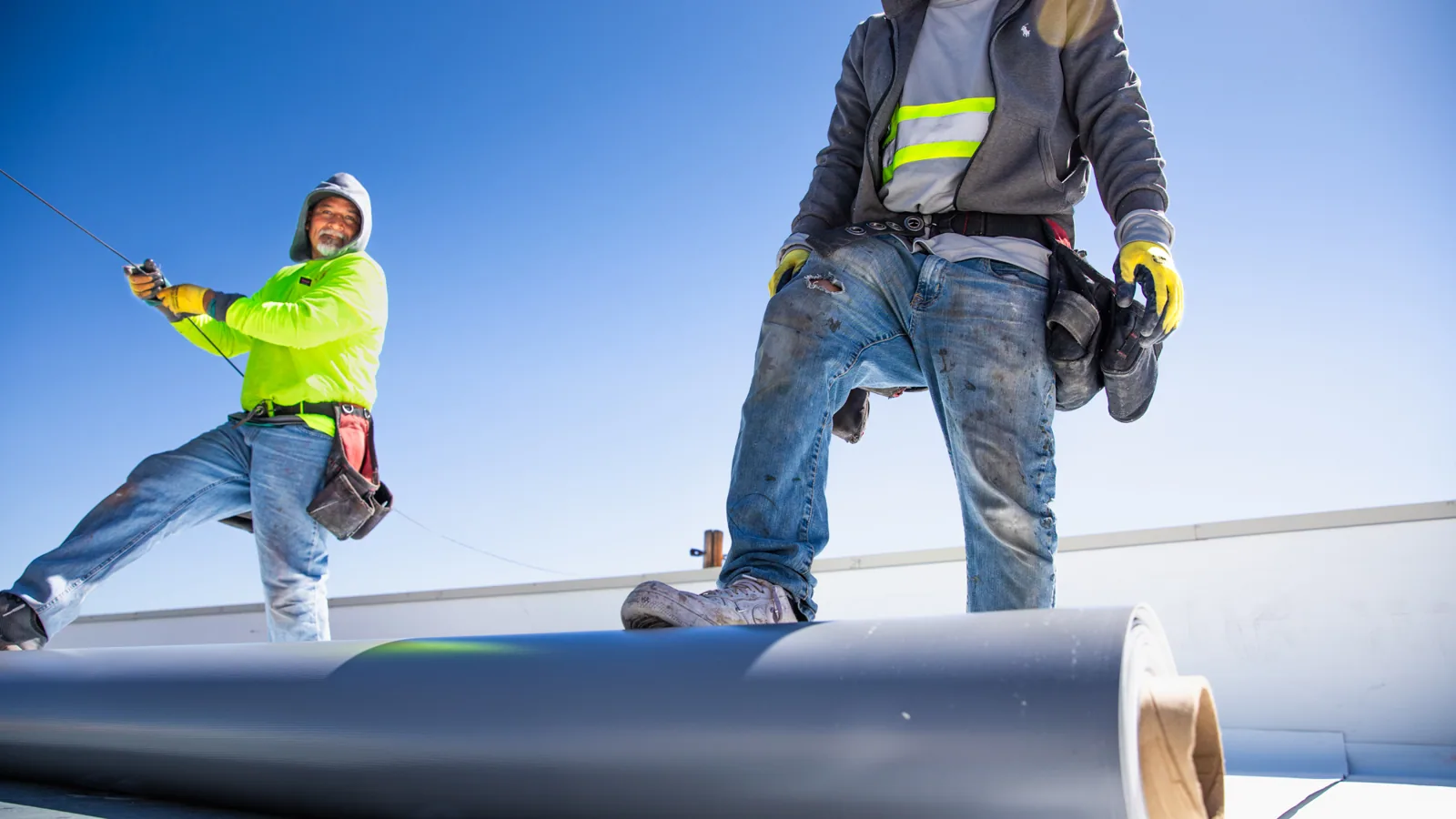
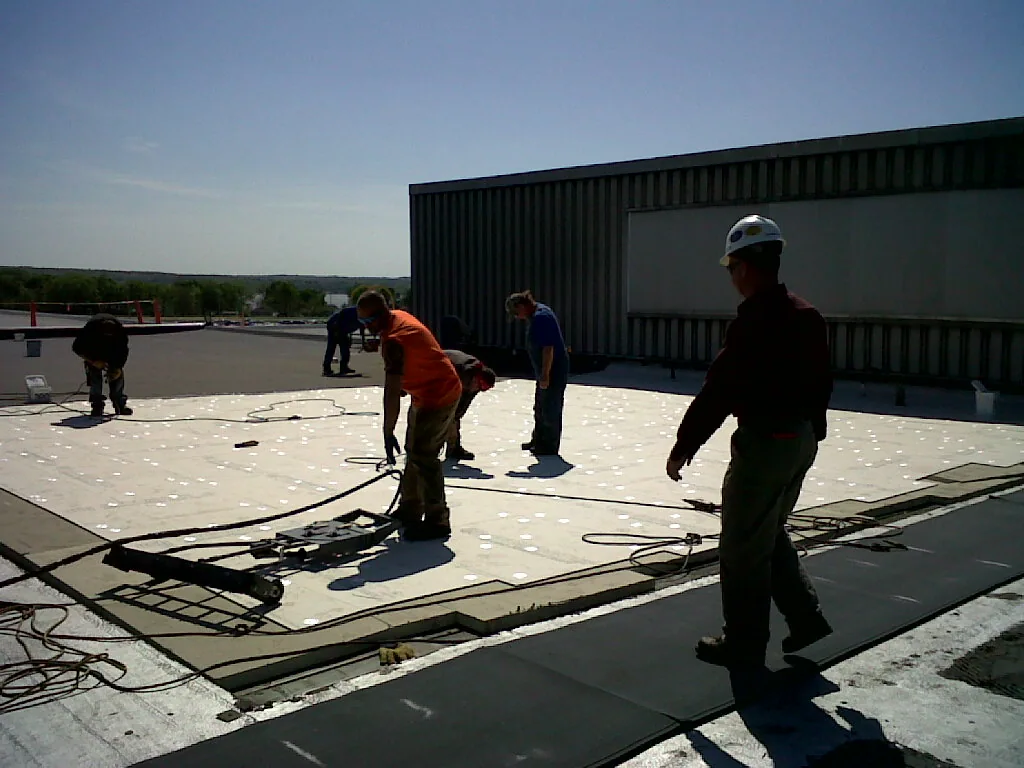
Once we know what is wet and what is sound, the order is straightforward. Replace wet insulation and damaged deck. Fix failed seams and flashing nearby. Clean and prep the existing PVC. Weld the new material. If an old patch or contaminated surface keeps the new material from bonding, we deal with it first and list it in the estimate.
We work out roof access, parking, material staging and work hours with the building manager. Fort Worth office buildings range from small suburban sites to downtown towers with freight elevators and loading docks, and each has its own rules. If an HVAC contractor needs to reset a unit or repair a curb before we can flash around it, we name that task and coordinate the timing.
You get updates as each step is finished, so you know when the roof is actually done.
Photos and the inspection report
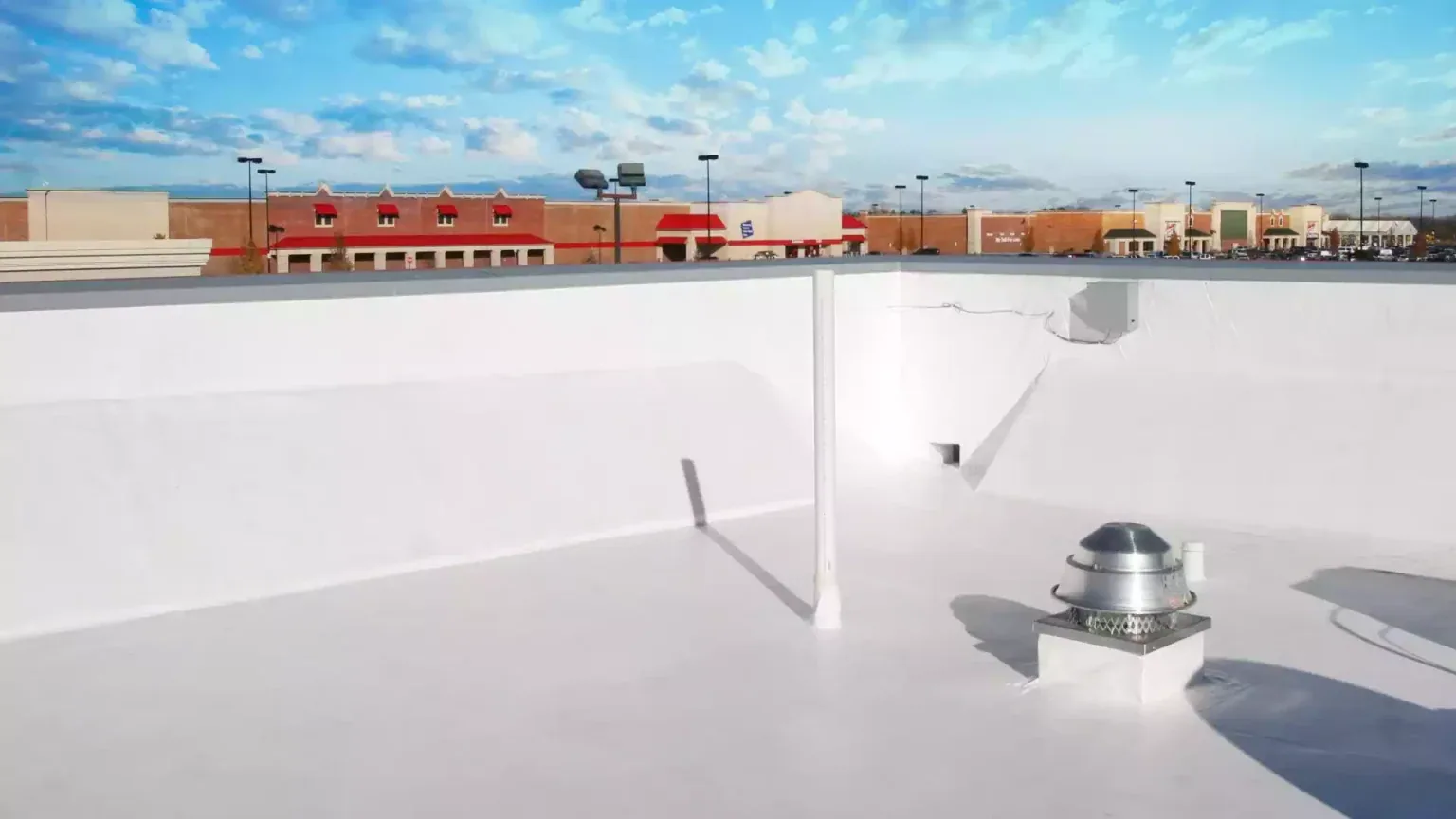
We photograph each finding and each step of the repair: the damage as found, any opened insulation, the deck, the repaired seams, the prepped membrane and the finished weld. Each photo is tied to its location on the roof plan.
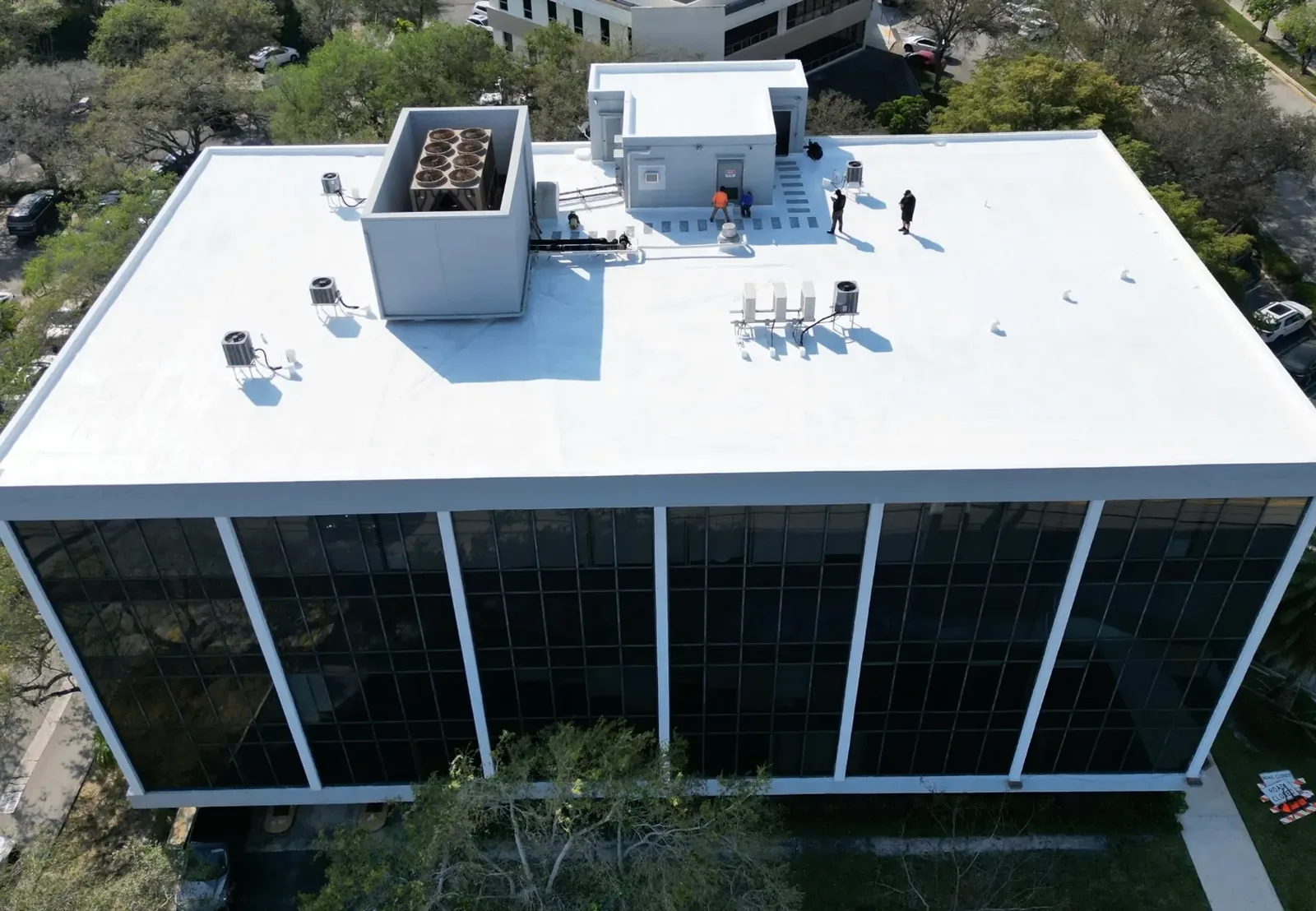
A roof condition report for a Fort Worth building lists every finding with its location, what we repaired, what we found but did not repair and any area we did not inspect. If hail is part of an insurance claim, the photos of hail impacts are kept separate from the repair record, so the adjuster can see exactly what we observed.
If we put down a temporary patch before the permanent repair, the report says so. That record gives you a clear starting point the next time a question comes up on that roof.
Common Questions
Can you tell our roof's condition from records alone?
No. Records help us know what to look for, but the condition has to come from inspecting the roof itself. We confirm the membrane and check the details before recommending a repair.
How do you show what the inspection did not cover?
The report lists every area we inspected and every area we could not reach, such as under large equipment. Those limits are marked on the roof plan next to the findings.
Why do you need to confirm the membrane before repairing it?
Each roof system needs different repair materials. Using the wrong product means the repair will not bond. We confirm what is on the roof at each repair spot first.
What happens if you find more damage once the roof is open?
We stop, photograph it and talk with you before closing up. The estimate is updated so you see the change and the cost first. The photos and notes stay in the report, tied to that location, so anyone reviewing the job later can see why the scope changed.
What evidence shows the repair was done properly?
Photos of each step tied to its location: the damage, any opened insulation, the seam repairs, the prepped membrane and the finished weld, plus a report listing what was done.
Get your Fort Worth roof inspected
Tell us which building and what you're seeing, whether it's a leak, hail concern or worn area. We'll inspect it, show you what we find and give you a clear plan for the repair.
- commercial roof inspection linking located observations to proposed corrective work
- Benbrook
- Haltom City
- the Arlington Entertainment District
- PVC roof correction supported by identified membrane and a suitable retained boundary
- office building with its own authorized roofing and supporting material examination
- roof condition report locating Fort Worth repair evidence and outstanding roof questions