
Commercial Roofing in Coppell
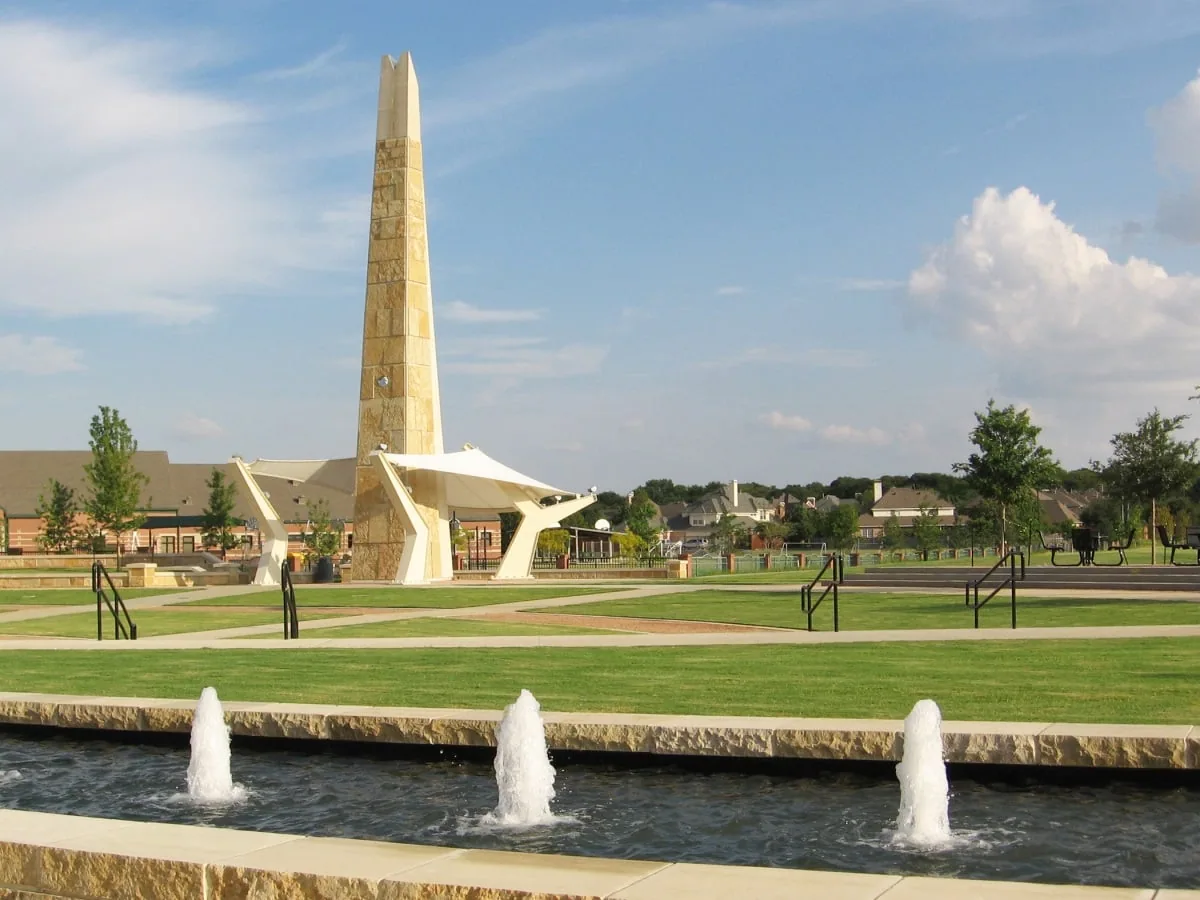
Coppell
Commercial roof coating and restoration in Coppell, TX: moisture surveys, seam and flashing repairs, acrylic or silicone coatings and photo records of the prep.
Many office and warehouse roofs in Coppell are aging but not yet ready for replacement. For a lot of them, a coating is a sensible middle step. It renews the surface and reflects heat, usually for much less than a tear-off. But a coating only works on a roof that is still basically sound. We check first, fix what needs fixing and then tell you honestly whether coating makes sense.
We also look at restoration projects in Irving and Grapevine, and we judge each roof by its own condition.
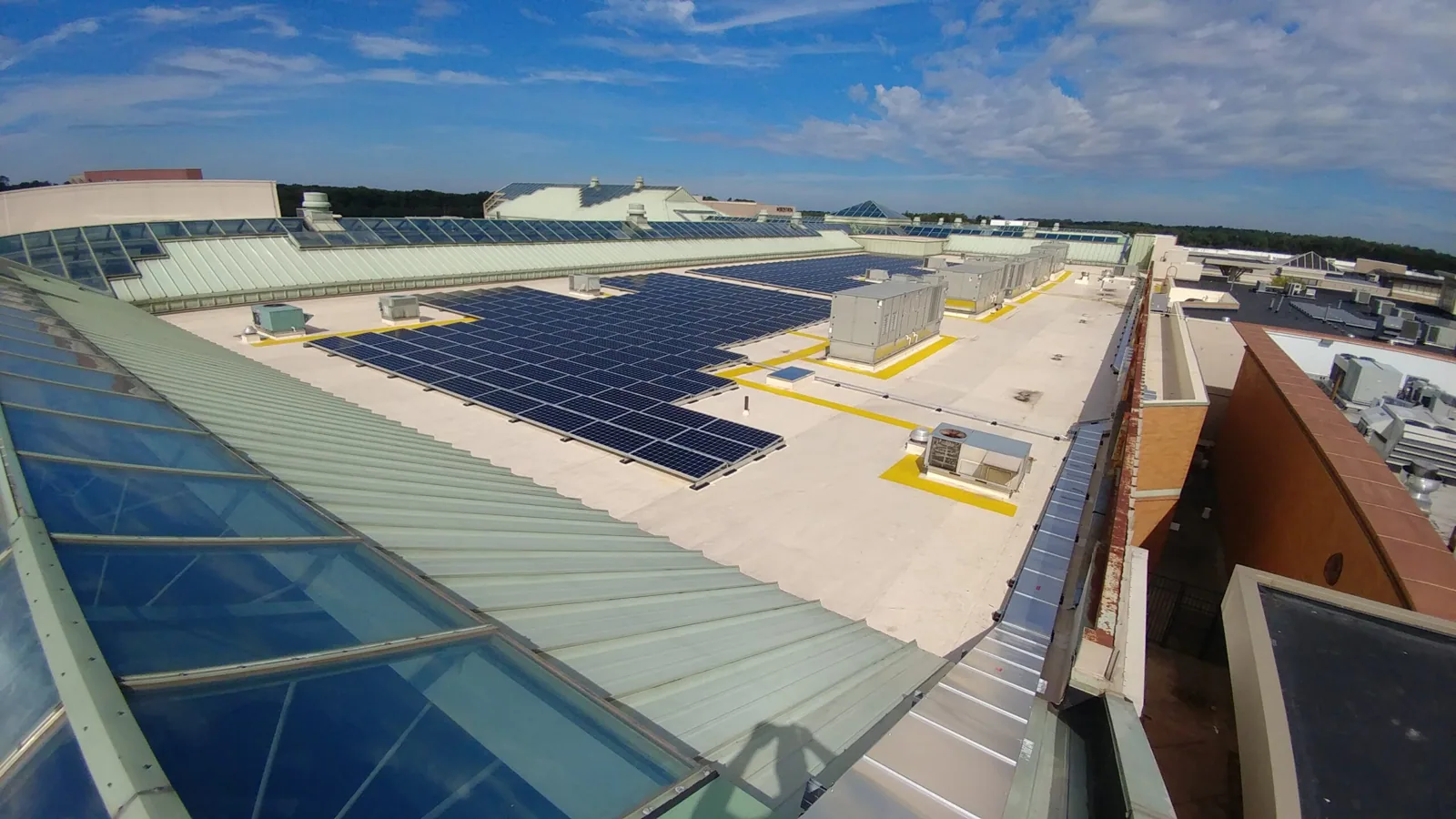
Deciding which areas can be coated
We walk the roof and identify the existing system and its condition: membrane wear, seams, flashing, drains, ponding areas and past patches. Some sections may be good candidates for coating while others are too far gone. We mark those areas on a roof plan so you can see exactly what would be coated and what would need replacing.
Our roof coating restoration estimate lists the coated area, the repairs that have to happen first and any sections that should be torn off and replaced. That way you are not paying to coat over a problem.
We also run adhesion tests on cleaned sections of the roof. After the test patches cure, we pull them to see how well the coating holds. Poor adhesion means a primer is needed, or that coating is not the right fit for that surface.
Ponding is the other thing we map. Water that sits on the roof for more than a day or two after rain wears a coating faster and can void some coating warranties. We mark every low spot and note how deep and wide it is, so the estimate can address it with the right coating or a drainage fix before the coating goes on.
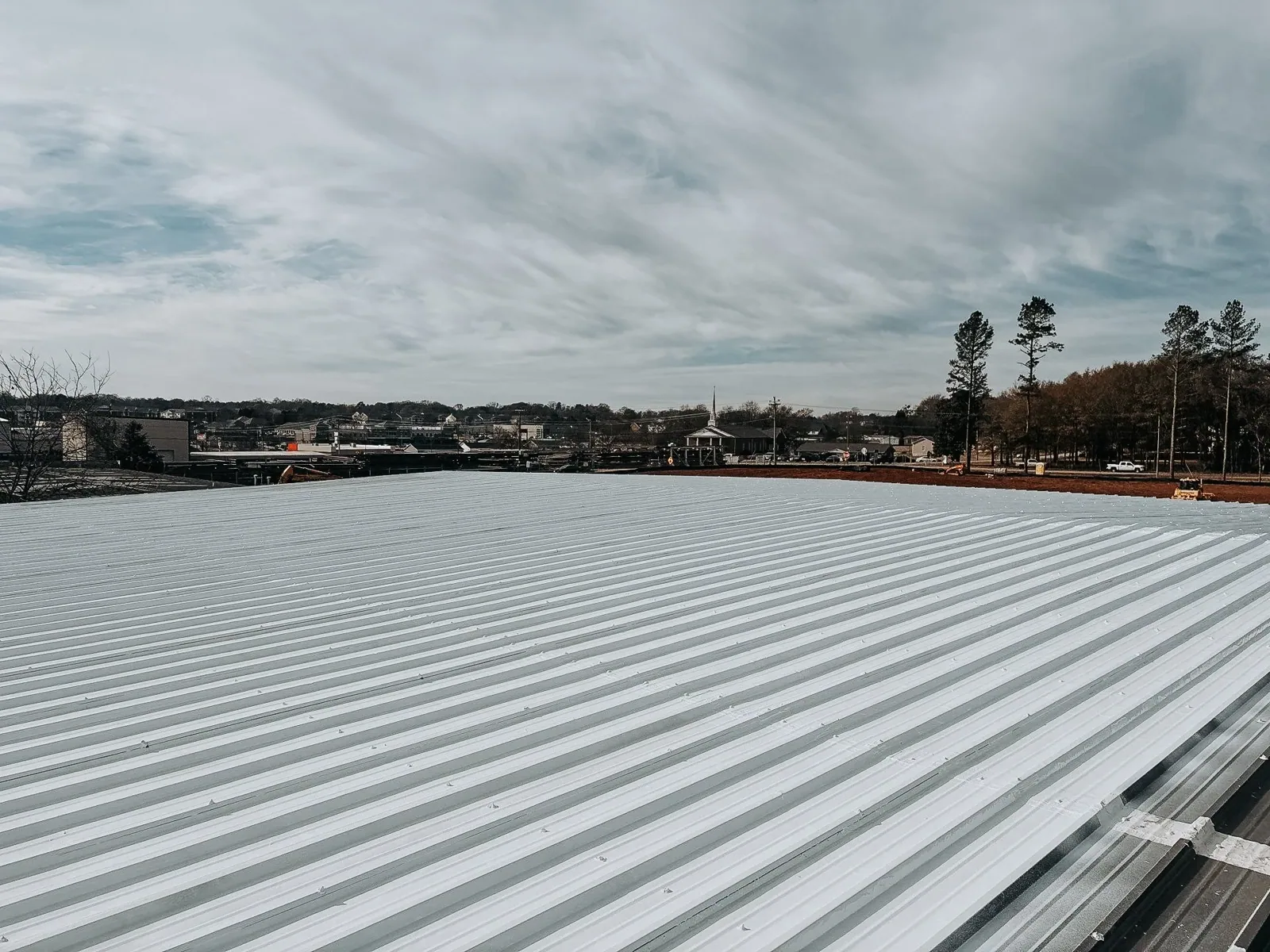
Moisture checks before coating
Coating over wet insulation seals the water in. The insulation stays wet, loses its value and can rust the deck below. Before we recommend coating, we survey the roof for moisture, usually with infrared or moisture meters, and confirm the readings with core cuts.
On an office building roof, we schedule the survey and core cuts with the property manager. Infrared surveys work best in the evening after a sunny day, when wet insulation stays warmer than dry insulation and shows up on camera.
Wet areas are cut out and replaced with new insulation and membrane before coating. If we open the roof and find more damage than the survey showed, we photograph it and update the estimate before going further.
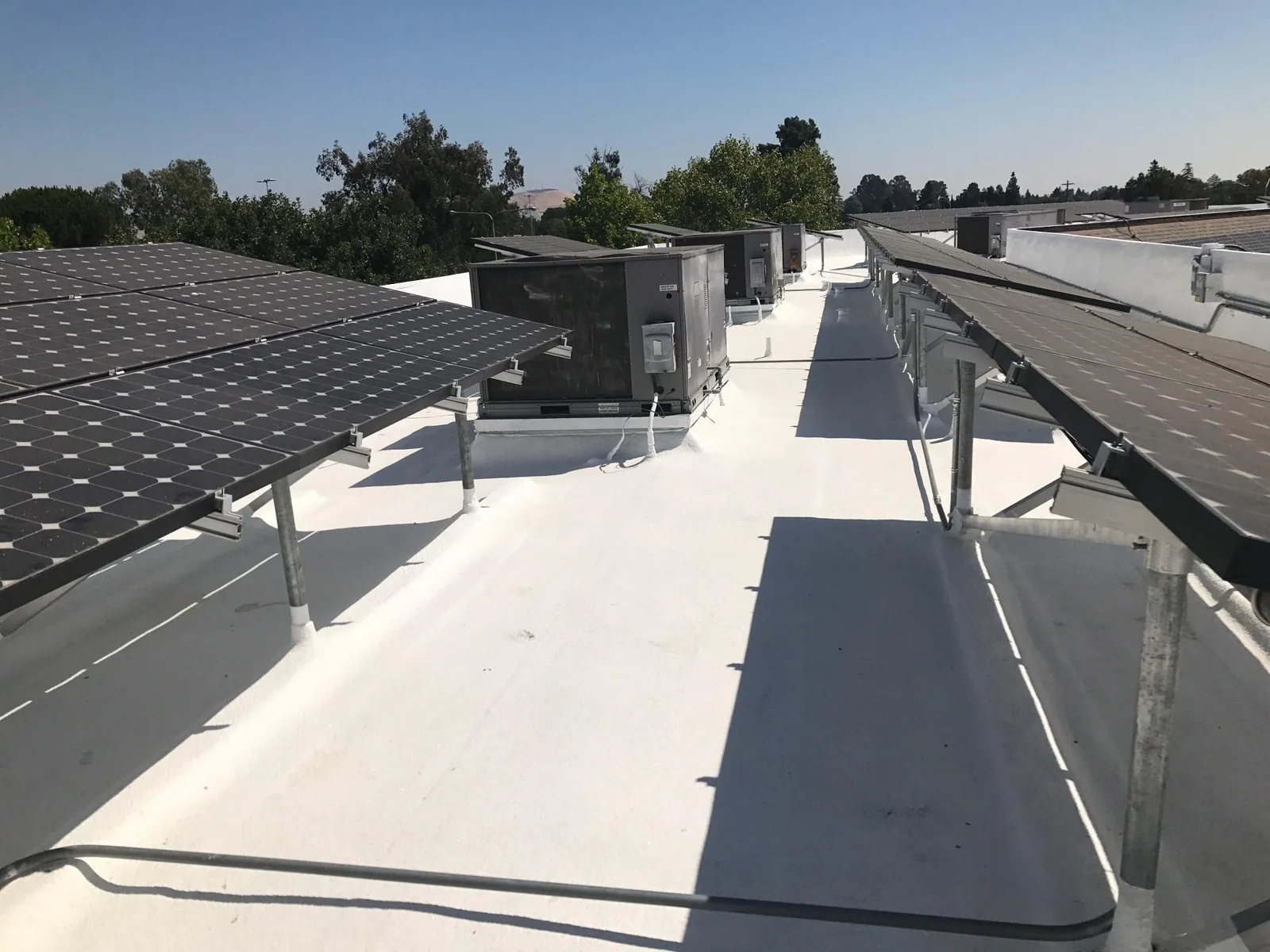
Seam and flashing repairs first
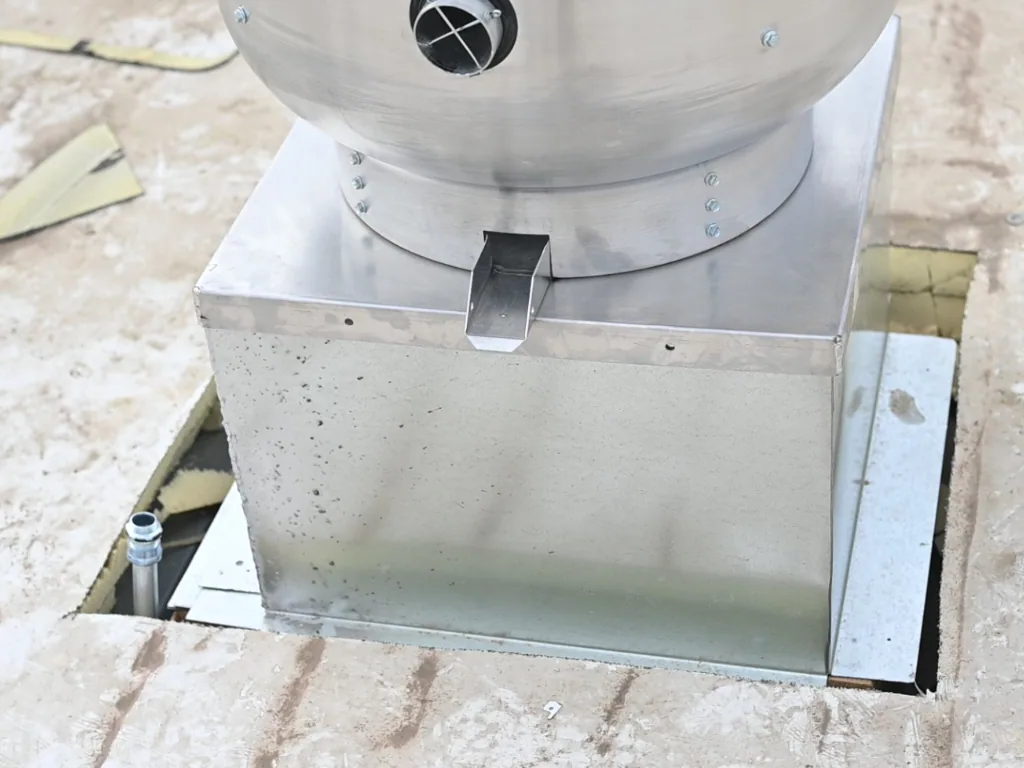
A coating is not glue. It will not hold an open seam together or keep loose flashing on a curb. Before coating, we repair split seams, failed flashing at walls and curbs, loose edge metal and punctures using materials that match the existing roof. The coating then goes over a sound, watertight surface.
For an acrylic roof coating, the roof has to drain well, because acrylics do not hold up to standing water. Seams and flashing usually get a reinforced base coat with fabric before the field is coated. If the roof holds water in several spots, we may recommend silicone instead, or tapered insulation to fix the drainage.
Each repair is listed separately, so the estimate shows the coating and the repair work as different items.
Tenants should hear about the project before the crew shows up. We give the property manager a simple notice with the dates, the hours and what to expect, such as some noise during power washing and a mild smell while certain primers cure.
Prep and scheduling
The order is set: moisture survey, insulation replacement, seam and flashing repairs, power washing, primer if needed, then base and top coats. Each step has to be finished before the next starts. Coatings need dry weather and the right temperature range to cure, so we watch the forecast and plan around rain.
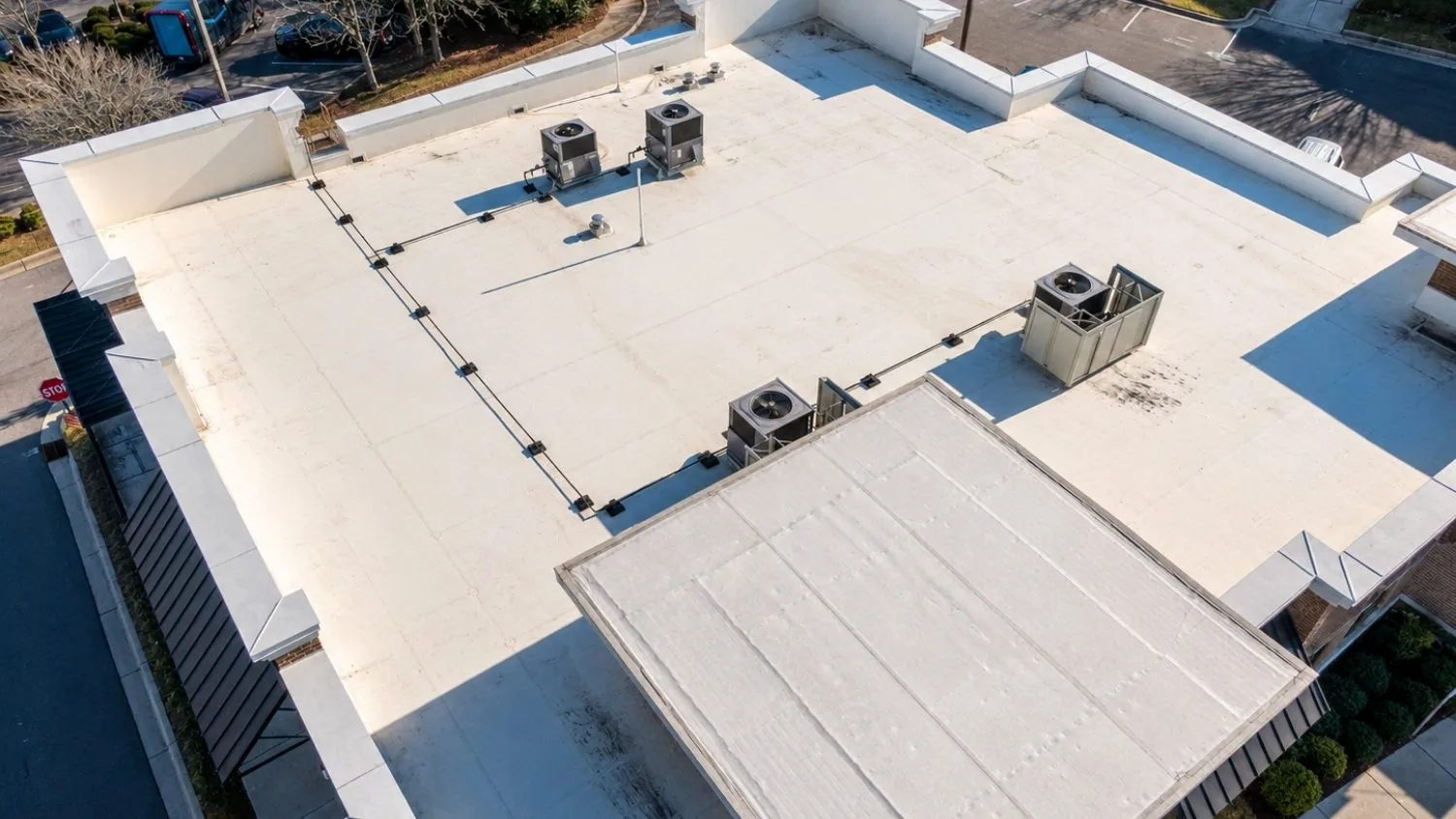
We confirm roof access, staging, parking and crew hours with the building manager. Overspray can drift onto cars and into HVAC intakes, so we plan which units get covered and when. If an HVAC contractor or plumber needs to fix a curb or drain before we coat, that goes on the schedule first.
We keep you updated as each step is done, so you know where the project stands.
We also note anything the coating does not cover, such as a skylight frame, a rooftop unit or a section of wall flashing that belongs to another trade. Those stay on the list so they get handled separately instead of falling through the cracks.
Records you can use later
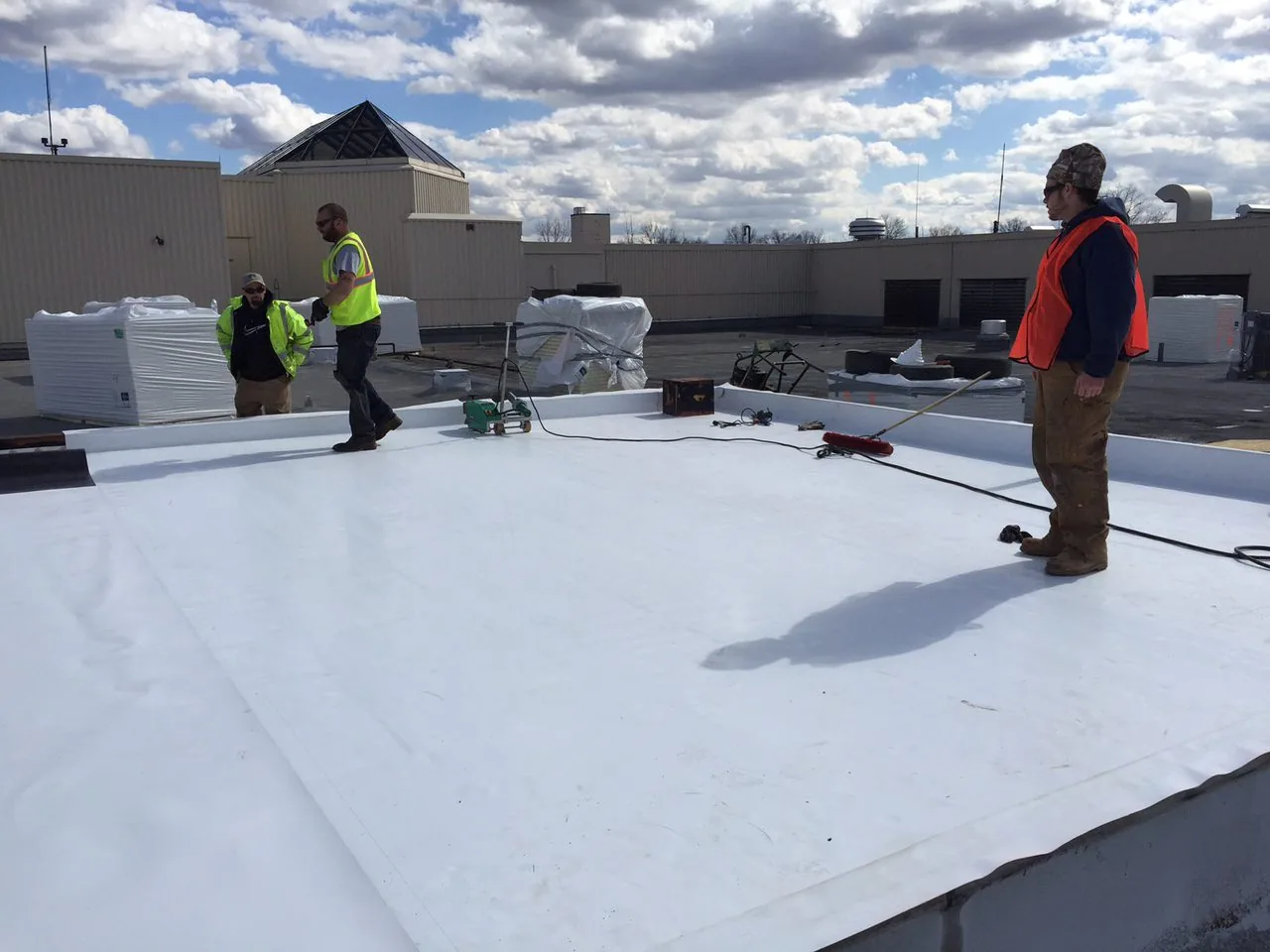
We photograph the roof before work starts, the moisture survey results, the core cuts, the replaced insulation, each seam and flashing repair, the cleaned surface and the finished coating. Each photo is tied to its location. Once the coating is on, everything under it is hidden, so these photos are the only record of the prep.
A roof condition report for a Coppell coating project lists the coated area, the replaced areas, the repairs made and any part of the roof left out. It also records the coating product and the thickness applied, which matters for warranties.
Many coating warranties require proof of prep and thickness.
When you call about a Coppell building, tell us the approximate roof size, what system you think is on it, how old it is and whether it leaks. Send any past infrared surveys or repair records you have. We will walk the roof, check for moisture, test adhesion and tell you whether coating makes sense. If it does, the estimate breaks out the coating, the repairs and the replacement areas. If it does not, we will tell you why and what we would do instead, whether that is targeted repairs now or planning for a full replacement.
Common Questions
Can the coating price leave out the seam repairs?
It should not. Coating over open seams or loose flashing means the leaks come back. We list those repairs separately so you can see they are part of the job.
How do you decide which parts of the roof can stay?
We check the membrane condition, test for moisture and run adhesion tests. Areas that are dry, sound and hold the coating well can stay. Wet or badly damaged areas get replaced first.
What happens if you find more wet insulation once the roof is open?
We photograph it, explain what it means and update the estimate before going further. Wet insulation always gets replaced before coating.
Who do you coordinate access and scheduling with?
The building manager. They set the work hours and tenant notices, and we plan around weather, overspray and any other trades that need to finish first.
What records will we have after the coating?
Photos of the moisture checks, repairs, prep and finished coating, plus a report listing the coated and replaced areas, the product and the thickness applied.
Find out if your Coppell roof is a coating candidate
Tell us about the building and the roof you're considering. We'll check for moisture, test adhesion and give you a straight answer on whether coating makes sense and what repairs come first.
- Irving commercial properties through their own retained surface assessment
- Grapevine buildings with individually defined membrane restoration findings
- roof coating restoration recommendation specifying retained material and preceding roof corrections
- office building requiring a defined restoration and supporting layer assessment
- acrylic roof coating work following confirmed covering and compatible detail corrections
- roof condition record locating Coppell restoration findings and completed material corrections