
Commercial Roofing for Arlington Retail and Restaurant Groups
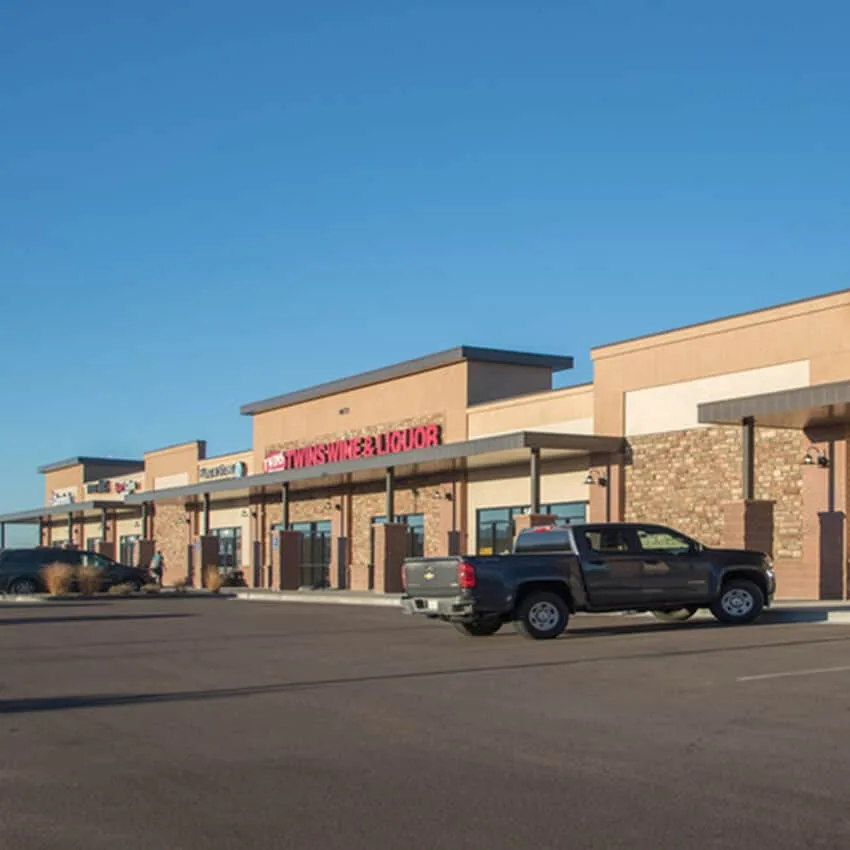
Retail and Restaurant Groups
Roofing for Arlington retail and restaurant groups: leak tracing, repairs and replacements planned around customers, tenants and kitchen equipment, with clear.
Hail was reported in Arlington on May 27, 2024, and a storm like that gets a lot of store and restaurant managers calling about their roofs. But a hail report doesn't mean any particular store was damaged. A roofing decision starts with the specific property, the problem reported and what we can inspect on that roof. If you manage several locations, the storm may be a reason to check them, but each roof still needs its own findings and recommendation.
Commercial Roofing Services Arlington helps retail and restaurant groups plan repairs, replacement reviews and the roof work around equipment. What you get is a proposal that shows where the work goes, what it ties into and which decisions belong to the owner or another contractor. A familiar storefront doesn't tell us whether the roof, rooftop equipment or past alterations match another location in the chain.
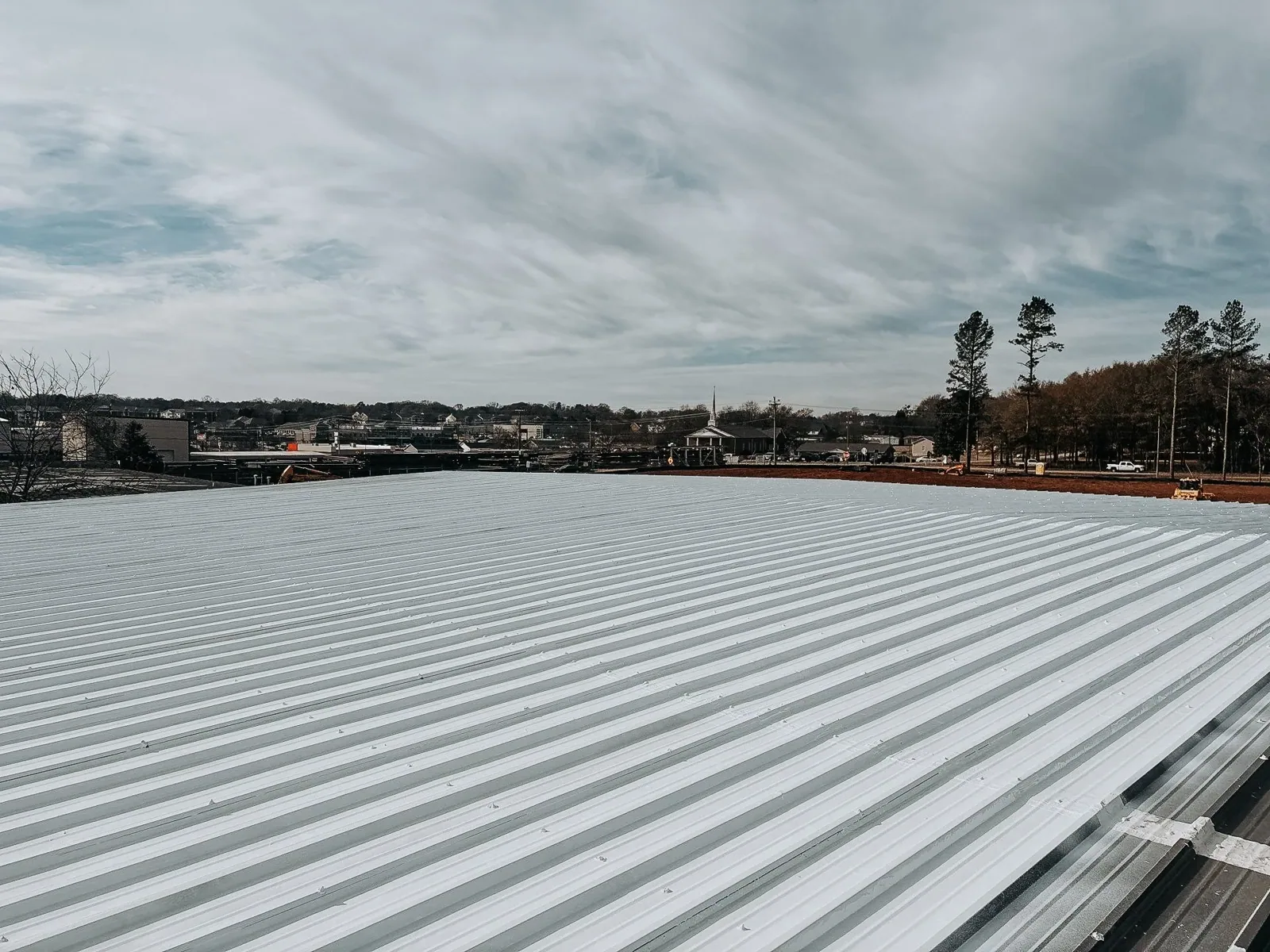
Coordination: landlord and tenant roles
We identify the building owner, the tenant contact and the person who can approve roof work. We ask for any roof records and where the leak showed up. A lease or management agreement may split responsibilities, but the right people need to read it and tell us who's responsible. We don't assume the person who reported the leak can approve changes to every part of the roof.
Before scheduling, we go over access, any test cuts and protection inside. The property contact tells us about restrictions and who handles affected utilities or equipment. A restaurant usually has kitchen exhaust, makeup air units and gas lines on the roof, but we confirm what's actually there from records and the inspection instead of guessing from the type of business.
Before the crew shows up, we confirm which entrance and route we can use and who to call if that route or work area becomes unavailable. We plan how material gets to the roof and how debris comes down, including any protection the property requires. These are arrangements we confirm with your property contact, not standard rules we assume from a store or restaurant brand.
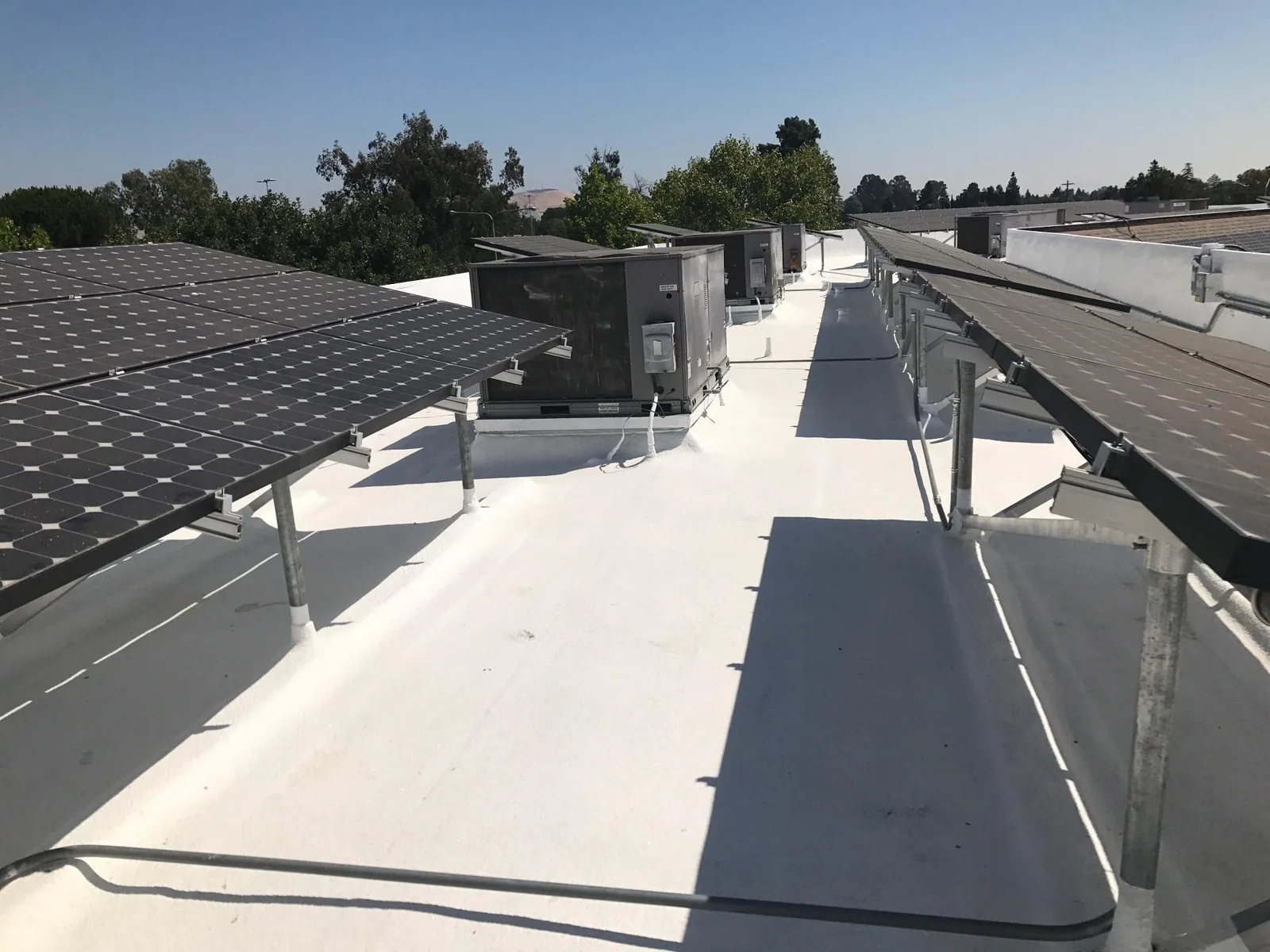
Inspection: find the leak above the sales floor
A commercial roof inspection connects the leak inside to what's happening on the roof. We note the affected room or tenant space, when staff noticed it and the roof details above. Water dripping over a counter doesn't mean the hole is directly above it. We explain the limits of the inspection and any testing needed before choosing a repair.
We take wide photos so the spot can be found, and close-ups that show the condition clearly enough to explain the repair. If wet insulation could change the decision, we recommend core cuts, with your permission and with each cut patched. A roof that looks fine on top can hide wet or damaged material that changes the tear-off or prep. That uncertainty stays attached to the price.
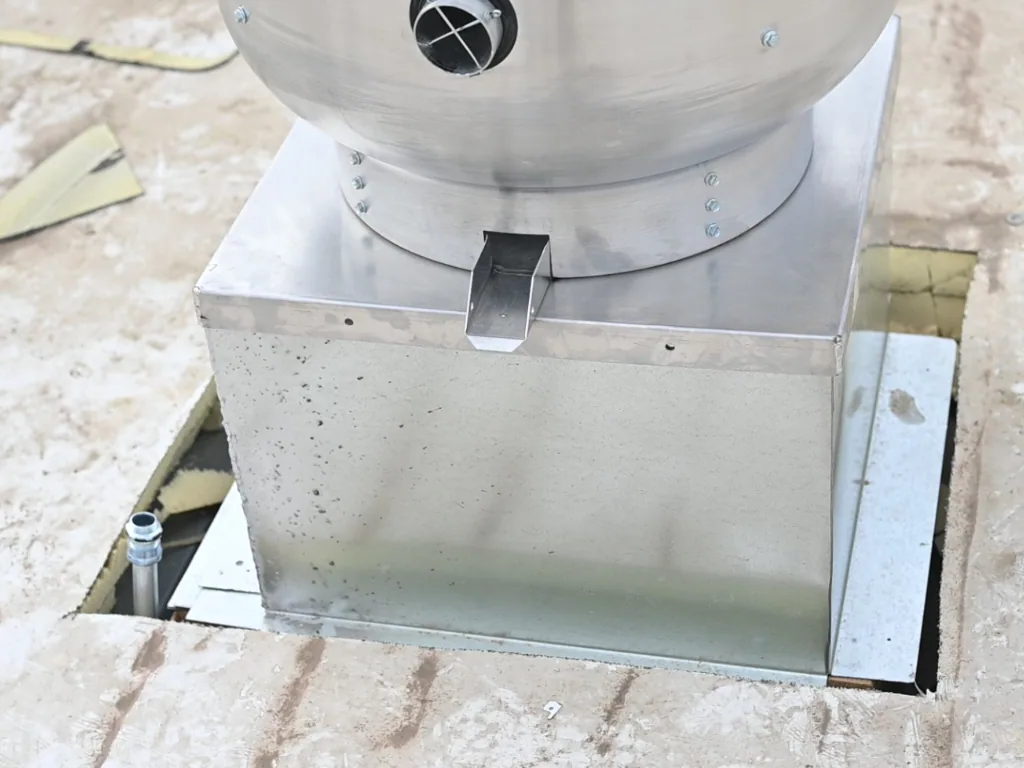
Repair: what comes off and how the new material ties in
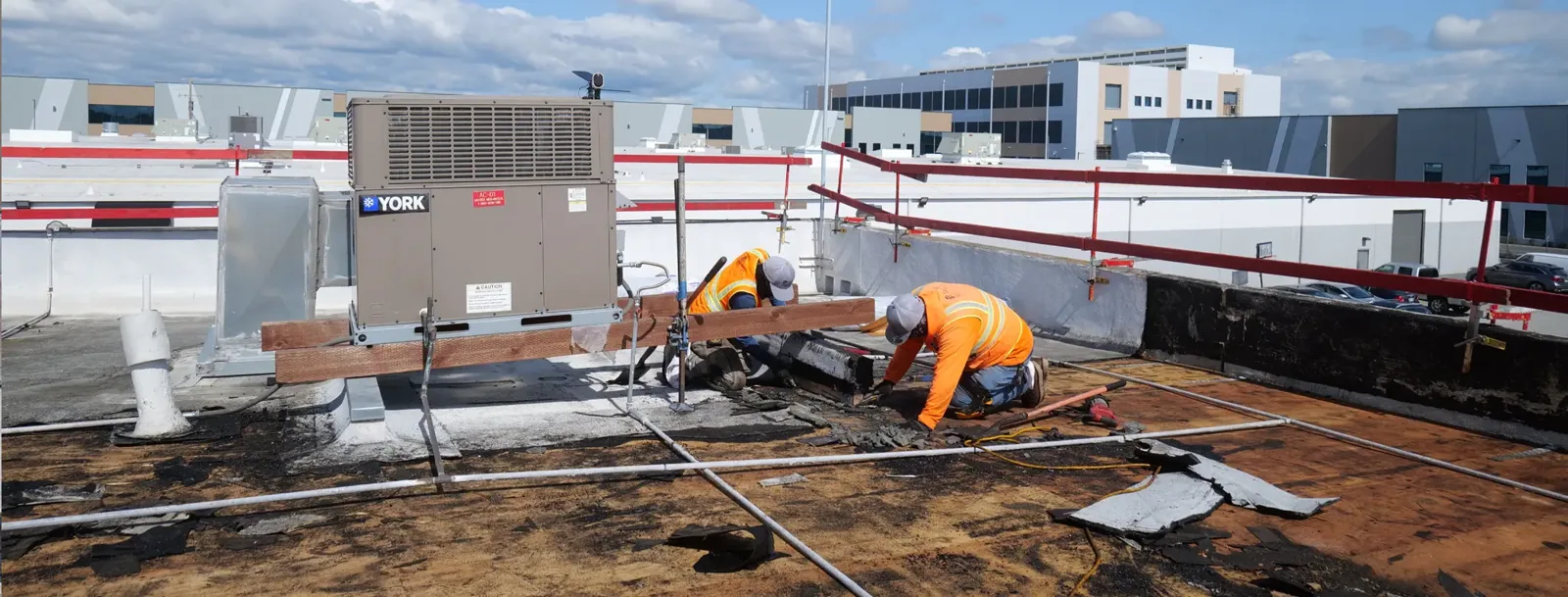
A commercial roof repair proposal should name the problem and show how much material comes off or gets prepped. We identify the membrane, the condition around the problem and a compatible way to tie in. If the surrounding membrane can't take the repair, we explain the extra work needed to reach sound material. A small hole and the full repair area are often not the same size.
After opening an approved area, we note the layers we find and anything that changes the scope. If wood blocking or the deck looks questionable, we get an engineer's input. We describe how removed material will be replaced and how the repair meets the existing roof. Changes are reviewed before new layers cover them, and an allowance is always marked as an estimate, separate from confirmed quantities.
Equipment and curbs: before the flashing goes on
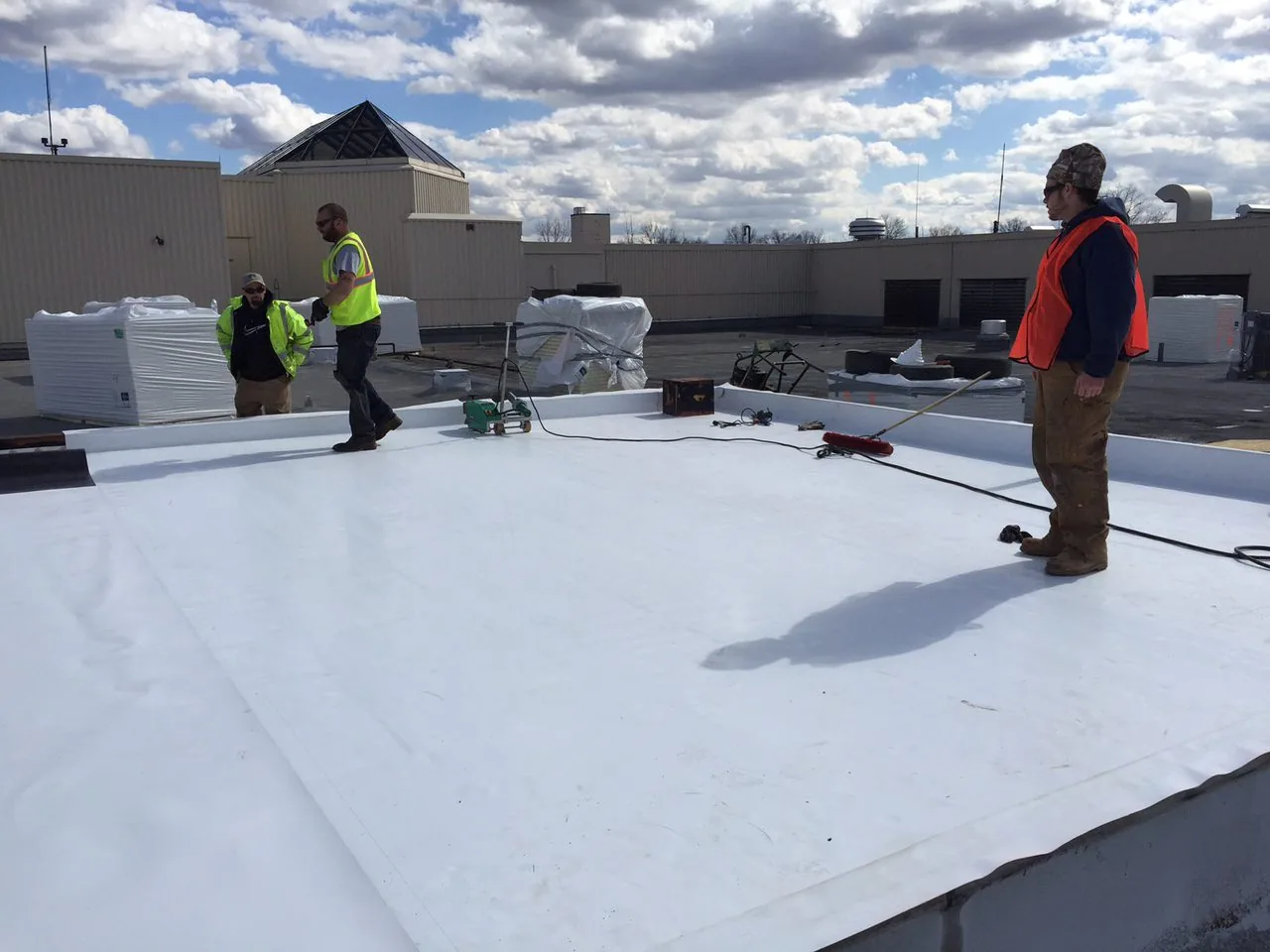
Work on a rooftop unit, curb or wall can leave the roofing waiting. We identify who's fixing or replacing that equipment and what the new flashing will seal to. The HVAC or kitchen equipment contractor handles shutdowns and service. We don't flash against unfinished equipment just because the rest of the roof is moving ahead.
We plan the tear-off, equipment work and roof tie-ins around the actual work area. If the job is phased, we show where temporary protection goes and where the permanent detail ties in later, and we price repeated setup and prep. Then you can compare one complete job with a phased one based on the real work involved.
For shopping center roofing, neighboring tenant spaces need clear work limits too. A repair above one unit says nothing about the roof above the others. That helps property management companies and general contractors split up responsibilities without turning one inspection into a conclusion about the whole center.
Arlington locations: confirm the building first
For a store or restaurant, send us the unit or building address with the problem you're seeing. We cover retail and restaurant roofs around The Parks Mall and the South Cooper Street corridor. Even when a caller describes the location by a well-known shopping center, we confirm the exact building and roof section.
For a portfolio spanning Downtown, South Cooper and Great Southwest, we need a local contact who can arrange access at each property. Each roof gets its own record. Shared branding and nearby locations don't justify copying a repair recommendation or tenant arrangement from one property to another.
Completion: show the repair under the finished surface
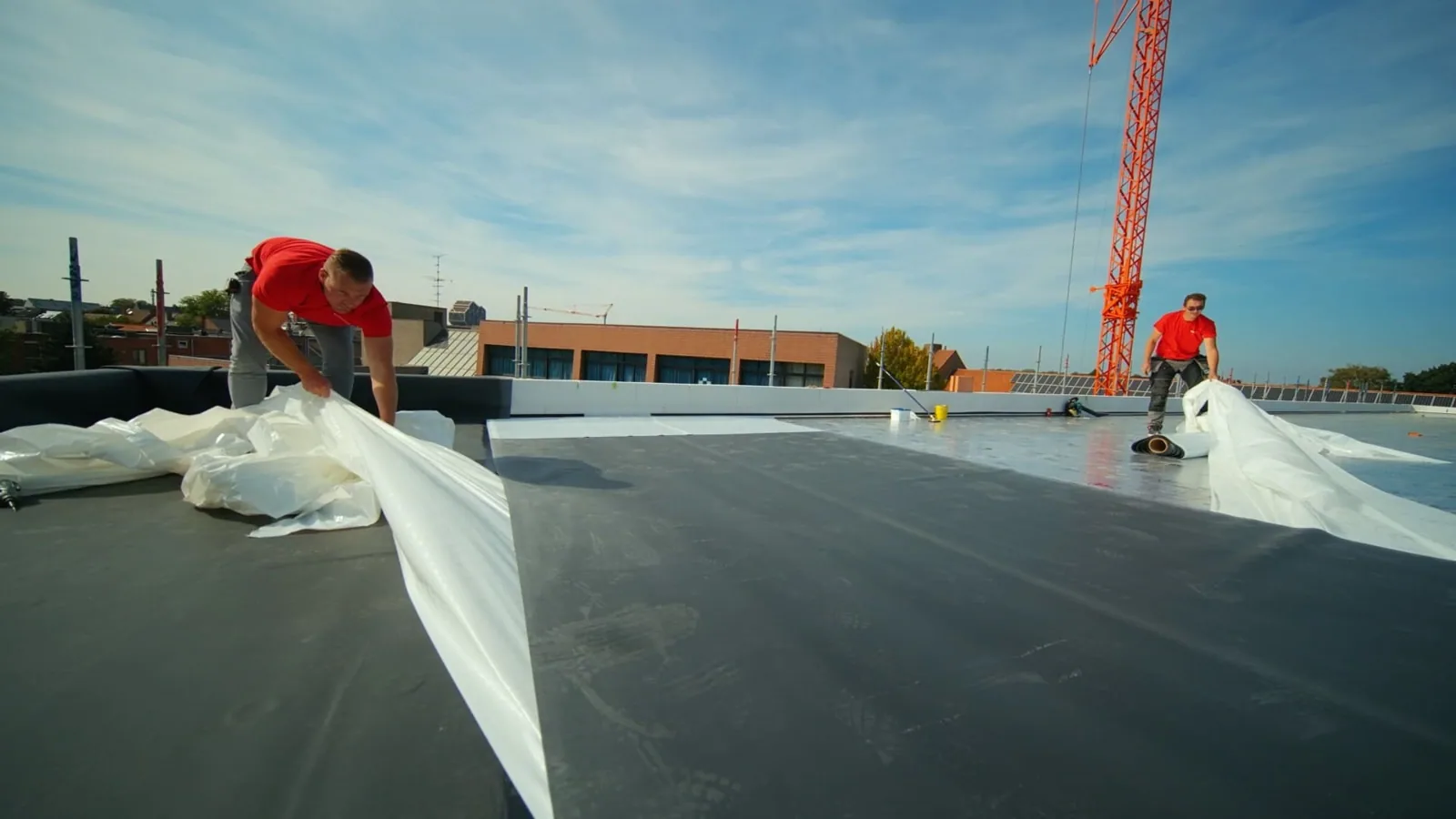
We photograph the exposed repair area and new layers before they're covered. The closeout lists the materials installed and the seams and flashing completed. Changes approved after tear-off are recorded, along with how they affected the final scope. That way you can see what was fixed, not just a photo of the finished roof.
Unfinished work by other trades and any temporary patches are listed separately. We test the finished repair the way that roof system calls for. Manufacturer or other sign-offs are tracked separately where they're required. You get a record tied to the repair location that helps with future service calls, without implying this repair says anything about other roof sections.
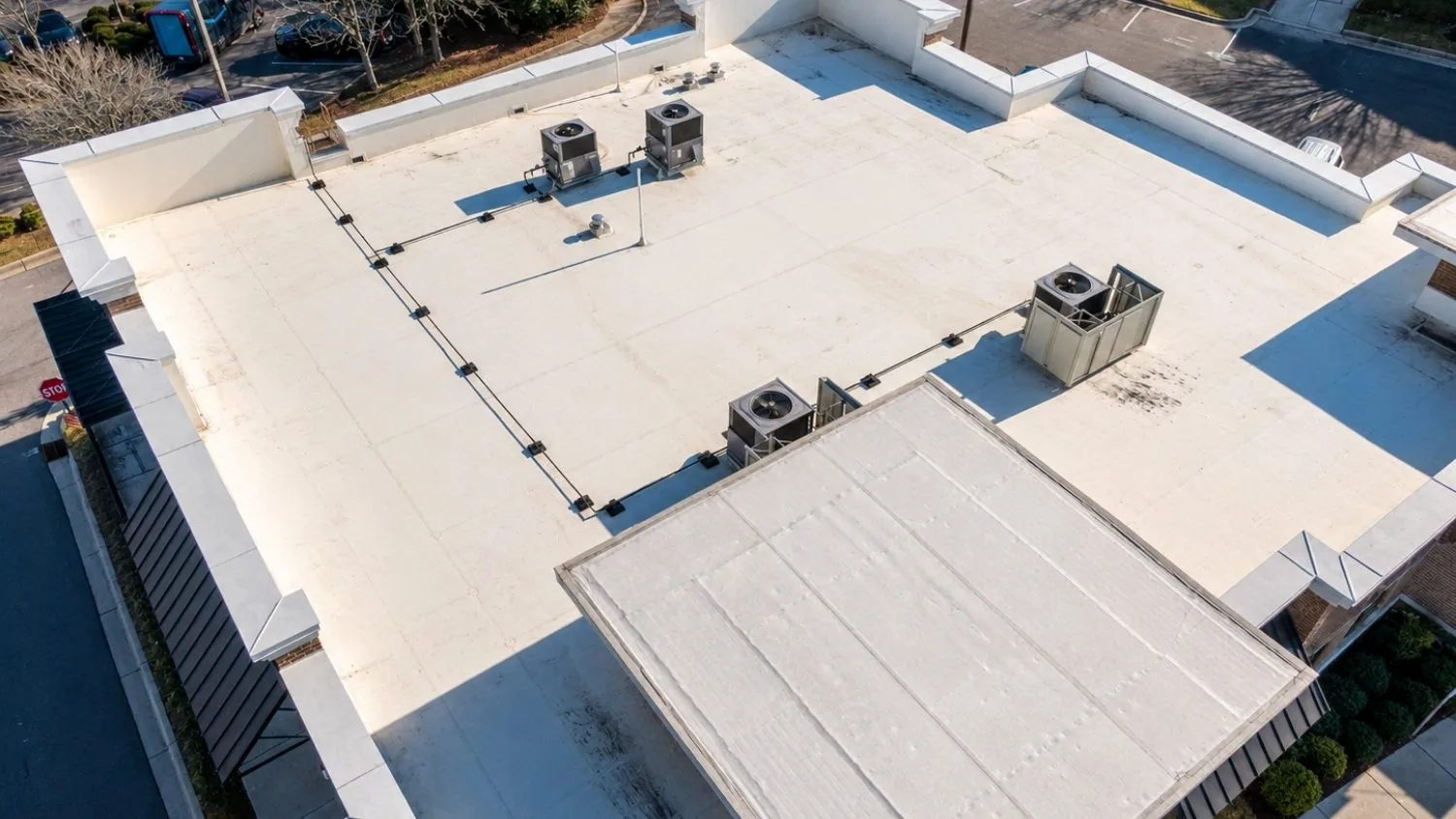
At a retail or restaurant property, roof work can affect customers, deliveries, food-service areas, signage, and rooftop equipment. The site manager can identify the operating periods and access routes that matter, while the contractor defines the work zone and daily protection plan. A proposal should show how materials reach the roof, where debris is handled, and how penetrations or equipment curbs will be tied back into the finished membrane. If phased work is proposed, compare its repeated mobilization and temporary tie-ins with the impact of a larger work window. Any shutdown, utility isolation, or equipment move should be coordinated with the responsible operator or trade. These details let the owner weigh construction cost against disruption at the specific location.
Common Questions
Can one standard repair price cover all our locations?
No. Each roof's membrane, tear-off area, prep and details need to be checked first, because the same brand doesn't mean the same roof. We recommend separate findings and quantities for each location, presented in the same format so your group can compare them fairly.
Who should approve roof work above a tenant's space?
Whoever has that authority under the lease or management agreement and the property's project rules. A tenant can report a leak without having permission to change the roof or equipment. Approval and access should be settled before test cuts or work are scheduled.
How does restaurant equipment affect the roofing scope?
We note the exhaust fans, makeup air units, gas lines and curbs actually on the roof. Equipment shutdowns and service go to the right contractor, and we describe the flashing and membrane work we'll do around them. We don't price equipment we haven't confirmed is there.
What should a completed repair record include?
The repair location, what we found when we opened it, the new layers and the finished seams and flashing. Approved changes and any unfinished equipment work are listed separately. Manufacturer sign-offs are kept with it, so you can see what's still open.
Set up a retail or restaurant roof review
Send us the property address, the problem you're seeing and the owner or tenant contact. We'll explain the right inspection and give you a scope with clear repair limits and any work other trades need to handle.