
Wind Damage Roof Repair in Arlington, TX
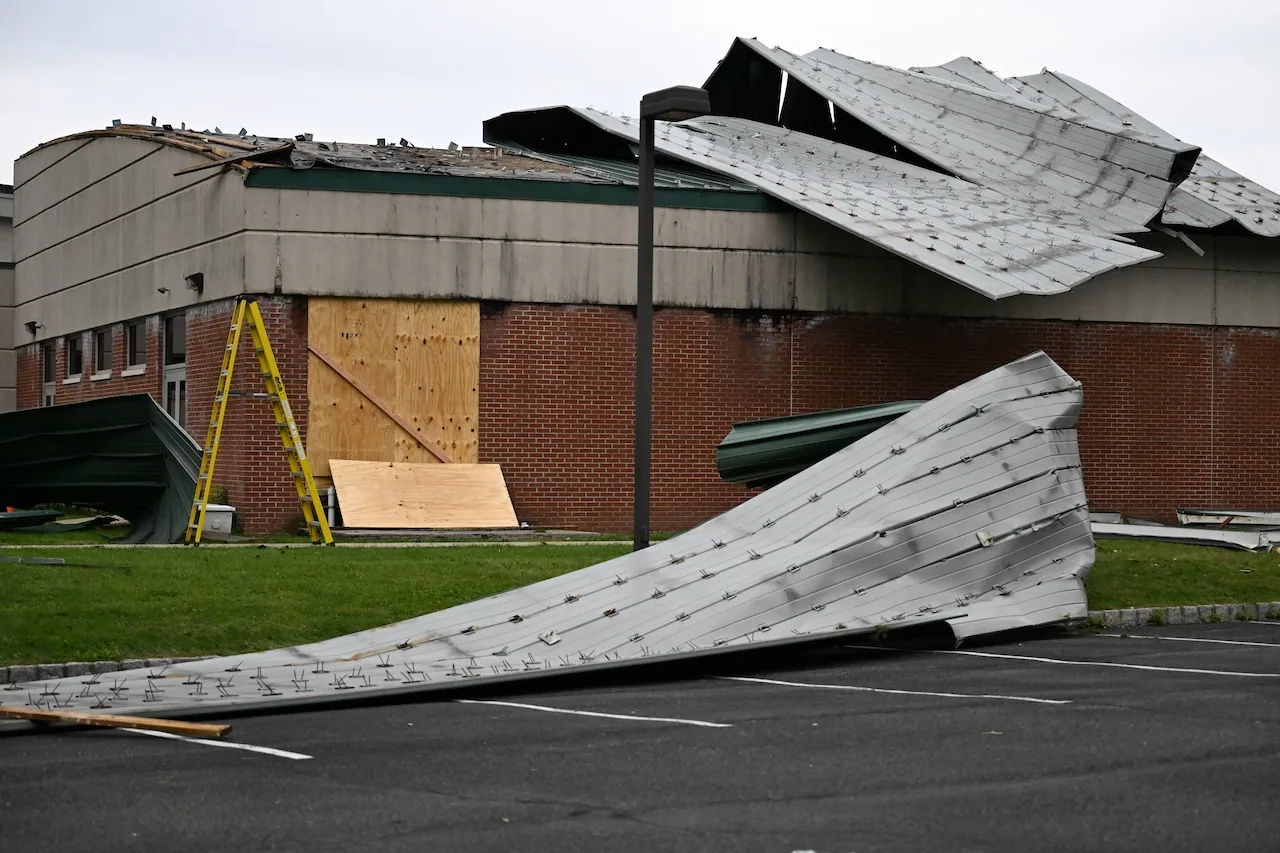
Wind Damage Roof Repair
Wind damage roof repair in Arlington, TX: loose edge metal, torn or lifted membrane, wet insulation, emergency dry-in and permanent repairs based on inspection.
An EF-2 tornado struck Arlington on November 24, 2020, and strong straight-line winds from spring and summer storms hit North Texas roofs most years. Knowing what happened to your roof takes an inspection: which pieces moved, where the membrane tore or lifted, and whether the insulation and deck underneath are still sound. We inspect the roof in question and base the temporary and permanent repair on what we find there.
Commercial Roofing Services Arlington repairs wind damage by looking past the obvious torn piece. Wind usually starts at the edges and corners, works metal loose, then gets under the membrane. Loose edge metal, lifted seams and wet insulation can all push the repair well past the tear you can see. We find those first, so a permanent repair isn't sold as a simple patch. You get a clear scope, plus a list of anything that needs more investigation or another trade before we can finish.
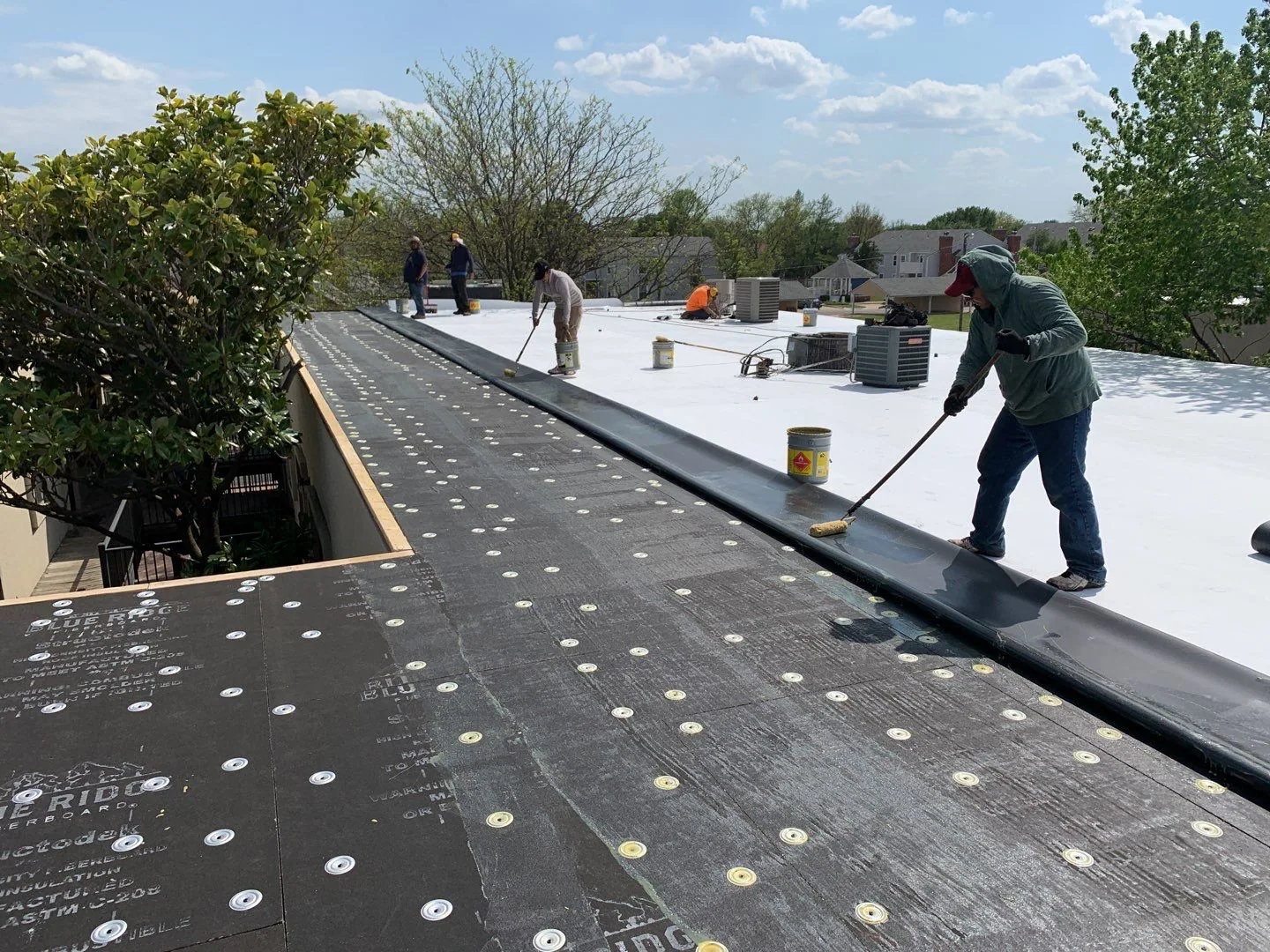
Right after the storm
Keep people off the roof near loose metal or soft spots, and away from the ground below a damaged edge. Don't climb up just to get photos. Emergency roof repair can dry the building in once it's safe to work up there, using tarps, temporary membrane or fastening down loose metal. We note what was protected and why. A temporary dry-in is exactly that; it isn't the permanent repair, and we don't present it as one.
Temporary protection also depends on what's below. Water coming into an occupied office, loose metal over a sidewalk or entrance, and exposed insulation each call for a different response. The building contact should tell us which spaces are affected and who needs to know. We can't approve shutting down a rooftop unit or closing off part of the building; those calls belong to the owner or the mechanical contractor. We list them next to the temporary work so the permanent repair can be planned around them.
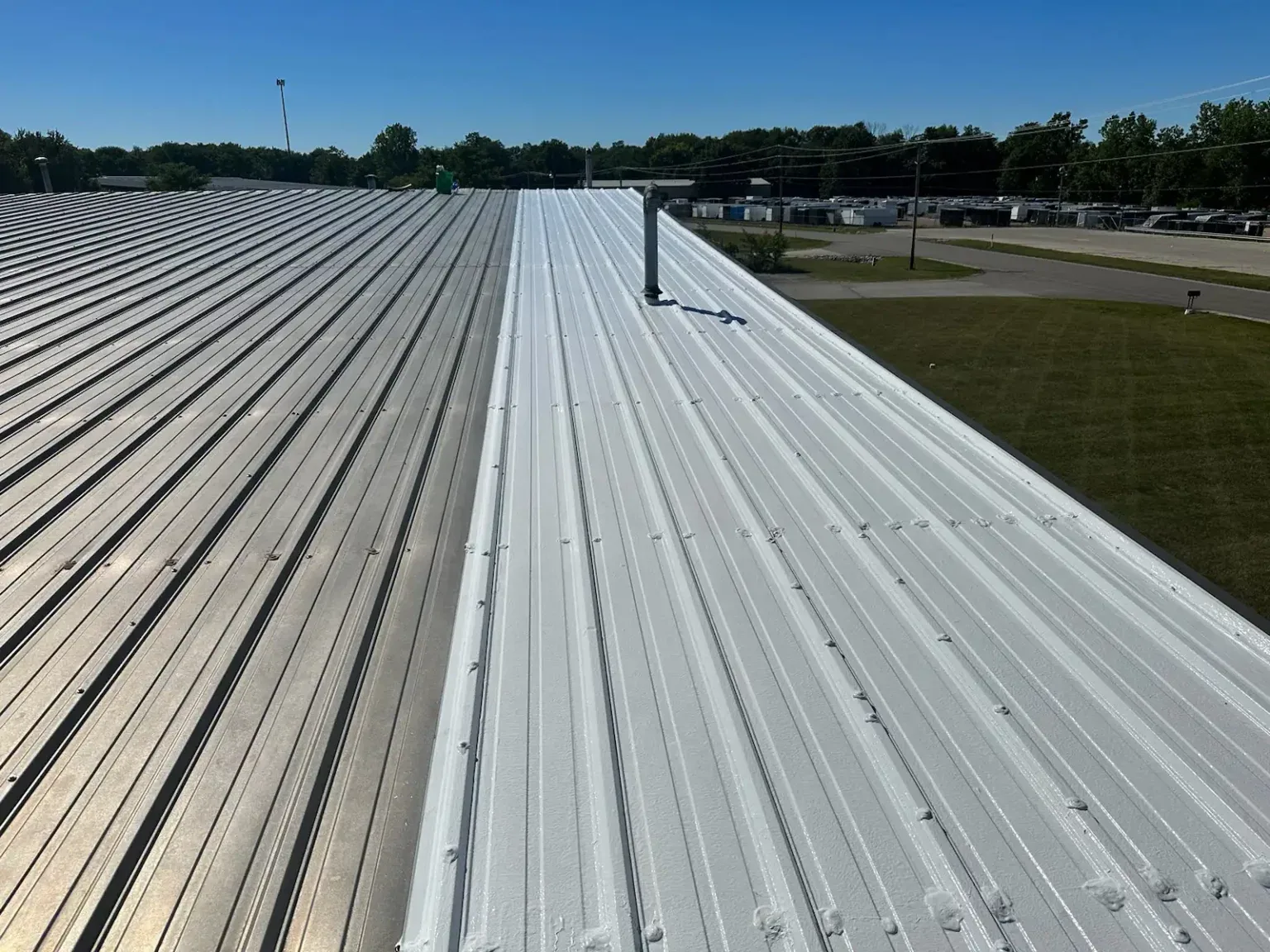
Loose edge metal
When edge metal or coping lifts, we check how it was fastened and the wood nailer it was fastened to. The bent piece you can see from the parking lot is often only part of the damage. New metal needs solid wood to fasten into and a proper tie-in to the membrane. Edge metal and coping repair should spell that out, including any nailer, wall top or membrane that has to be replaced first.
Bending a piece back into place doesn't mean it's attached. Edges are where wind uplift starts, so a loose cleat or rotted nailer will fail again in the next storm. If the wood or wall is damaged badly enough to need an engineer's input, we get it before rebuilding. We also name who does any wall repair and how it gets checked. A membrane price that skips the edge isn't a complete wind-damage repair, no matter how low it is.
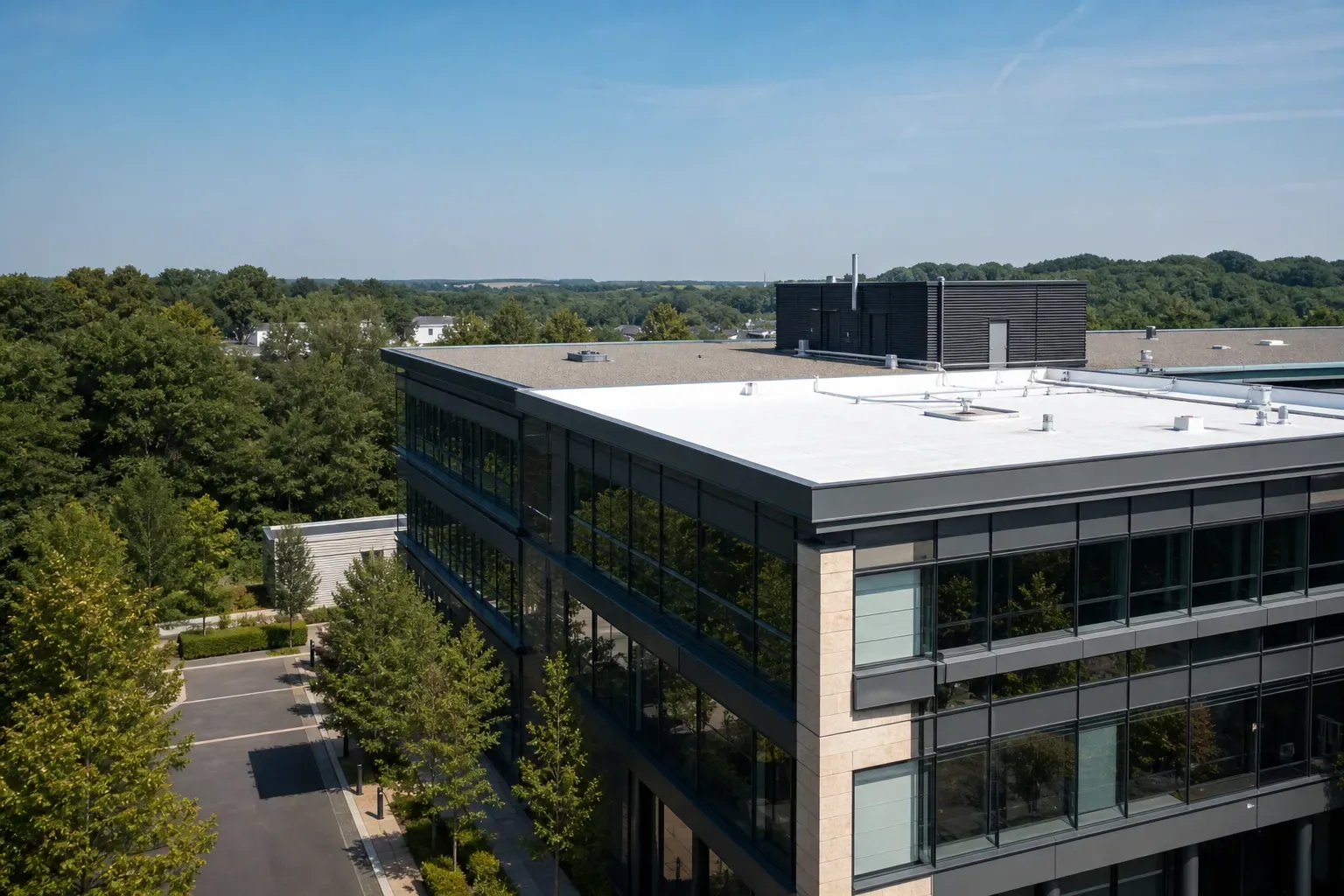
Torn or lifted membrane
We identify the membrane type and check the material around the tear or open seam. A good repair needs clean, sound membrane to bond or weld to. Dirt, stretched sheet, aging or wet insulation underneath can push the repair past the visible split. The proposal should show where the repair ends and why, and call for a core cut where hidden layers could move that line. A neat patch over wet insulation doesn't solve anything; it just hides the problem for a season.
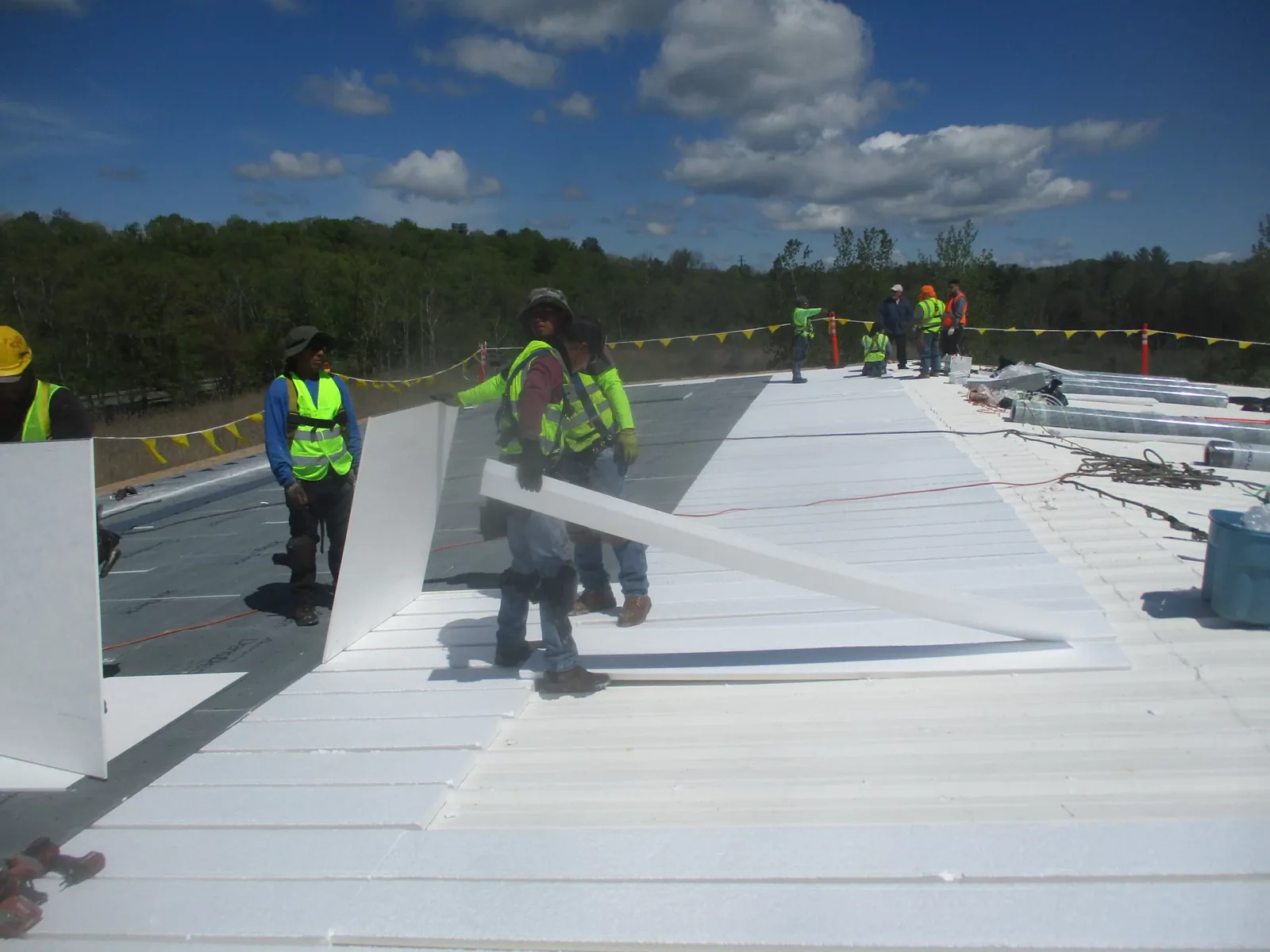
Insulation and cover board replacement may be needed where cores or test openings confirm wet or crushed material. Once the old layers are off, we check the deck before installing new ones. Rusted or damaged deck, or anything that needs an engineer's look, gets handled while it's exposed. If what we find changes the agreed scope, we stop and get approval instead of tearing off more roof without a plan for protecting the building.
Where the membrane meets walls and curbs
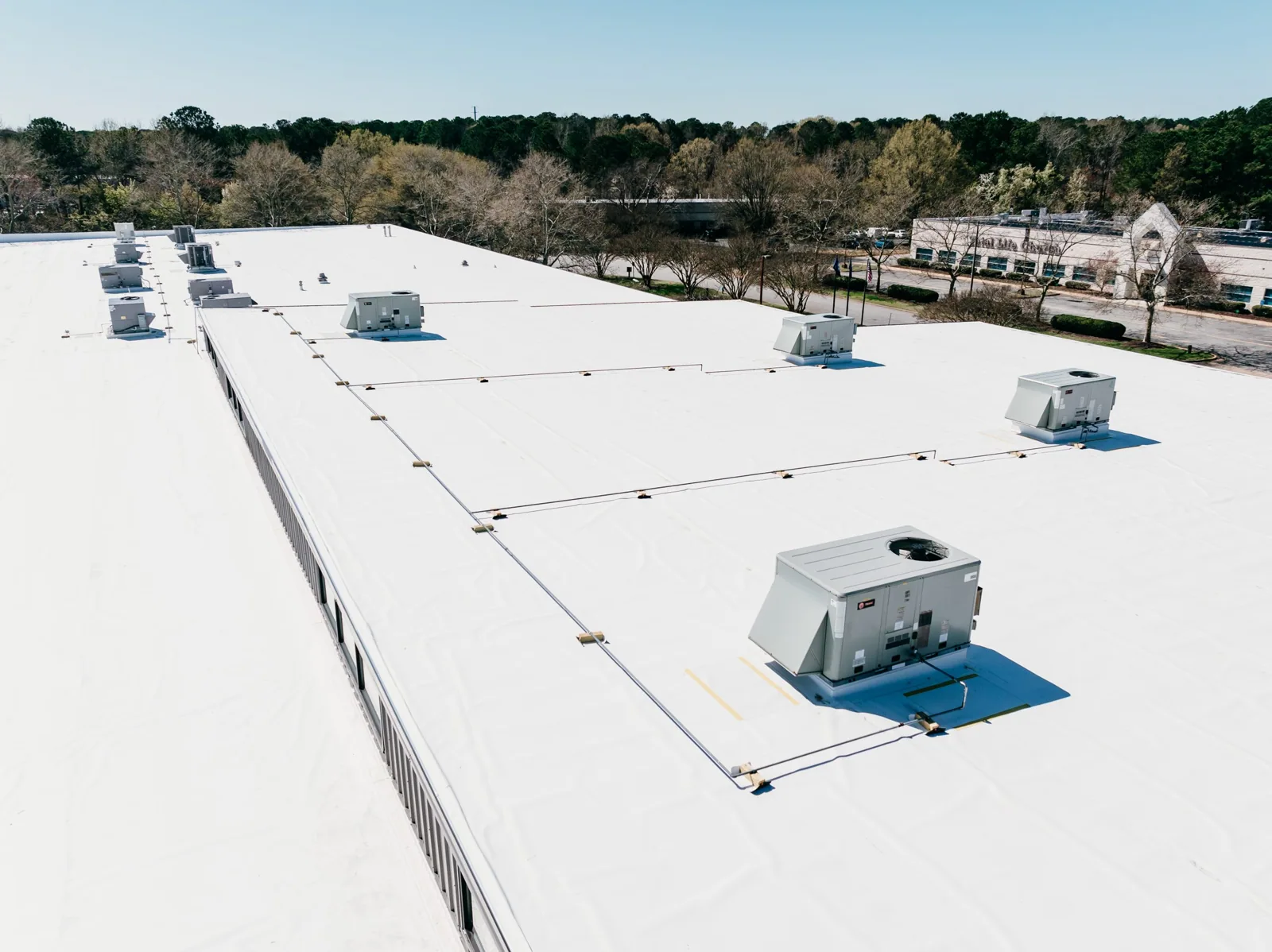
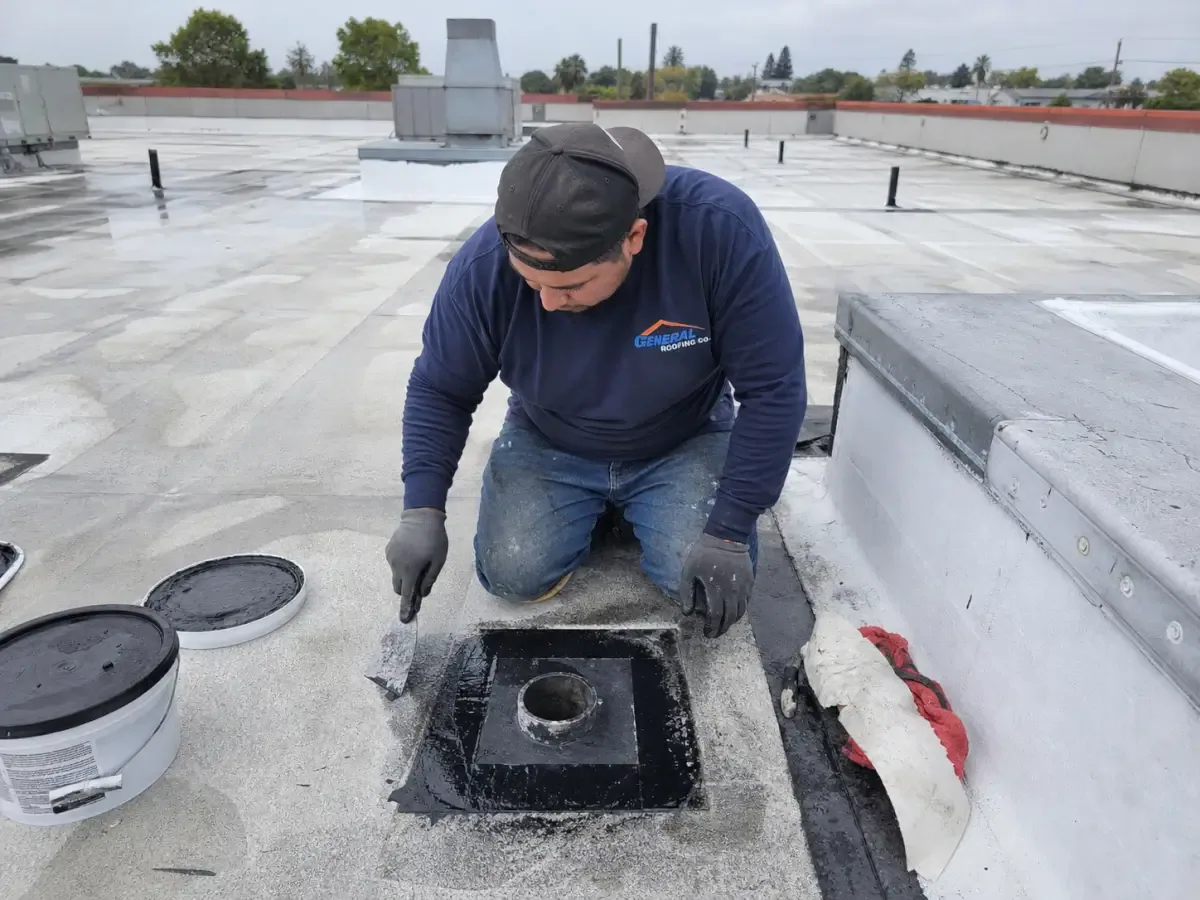
Wind damage often runs into a wall, curb, drain or other penetration. We inspect those spots on their own, not just as an extension of the field tear. A flashing failure repair needs a solid surface to attach to and a detail that suits the roof system. If a wall or curb was damaged, another trade may have to fix it before we can finish the flashing. We sort that out before anyone calls the area ready to close up.
Lifted flashing can also expose seam failures outside the original repair area. We mark each location separately and explain why the extra work is needed. If a new finding expands the tear-off, we update the protection inside as well as the roof quantities. The owner should see the whole revised job, not just a bigger membrane number with the prep work left out.
Scheduling an inspection in Arlington
After high winds hit the Great Southwest Industrial District or the South Cooper Street Corridor, note displaced metal, open seams and loose membrane by roof area from a safe spot, then set up access with the property contact. Send any photos and tell us where the problem was reported. For properties in Downtown Arlington and the surrounding business districts, we can schedule a local inspection. Let us know who can let us in and what's happening inside so we can match interior leaks to the right part of the roof.
At a warehouse roof with wind damage, the operator decides which aisles, stock and dock areas need protection. We inspect how the roof is actually built rather than assuming from the building type. Two warehouses on the same street can have different roof systems and different rules for opening them up. The repair follows this building's conditions, with the right people involved before damaged material comes off.
Wind damage concentrates at edges, corners, penetrations and transitions, where uplift pressure is highest and the attachment changes. We inspect the exposed membrane along with fasteners, clips, edge metal and nailers, because replacing a bent piece alone may not restore the attachment. We map lifted and missing areas, note whether water got into the insulation, and flag where temporary protection is still needed. If the attachment or support needs engineering input, we call that out before specifying a permanent detail. The proposal lays out the tear-off limits, replacement materials, the tie-in to the roof that stays, and any edge or curb repairs. Findings stay tied to the areas we actually looked at; a section that looks similar doesn't necessarily have the same attachment. Closeout photos show the rebuilt edge and the roof around it, and any area we didn't inspect is listed for follow-up instead of being folded into a blanket statement that the job is complete.
Photos and closeout
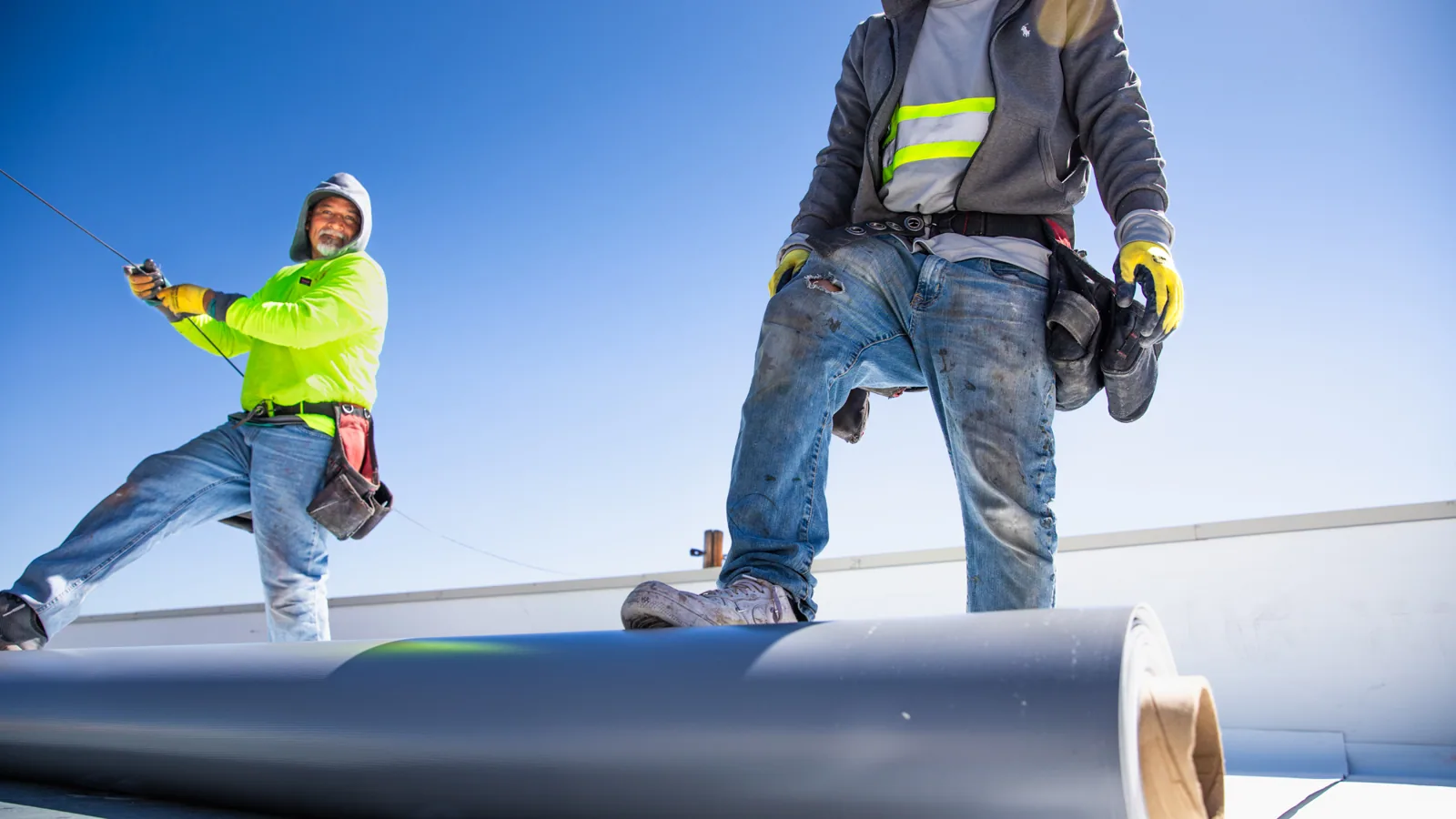
We photograph damaged pieces, tear-off limits and the deck and insulation before rebuilding, and we keep photos of new nailers, fasteners and flashing before they're closed in. The closeout record separates the permanent repair from the emergency work and from anything another trade still owes. A photo of new membrane can't show every layer under it, or prove that someone else's wall repair got done.
If the final work differs from the first proposal, the record keeps the finding and the approved change. We check the finished seams and flashing with the right test for the roof system, such as probing heat-welded seams. Any manufacturer inspection is a separate step from our construction record. That way the owner knows what was fixed in the damaged area and which decisions are still open elsewhere on the roof.
Common Questions
Can a torn membrane be patched without removing the layers below?
Sometimes. If the membrane around the tear is sound and cores show the insulation underneath is dry, a patch can be a proper permanent repair. If the insulation is wet or the sheet is damaged past the tear, those layers come out first.
What should happen when loose edge metal is found?
Keep people away from the roof edge and the ground below it, and call for an inspection. We check the fasteners, the wood nailer and the tie-in to the membrane. The permanent fix usually includes replacing damaged wood, not just bending the metal back.
Does an emergency tarp or dry-in finish the repair?
No. Temporary protection keeps water out while the permanent repair is planned. We record what was protected and what's left to do, then inspect the membrane, insulation and flashing before pricing the final repair.
What information helps set up the first visit?
The address, the damage you've seen, any interior leaks, and who can give us access. Past roof or repair records help too. Don't go near loose metal or soft spots just to get photos; what you can see safely is enough to start.
Get the full wind-damage repair scoped
Send the address, what you've seen and any roof records. We'll inspect the damaged area and lay out the temporary protection, the permanent repair, and anything another trade needs to handle.